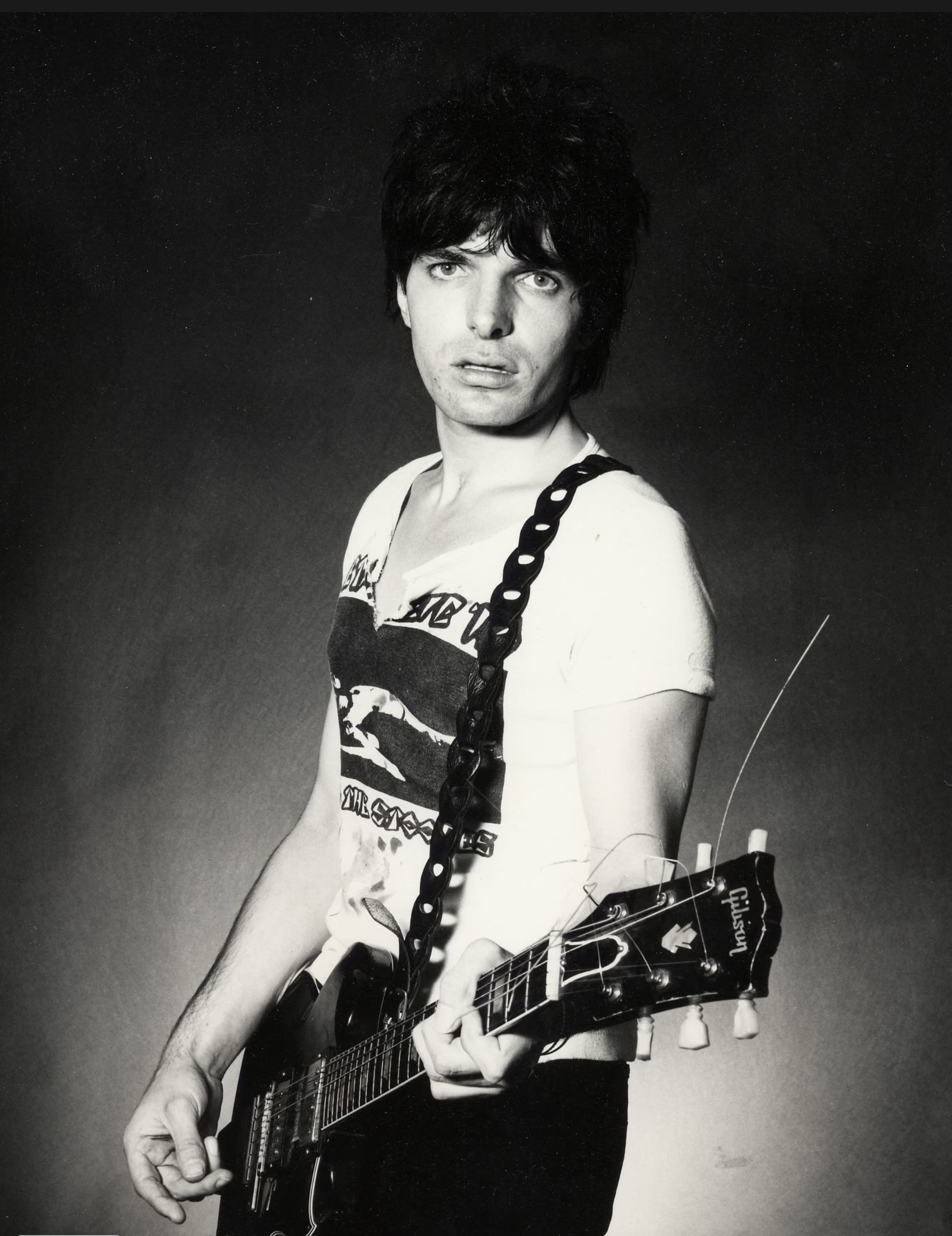
After the Stooges imploded in February 1974, having played their final show, Iggy’s acolytes did just enough to keep the band’s name and reputation, good and bad, alive. Among the items drip fed into the life support machine were an April ’74 Creem cover story, the announcement of a never-to-happen UK tour and Nick Kent’s tireless championing of the band in the NME.
By 1976 the band’s back catalogue was out of print with specialist record shops, Rock On and Bizzarre in London and Open Market in Paris feeding whatever small demand there was with imported cut-outs. Released only three years earlier, factory fresh copies of Raw Power were nowhere to be had in the year of America’s bicentennial.
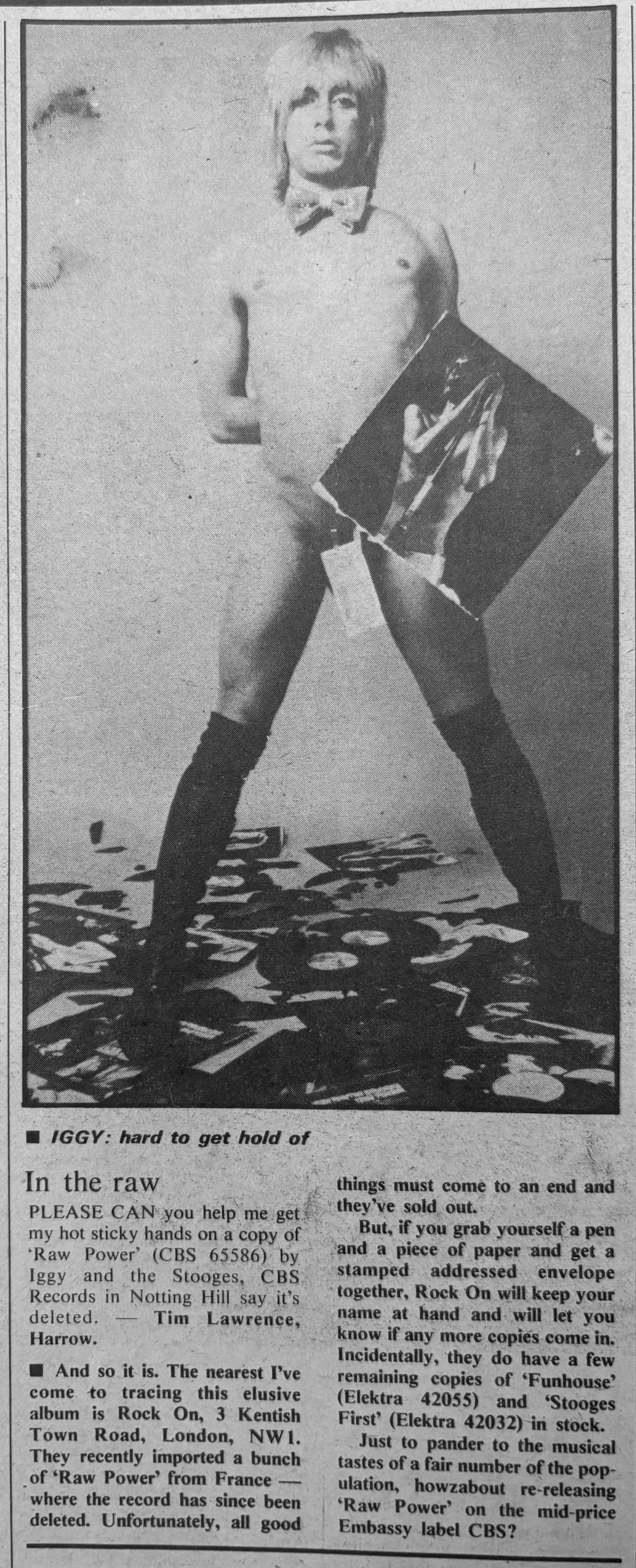
Sounds’ letter page, January 31 1976
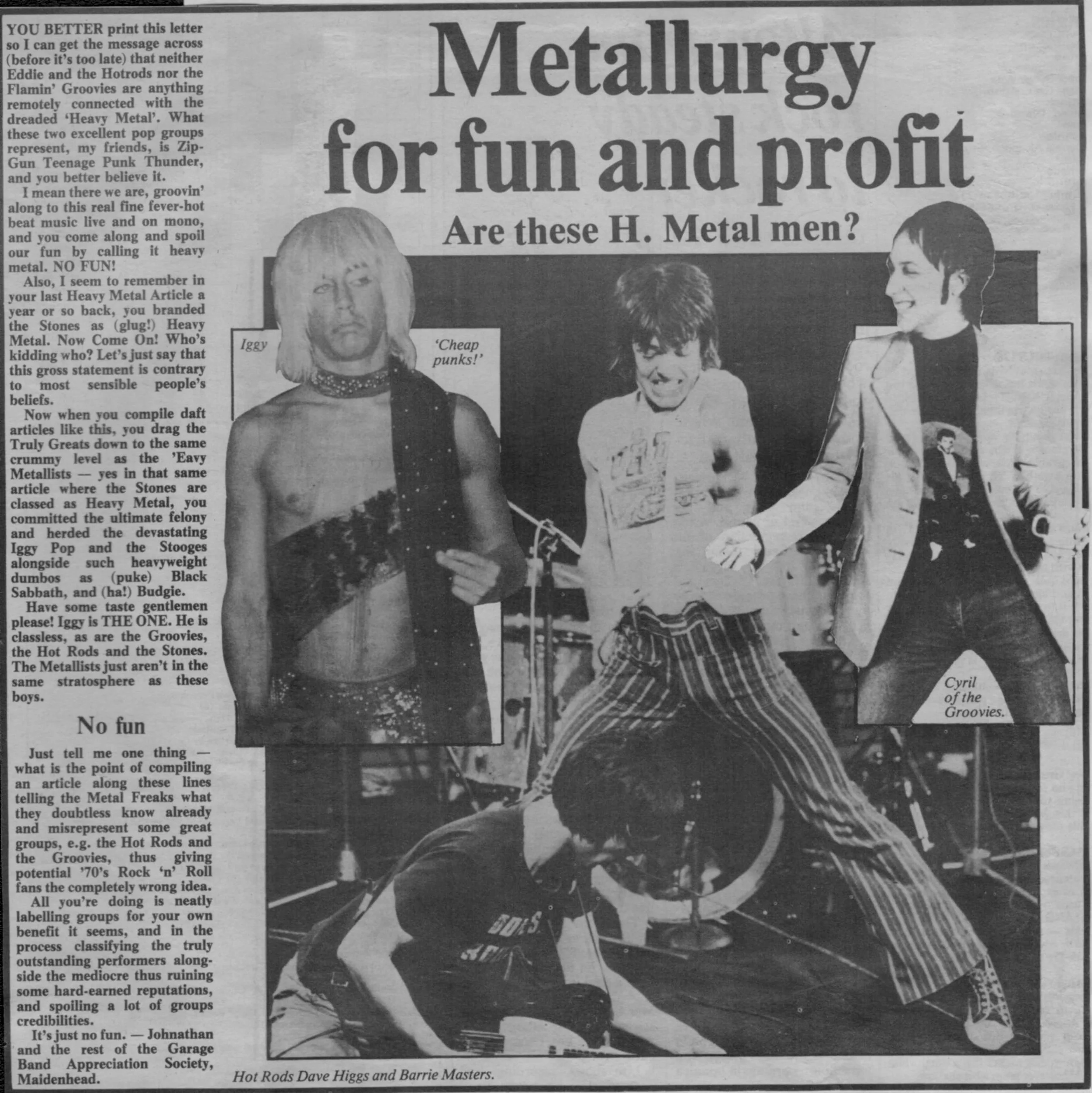
Sounds letter page, Stooges and Groovies mixing it up with the Hot Rods to provide some zip-gun teenage punk thunder (May 8 1976)
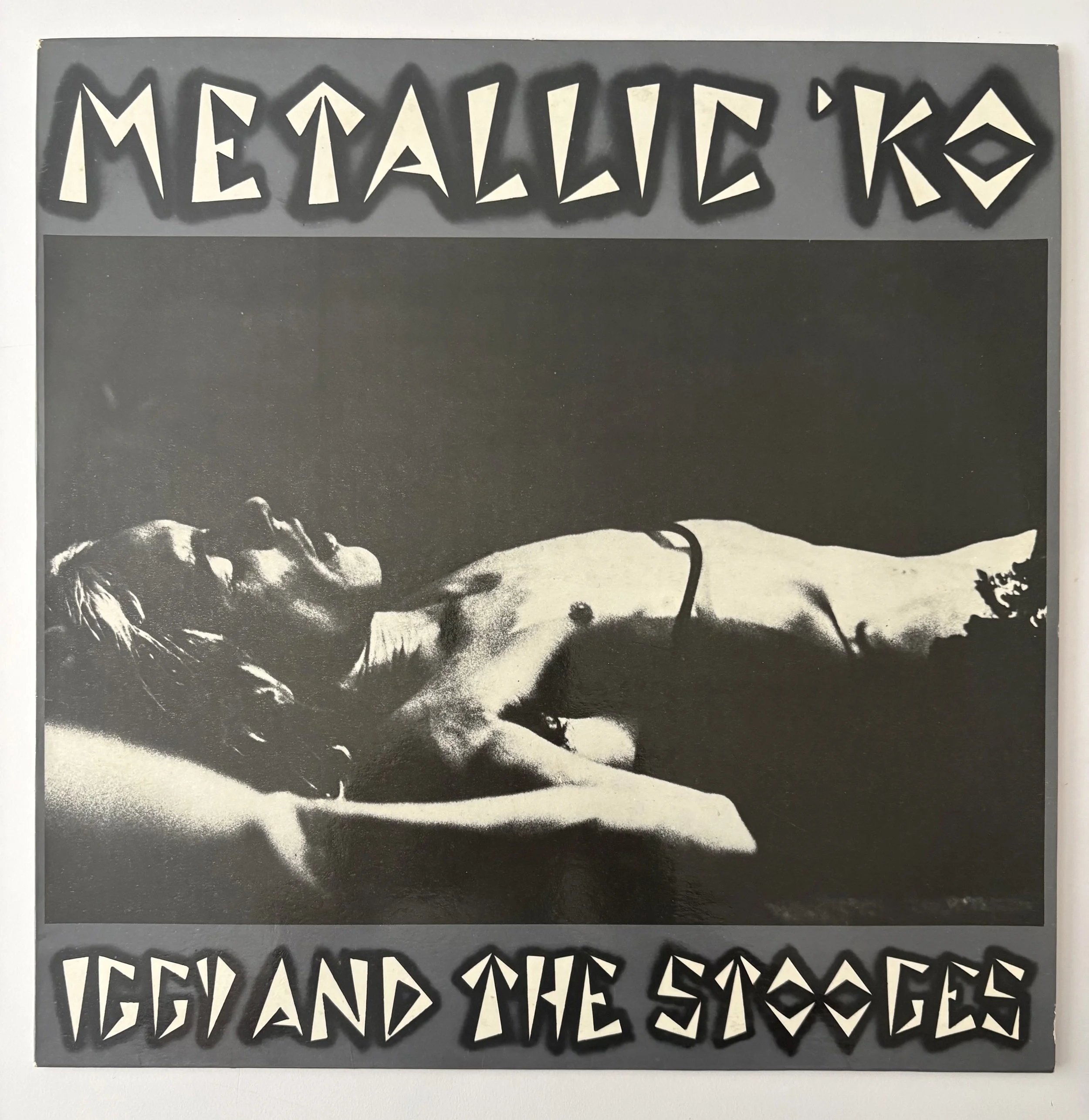
The gap between Raw Power and Iggy’s return with The Idiot was filled in great part by the release of Skydog’s Metallic KO. Word of the album began sneaking out in April ’76:
Paris-based Skydog Records claiming to have signed Iggy And The Stooges. Though there are those amongst us who would doubt such a tale the label reckons it'll be releasing a live album in April and that there'll be a Paris concert in June. ‘Teazers’ NME (April 4 1976)
Two weeks later, Roy Carr interviewed Larry Debay for NME’s ‘Junkyard Angels’ colum. It was illustrated by images of Gene Vincent and Vince Taylor, Dion, the MC5 and Iggy from the King’s Cross show; a small congregation of cult rockers.
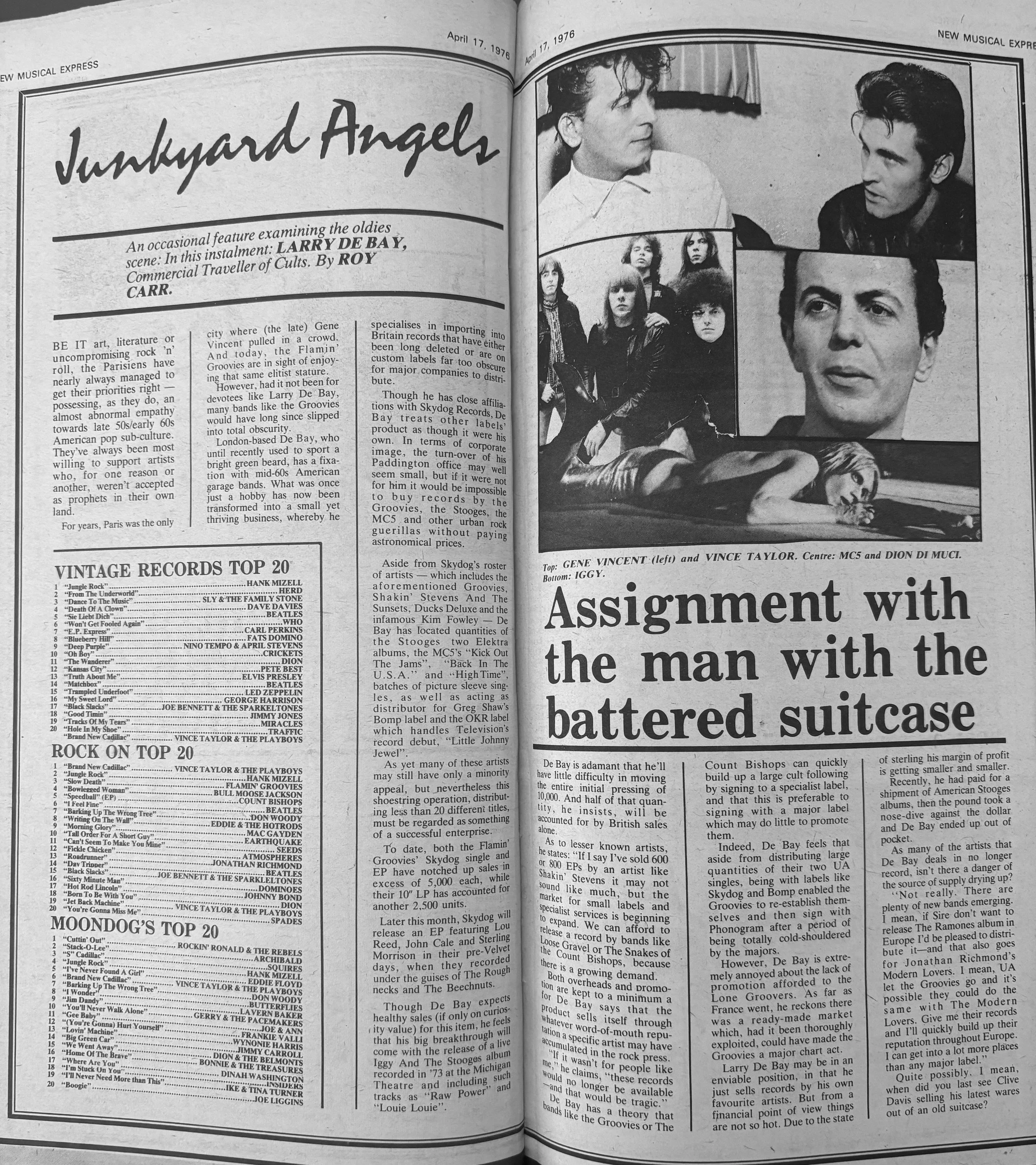
NME April 17 1976, the three chart listings are a good example of what some other specialist stores were offering in Spring ‘76
From Josephine Baker to Le Jazz Hot to film noir to Chester Himes to Sam Fuller and Jim Thompson, the French love of American outsiders was an established convention when Carr talked about the latest iteration with the Parisian love for the Flamin’ Groovies. London based Frenchman Debay, he wrote, has a ‘fixation with mid-60s American garage bands and has turned his hobby into a business. If his shop, Bizzarre, didn’t exist it would be ‘impossible to buy records by the Groovies, the Stooges, the MC5 and other urban rock guerrillas’.
Carr tracks some of the artists Debay favours [see HERE] before discussing Metallic KO:
Though Debay expects healthy sales (if only on curiosity value) for this item, he feels that his big breakthrough will come with the release of a live Iggy And The Stooges album recorded in ’73 at the Michigan Theatre and including such tracks as ‘Raw Power’ and ‘Louie Louie’. Debay is adamant that he'll have little difficulty in moving the entire initial pressing of 10,000. And half of that quantity, he insists, will be accounted for by British sales alone.
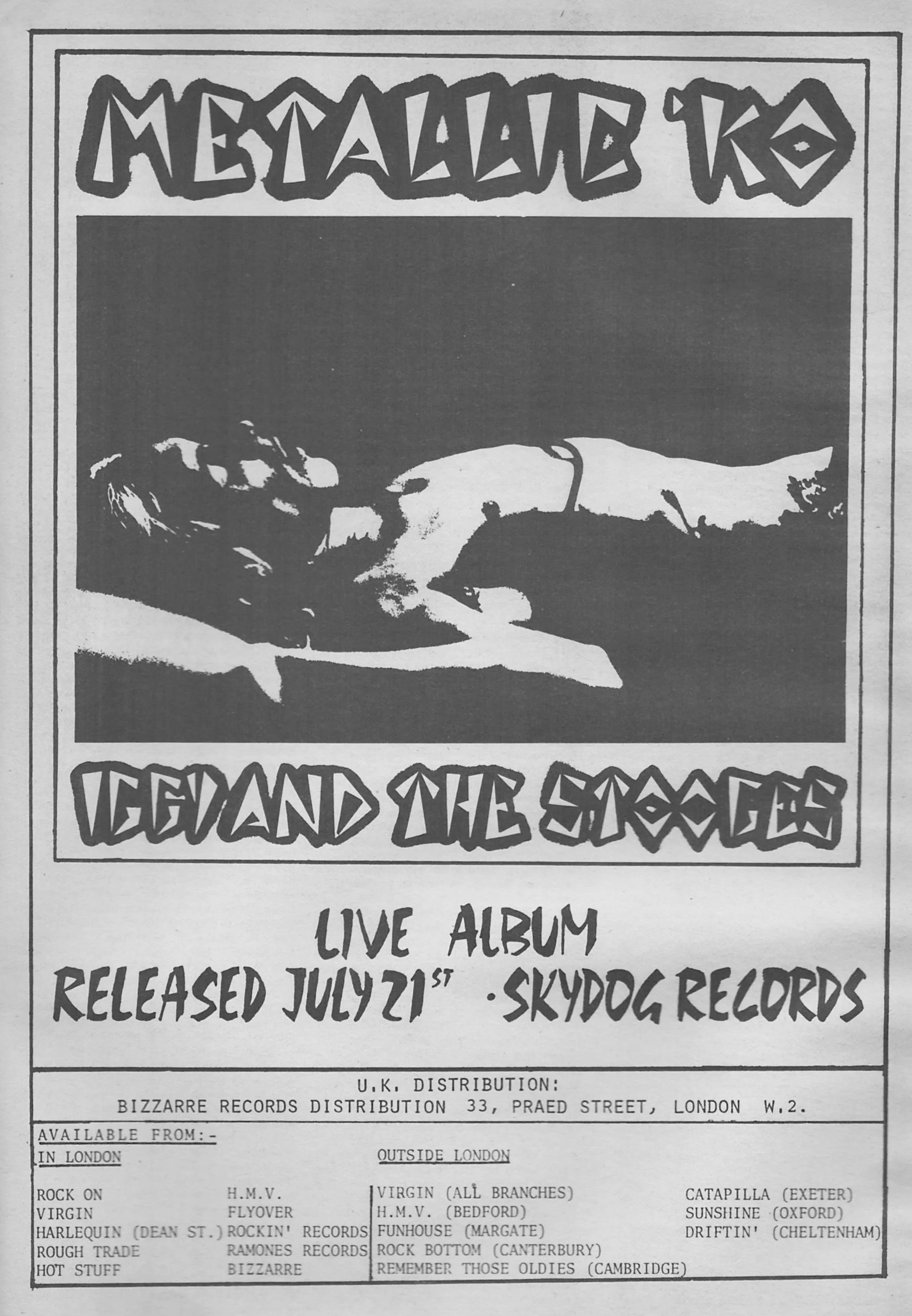
Somewhat prematurely, Debay took out a full page advert in Zigzag magazine (June ’76) that gave a July 21 release date and a list of stockists in London and around the country, ‘Ramones Records’ anyone?. As it happened, Bizzarre would not receive copies until early in September when NME reported it would retail at the exorbitant price of £3.75 – a 50p mark-up on a standard UK LP.
From September 11, the album was advertised weekly in the NME’s ‘Records Wanted’ classifieds and a couple of weeks earlier in the 2 by 2 inch block in the back pages of Sounds.
For an additional £2.50 you could also get a Stooges t-shirt; just like the Damned’s Brian James.
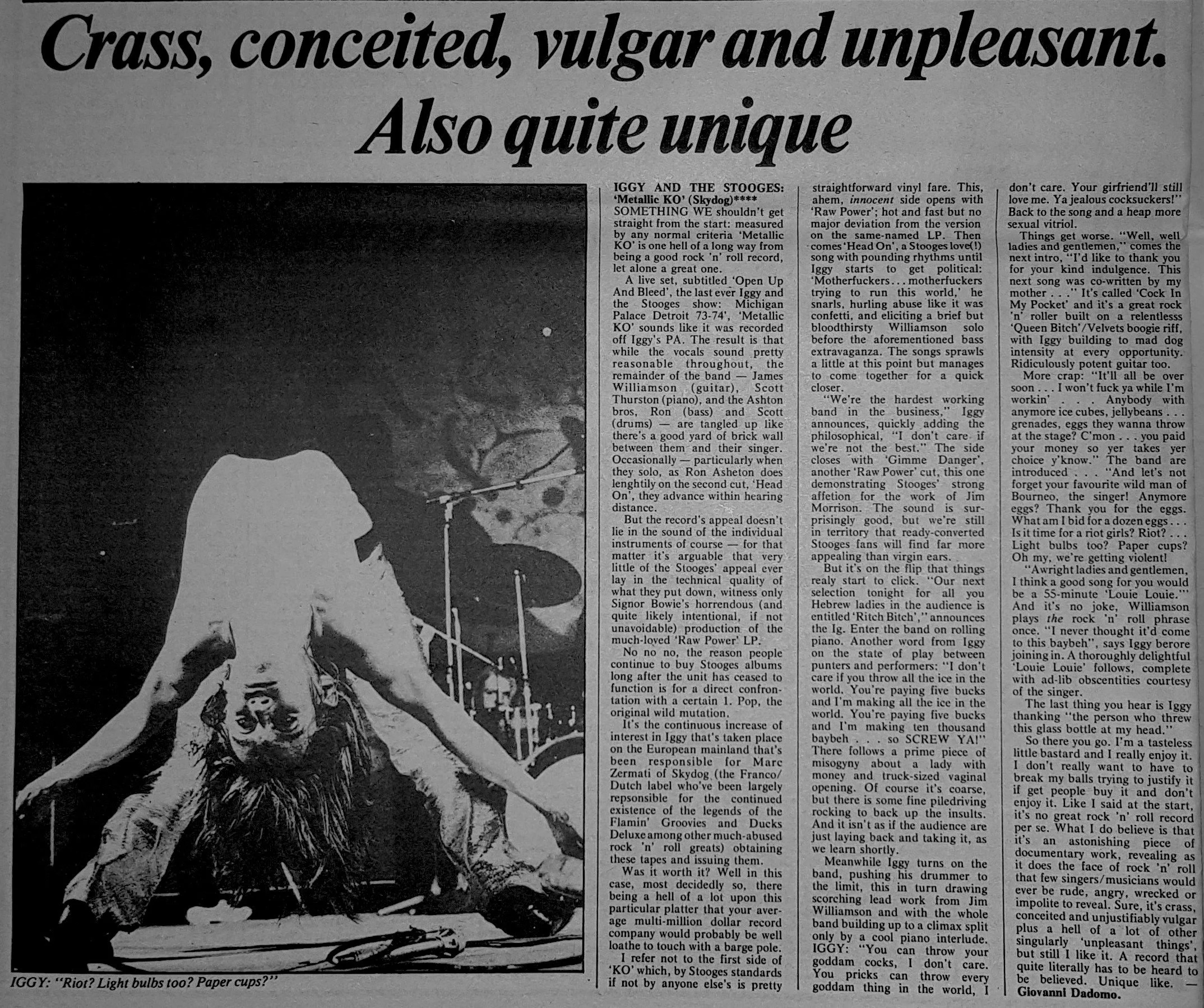
Sounds’ Giovanni Dadomo was first out of the block, September 18, with his four star review which amply makes the case for why you needed to hear this album, the evidence was the transcription of great chunks of Iggy’s between song interaction with his audience:
So there you go. I'm a tasteless little bastard and I really enjoy it. I don't really want to have to break my balls trying to justify it if people buy it and don’t enjoy it. Like I said at the start, it's no great rock 'n' roll record per se. What I do believe is that it’s an astonishing piece of documentary work, revealing as it does the face of rock ’n’ roll that few singers/musicians would ever be rude, angry, wrecked or impolite to reveal. Sure, it’s crass, conceited and unjustifiably vulgar plus a hell of a lot of other singularly ‘unpleasant things’, but still I like it. A record that quite literally has to be heard to be believed. Unique like.
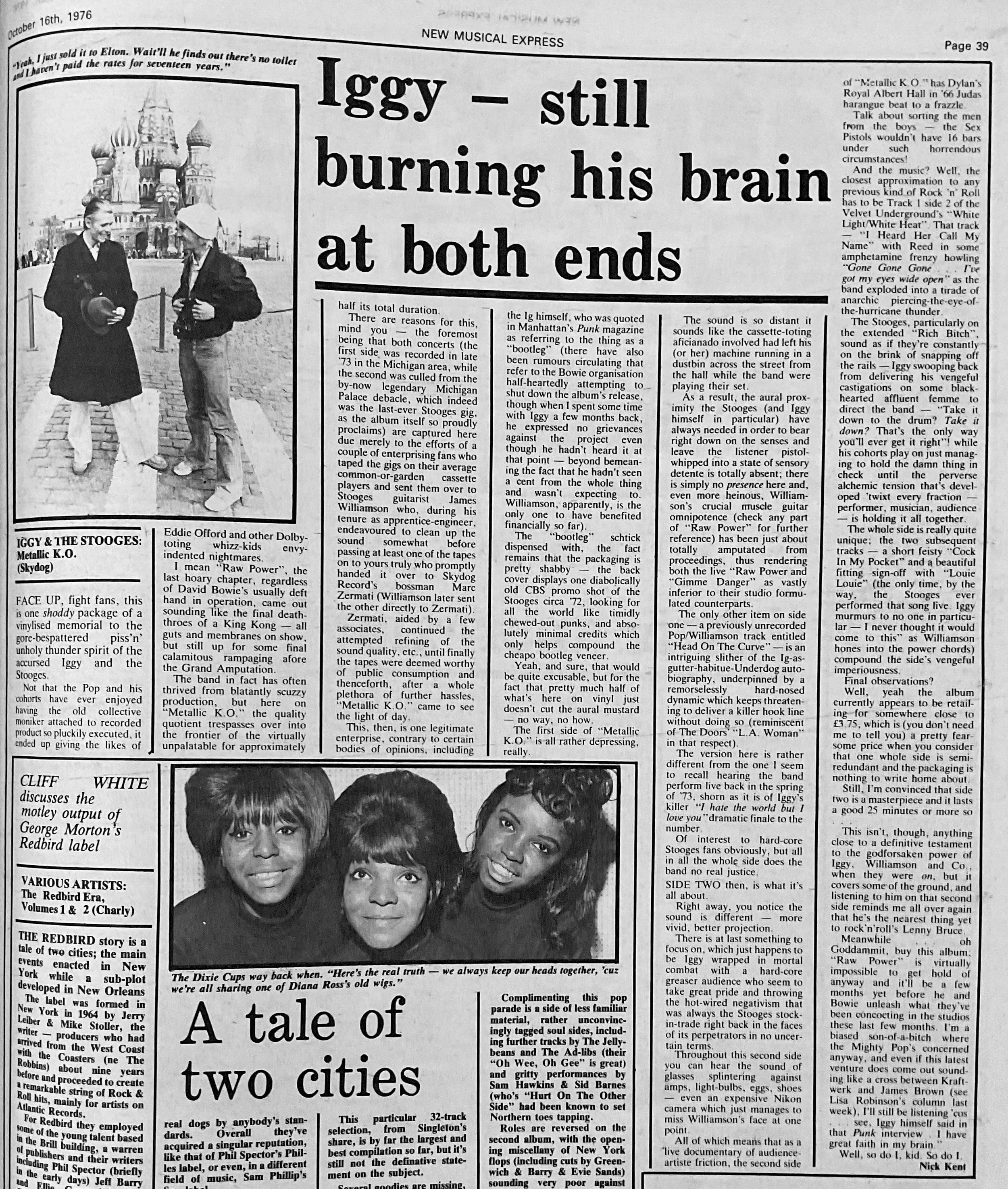
Nick Kent had acted as the intermediary between James Williamson and Marc Zermati and his review in NME followed Dadomo’s a month later, October 16: ‘FACE UP, fight fans, this is one shoddy package of a vinylised memorial to the gore-bespattered piss ’n’ unholy thunder spirit of the accursed Iggy and the Stooges’.
Kent spent the early part of the review explaining that the album is not a bootleg but a legitimate release. Like Dadomo he bemoans the poor audio of side one and concentrates on side two, which for ‘audience-artiste friction’ has Dylan’s Royal Albert Hall ‘harangue beat to a frazzle’.
The Michigan Palace confrontation put the violence at London punk shows into some kind of relief – the real and the pretend: ‘Talk about sorting the men from the boys – the Sex Pistols wouldn’t have 16 bars under such horrendous circumstances!’
Whatever the downsides of the album, the hefty price tag, the unimaginative packaging (which many would dispute, the designer was Michael Beal who came up with the classic Hot Rods’ poster of the suicidal punk pistoleer), the poor audio, the dud side one, Kent was nevertheless ‘convinced that side two is a masterpiece’ (no argument here).
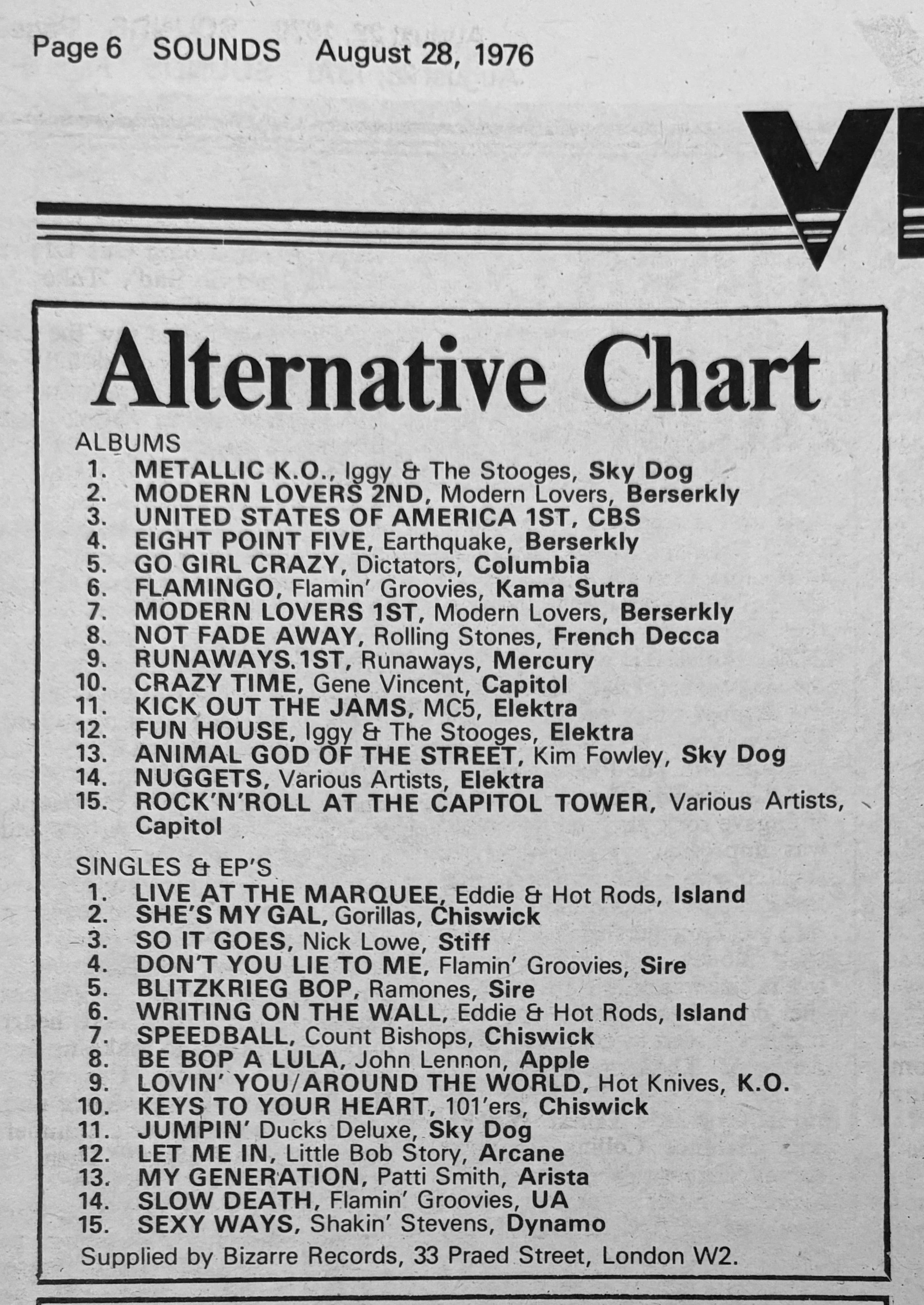
Bizzarre filing false reports of sales for Metallic KO hyping its own product to the top of the charts . . .
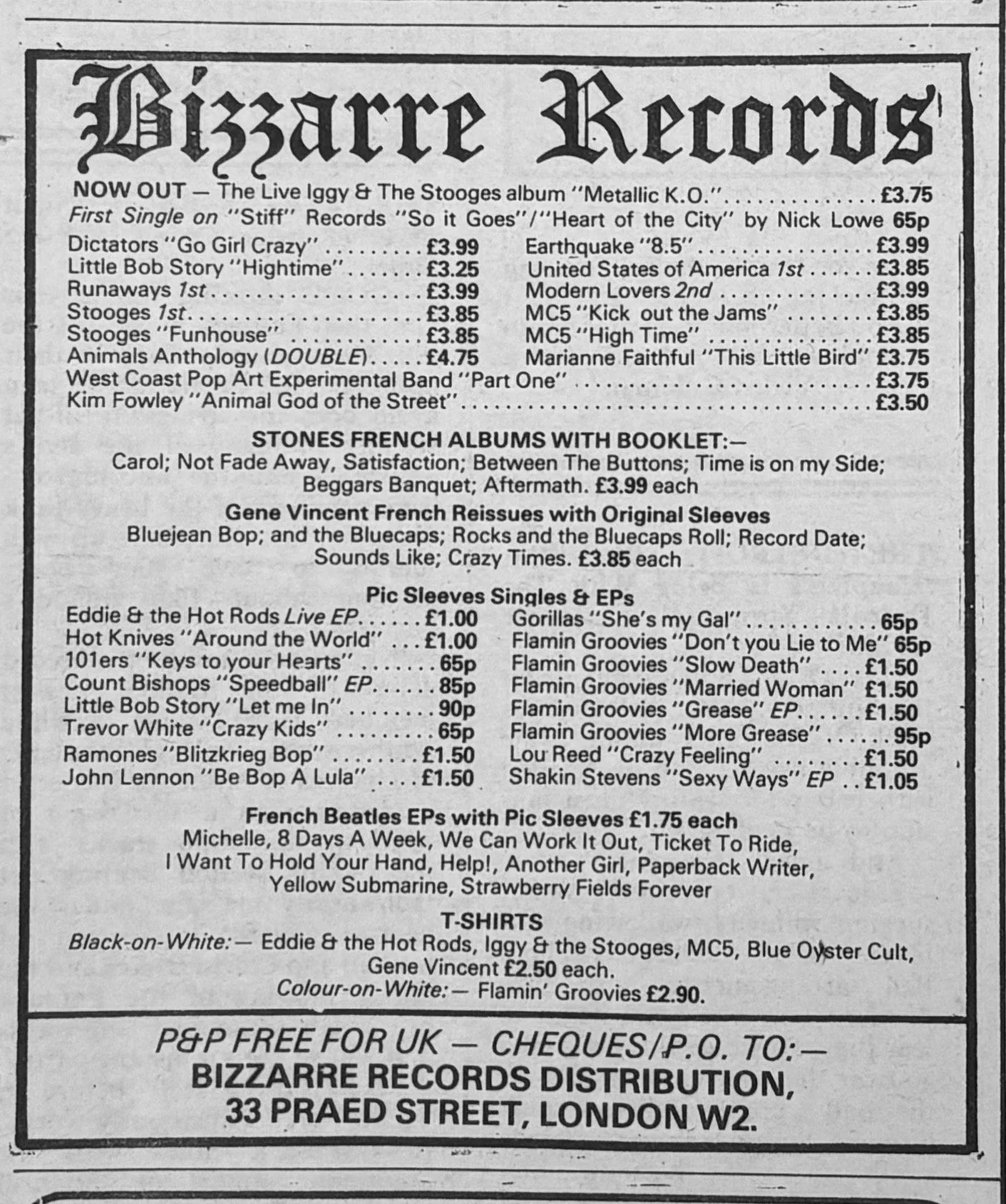
Sounds ad, August 28
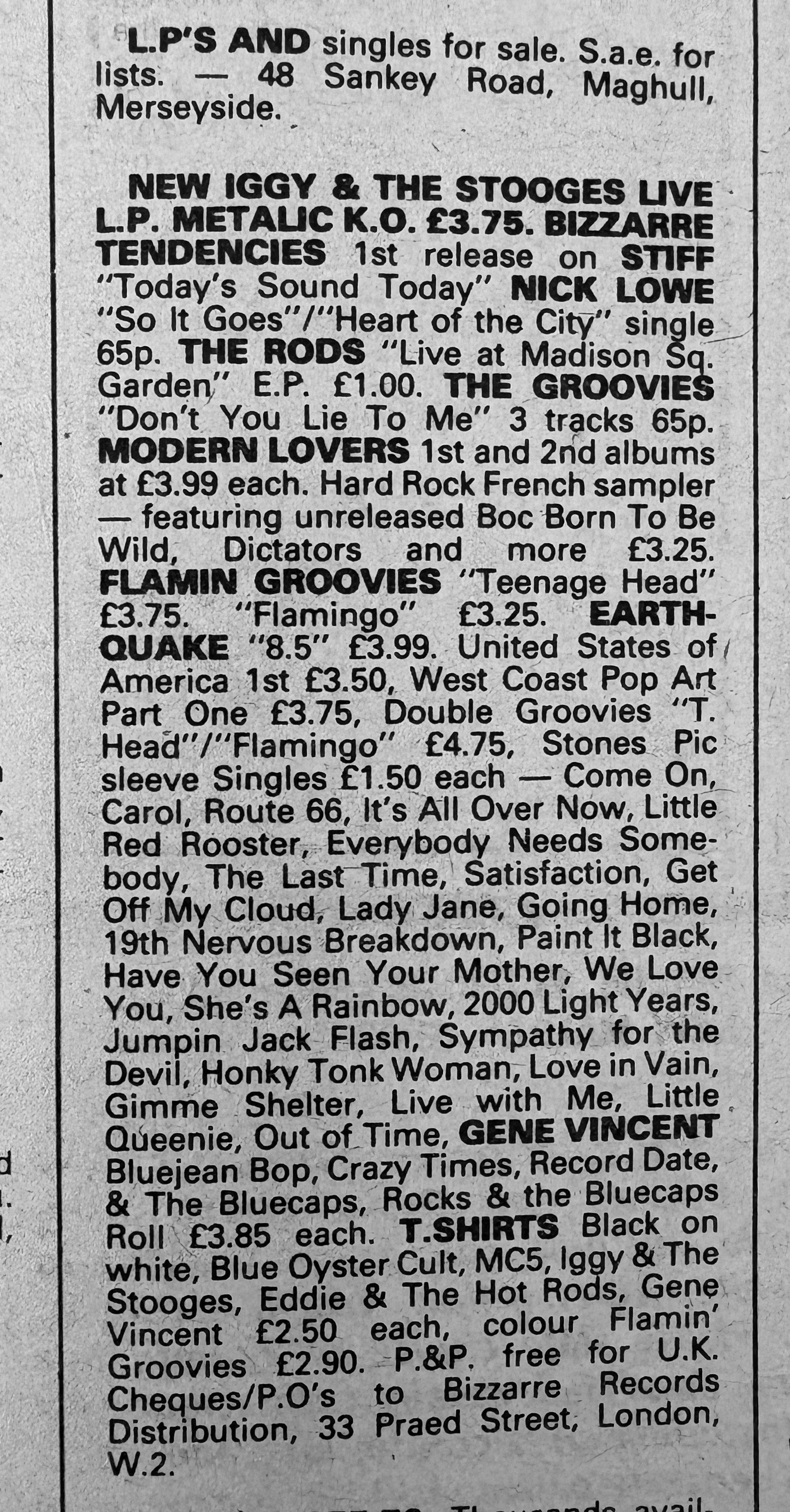
NME classifieds, September 11
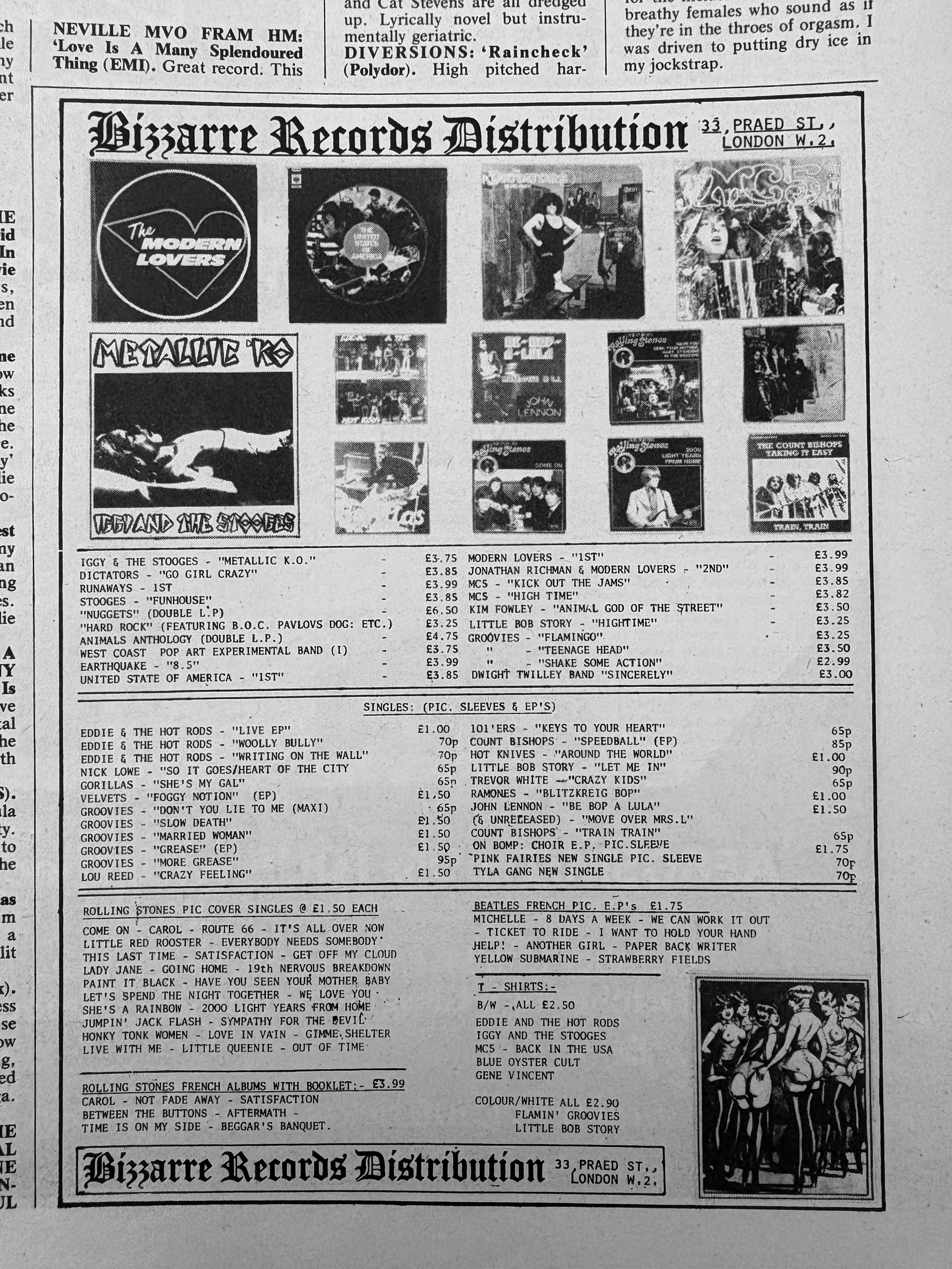
Sounds ad, October 9
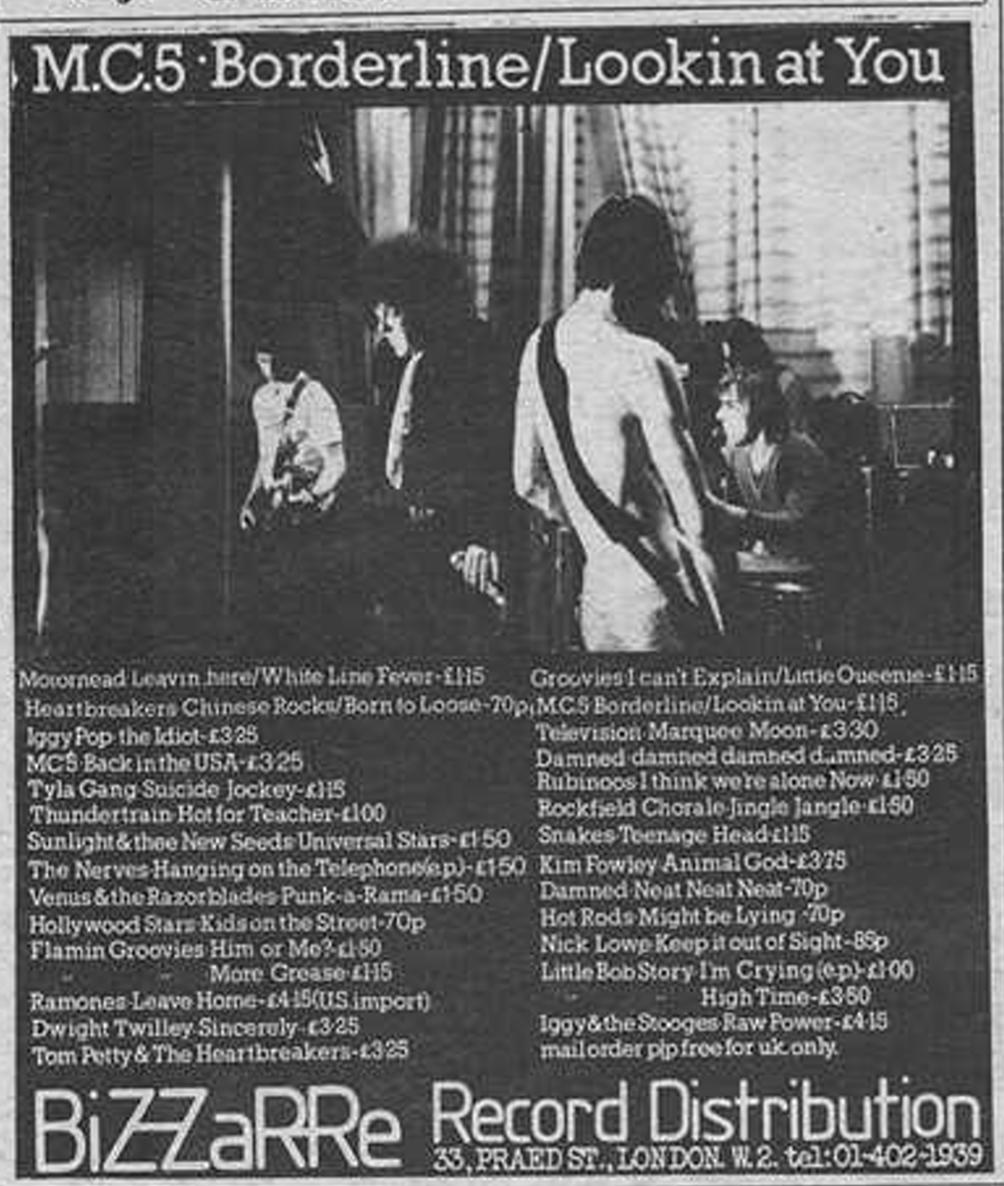
NME April 30 1977
Now advertising weekly in NME on page 2 adjacent to the chart listings, Bizzarre finally acquired import copies of Raw Power. They were not cheap at £4.15. These were, I recall, Dutch Embassy pressings [HERE]. It will finally be reissued in the UK at the end of June retailing at the much more reasonable £1.99. It was also on CBS’ budget Embassy label. UK reissues of the debut and Fun House had been reviewed by Max Bell in NME, April 2.
Quisque iaculis facilisis lacinia. Mauris euismod pellentesque tellus sit amet mollis.