This Is Not A Soundtrack (part 6)

rock 1.jpg

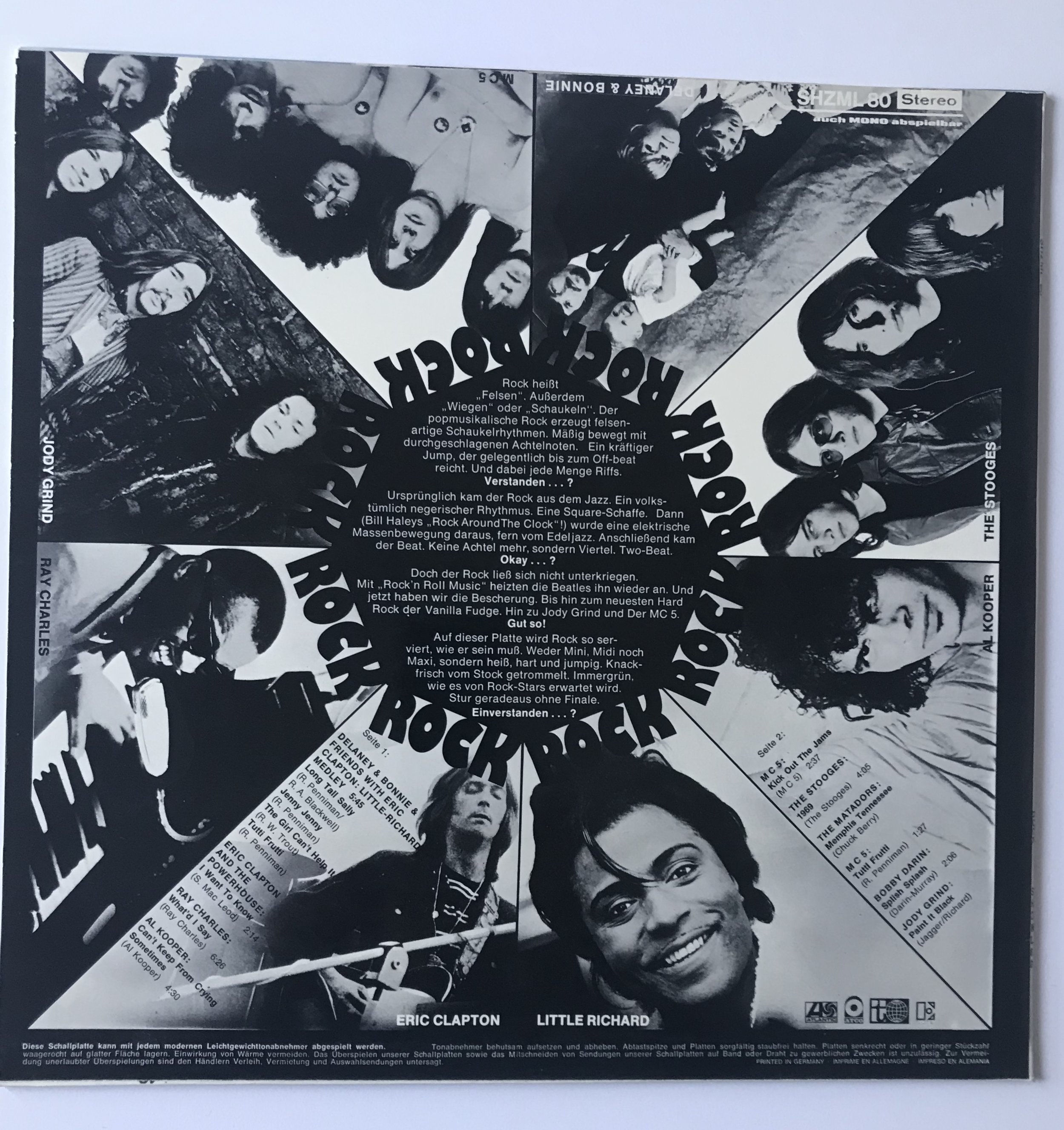
This 1970 German compilation comes close to what I imagine a biker movie soundtrack might be like if its producers had access to Atlantic and Elektra artistes . . . It’s rock ’n’ roll as filtered through Rock, so Clapton, Delaney & Bonnie on a live medley of Little Richard numbers, followed by Eric Clapton and the Powerhouse chugging through de blues, Ray Charles caught in performance with ‘What’d I Say’, and Al Kooper closing the side with another piano led tune. Side 2 gets going in style with the MC5 kicking out the jams, followed by the Stooges telling it like it was in ‘1969.’ The Danish Matadors stay in keeping with the musical theme of R ’n’ R with their cover of Chuck’s ‘Memphis Tennessee’, but they are otherwise out of time with this 1965 recording. The MC5 return with their homage to Richard Penniman on ‘Tutti Frutti.’ Bobby Darin supplies the only genuine slice of fifties sound with ‘Splish Splash’, before Jody Grind get hard ‘n heavy on their cover of ‘Paint It Black.’ I believe this is the only contemporaneous album to feature both the Stooges and The MC5, ain’t that something?

The cover features members of the Nederlands Harley-Davidson Club - rockers to the max. Now you know what I meant about those caps [see Feb 12 entry].
rock 2.jpg

Good Old Rock 'n Roll

rock.jpg

Various, Good Old Rock ’n Roll (Coral: COPS-6219)

A 1972 German double-album. Each side features Bill Haley, Johnny Burnette, Brenda Lee, Buddy Holly, Waylon Jennings and Carl Perkins, and that order is fixed across all four sides. Now that’s what I call the art of curation. Audio is a particularly bad example of reprocessed stereo. But then I didn’t buy this for the music but for its cover art . . .

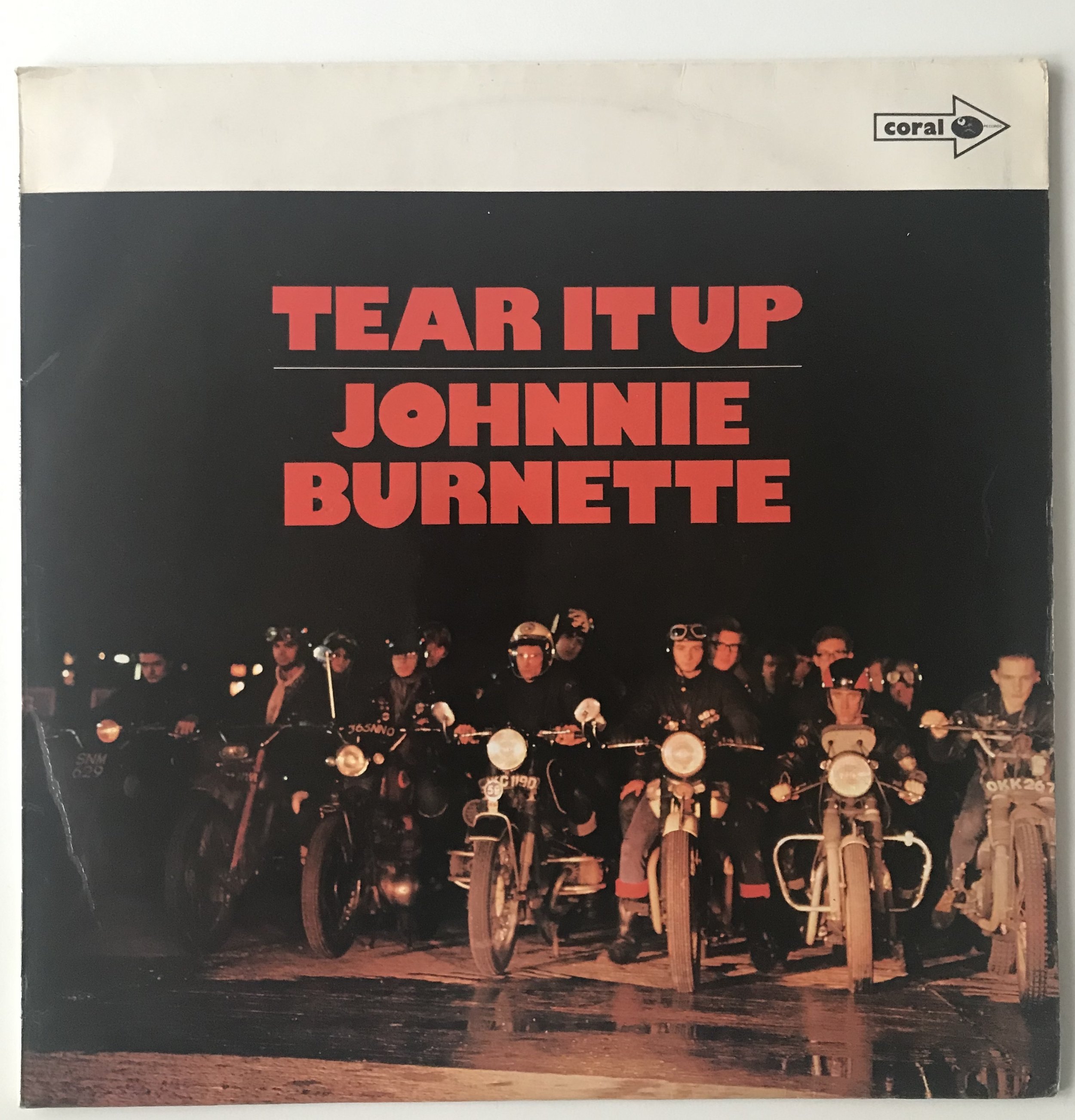
In the same way UK rock ’n’ roll revival compilations always betray their county of origin, like the ton up boys on the front of Johnnie Burnette’s Tear It Up, Continental comps also say something about their version of America’s 1950s into Europe’s 1970s. The figure in the portrait looks Gallic to me, and the way his hair is piled up on top is rather unique. I like too the hint of a moustache, the ruby and emerald rings, the extra long cig and the gentle way he holds the oversized transistor radio. He looks to me like an aesthete dreaming of Rimbaud channeled through Gene Vincent, or Jim Jarmusch before the colour drained from his hair

jim.jpg

Sylvia Pitcher and Neat Change - Who?pix

After posting the shot of the ‘Johnnie Burnette’ Tear It Up cover, I went looking for more of Sylvia Pitcher’s images. Lots of her great pix of the Animals and, most impressively photos of The Action I’d not previously seen, can be found in the Getty Images archive here

I like the mirrored images of the fags, left hand right hand.

I like the mirrored images of the fags, left hand right hand.

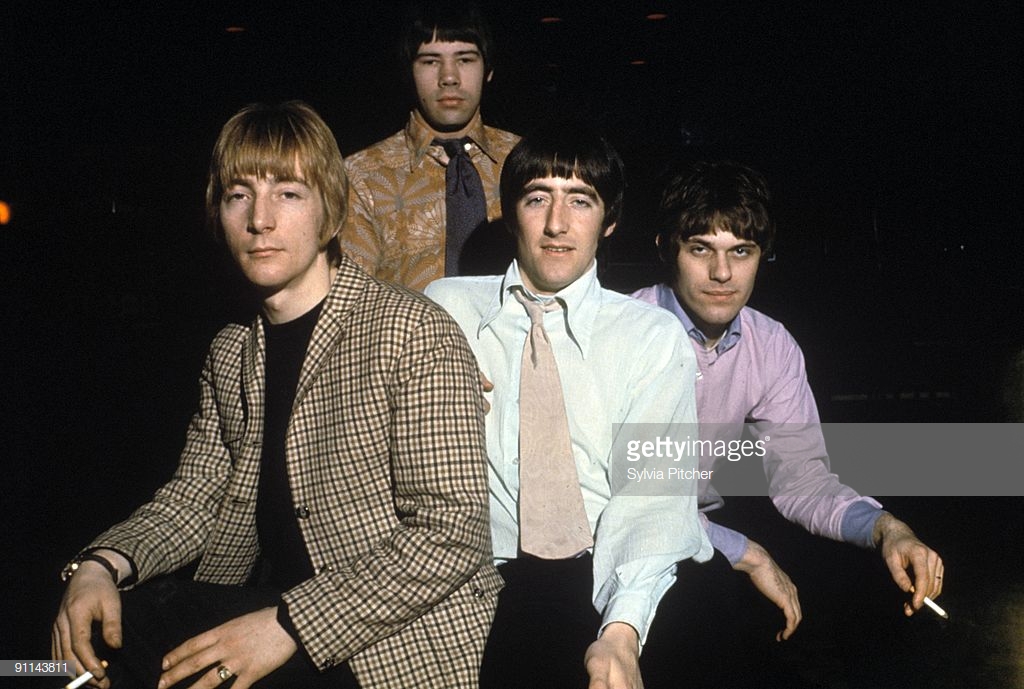
But as arresting as those images of the boys from Kentish Town are, they’re nothing compared to this pic of hers of a band hitherto unknown to me, Neat Change

Neat Change 1.jpg

The listing dates this circa 1967, my first thought was the skinhead look and pose is more likely 1969, but the shoes are all wrong. What they actually look like is late period The Birds, so I’d say 1966.

birds.jpg
neat change 2.jpg

45cat lists only one Neat Change 45 , which has a Peter Frampton connection. It’s okay, soft psyche with strings which fits well with their new primped hair. One of the band later helped form Yes (Peter Brockbanks aka Banks). The singer, Jimmy Edwards went on to work with Bruce Foxton after the death of The Jam. Stewart Home gives the lowdown on his career here. I dunno if there are any recordings by the band in their late Mod, proto-skinhead phase ,but I hope they sound like they looked.

Neat Change after a vist to the hairdressers, 1968 (uploaded by freakbeatjames on 45Cat)

Neat Change after a vist to the hairdressers, 1968 (uploaded by freakbeatjames on 45Cat)

Johnny Burnette & the R ’n’ R Trio - Tear It Up

IMG_8938.jpg

Johnnie Burnette, Tear It Up (Coral: CP10, 1969)

Forget the mis-spelling of Johnny, this UK album pulls together for the first time 12 of the 13 masters not used on the band’s album from 1956, which was reissued around this time, only ‘Butterfingers’ remained in storage. No great loss there. An utterly essential compilation that is made all the more irresistible by having a line of ton up boys on the front. Photograph is by Sylvia Pitcher.

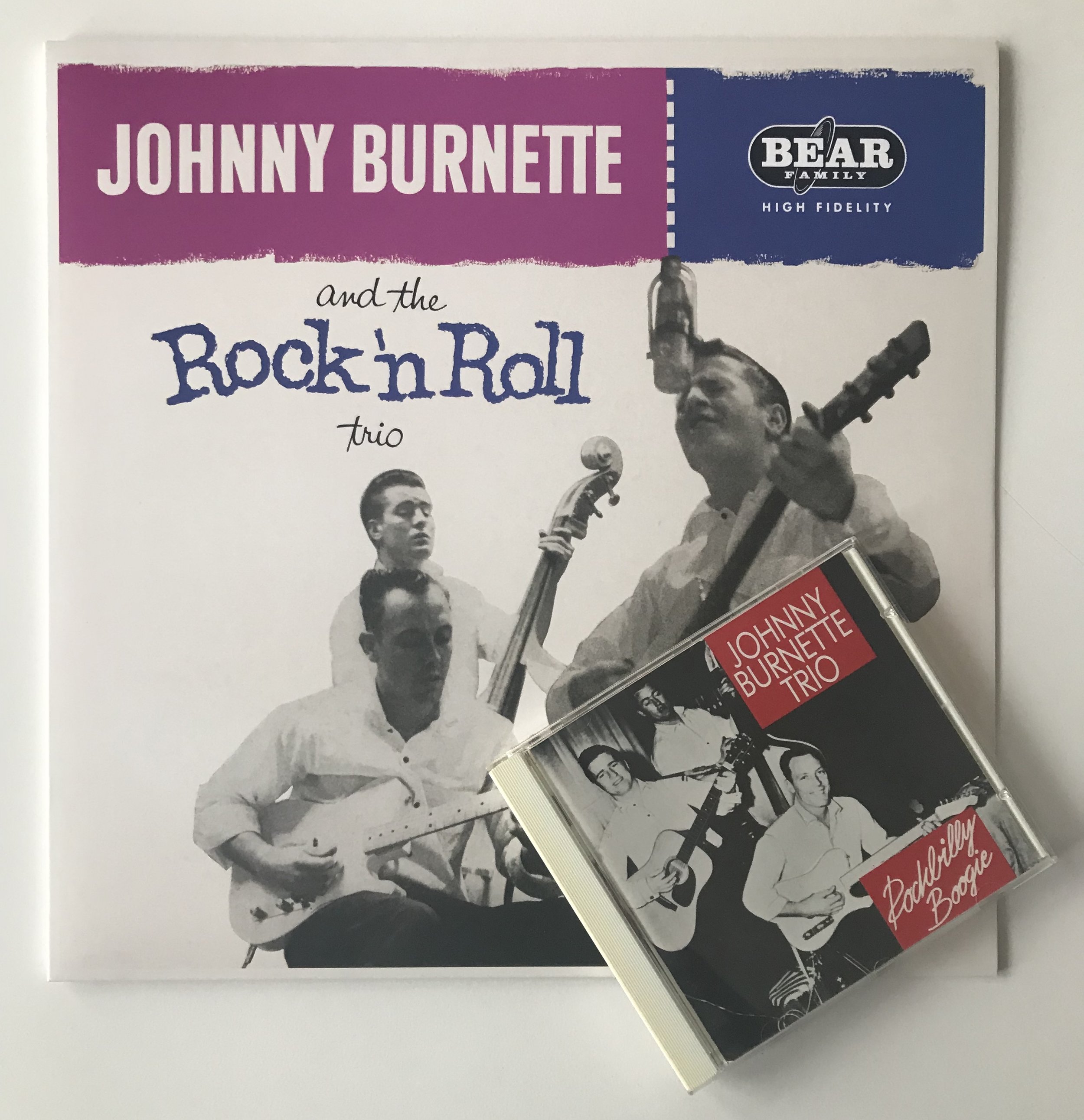
The audio on Tear It Up is terrific, MONO!!! And makes for a great pairing with Bear Family’s recent pressing of the first album. You need go nowhere else for a copy. 180gms of the purest rockabilly. Their 1989 cd, one of the first I bought, has 28 tracks, all the masters and three alternates. Cool sleeve notes by Colin Escott and shots of Gene Vincent, on tour with the Trio, with his shirt off and leg in cast. . . not a good look.

IMG_8940.jpg

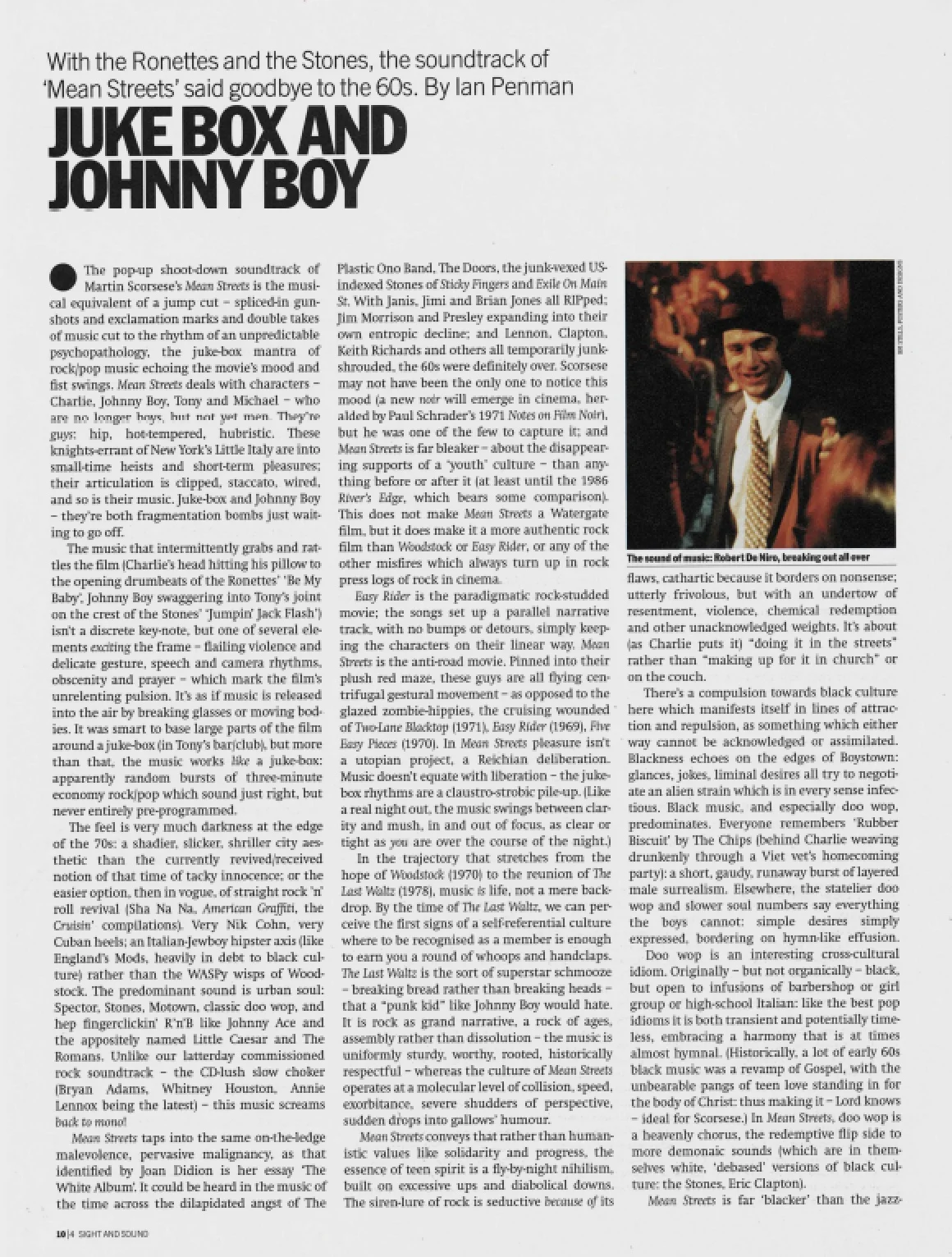
Ian Penman on Mean Streets (Sight and Sound)

Screenshot 2019-02-17 at 14.04.50.jpg
A superb essay from Ian Penman, he captures the film better than any other critic and he’s so good on the music.Sight and Sound (April 1993)

A superb essay from Ian Penman, he captures the film better than any other critic and he’s so good on the music.

Sight and Sound (April 1993)

Howard Hampton, is pretty good on the film too, just not as fine as Penman.

NEARLY A QUARTER of a century has passed since Martin Scorsese opened Mean Streets (73) with the fated beat of "Be My Baby." The film stands as the most enduring, not to mention thrilling, union of film and rock sensibilities. It's an infinitely seductive vision of a world where human and musical passions are one, the soundtrack elaborating and intensifying the movie's meanings. . . This was the first film to truly integrate rock into its narrative, transforming Kenneth Anger's iconographic abstractions (which bordered on camp) into a new form of heightened, pop-operatic naturalism. Scorsese's images were extensions of - and commentaries on the music. . . . Mean Streets has a funky city-of-night sheen that echoes rock's synthesis of the mythic and the quotidian; it reinvents film in terms of rock as much as the contemporaneous early works of Bruce Springsteen reimagined rock in terms of Kazan, Dean, and Brando, of West Side Story as Scorpio Rising

Howard Hampton, ‘Rock’n’ Roll Movies’ Film Comment 33:2 (1997)

This Is Not A Soundtrack LP (part 3)

lp3.jpg

Donnie Fritts never looked so good as he did in Sam Peckinpah’s Pat Garrett & Billy the Kid, which is why he put a picture of himself in the film on the cover of his debut long player, Prone to Lean (Atlantic 1974) … In Bring Me the Head of Alfredo Garcia he and sidekick Kris Kristofferson have bellies that look like over-gorged water sacks. Those images didn’t appear on either singer songwriters’ albums …

This Is Not A Soundtrack LP (part 2)

lp1.jpg

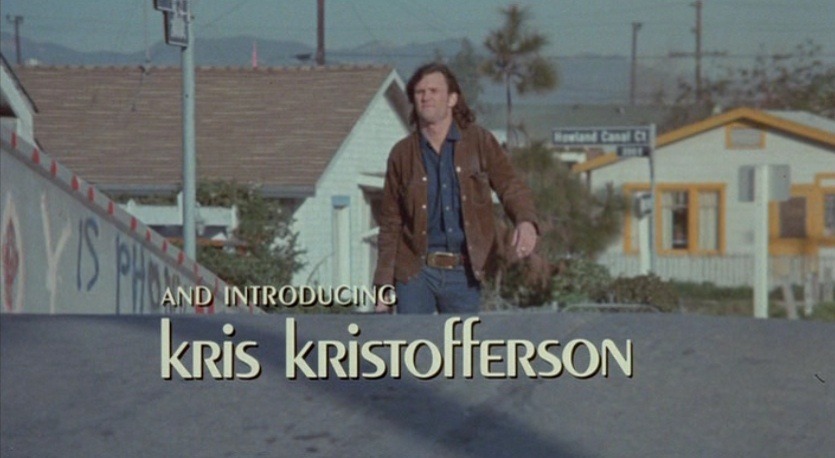
Despite the cover shot from Cisco Pike (1972) and the inclusion of three tracks used in the film’s soundtrack there is no direct reference to the film on Kristofferson's The Silver Tongued Devil and I… 

Songs on album and film are:

“Loving Her Was Easier,”  "The Pilgrim: Chapter 33" and “Breakdown." 

A forth song, "I’d Rather Be Sorry" was not included on the albumIt was sang as a duet in the film with Karen Black and later recorded with Rita Coolidge. It’s the former that breaks my heart … Someone has put the two versions together here

That cigarette, suede jean jacket over denim shirt sure looks good … Did he swipe Dennis’ belt?

d & K.jpg
kris-kristofferson-breakdown-a-long-way-from-home-monument.jpg
kris-kristofferson-the-pilgrim-chapter-33-monument-5.jpg

Not so much a soundtrack album as a 3 track EP, UK only I think.

cisco.jpg

And Introducing Kris Kristofferson: Cisco Pike (1971)

A class act: from Betsy introducing Travis Bickle to his music in Taxi Driver, back through his role in Scorsese’s earlier Alice Doesn’t Live Here Anymore, wandering minstrel cameos in Dennis Hopper’s The Last Movie and Sam Peckinpah’s Bring Me the Head of Alfredo Garcia, a starring role in Pat Garrett & Billy the Kid, soundtrack highlights on John Huston’s Fat City and Monte Hellman’s Two-Lane Blacktop, right on down to his feature introduction in Cisco Pike … a film CV unmatched by any of his (country) rock royalty contemporaries I’ll wager … and all this with eyes that look like two pissholes.

This Is Not A Soundtrack LP (part 1)

IMG_8921.jpg
IMG_8922.jpg

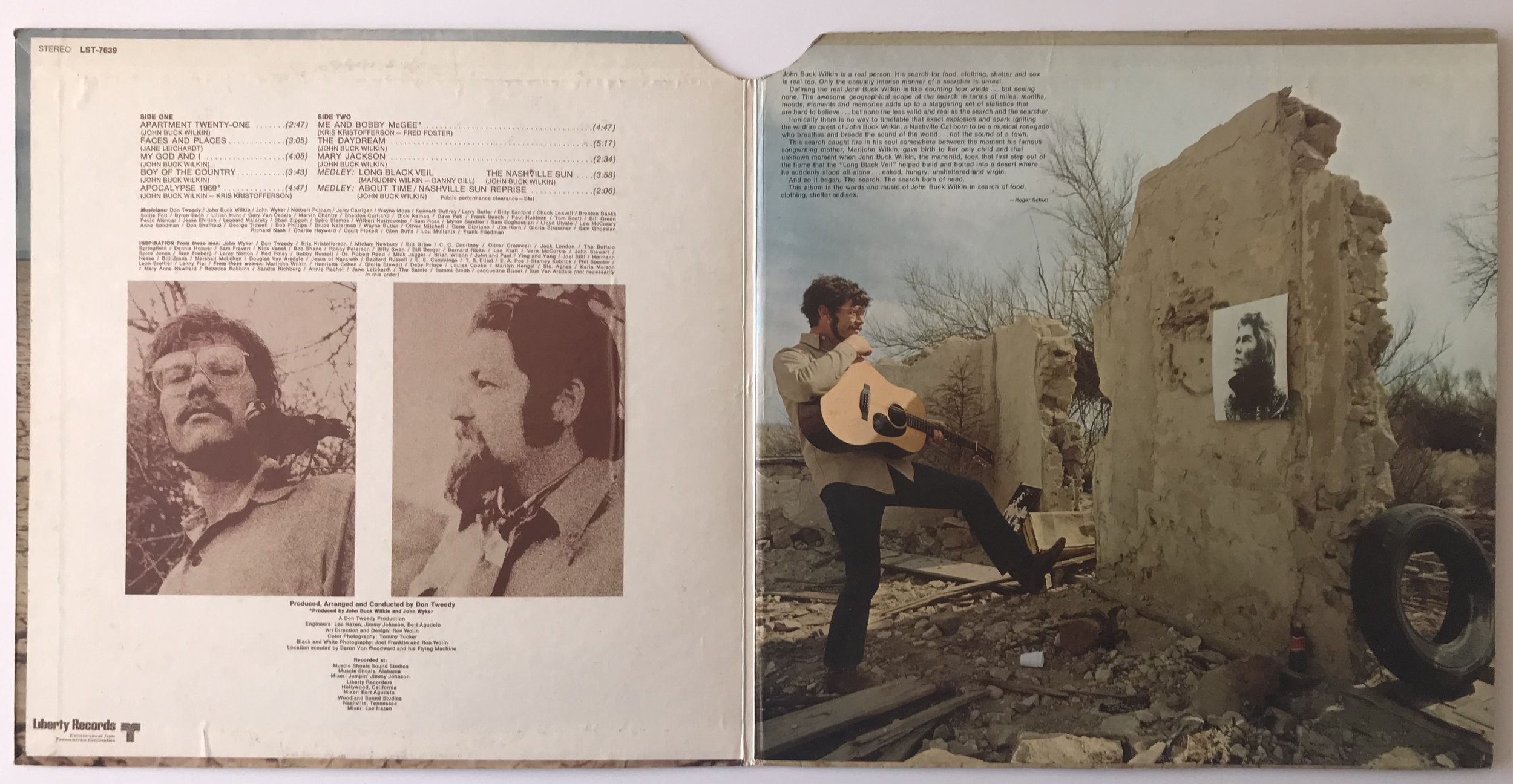
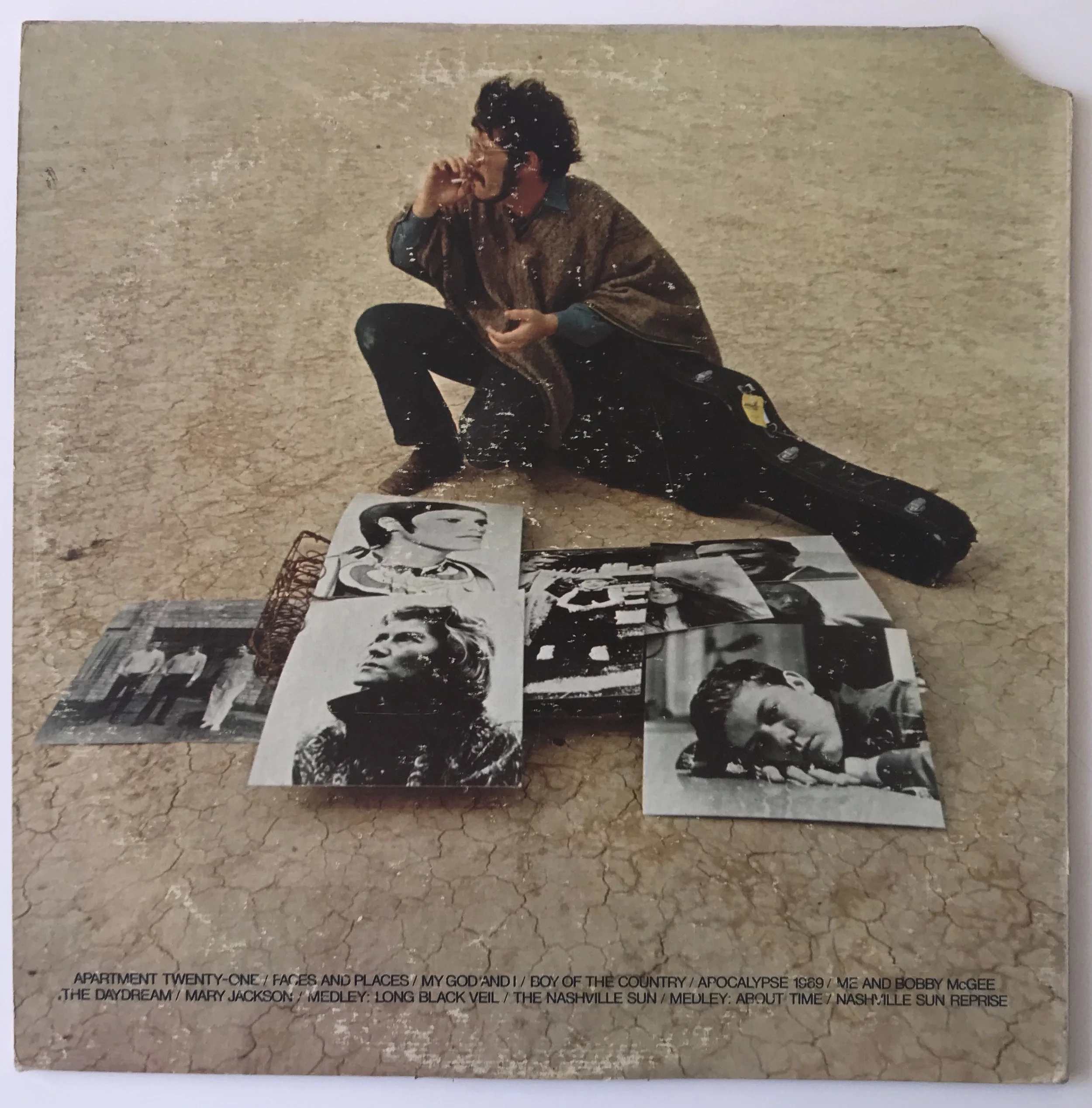
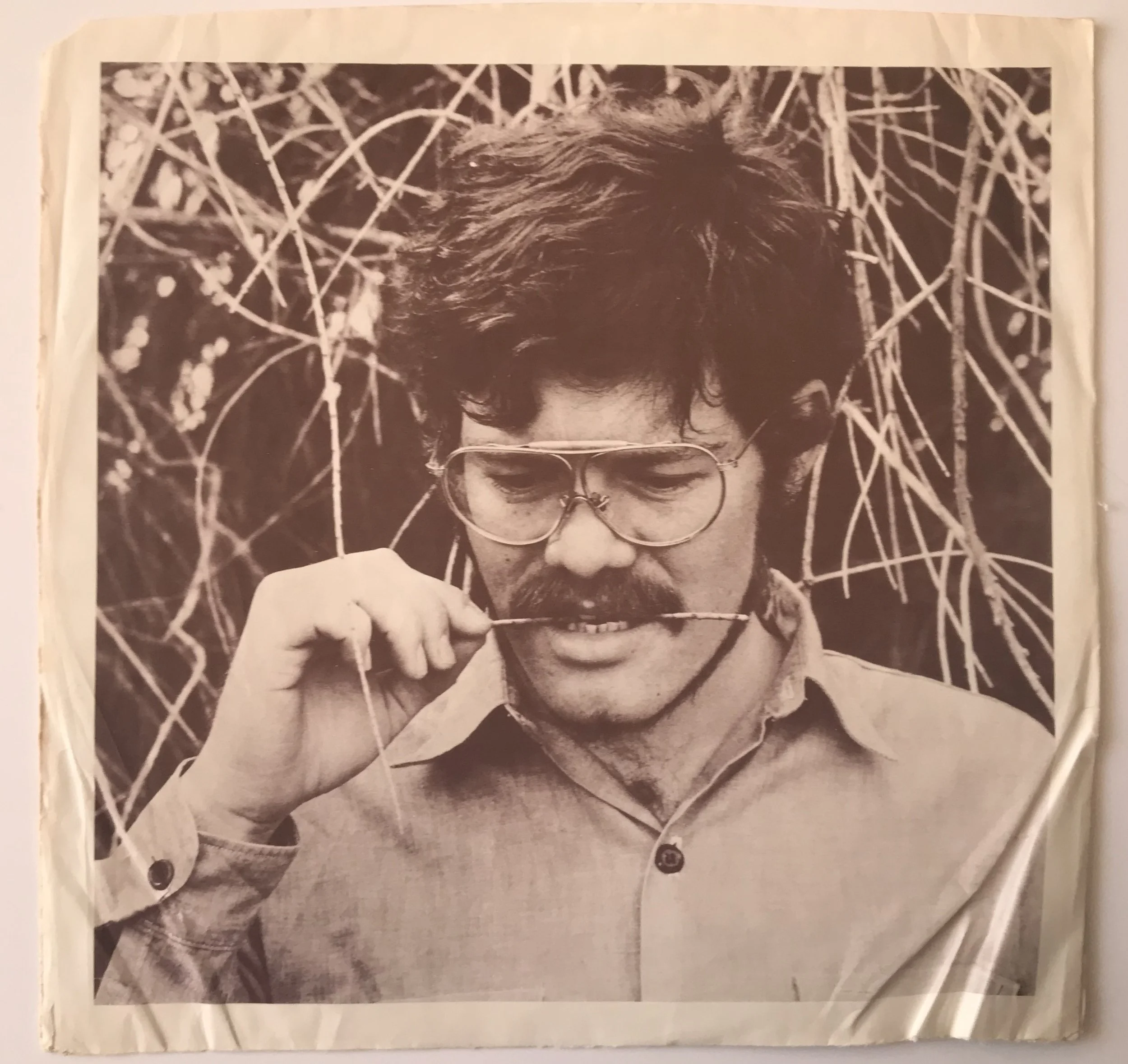
John Buck Wilkin, In Search Of Food Clothing Shelter And Sex (Liberty, 1970)

Liberty spared no expense on packaging Wilkin’s album, gatefold with lyric and portrait inner. Hopper gets a thank you in the acknowledgements. I’m guessing there wasn’t enough original material to produce a soundtrack for The Last Movie, which used music recorded in performance and on location, so this is as close as we have to one, with ‘Bobbie McGee’ and ‘My God and I’ shared between album and film.

Wilkin appears to be wearing the poncho Hopper wore in the movie, and the locations mimic the desert junkyard theme at the beginning of Easy Rider and in countless biker movies.

Wilkin had once played in Ronny and the Daytonas and made one more album after this.

IMG_8923.jpg
IMG_8924.jpg

Dennis Hopper - American Dreamer OST

poster lp.jpg

With the release of The Last Movie on blu-ray, I’ve been listening again to the OST of American Dreamer . Both soundtracks feature John Buck Wilkin, who appears in a cameo with Kris Kristofferson singing ‘Me & Bobby McGee.’ Wilkin’s mum was the Nashville songwriter and publisher Marijohn Wilkin, by this short route John Buck got hold of KK’s most famous song and delivered the first recording of it on his debut long player, In Search of Food Clothing Shelter and Sex (Liberty 1970). That album also contained ‘My God and I’, another song that found a home on The Last Movie.

John Buck is playing guitar (sitting) to Hopper’s right, to his left is Peter Fonda and Kris Kristofferson

John Buck is playing guitar (sitting) to Hopper’s right, to his left is Peter Fonda and Kris Kristofferson

IMG_8925.jpg

Clive Hodgson’s review in Frendz #30 is pretty dismissive of American Dreamer and takes particular aim at the film’s producer, Lawrence Schiller, due to his exploitation of the Tate murder.

tate.jpg

Schiller though was a good photographer and many of his images of Hopper provide the booklet illustrations that accompany the recent Light In The Attic re-issue of the OST. The vinyl edition is limited to 1000 copies, you can probably get the original (w/ poster) for less than it is selling on eBay.

booklet.jpg
IMG_8912.jpg
cd tray.jpg

Despite the wonderful packaging and that essential poster, the bottom line is that OST is feeble, only Gene Clark shines (of course he does).

Mick Gold 'Rock on the Road' 1976

rock.jpg

Mick Gold, Rock on the Road (Futura, 1976)

This oversized paperback, 24 x 18 cm, is something of a forgotten book, it collects together Gold’s reportage and photos of bands on tour, Faces, Slade, Pink Floyd, Led Zeppelin, but if for nothing else it should be recalled for his document of the Feelgoods on the Naughty Rhythm tour in the spring of 1975. Iconic just about sums it up

3_4_Naughty.jpg
Gold and Brilleaux plot the route to the next gig . . .

Gold and Brilleaux plot the route to the next gig . . .

rock3.jpg
rock4.jpg
rock5.jpg

Responding to a question about the band backing Heinz at the London Rock and Roll Show, Wilko said:

‘Teddy boys convinced us we didn’t want nothing to do with classical rock ’n’ roll.’ Wilko reminisced. ‘It was so mindless . . . it was based on a fiction . . . they wanted to hear a kind of music that never really existed. They thought if you didn’t wear a drape suit, it wasn’t classical rock ’n’ roll., but no singers ever dressed like that. Chuck Berry never wore a drape suit. I used to love playing the old classics, but after a couple of gigs with teds I didn’t want to know. We shied away from calling our music rock ’n’ roll  . . . we called it rhythm and blues instead.’

Budget Line Revivalists

contour2.jpg

Three revivalist albums all on the budget Contour label. All examples of the rushed low-cost recording aesthetic that plagued purveyors of the greasy rockin’ beat. You gotta love the hand coloured photograph of the Houseshakers. Only singer Graham Fenton has bothered to turn up in his drape. The others look like they are on loan from some heavy psych-band. Demolition Rock’s track list of covers, which includes Vince Taylor’s ‘Brand New Cadillac’, is the more interesting of the three. Two years after its release, in 1974, Fenton and guitarist Terry Clemson recorded with the Hellraisers and didn’t even get their picture on the sleeve. Remember When?’s track list is miserable, ‘Peggy Sue’, ‘Shakin’ All Over’, ‘Let’s Twist Again’ and so on..

Shakin’ Stevens manager, Paul ‘Legs’ Barrett is scathing about Donny Marchand’s ‘production’ on Rockin’ and Shakin’ . . . He is not wrong.

Budget label Teddy Boy R 'n' Revival

contour.jpg

Two collections from the Contour label drawing on the Philips catalogue, mostly 60s recordings in reprocessed stereo.

The same three Teds are featured on both sleeves - jackets on and off. They have the look of the authentic. No photographer credit.

They are posing in front of a cinema for the Crazy Rock sleeve, Horror of Frankenstein is playing and Abbot & Costello’s In The Navy (1941) is also on the programme. The Hammer horror was released in November 1970, so I’d guess these two discs hit the shops in the following year.

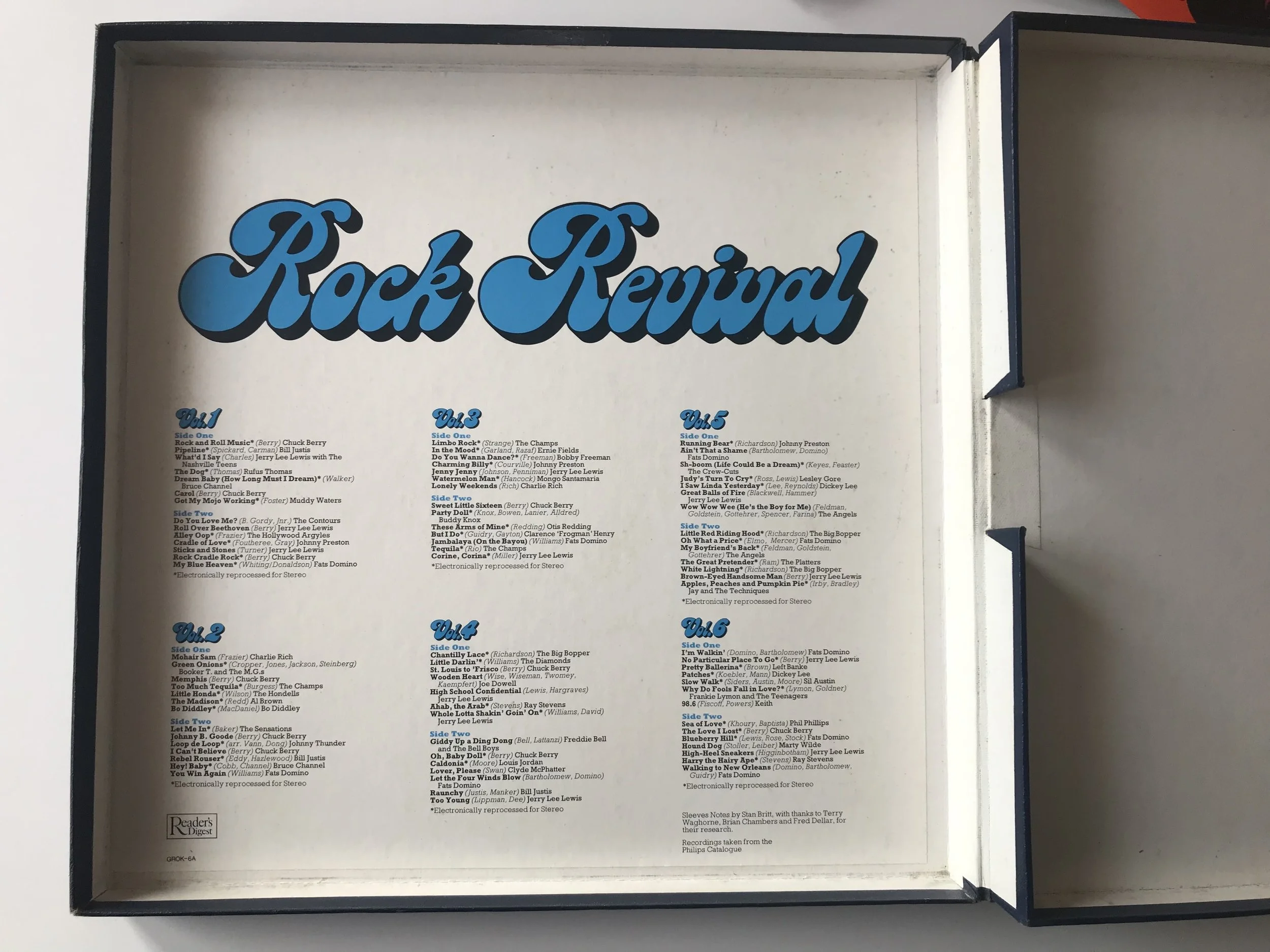
Reader's Digest boxes up the Rock Revival

RD revival.jpg

Six albums of electronically reprocessed for stereo recordings drawn from the Philips catalogue, circa 1975. looks like a Harley Duo-Glide to me, though I wouldn’t be embarrassed if you told me it was an Electra Glide. I bet the rider is French (or maybe Dutch), something about that cap says he is . . . Sixties pop art lettering and psychedelic ink suggest the designer was more than a little unsure of his signifiers.

Sleeve notes on artistes and songs is by Stan Britt, who I think was a jazz journalist. The set cost £5 inc. shipping courtesy of eBay

RD2.jpg

Teddy Boys at The Black Raven (1972)

pub.jpg

A James Gray photograph of the Black Raven pub that is described in the Rolling Stone piece from a previous posting. Below is one of his portraits from 1973, this one features the same geezer who was supping back a pint in Roger Perry’s pic that accompanied Jerry Hopkins observations. He’s got himself a new hair cut . .

The two photos are from this Evening Standard file

The two photos are from this Evening Standard file

There’s a public Facebook page on the pub here which features lots of snaps. The guys in the banner photograph can all be seen in the 1970 BBC documentary of Gene Vincent’s last tour of the UK having a pop at skinheads, more of which anon.

By day . . . Melody Maker (May 6 1972)

'Awopbopaloobop: The Teds are back and greased for action' (Rolling Stone 1972)

teds1.jpg
teds2.jpg
teds3.jpg

Jerry Hopkins, ‘Beatle Loathers Return: Britain’s Teddy Boys’ Rolling Stone (March 2, 1972) gets in on the UK’s Rock’n’ Roil revival scene. Here’s my favorite observation by Elvis’ first rock biographer:

All you can see is hair.

Plumes and cascades and whirlpools of hair, all of it greased and obsidian-black, thumbing its nose at gravity as it stretches four inches from the brow, wobbling, glistening: the classic Elephant’s Trunk; sweeping back in shiny sheets past earringed ears to plunge into a perfect D.A. or splash over the velvet collars in hirsute waterfalls. Towers and arches and walls of hair. This isn’t just extraordinary styling—it’s architecture.

Unless you’ve got good eyesight you might want to check out the piece here, which for reasons known only to the magazine’s on-line editors uses a pic of Teds from 1954 rather than Roger Perry’s photographs

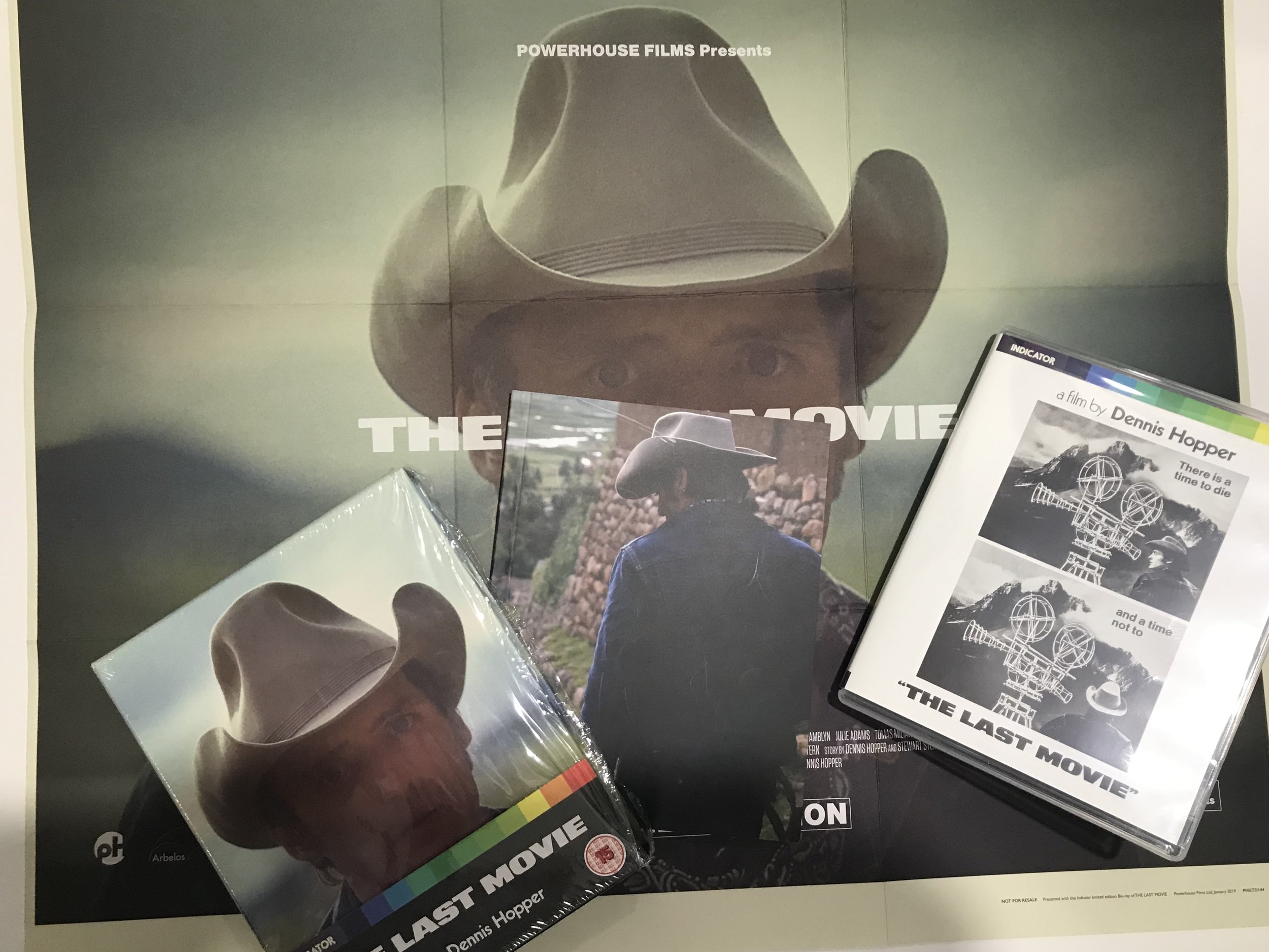
The Last Movie (Dennis Hopper) - Blu-Ray release

last.jpg

#1082 of 3000 is the one I’ve got . . . a really fine package from Indicator with a stand out transfer of the film, superb extras, a fold-out poster, and a booklet with an Alex Cox essay and some great locations stills . . . colour me happy

stella.png

Just because she hasn’t got any running water or electricity doesn’t mean she doesn’t want nice things. Right now it’s a General Electric refrigerator. Like a jazz drummer, Stella Garcia performance as Maria is never off the beat. She always hits her mark regardless of whatever nonsense is going down.

jacket.jpg

For much of the film, and in the documentary American Dreamer, Hopper wears a Lee 101J denim jacket and jeans. No one ever looked better in that combination, but this variation on a trucker jacket in heavy suede and rounded leather collar is pretty special, as is the blanket coat with fur collar that he wears while prospecting with Neville. When The Treasure of the Sierra Madre is your guide to getting the gold you gotta look your best.

last.jpg

Dennis Hopper - Glory Stomper

glory 1.jpg
glory 2.jpg
glory 3.jpg
glory 4.jpg

“Art work” by Ed Roth … what’s that mean? the bikes? Perhaps the vandalism done to Hopper’s Levi’s 507 jacket … who’d cut the sleeves off the jacket Martin Sheen wore in Badlands? Still, at least he’s not wearing a brand new trucker with hacked off sleeves that John Casavettes sports in Devil’s Angels …  I guess, Big Daddy blessed the production with the patches - swastikas, Maltese crosses, and gang names and emblems - Henchmen, Jokers, Glory Stompers and, Dennis’s gang, Black Souls … Saundra Gale plays Hopper’s momma in a costume that makes her look like she just jumped straight out of a 50s beatnik movie …

glory 5.jpg
glory 6.jpg
glory 7.jpg
glory 8.jpg

The Glory Stompers (AIP 1968), starring Dennis “Baby” Hopper … Opens and closes with a kickstarter … The fly-eye end credits are well worth riding to the finale for …and that Ed Roth credit …