A Yardbirds Miscellany

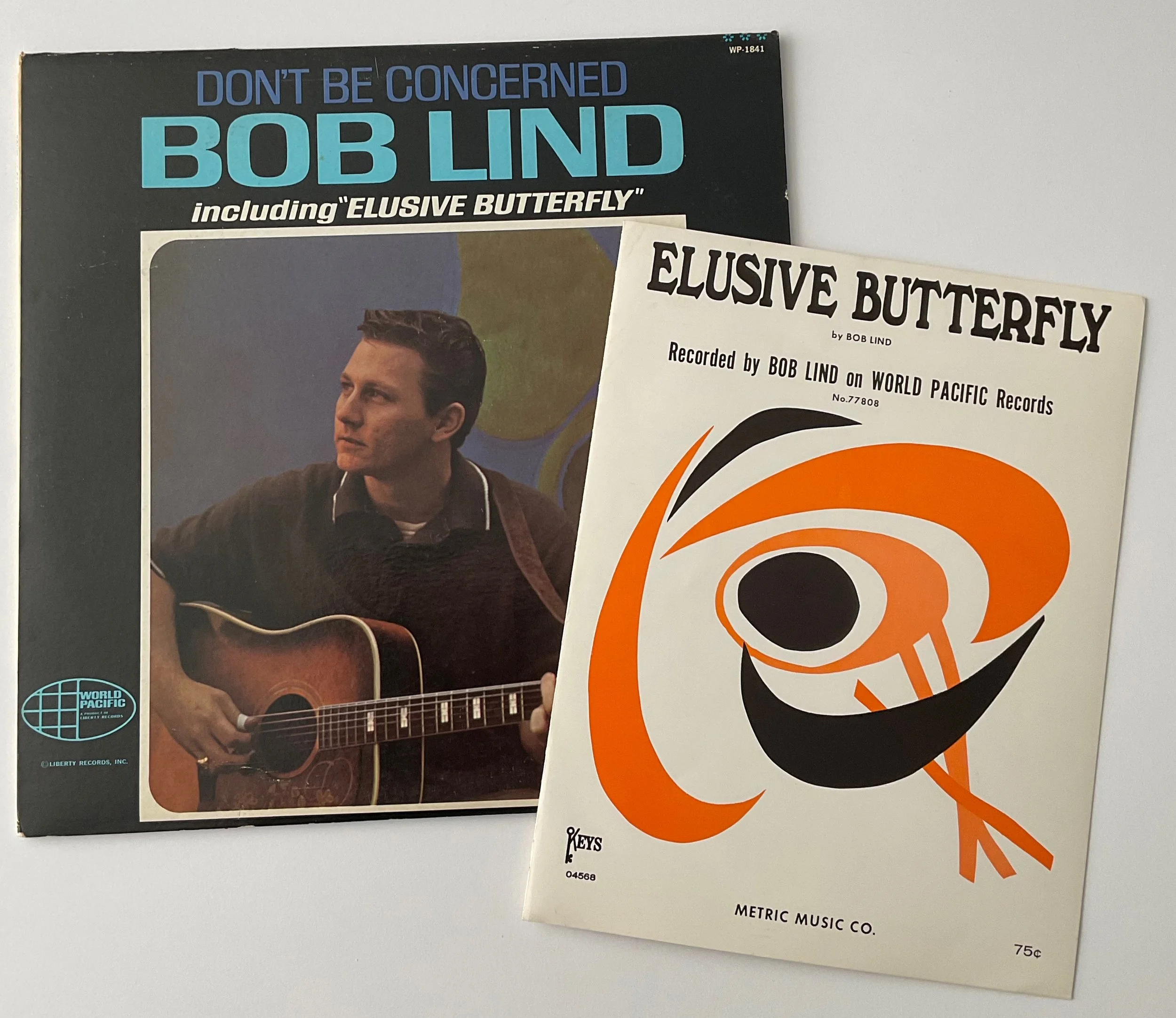
At this point in time, the influence of American singer-songwriter Bob Lind on the Yardbirds in 1966 is baffling, his dour, overripe lyrics, faux-folk stylings with orchestral ornamentation are the antithesis of a band that in good part had come to be defined by Beck’s sonic assaults. That Val Doonican had covered the singer’s ‘Elusive Butterfly’ and taken it into the charts in March 1966 should only have confirmed the artist’s mid-brow credentials as the decade’s Rod McKuen.
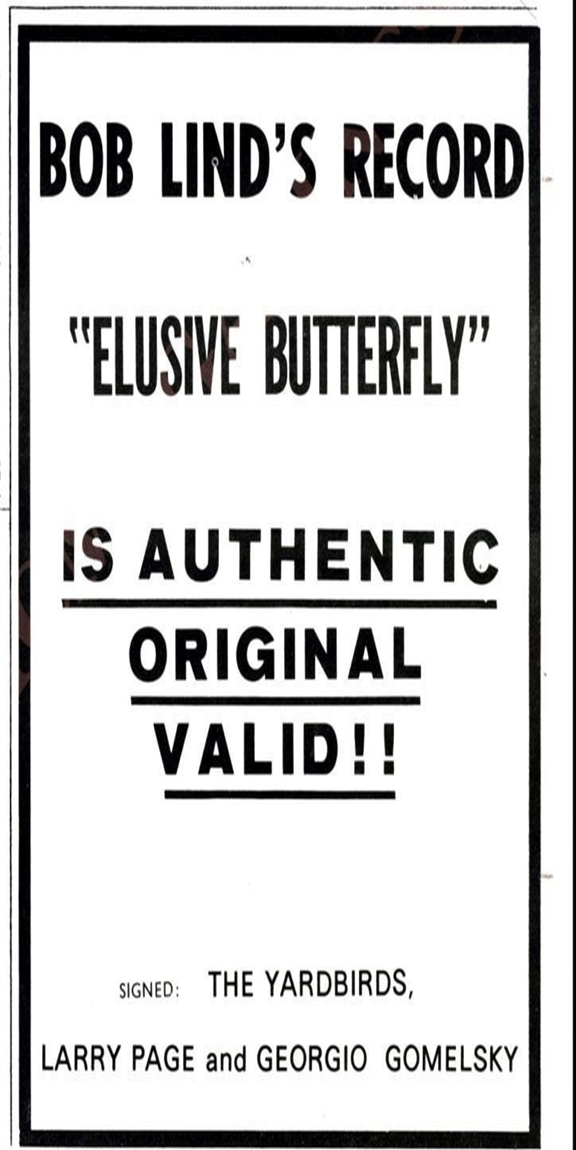
Principal among Lind’s supporters was Georgio Gomelsky, Paul Samwell-Smith and Keith Relf. Even before the release of Lind’s debut album (February in the US and April 1966 in the UK) they had been singing his praises having brought back from their travels a clutch of acetates. They felt strongly enough about his artistry being cheapened by association with the light entertainment industry’s top crooner that they paid for an advert in the music press. Where they called Lind, ‘Authentic, Original, Valid!!’ Everything that Doonican, the man in a cardigan, lacked.

Samwell-Smith said his lyric for ‘Shapes of Things’ had followed lines laid by Lind and he and Gomelsky had plans for Relf to record ‘Mr. Zero’, a maudlin tune about a suburbanite abandoned by his lover, Miss Someone:

The present moves out on the sunset's crescendo
As seagulls of dawn set their wings to the air
And fly without resting on outward bound breezes
To die where horizons are melting the dusk

Leonard Cohen look away . . .

The Yardbirds split from Gomelsky before he could record ‘Mr. Zero’, but the idea had enough weight behind it to become part of Simon Napier-Bell’s schema. Samwell-Smith and Napier-Bell would double-up on production duties for Relf.
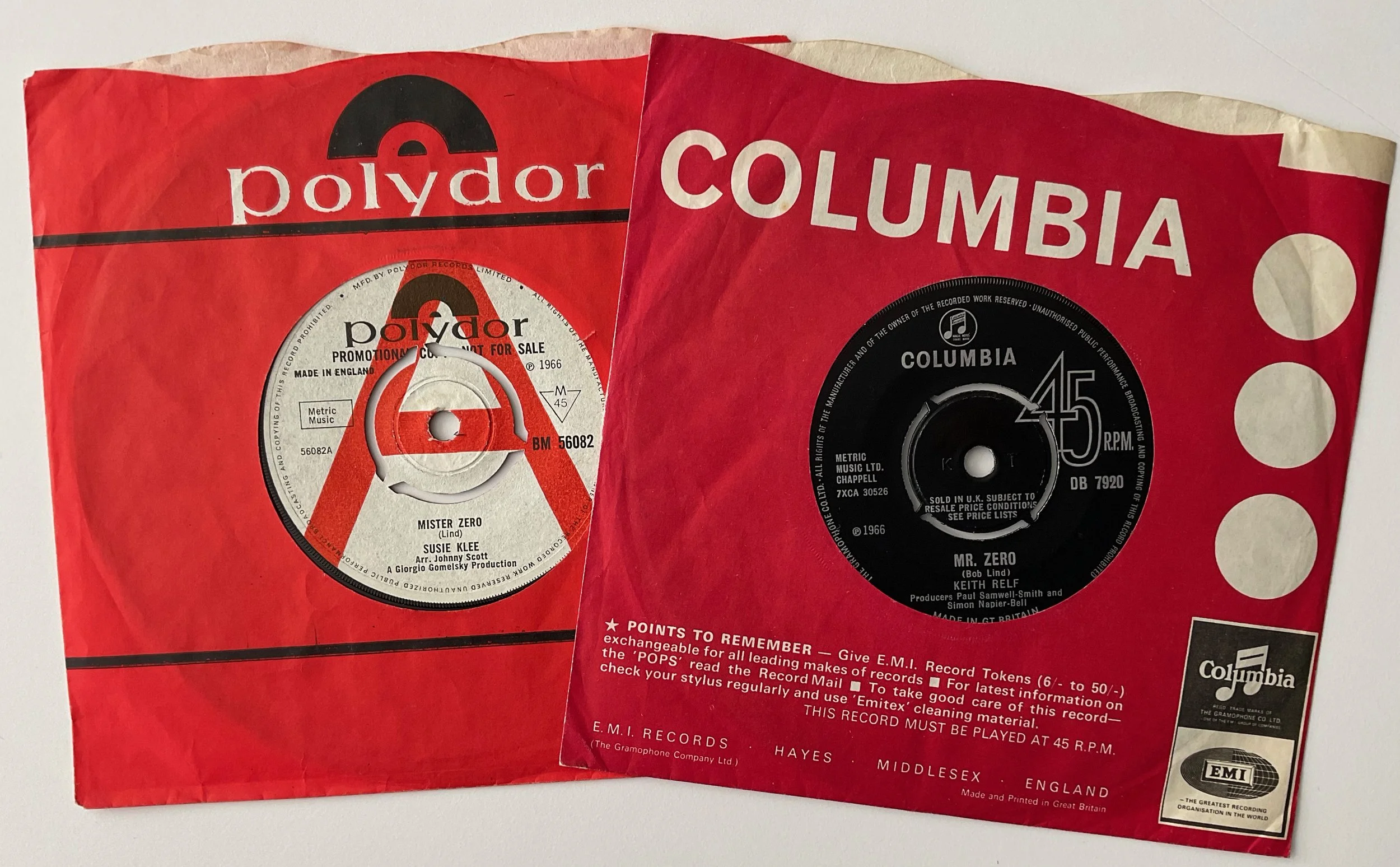
Released in May, Penny Valentine reviewed it for Disc: ‘very fond of dear Keith Relf with his starved face, and I too thought that this would have been just the sort of sad song cut out for him. BUT . . .’, she felt it was too fast and hence lost ‘a lot of the impact of loneliness’ of Lind ’s original.  Derek Johnson in NME gave it ‘full marks . . . This Bob Lind number isn’t easy at all to sing, largely because there’s little melody you can get your teeth into, but Keith copes admirably and his diction is perfect’. Norman Jopling in Record Mirror was more positive: sung ‘with haunting tones, building the drama well. Should be a hit’.

Complicating matters somewhat was a version by Susie Klee that was released in the same week as Relf’s effort, produced by Gomelsky, and obviously designed by him as a spoiler or at the least his way of cocking a snook at Relf and the band.

Melody Maker published a dual review of the two singles, which had Relf sounding ‘like a cross between Tom Lehrer and Paul McCartney’ capturing the ‘poetic mood of the song’. The reviewer, however, thought Klee gave a ‘better interpretation’ – ‘the lyrics definitely suit a girl more’, which indicated he’d not listened with any care to the song, which is very much about masculine self-absorption.

Relf’s single peaked at number 50 in Record Retailer’s chart in the last week of May. Gomelsky’s spoiler made nary a dent in the hit parade and, given the scarcity of stock copies in today’s collector’s market, sold only in miniscule numbers.

Truth be told, Relf’s is the better arrangement and production, Klee’s is a foggy affair, her voice buried in the mix. Relf’s voice is out front, his scansion is perfect, the production bright and airy giving full support to his tale of woe is me.
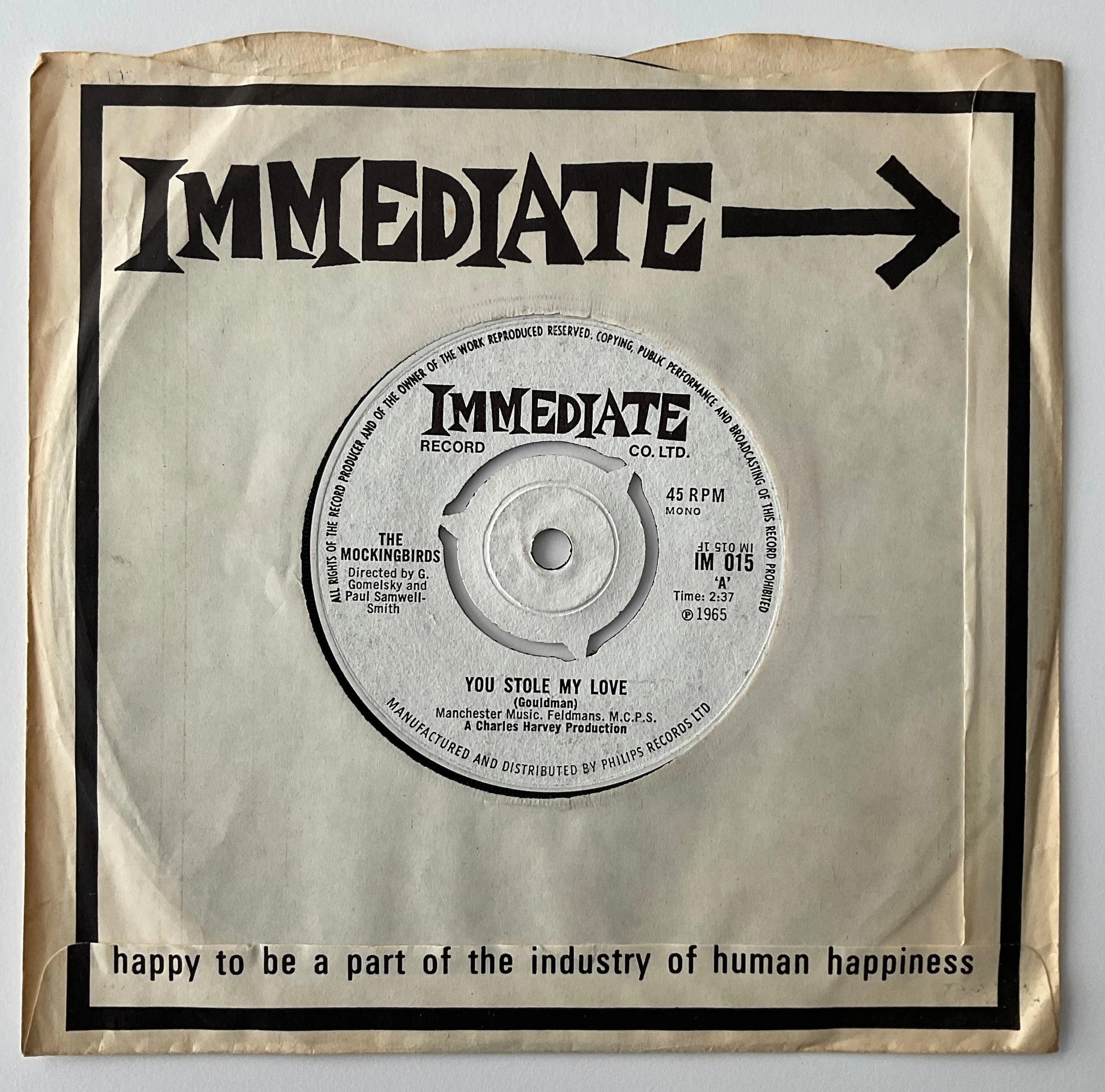
Samwell-Smith had earlier stepped out of his dual role in the band as producer and bass player to record, with Gomelsky, Graham Gouldman’s Mockingbirds. Gouldman’s composition, ‘You Stole My Love’ closely follows the pattern he had established with ‘For Your Love’ and ‘Heart Full of Soul’ with it switches in tempo and a sub-Beck rave up.

After quitting the ’Birds, Samwell-Smith turned to independent production, working now on his own. His first effort was Al Stewart’s debut on Decca, ‘The Elf’, which is in keeping with his predilection for pop folk (he said he was a keen fan of early Dylan but disliked his amphetamine fuelled electric phase).
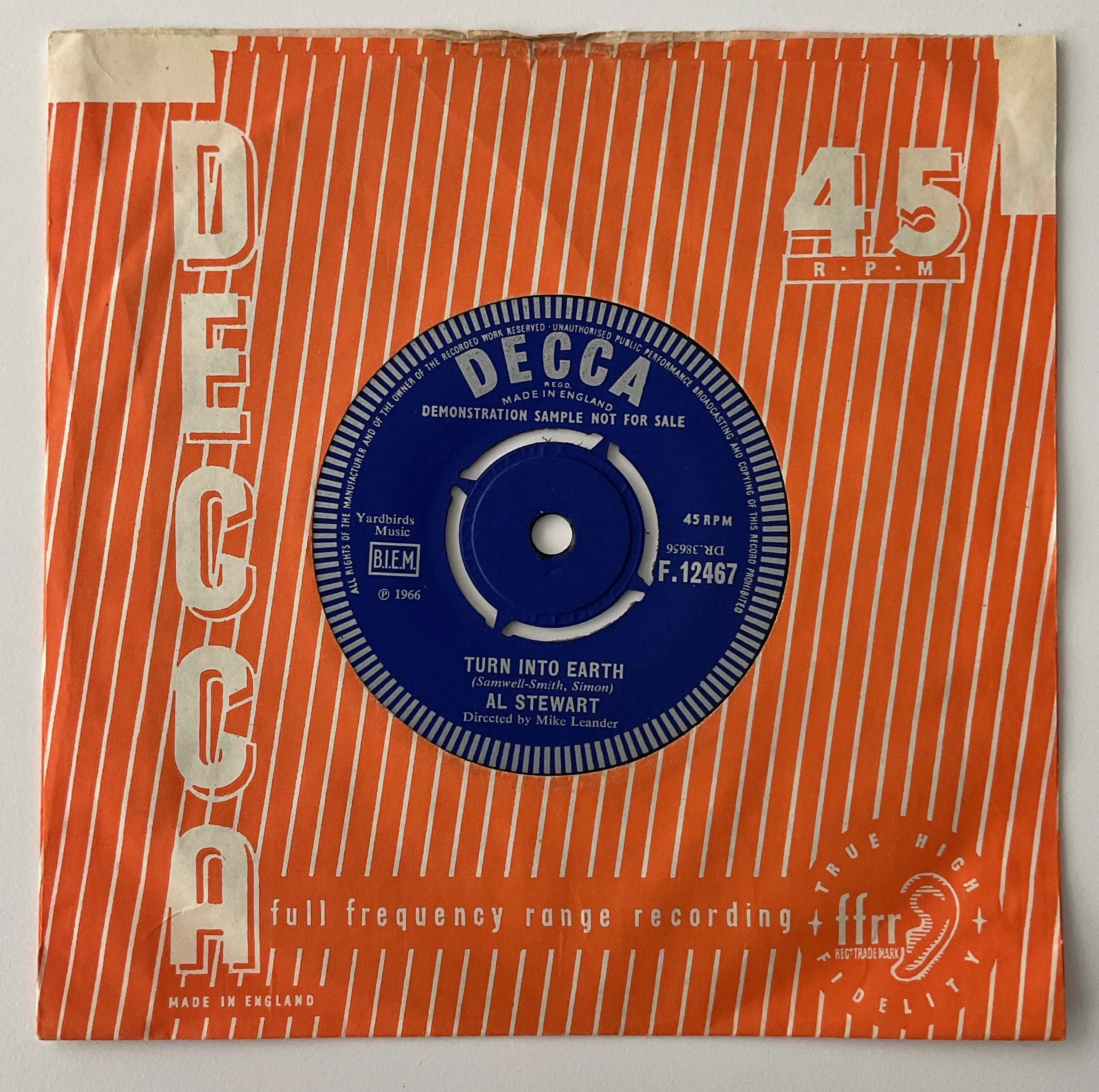
Samwell-Smith would later get the chance to more fully pursue his preference with Cat Stevens, but before then he couldn’t or wouldn’t abandon the lessons he had learned with the Yardbirds. He used his on composition for the flip of ‘The Elf’, a cover of the Yardbirds ‘Turn to Earth’ that, it is said, features Jimmy Page in Beck’s place and what sounds like McCarty and Dreja resuming their roles. It’s a fuller, bolder production, with flute and, toward the end, great bursts of percussion.

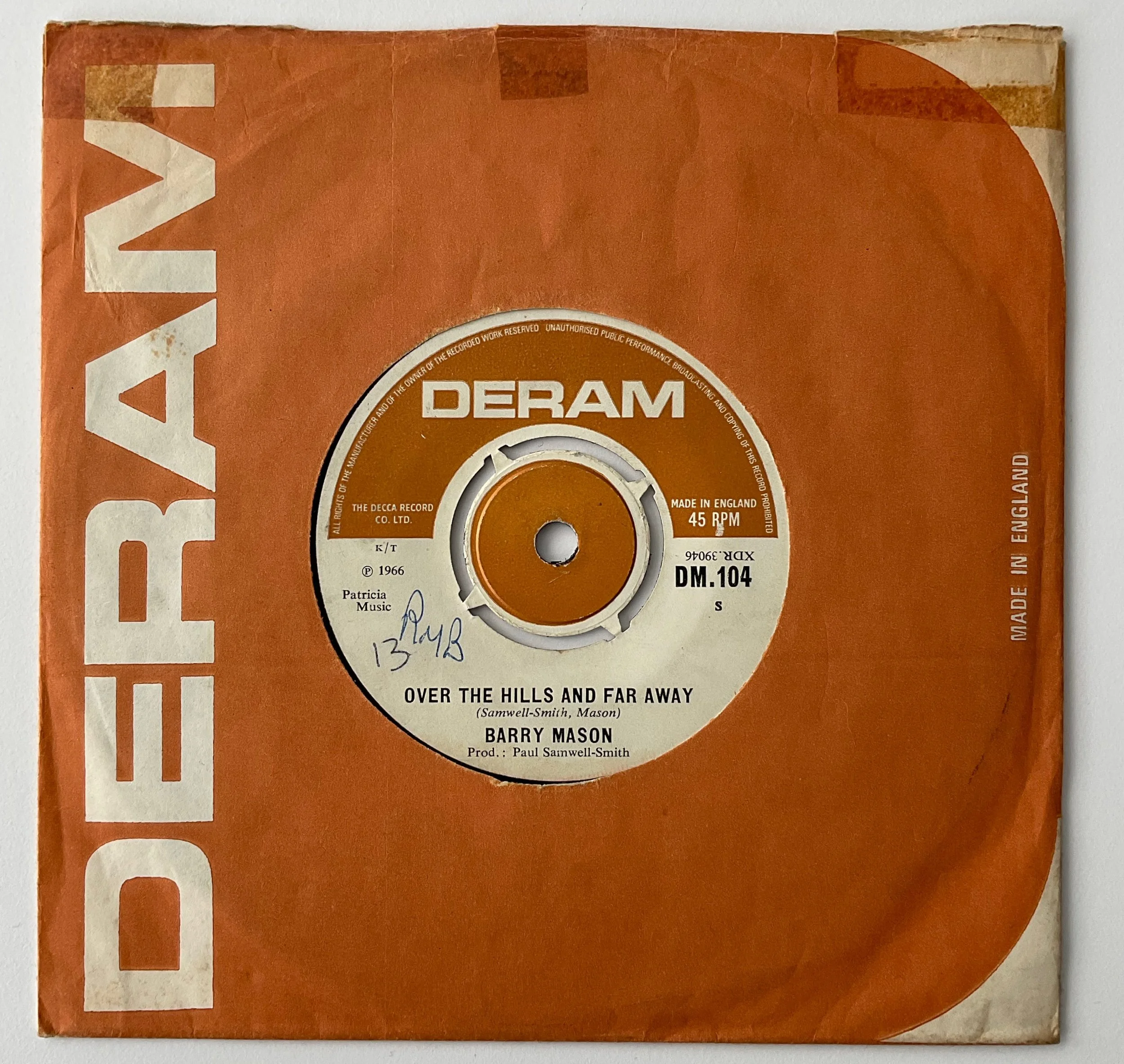
Samwell-Smith was back at the recording studio consul for songwriter Barry Mason’s ‘Over the Hills and Far Away’, released on Deram in October. A droning, heavily flanged arrangement that would not have been out of place on Roger the Engineer. It is certainly at odds with Mason’s more commercial output that is better represented by the b-side ‘Collection of Recollections’, which picks Lind’s pocket.
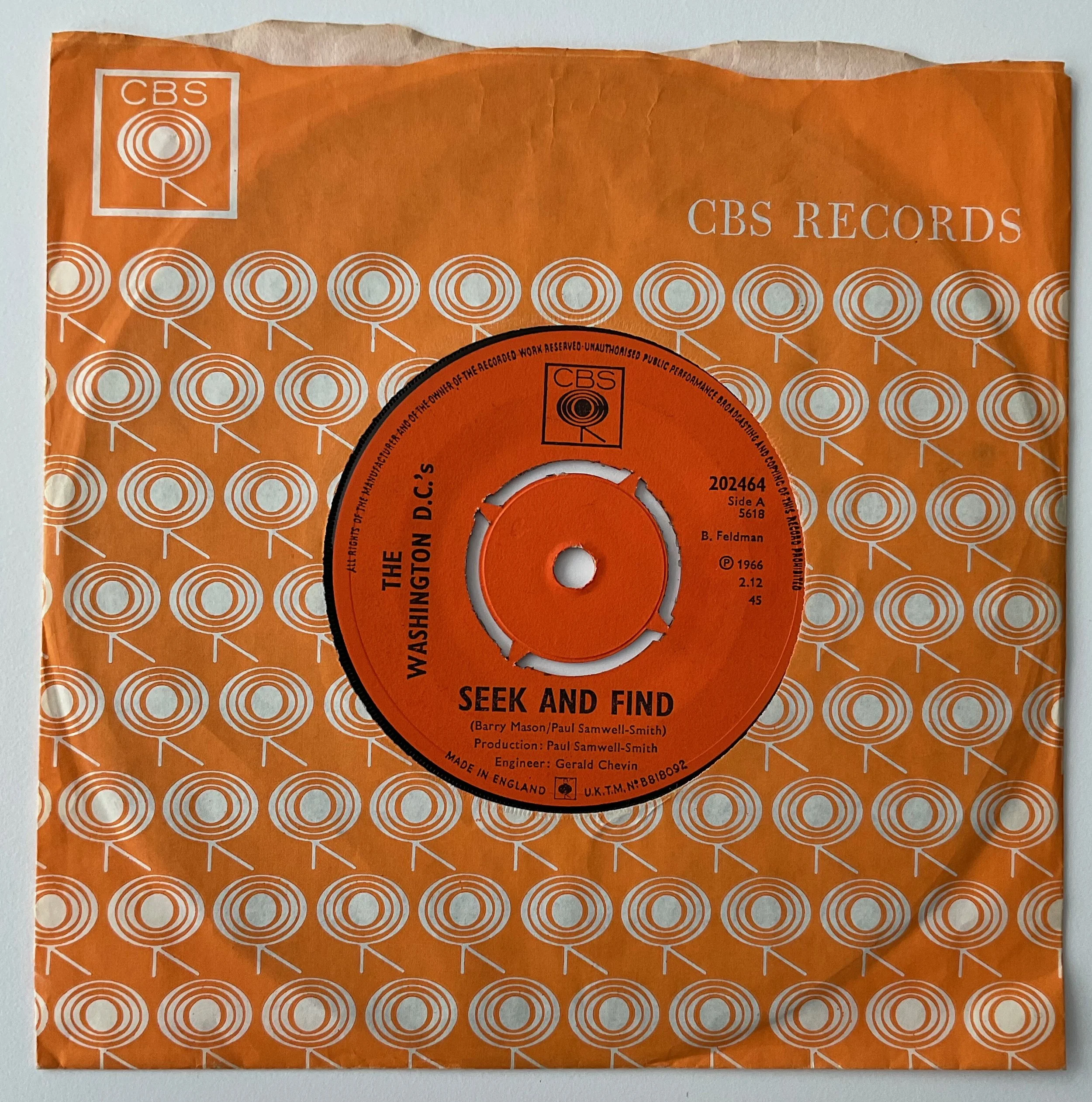
Samwell-Smith’s last released production credit for 1966 was a joint affair with Mason, the Washington D.C’s ‘Seek and Find’. With its accelerated ending (though without anything approaching a Beck like turnaround) the performance is more Gomelsky-era Yardbirds than the mind-expanding forays the band embarked on with Simon Napier-Bell. Still, the Yardbirds’ spell continued to hold Samwell-Smith in its thrall.
Relf’s second single, ‘Shapes In My Mind’ was tracked and mixed in Los Angeles and New York in August and September. At the same session, Napier-Bell had also overseen the recording of the backing track to the debut John’s Children single, ‘Smashed Blocked’. Written and produced by Napier-Bell alone, Relf’s disc was ostensibly a song dealing with a forlorn lover, but more pertinently it was about the derangement of the senses – the shifting shapes in the mind’s eye, where colours cry, the brain explodes and the body shrinks inside the singer’s head. ‘Help’ he cries, ‘or I’ll be dead’. The whole an echo of the cry at the start of ‘Smashed Blocked’ – ‘Please! I’m losing my mind’. But few were paying much attention to either disc, though NME’s Derek Johnson liked the John’s Children’s single, re-titled ‘The Love I thought I’d Found’ for the British market: ‘A spoken intro leads into this stormer, which suddenly lapses into ballad tempo. Unusual in the extreme!’
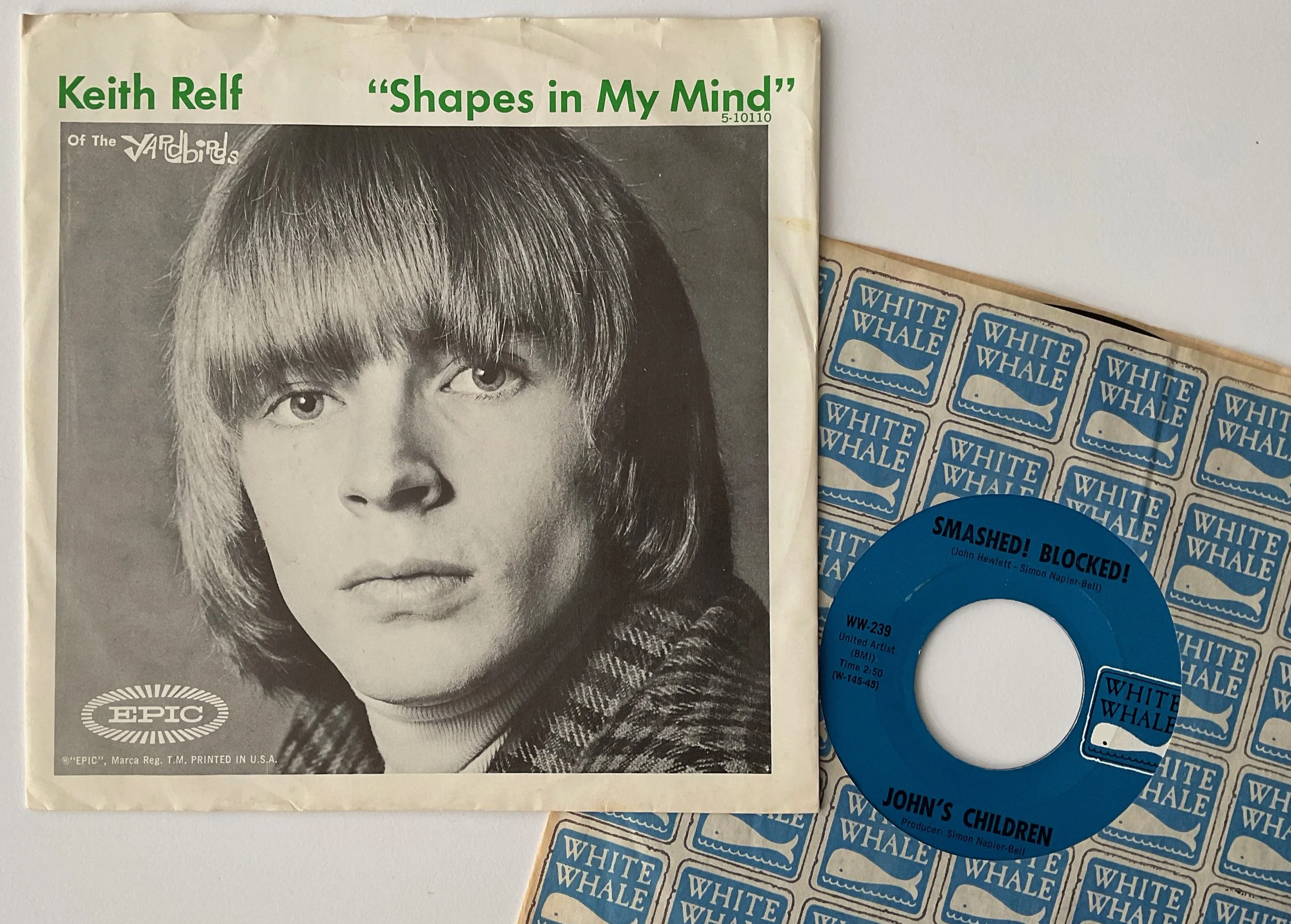
Norman Jopling and Peter Jones in Record Mirror described Relf’s single as having a ‘curious instrumental opening  . . . Changes of tempo, powerful chords, rather unusual song’, but they didn’t link it to psychedelia. Neither did Derek Johnson in the NME: ‘Sung on deep echo, with an enveloping organ sound and plucking bass well to the fore, plus a pounding beat – it has a nagging, insidious effect in keeping with the bemused lyric. Full marks to Simon Napier-Bell on his very startling production, and to Yardbird Keith’. In Disc and Music Echo, Penny Valentine reviewed it under a pre-release title of ‘Make Me Break This Spell’, she better caught its strange effect:

Simon Napier-Bell has been groping around in the dark – in the musical sense – for a long time and may at last be coming into the light. This is as strange and weird as some of his other efforts (that includes the last Yardbirds’ monstrosity) but unlike the others this actually works. Here then we have Keith’s off-beat, sad, echoey voice in a desperate state at losing his girl. Once you’ve got over the shock of everything stopping and starting and feeling that somewhere lurks the phantom of the opera at his organ keyboard, you’ll like it. It may even move you. It did me.
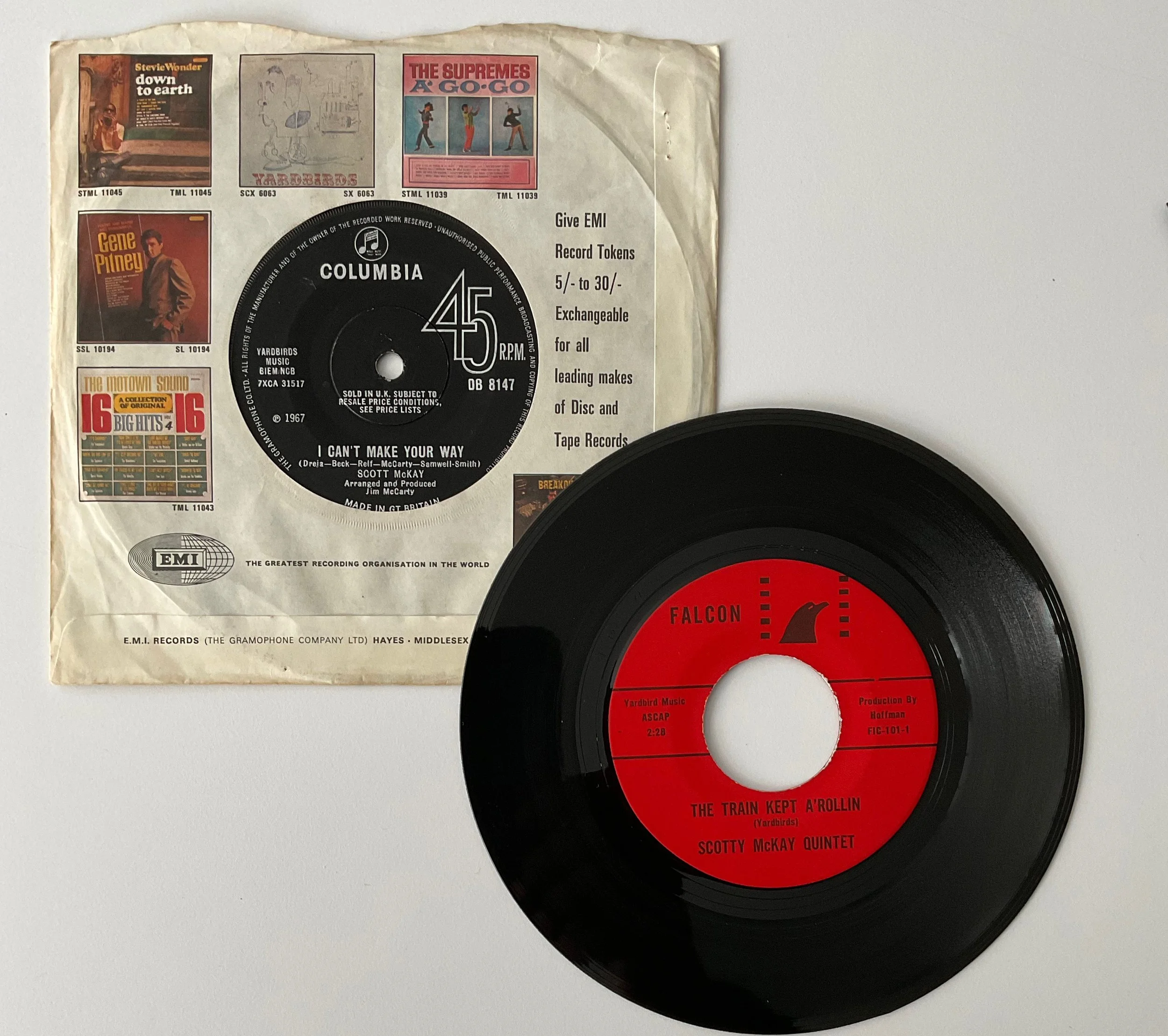
Tripping into 1967, Jim McCarty made  his production debut with Scotty McKay’s cover of the ‘Birds, ‘I Can’t Make Your Way’ – a Roger the Engineer tune that curiously Tony Blackburn had recorded for his debut album [see here]. McKay had hooked up with the band during the ill-fated Dick Clark Caravan of Stars, which Beck had walked away from. He’d briefly been one of Gene Vincent’s Blue Caps and had cut a number of rocking sides for the Ace label. His version of ‘Make Your Way’ betters Blackburn’s but doesn’t trouble the original. More interesting by far was his blistering take on ‘Train Kept A-Rollin’ which on the disc’s label was credited to the Yardbirds. You could say Scotty McKay was a fan.
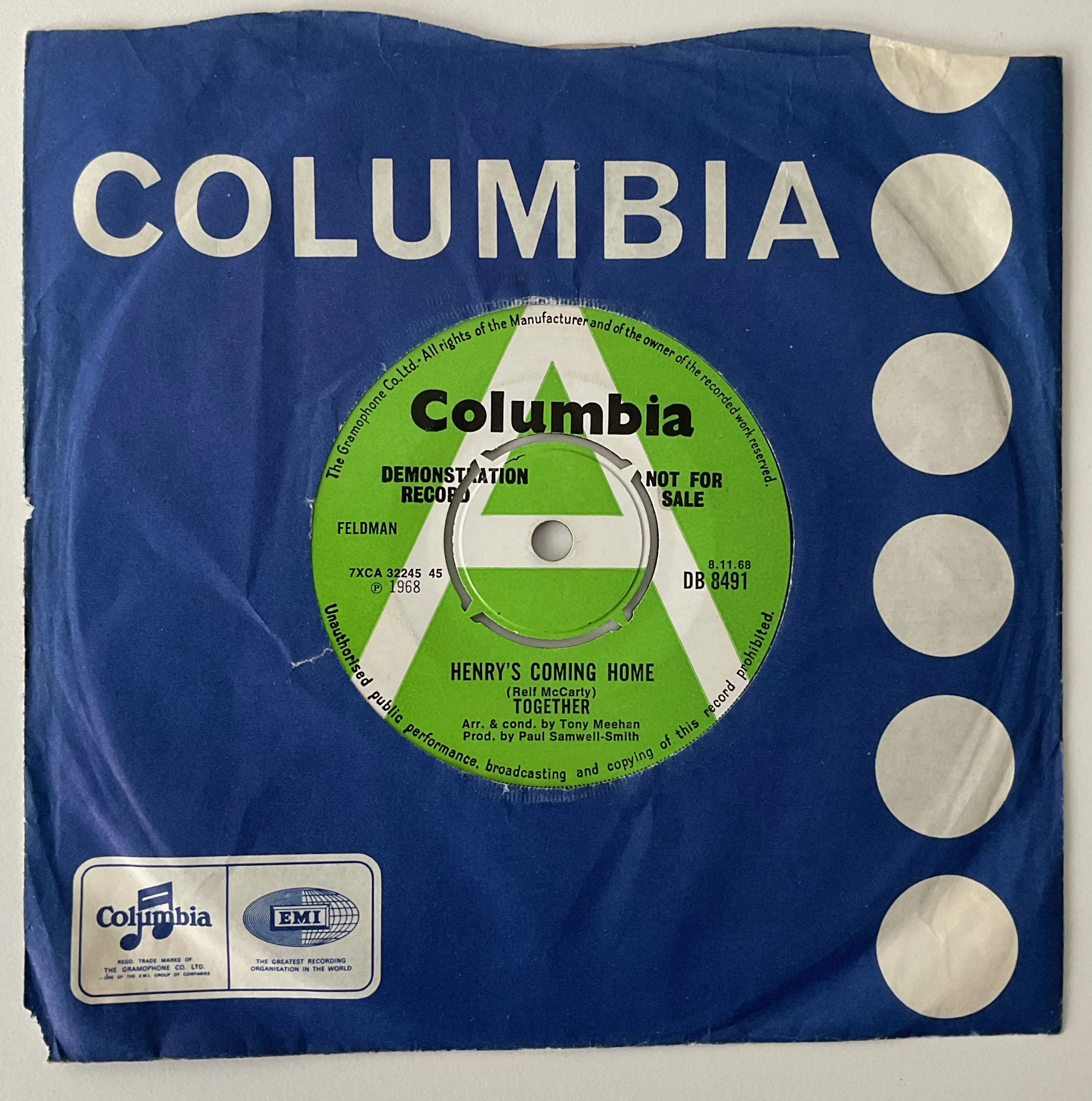
Alas, this small but intriguing miscellany ends with Samwell-Smith’s return to the fold with his production for Together, Relf and McCarty’s brief and all but invisible reprise after the Yardbirds had split. ‘Henry’s Coming Home’ b/w ‘Love Mum and Dad’ was released in mid-November 1968, Penny Valentine gave it a sincere review: an ‘intensely warm, pretty American sort of record’. It reminded her of the Turtles. Ex-Shadow Tony Meehan was responsible for the arrangement and the ‘really lovely handling of strings. The whole thing is excellent and they have reason to be proud’. She didn’t, however, consider it to be smash hit material, but it ‘bodes well for their future’ and will ‘get them a lot of well-deserved attention’. It did none of that and sank without a trace, there was no promotion and no further reviews. It could just be me getting sentimental about the end of the Yardbirds but I love it, a touching tender tale about a young man’s homecoming —Relf and McCarty’s paean to English suburbia after the tour trauma they had endured in America.

Penny Valentine and Simon Napier-Bell in a tête-à-tête about John’s Children

Of all the weekly music press critics who took a turn at reviewing the latest singles, Penny Valentine was by far the most astute, witty and all around entertaining. You can get endlessly and delightfully lost browsing her column in Disc, which she wrote between 1964-1970. She could be equally enthused about the latest from regular chart toppers or a debut offer from complete unknowns. She didn’t work on a grace or favour basis, her recommendation had to be earned. Her style is intimate, personal, reflective. She will explain what she wants from a record and why it does or does not meet with her expectations. She is without cupidity in her love of pop: never curtly dismissive, patronising or elitist.

She filled the role of an interlocutor mediating between the pop machine and the pop consumer; her endorsement of a record genuine, honest, her critique considered. Most importantly she made her reader feel part of an ongoing conversation about pop, she was inclusive – writing in the same temper as the records she so clearly loved.

You can see how this played out across her reviews of records produced by Simon Napier -Bell in 1966–1967 in which she engaged with him as if he, the reader and her were sharing the same space.

Her column would highlight half a dozen releases but she also dealt with twice that number in the ‘Quick Spins’ section, which is where she reviewed John’s Children’s second 45:

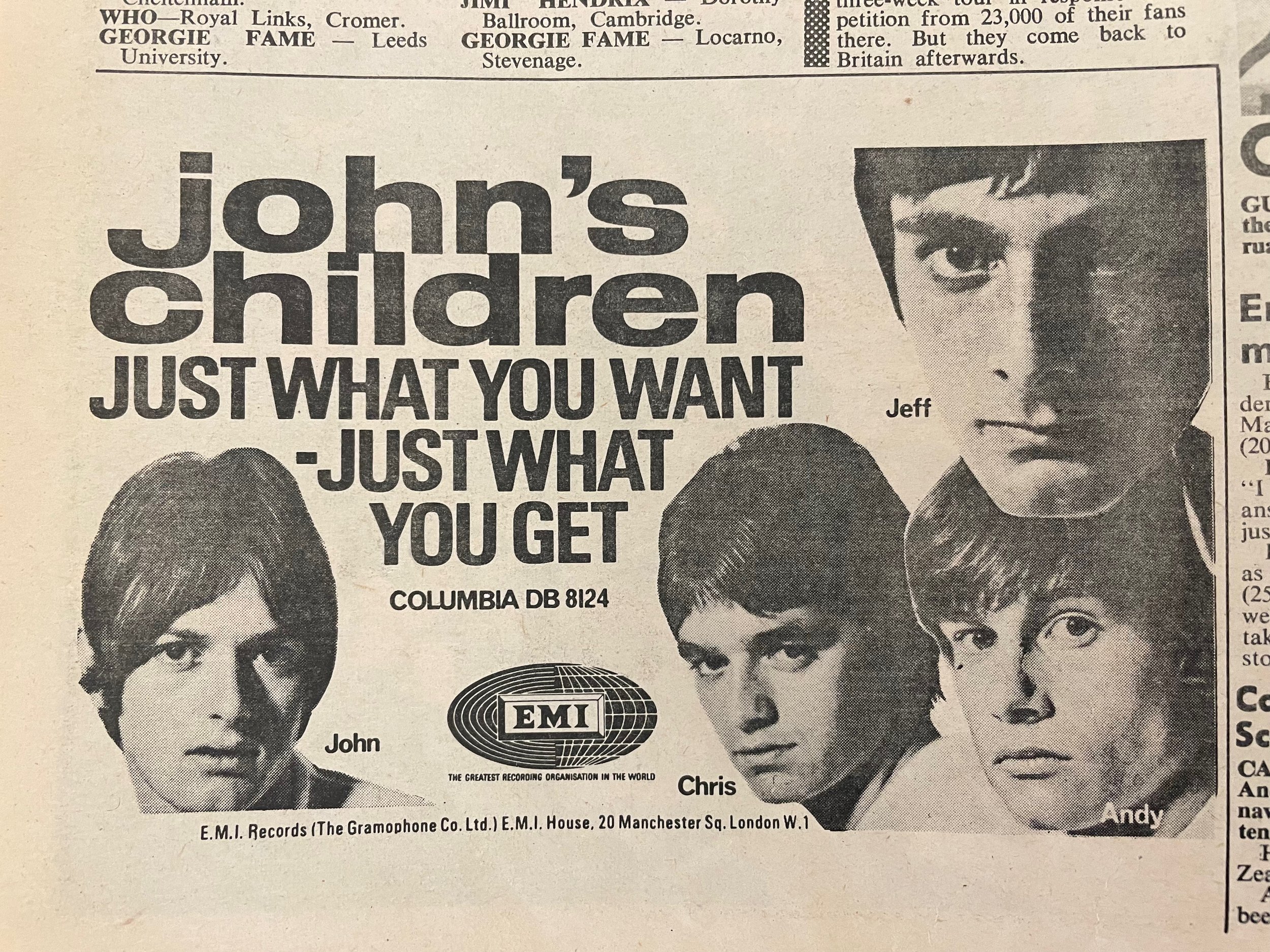
A gentleman phoned me last week and accused me of being very anti the musical works of Simon Napier-Bell. I wish to disagree – while admitting that I have so far remained unimpressed with the odd sounds Mr Bell has produced. Now to ‘Just What You want’ by John’s Children which is odd weird peculiar and disturbing but some tricks work and the overall is effective. Do I see the light? (February 4 1967)

It doesn’t appear that she reviewed the band’s debut – ‘The Love I Thought I’d Found’ aka ‘Smashed Blocked’ –  back in October 1966 so that accusation of being antithetical to SNB productions was most likely in response to the discs by The Yardbirds and Keith Relf:

 Keith Relf ‘Mr Zero’ (Columbia)

I'm very fond of dear Keith Relf with his starved face, and I too thought that this would have been just the sort of sad song cut out for him. BUT. . . I hate to make comparisons but if people will do songs that other people have already made then they must be prepared. It's been done much faster than Bob Lind's, and consequently you lose a lot of the of impact of loneliness. I'm not at all sure about this record at all. Other side is "Knowing." (May 14 1966)

Two weeks later, beneath the headlineNow Yardbirds go Russian and Arabic!’, she reviewed ‘Over Under Sideways Down’ (Columbia):

 I can only suppose that on their next record the Yardies will have the entire Dagenham Girl Pipers playing pick and shovels . . things have got to quite а pitch in their search for new sounds. On this they have great clapping and Russian-type "Heys, Indian rave-ups and a part that sounds like the Arabic call to prayer. Fact, I think it's fascinating and all very splendid. So there! (May 28 1966)

Hardly dismissive in either case but the idea of engaging with SNB must have appealed to her. Whatever, she definitely refused to continence their next single. As she explained:

 Yardbirds ‘Happenings Ten Years Time Ago (Columbia)

The time has come, the walrus said, to have a go. Well, he didn’t actually say that, but I am going to have a go.

I have always thought that a record should give, to each individually it should impart something musically nice. This does not give. It takes. I have had enough of this sort of excuse for music. It is not clever, it is not entertaining, it is not informative. It is boring and pretentious. I am tired of people like the Yardbirds thinking this sort of thing is clever when people like the Spoonful and the Beach Boys are putting real thought into their music. And if I hear the word psychedelic mentioned I will go nuts. (October 22 1966)

Being dull and condescending was a grave sin, while hiding behind the mask of psychedelia was no excuse for pretension. She was, however, ready to make amends with Relf’s second solo disc, ‘Shapes in my Mind’, which she reviewed under the title  ‘Make Me Break This Spell’ (Columbia), even if she still felt ‘Happenings’ was a ‘monstrosity’:

 I have a strange feeling that Simon Napier-Bell has been groping around in the dark – In the musical sense for a long time and may at last be coming out into the light.

This is as strange and weird as some of his other efforts (that includes the last Yardbirds’ monstrosity) but unlike the others this actually works. Here then we have Keith's off-beat, sad, echoey voice in a desperate state at losing his girl. Once you've got over the shock of everything stopping and starting and feeling that somewhere lurks the phantom of the opera at his organ keyboard, you'll like it. It may even move you. It did me. (November 26 1966)

Napier-Bell had cut the backing for Relf’s single in Los Angeles at the same time as he had the city’s top session men record John’s Children’s debut, musically and thematically the two singles make good companion pieces.

Marc explained about their stage act “We don’t just do a musical performance . . . it’s a 45-minute happening . . .”’Record Mirror (June 10, 1967)

It would have been a fair exchange . . . . Velvets for John’s Children Melody Maker (July 15 1967)

The third release by John’s Children was also placed in the ‘Quick Spins’ section:

Some have said that ‘Desdemona’ is a very dodgy song indeed, and JOHN'S CHILDREN say no, it's not. So be it. But even to my uncontaminated mind the words don't seem to leave much to the imagination. All very weird, with Marc Boland's [sic] odd black magic voice coming through well. (May 13 1967)

Valentine had reviewed Bolan’s debut The Wizard and had rather liked it:

On the strength of this strange young man's looks and weird background, I suspect we'll hear more of this odd record about meeting a wizard in the woods who knew all.

I prefer the other side, 'Beyond the Rising Sun' which has more tune. Jim Economides, ace producer, does lovely things on this. I'm a bit put off by the way this boy sings with Dylan phrasing, but that’s all. (November 19, 1965)

She missed (or avoided) reviewing ‘The Third Degree’ and ‘Hippy Gumbo’.

Melody Maker (June 10 1967)

Napier-Bell’s pursuit of the sensational, however phoney, had made its mark with ‘Desdemona’, how then to follow that line of provocation?

John’s Children – ‘Come and Play With Me in the Garden’ (Track)

Some people, including Simon Napier-Bell himself, think I have a "down" on Simon Napier-Bell's productions. Well, I haven't. I do try to be fair – really. But so often it strikes me that all he and his groups агe after is a controversial lyric and such a way-out production that nobody would be any the wiser if they were all playing and singing on their heads. Perhaps they are. Down here, mother, where the air is clean and your children are innocent, I couldn't understand what was going on. In fact, I couldn't even follow the tune.

John's Children sound as though they have been recorded suspended from crystal balloons. All disconcerting. But see "Emily Play" and look how wrong I was about THAT. (July 22 1967)

The admission of error when it came to predicting hit records was one of the traits that enhanced her appeal. The previous month she had written off Syd and the boys:

Pink Floyd – ‘See Emily Play’ (Columbia), didn't really go mad over this group's last record, and I' can't in all honesty say I like this much either. It's another of those songs which appear childishly innocent on the surface but actually carry messages of doomy evilness. (June 17 1967)

With the next John Children’s effort,was Napier-Bell replying in kind to her commentary about his charges?

 John’s Children – Go Go Girl (Track)

The clever thing about this group is that their records are always so outrageous they always manage to get a big review. This one, I understand, was made in desperation after continual harsh words from me. It sounds like it. I will accept no responsibility for this extraordinary send-up. It's chronic and a joke. But then, of course, it's meant to be. Haha. Ignored it will surely not be. Goodnight Simon. (October 7 1967)

Was Penny Valentine – all put together with chocolate n’ feathers – the subject of ‘Go Go Girl’? Undoubtedly not, but it kept the conversation rolling on though that was the last of the John’s Children 45s. Valentine did, however, review two of Andy Ellison’s solo singles:

 Quick Spins:

From ‘Round the Mulberry Bush’ a pretty song of lost summer love, sea and sand, called ‘It’s Been A Long Time’ by Andy Ellison (January 6 1968)

Andy Ellison, who has stunned many by recent TV appearances, makes Beatles’ ‘You Can’t Do That’ into a pretty evil-sounding proposition. (June 8 1968)

Had others heard the evil masquerading as innocence in ‘See Emily Play’ and Ellison’s version of the ‘You Can’t Do That’? While her dialogue with Napier-Bell faded, his replacement was waiting in the wings:

Tyrannosaurus Rex ‘Deborah’ (Regal Zonophone)

Once you've staggered over that name this is a very interesting record. Apparently this is John Peel's favourite record at the moment but don't be feared doesn't mean it's that incredibly obtuse. What it is, is a very interesting record. By that I mean it's a new weird sound from Marc Bolan's highly distinctive vocal. Few words, lots of sounds, and it's pretty in a strange way too. Unexpectedly nice. (April 27 1968)

Tyrannosaurus Rex ‘One Inch Rock’ (Regal Zonophone)

I dig you now, Tyrannosaurus! It has taken me much longer than all those hip people who have been digging them for ages to appreciate this group. I now admit I find their sound rather endearing, certainly very individual, and totally fascinating. I have also met Marc Bolan in my lift, and he’s much smaller and delicate looking close to than I had suspected. I’m glad they put a title on this because I couldn’t understand a thing he was singing about. But there’s power in those vocal cords, by jove! And they do get a very good sound. (August 23 1968)

Tyrannosaurus Rex ‘Power Suitor’ [sic] (Regal Zonophone)

After having owned up to liking the overall sound these two put over, I must now admit to being rather confused as to why all their singles have this hard tight chanting vocal but very little lyric. It's okay if you just want to leap about in a white hat making the floorboards shake, but to sit and listen to – unless you're in a mystic mood– it's a bit mind-boggling. (January 25 1969)

Tyrannosaurus Rex ‘King of The Rumbling Spires’ (Regal Zonophone)

Penny was on holiday for this release so the paper asked pop star Clodagh Rodgers to review the week’s singles

I can't follow it at all, I can't find any definite tune in it. I like Marc Bolan's voice because it's very distinctive ‘Deborah’ was great. But on this they've got too much backing —it's overloaded. It's messy and the only words you can hear is the title.

Penny Valentine, Sounds (March 26 1972)

Most of Penny Valentine’s reviews of Bolan’s records have been quoted in There was A Time – Marc Bolan: a Chronology (2024). I can think of no better way to idle away the hours than tracking with Cliff McLenehan the traces Bolan left behind.

Nik Cohn – Lost and Found: 'Mad Mister Mo'

Nik Cohn has published only a handful of short stories, ‘Mad Mister Mo’ from the October 1966 edition of King magazine is therefore something of a curiosity piece .

Given that his father was a celebrated history professor I guess you could chance a Freudian reading of this story of Mad Mo the history teacher: ‘He smelled of chalk all over and wore a ragged black gown with holes in it. When he walked, he gathered his black gown in tight around him like a shroud’. He is a monstrous figure who ‘threw out his arms like a mad messiah and he preached me lust and thieving and blashemy. He shouted at me and he said that religion was bad and murder good, love was bad and hate was right’. He preached me the triumphant victories of evil’.

Mo is certainly mad, but is he a tyrant, drunken fool or phantom figure of a child’s imagination?

Illustration by Peter Adkins

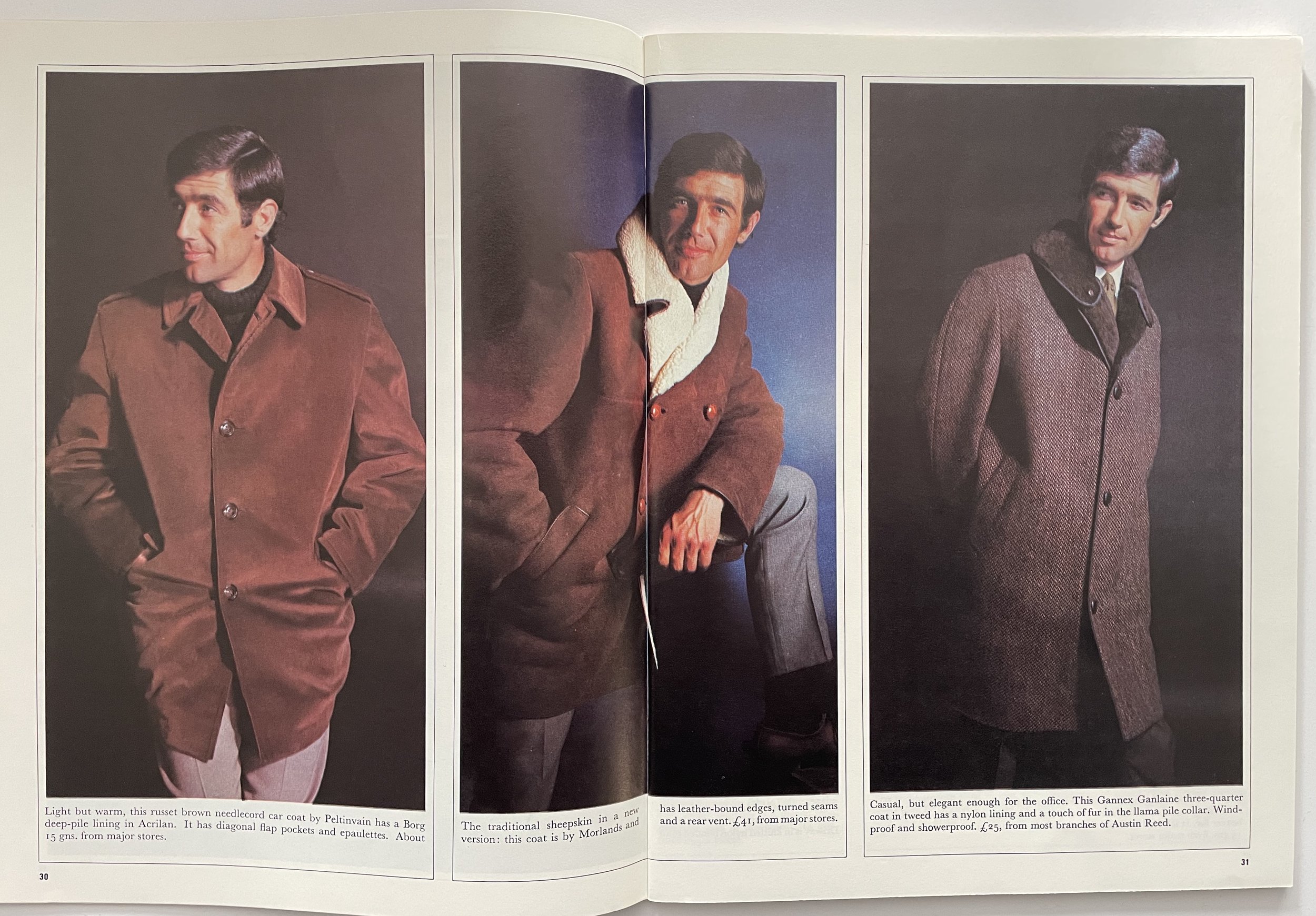
King was a fairly high-end men’s magazine, backed initially by Paul Raymond. It ran from 1964–68 when it was subsumed by Mayfair. I like to think its ideal reader found his surrogate in this male model puting some shape into the latest line in car coats – the well groomed man . . .

This issue also featured a piece and photograph by the great Val Wilmer on Thelonious Monk

Following on the heels of Cohn’s story is a report on drugs and Oxford, there’s no writer’s credit, but I imagine whoever penned this piece had some first-hand knowledge of both Oxford and the scene even if the tone is sensationalist.

The image of the student in mortor board and gown transforming into a bird imprinted on a sugar cube is rather wonderful, blocked and trippy even

What really catches the eye is the description of the dealer working the room with a Bob Dylan record under his arm:

The boy in the combat jacket with a face like the lead singer of the Yardbirds, but with a different intention has found a customer. In the airless bedroom, among the socks, he carefully unrolls a cigarette, watched by the young and eager faces of his new-found friends, and spills the tobacco on to the back of his Bob Dylan record.

The Pusher Men of Oxford . . . but ‘with a different intention’. Rave (May 1966)