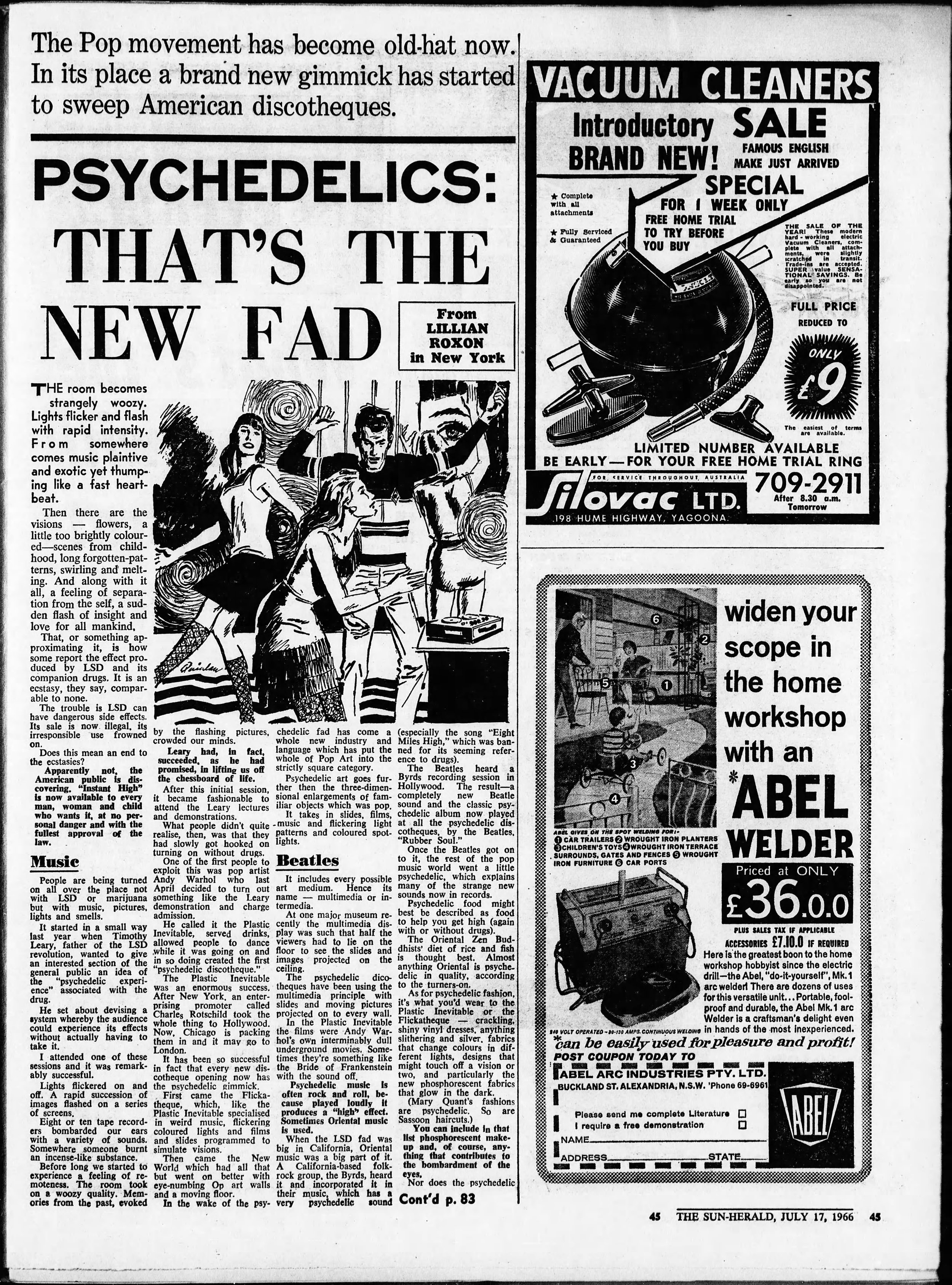
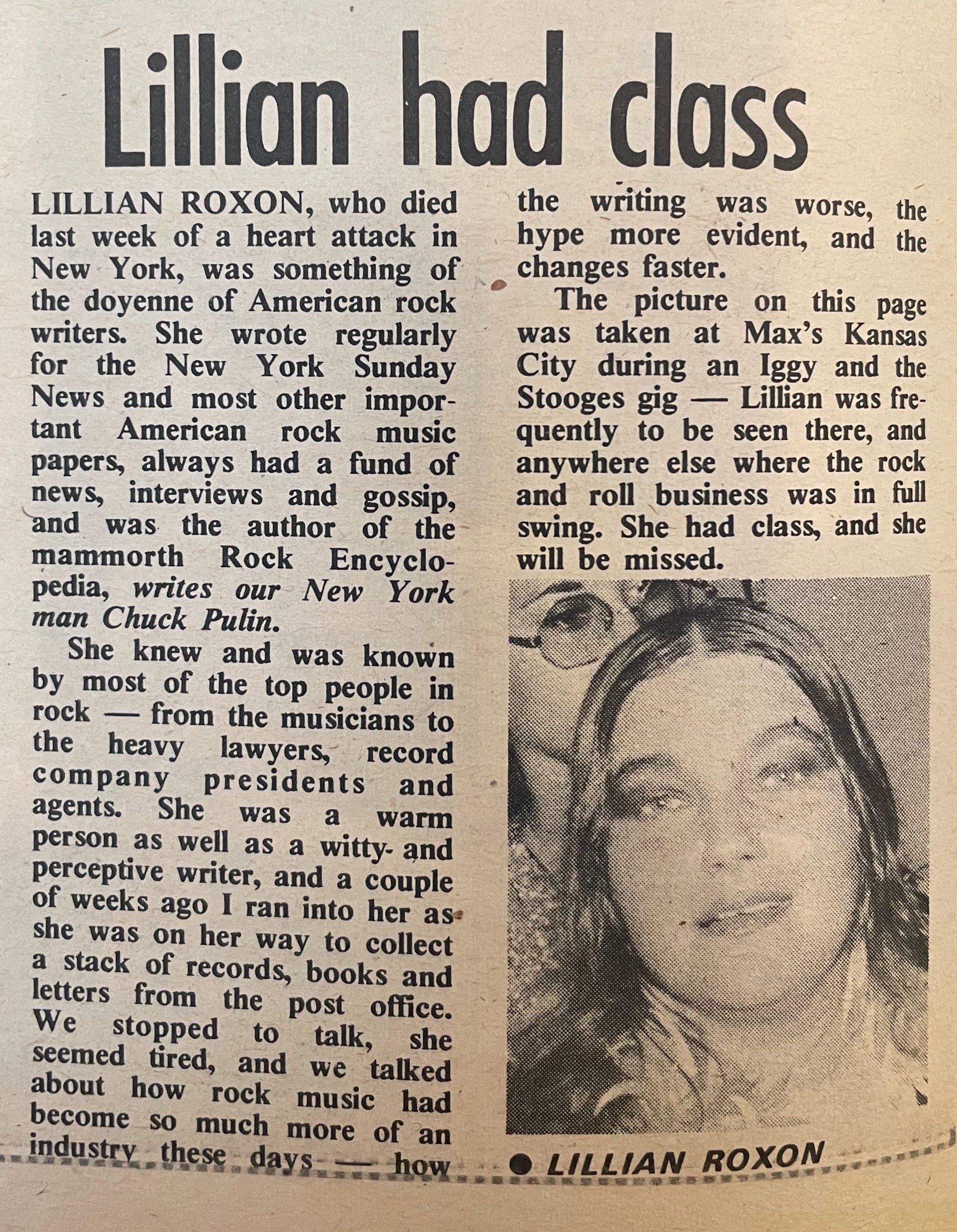
Lillian Roxon: Mother of Rock (2002) is as fine a biography as any I’ve read. From her family’s flight from Nazis to exile and new beginnings in Australia to her death in New York, aged 40, in 1973. In between, Milliken tells the story of how Roxon became one of the significant players in the New York rock scene of the late 1960s and early 1970s, one of the movers and shakers who held court at Max’s Kansas City. Her student years and the Australian bohemian scene in first Brisbane then Sydney and her start in journalism are succinctly, but evocatively evoked, before her move to Manhattan, aged 27, as the 50’s tipped into the following decade.
Australian newspaper culture, the nascent Murdoch empire, tabloid journalism and Roxon’s place in this as an independent, career-minded young woman is portrayed with a deft touch that moves eloquently between historical context and her personal situation, both private and public. Roxon and her friends were great letter writers so Milliken has a treasure trove’s worth of material to draw on, which he adroitly pulls together with her published words and interviews with those who were closest to her as friends and colleagues.
Though it is the third act of her story that most interests me, her family’s history and her early life, especially in Sydney, are crisply and effectively etched to provide a sure sense of who she was and where she came from. I didn’t skip a page.
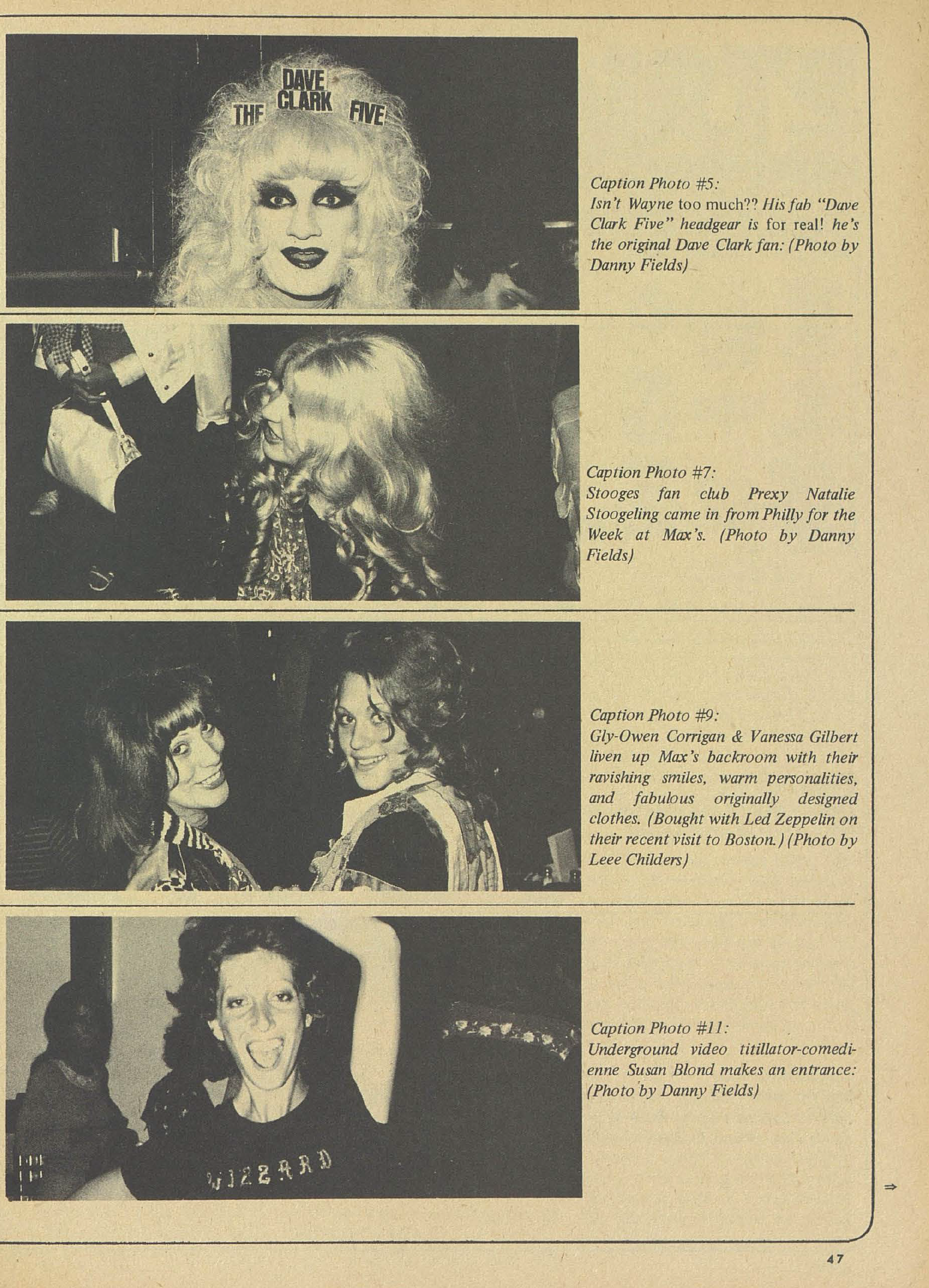
Her relationships with Linda McCartney and Germaine Greer are given generous space, never overbearingly so, but for me that is all peripheral to her friendship with Danny Fields, Lisa Robinson, Leee Black Childers, Lenny Kaye and the like and her mentorship of young writers like Richard Meltzer, who told Milliken:
Compared to so-called gossip writers, when Lillian wrote ‘scene pieces’ she had a playfulness that was so much more authentic, and never nasty or ill-tempered in the slightest. She wrote from a state of genuine affection for probably a wider range of rock-roll characters than any other rockwriter I have any recollection of. The only exception I can think of was Carole King. She hated Carole King (but then so did most of her colleagues).
In a June 1971 column for the Sunday News, Roxon wrote:
Carole King may have a number one single and a number one album, but I find her as boring as my girlfriends who are always on the phone to me whining about the problems they have ‘communicating’ and having ‘meaningful relationships’. She is like every messed-up neurotic girl you ever had to confront in group therapy. Sincere, certainly, well-meaning, too - a nice girl, not bad looking, super-talented, but exasperating and totally unexciting. You know, of course, what her success means - that rock is going to go into a ‘Dark Shadows’ period. Those moody broody songs about getting it all together and facing the world bravely are going to take over the air-waves, and then what are we going to dance to? The Pathetique Sonata? . . . You can learn more about being a human being from Tina Turner's body language than from all of Carole's fortune cookie philosophising.
That kiss-off line is so beautifully on point. If you can’t dance to Carole King you can pull back the rug and frug along with Ike and Tina, the Ronettes and the Shangri-las:



























































Quisque iaculis facilisis lacinia. Mauris euismod pellentesque tellus sit amet mollis.