In the Shadow of Centre Point – Peter Watts' History of Denmark Street

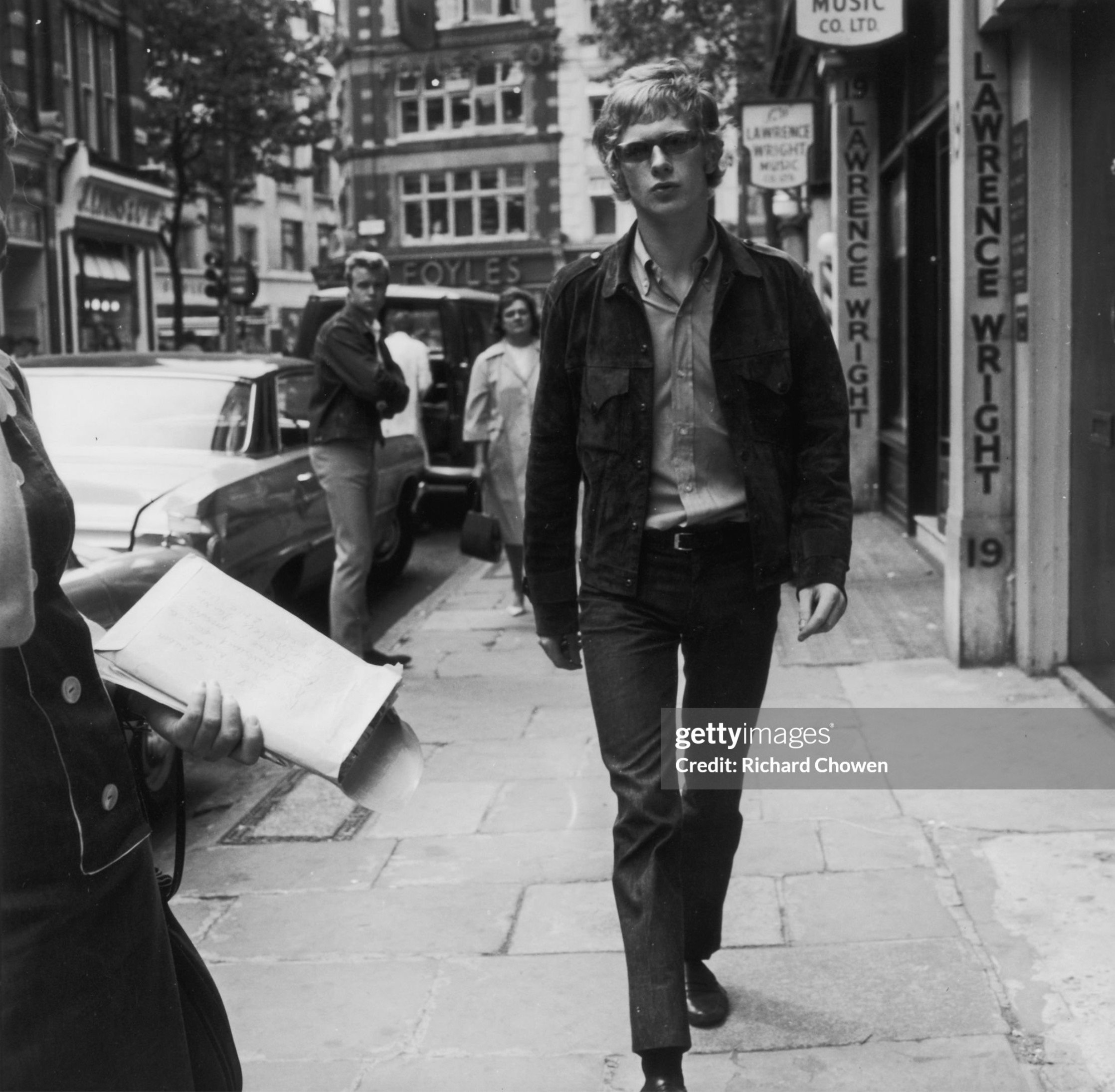
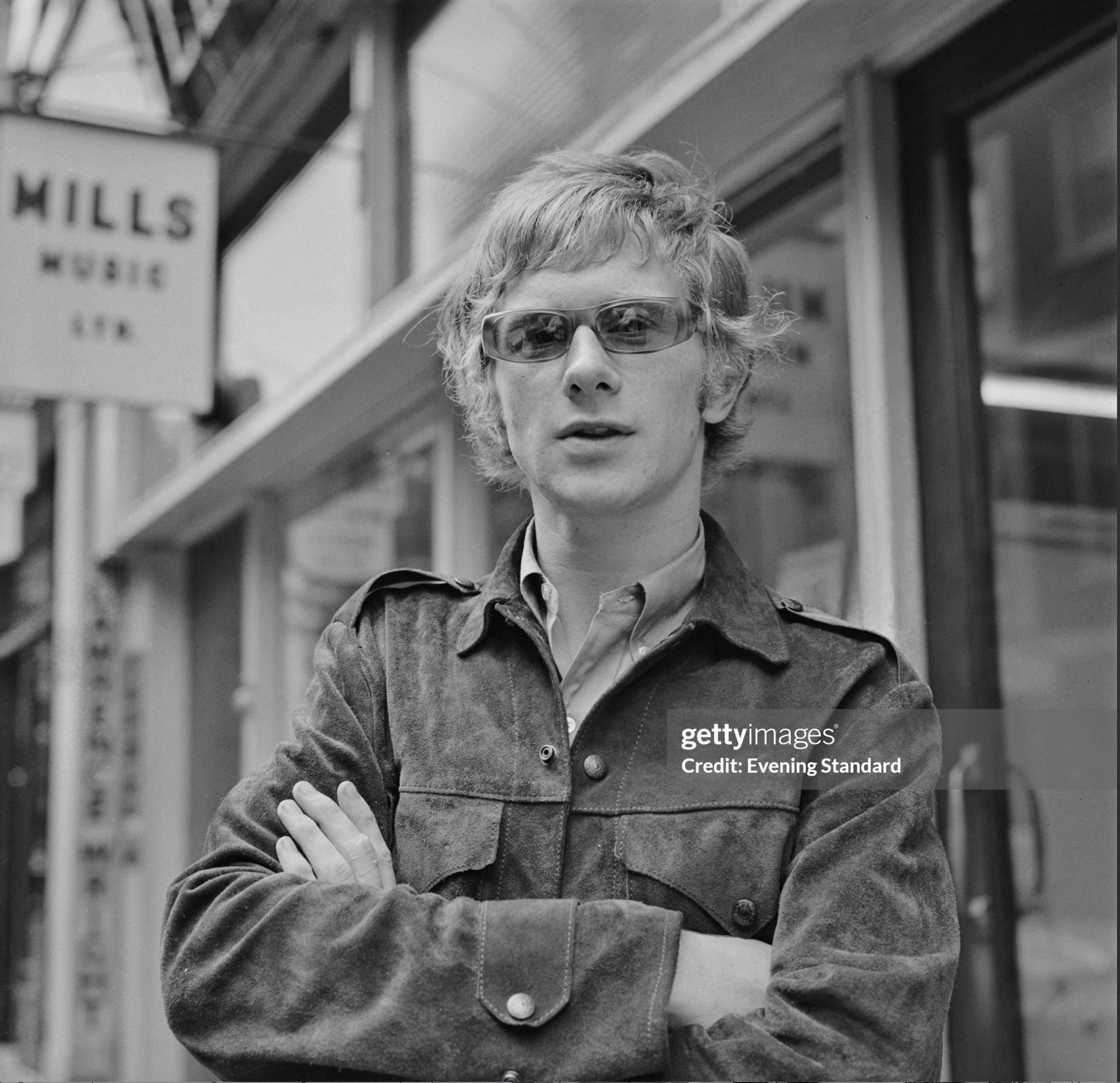
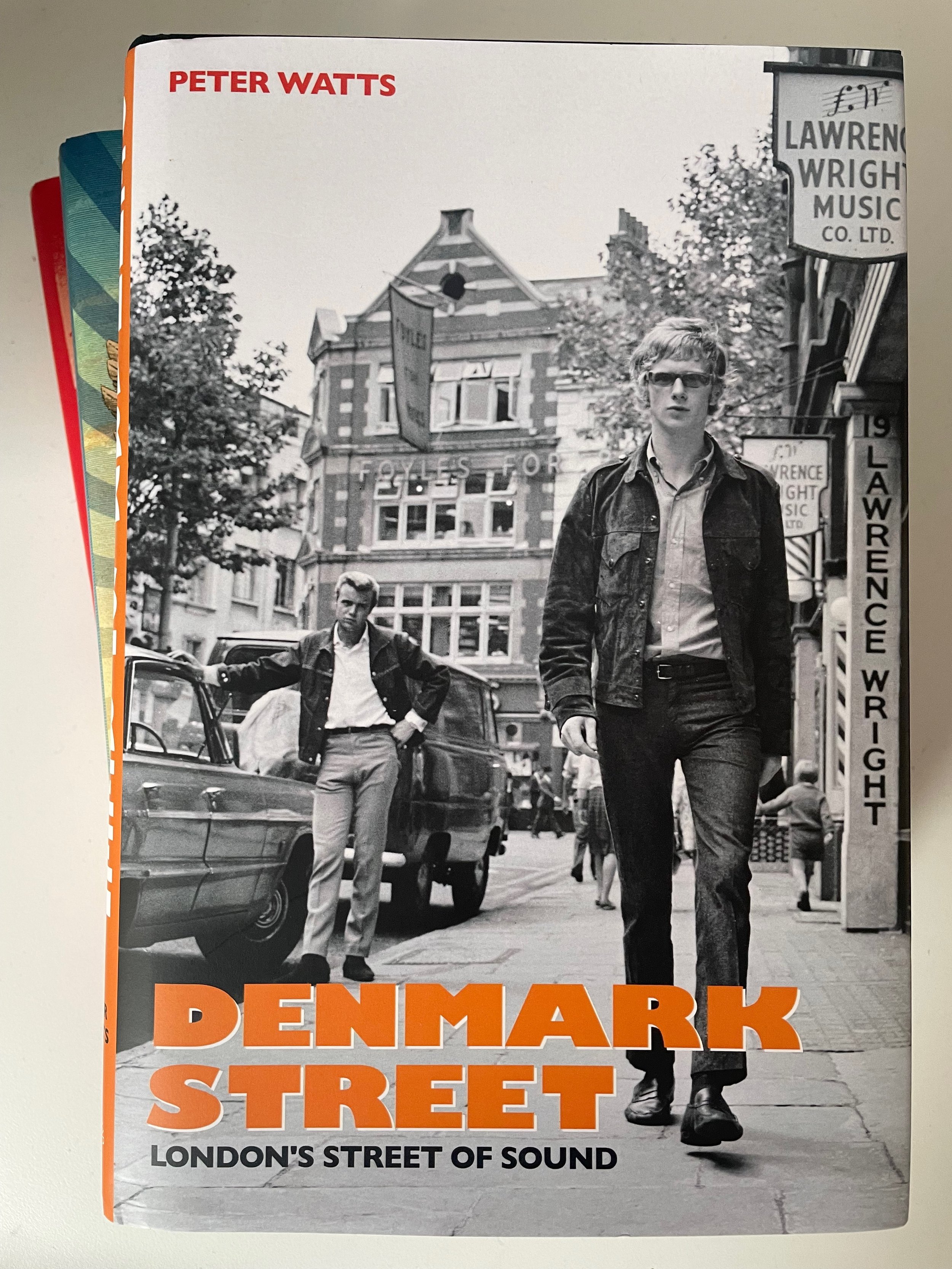
Never mind that the subject fascinates, I’d have bought Peter Watts’ Denmark Street: London’s Street of Sound for its jacket alone, which pictures Andrew Loog Oldham, August 1964, whippet short and skinny, striding past Lawrence Wright music publishers. He’s wearing a suede Levi’s-style jacket, trademark shades, open necked button-down collar shirt and trousers that are hemmed an inch or so above his shoes. Like his hero Lawrence Harvey in Expresso Bongo, Oldham has that caffeinated presence that suggests he owns these streets, if only in that moment. Behind him, across Charing Cross Road, is Foyles book shop. Between the spaces he is marking out, to his right, looking on, is a young guy with a Glen Campbell/Wrecking Crew casual style – blonde quiff, suede Cuban heeled boots, tan pants, white shirt, denim jacket – leaning on a big American car with a crushed rear fender – has US culture ever emerged unmarked from its contact with a British reality? American pop, the photograph suggests, corrupted by a youthful English swagger, is going to turn London Town upside down. Change is coming.

 Peter Watts deftly (and very eloquently) maps the transformations that have taken place on this street from the Great Plague to Crossrail, from the Great Beer Flood to the virtual reality of the Outernet. The revolutions wrought by Oldham, the Stones and The Beatles are the pivot around which he works his story; detailing the shift from sellers of sheet music for vocal with piano accompaniment to publishers of music composed, performed and recorded by the artistes themselves.

Until the recent demolitions and building projects, in my imaginary, Denmark Street was unchanged and unchangeable, it had always fallen beneath the shadow of Centre Point, guitars were always its main business and I would always move through it without care or thought, passing quickly on my way to Wardour Street or wherever. Watts causes a pause in this mindless flow so as to take stock of the street’s fabled history, to move off the pavement and into its buildings, to meet the people who worked and lived there, to follow the traces its businesses have left behind; the commerce undertaken in pursuit of fortune small and large.

 Whether the exchanges parlayed were legitimate or illegitimate, selling sex or selling a tune, it all lacked even a thin veneer of bourgeois respectability. With the new developments it is not just the loss of some of the buildings that creates a nostalgia for the place, it is rather the street’s regulation and ordering of permissible activities. I don’t feel a great need for the Sex Pistols’ first rehearsal space to be saved from gentrification, that matters to me as much as a blue disc on the house in Edith Grove to mark where the Stones once lived, nor do I mourn the closing of the 12 Bar Club any more than I do the Marquee, but I do feel the absence of another central London space where, whether fuelled by nefarious business practices or more romantically inclined sensibilities, temporary creative alliances might spark into life and infuse a new generation’s imaginations. Watts’ marvellous history of a small street in London has made me feel that loss more keenly than any other. But yeah, you also need to know about the Great Beer Flood of 1814  . . . that event deserves a plaque.

With its new addition of Denmark Street to sit alongside Robert Sellers’ Marquee: The Story of the World’s Greatest Music Venue and Andrew Humphreys’ Raving Upon Thames, Paradise Road is fast becoming my favourite publisher, all are beautiful presented, generously illustrated and with stories to tell. Get some!

Inside The Velvet Library

A small stream of new books on The Velvet Underground have joined with Todd Haynes’ documentary to produce yet another upswing in interest in the band; maximum momentum maintained even if, as a fan, you can barely find the energy to pull the cellophane from yet another behemoth record set that you surely already own in multiple versions. The fix is in, the fascination doesn’t pall, the same conjuring tricks still tantalise and please; familiarity and repetition a certain comfort – expectations will be met, satisfaction all but guaranteed.

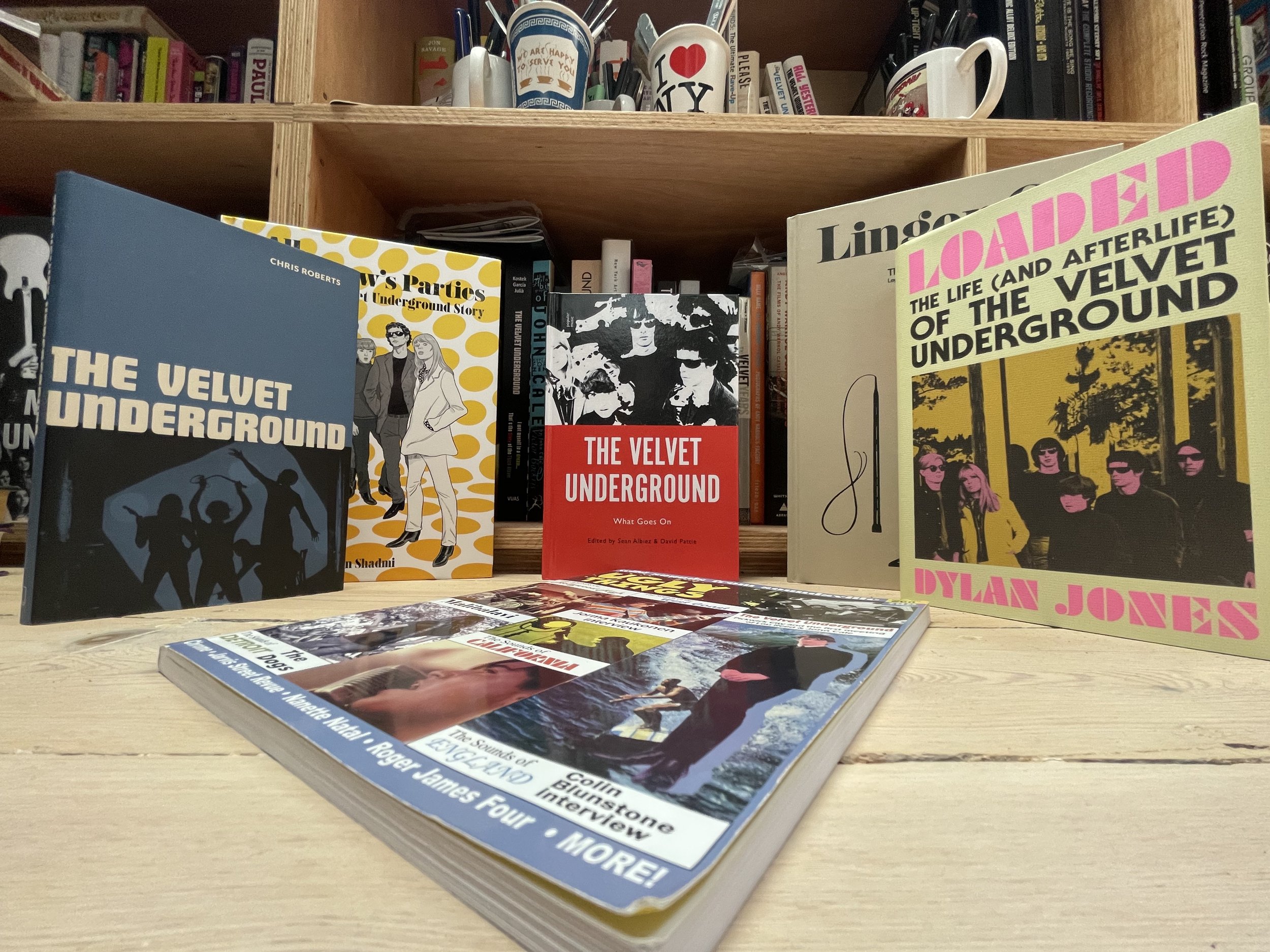
Everything is known, now only the skill of the story-teller is there to give life to the tale. Chris Roberts is one of the better recitalists, he is an eloquent writer, conversational in style, who promises in The Velvet Underground (Palazzo, 2022) an element of novelty based on his three encounters with Lou Reed. The book is well-designed with numerous, well-chosen, images but, for all that it offers, a reader’s prior knowledge will leave the author behind, racing on ahead of the biographical sketches; his rendering of the chance encounters and short-lived creative alliances that produced the first two albums; the sundering of Reed and Cale’s partnership and the trials and tribulations of trying to achieve popular acceptance, before Reed returns to the family home, suburbia, therapy and prescription pharmaceuticals.

The novelty offered to bring renewed excitement to these story conventions in All Tomorrow’s Parties: The Velvet Underground (2023), Koren Shadmi’s graphic novel, is front and centre. His tale is focused on the relationship between Reed and Cale, the former all ego, paranoia and anger, the latter a bemused and betrayed friend. The story as good as ends with the fallout, missing entirely the third album, before briefly sketching in the run of Max’s Kansas City gigs and Reed’s retreat to Long Island, which make up my favourite set of panels. The characters are all adroitly rendered, wholly recognisable, Nico is surprisingly sympathetic, Cale surprisingly passive in the face of Reed’s excesses. Reed is volatile, self-obsessed, endlessly resentful – a negative presence. Why anyone would put up with him is unanswered. Moe and Sterling, as always, are secondary bit part players, blank buffers – calm, mundane presences to counter Nico, Cale, Warhol and Reed’s overindulgences. Like the high-end boxed sets, the novel is a slick production; its spot gloss perfection somewhat at odds with its subject, yet its deftly rendered caricatures readily escape their packaging.

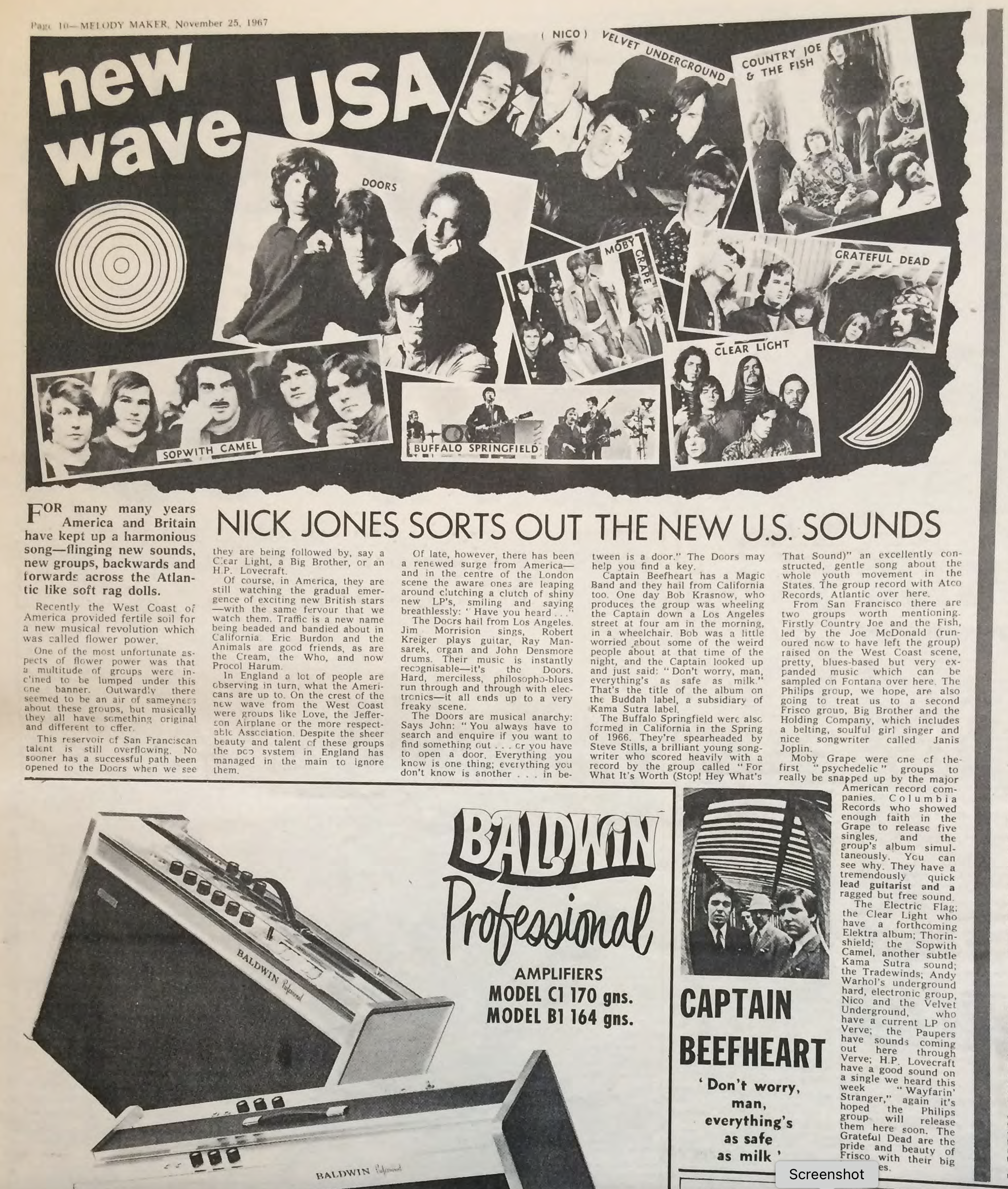
“New Wave USA’ . . . we’re not talking CBGBs 1976 here . . . The first photograph of the VU to appear in the British music press, Melody Maker (November 25, 1967)

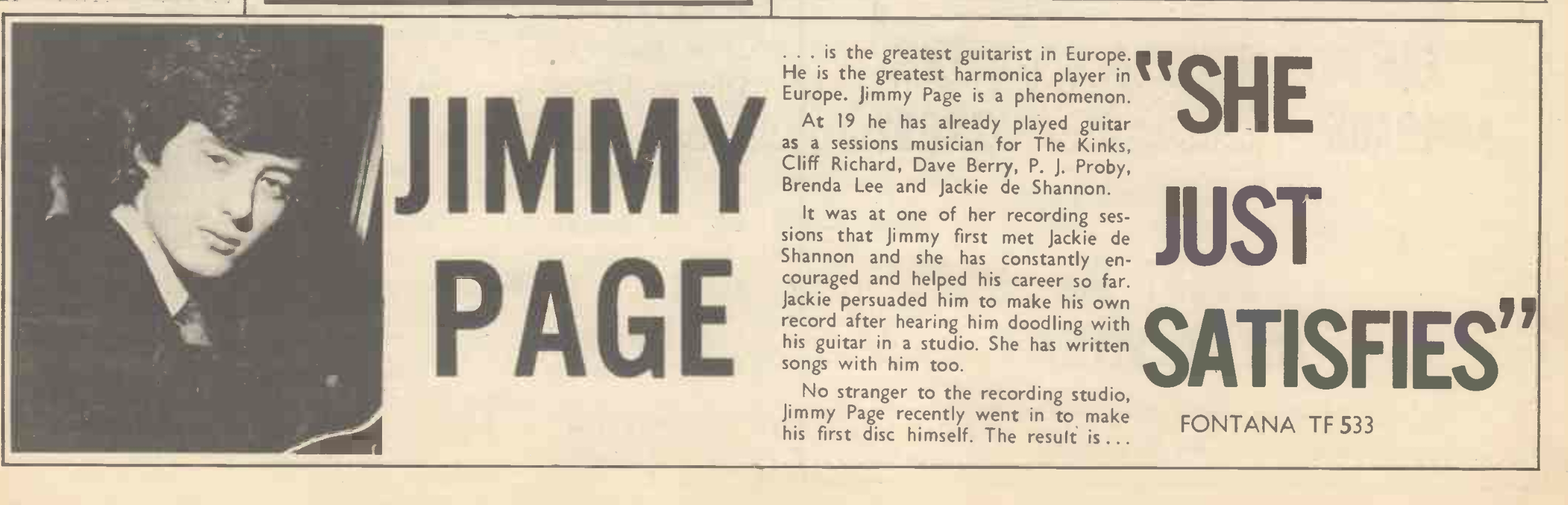
 Dylan Jones’ Loaded: The Life (and Afterlife) of The Velvet Underground (White Rabbit, 2023) follows the formula first introduced in Jean Stein’s Edie Sedgwick biography (1982) and deftly developed in his earlier Bowie volume: a careful assembly of previously published quotations, supplemented with new interviews, all held together by Jones’ narration and critical interjections. Even if a good number of the sources are known to a reader that familiarity is mitigated by the cumulative effect of the pieces, by Jones’ editorial curation. If the reader’s tendency is to race ahead of Roberts, here the effect is to keep pace with Jones, who pauses the rush with either a new voice, story or comment, such as Jimmy Page watching the Velvets over three nights at Steve Paul’s Scene club or Marco Pirroni’s observation:

At the time I couldn’t discern any influencers the band had. It didn’t sound like anything else. Now I know that all my heroes – Bryan Ferry, David Bowie and Lou Reed – were all obsessed with Bob Dylan.

Where the collage approach is at its weakest is in following up such an insight, pushing the idea just that little bit further. Instead the perspective shifts to another facet of the revolving glitterball Jones is spinning. The polyphony of voices also tend toward recalling the impact of first hearing the Velvets, sometimes years after their demise. The dependence on such after the fact contributors is understandable and the takes of Tracey Emin, Jarvis Cocker or Bobby Gillespie are not without interest, but they twirl the ball away from the history of the band (and give the whole a very British perspective on things). A problem facing all VU chroniclers is that Reed & co. gave so few contemporaneous interviews, the band members and Warhol acolytes’ views are all, therefore, delivered with their own spin on events. The passive voice of the editor in such oral collections means that commentary on the more wilfully self-serving often goes unchallenged, which is not necessarily a problem, or at least it isn’t when it comes to Mary Woronov’s acerbic commentary.

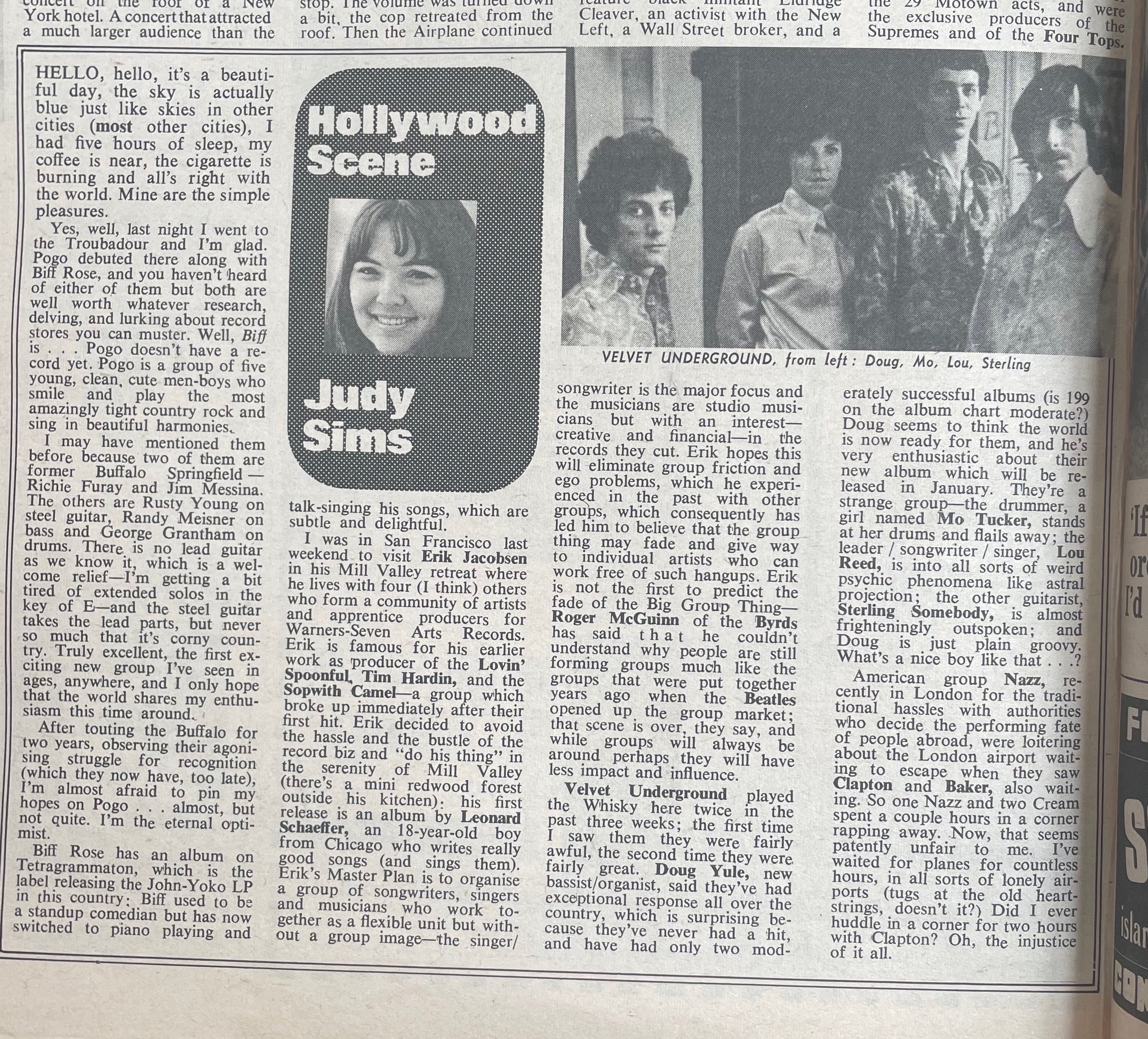
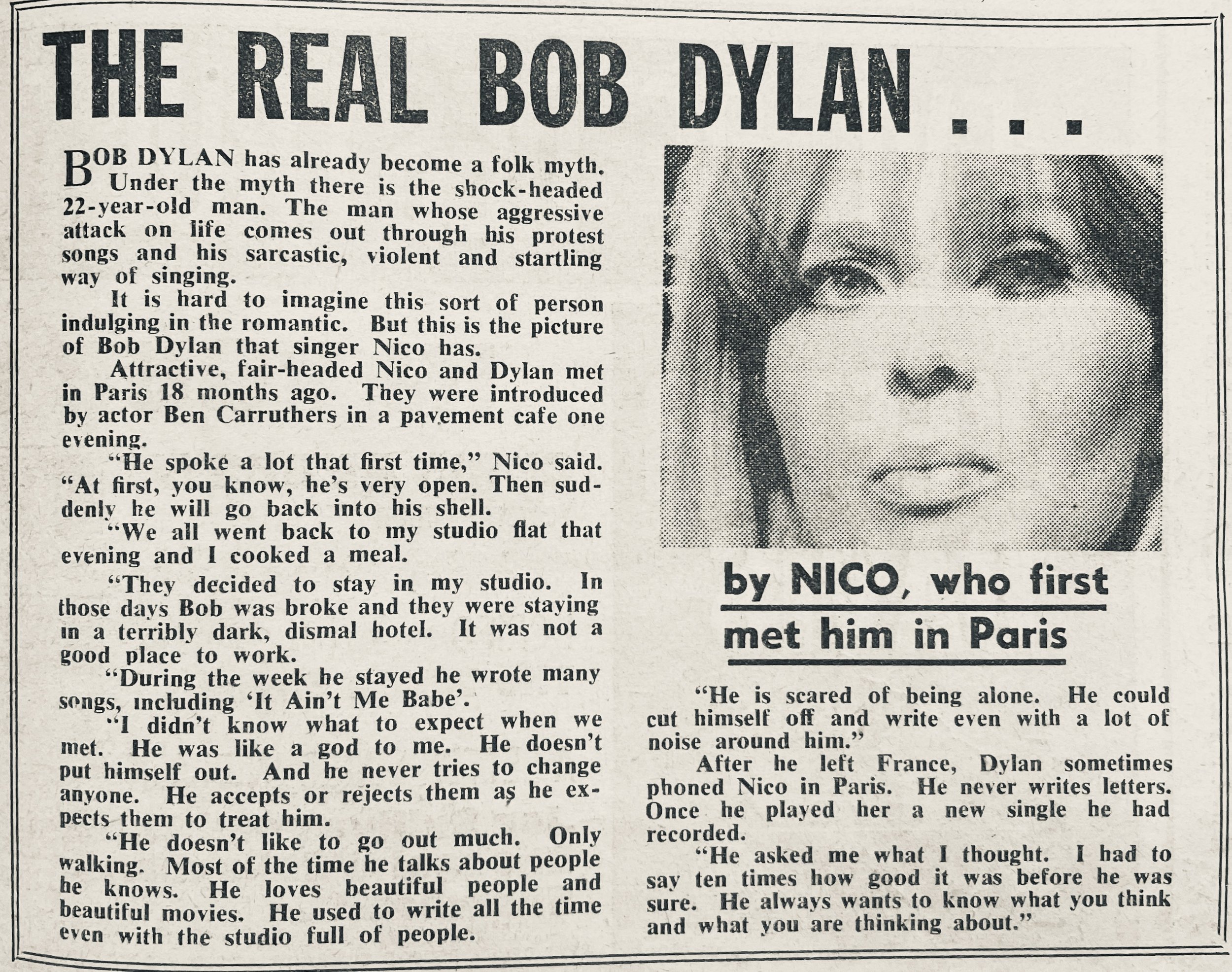
Clipping floating around on the internet, can anyone help identify its original source?

A welcome corrective to the overwhelming focus on the Reed/Cale axis in just about every other volume on the band is Ignacio Juliá’s Linger On: The Velvet Underground: Legend, Truth, Interviews (Ecstatic Peace Library, 2022), an expanded edition of his Feed-Back (Munster Records, 2008), which gives centre stage to Sterling Morrison. The introductory assemblage sets the scene: Bobby Gillespie (again) on the VU as rock’s ‘best kept secret’ willed above ground and into the open by Juliá’s ‘dream power and soul energy’ that is laid alongside the author’s declaration that ‘The legend of the Velvet Underground fades away. It is no more. It's been totally exposed to the light. Their secrets have been revealed and the myth evaporated’. Carried by an occult iconography, legends, though, exist only in the process of their tale being told, otherwise we are dealing with history, and all this productivity being reviewed here suggest the legend is doing more than just sputtering on, it’s the history that is fading.

In his talks with Juliá, Morrison is lucid, thoughtful – centred. He’s not competitive, appears to have no regrets and, like Maureen Tucker, is alarmingly modest in discussing his contribution to the band. There’s a marvellous section where he recalls playing Poor Richards in Chicago while Reed was in hospital with hepatitis:

We played for a week, with all different versions of the songs, with John on vocals, and we did lots of practicing just to make the songs work. It was fun. That was the first time that anybody could go missing and the shows would go on – John or Lou or anybody, it didn’t matter. . . we moved Maureen to bass and rhythm guitar. We got Angus MacLise, the original drummer, back to play drums. So here’s this astonishing incarnation of the band. “Sister Ray” grew out of this one gig.

Here he is, finally in the limelight, but the spot on Morrison quickly shifts away and he is soon back on the periphery of things, stage right, looking in. In band photographs, from 1965/66, Morrison’s face is always concealed behind a mop of long hair, wraparound dark glasses, swirling cigarette smoke. Tall and skinny, cuffed Levi’s worn over black engineer boots, he was the Velvets’ suburban juvenile delinquent figure, a perfect foil for the other three but never the main event. As Juliá’s interviews mount up, with all the old Velvets – Nico, Lou, John, Moe and Doug – and with others who have stories to tell – Jackson Browne, Gerard Malanga, Lenny Kaye and Todd Haynes – as the volume of voices increases, as in Jones’ Loaded, the centre contracts. What were they all talking about? In its parts Linger On is a work to cherish, but as a whole it is a babel of competing voices all demanding equal attention.

That the story’s broad outline no longer need be tendered is conspicuously the case with two lengthy articles by longstanding Velvets’ aficionado, Phil Milstein, in two recent issues of the inestimable Ugly Things. (It’s also worth noting the magazine’s publication of David Holzer’s exploration of Lou Reed’s obsession with the white light mysticism of Alice Bailey #61, Winter 2022). In #55 (Winter 2020) Milstein takes a deep dive into the world of Michael Leigh who wrote the pulp exploitation book from which The Velvet Underground took their name. The topic is, as Milstein admits, peripheral to the main event, even if the book’s cover imagery has been purloined numerous times to ground the band’s interest in the fetishistic and the taboo. Over 11 A4 sized three column pages, Milstein tracks the biography of the author and the various incarnations of his tale of the ‘bizarre sex underground’. It is an epic undertaking, excessive in its obsession and quite marvellous, even if the included photograph of Tony Conrad’s dirtied, torn and frayed personal copy – an occult relic if ever there was one – is sufficient in itself to maintain the book’s iconographic potency.

‘Doug is just plain groovy . . .’ Disc & Music Echo (November 30, 1968)

In Ugly Things #60 (Summer 2022), Milstein is back and surpassing his earlier effort with a 22 page inquiry into the pre-Velvet Underground activities of Reed and Cale, with a focus on the former’s Pickwick-era songwriting and recordings. The research is once more impeccable and just as obsessive – has the flotsam of an exploitation record company ever been picked through with such care and attention as Milstein practices here? I find it all delightful, but to what end, to what effect, does all this expended energy add to the matter of The Velvet Underground?

 The question of why The Velvet Underground matter should surely form the heart of any academic study of the band yet, until now, there has been no such book length exploration of The Velvets. Sean Albiez and David Pattie’s edited collection The Velvet Underground: What Goes On (Bloomsbury, 2022) corrects this situation and presents sixteen essays from academics aligned with a range of disciplines, film, queer, cultural, literary, music and media studies – a good half of the book, however, is less concerned with the band than with its cultural and musical influence on other artists and on the post-VU careers of Nico, Cale and Reed. Though there is a panoply of theoretical approaches in play, none of which would or should bother Milstein, they do share the same desire to focus on an aspect of the story rather than the story itself. With a few notable exceptions, what they don’t share with Milstein is his output’s basis in primary research.

Like all such collections, the editors, as they themselves reflect, are at the mercy of who responds to their call for papers. Such a state of affairs usually leads to a fairly eclectic set of essays and this is no exception, so they will forgive me, I hope, if I only focus on the contributions that play directly to my interests. Their introduction sketches in the broad dimensions of the band’s legacy – cult rebel outliers, inside the Factory with Warhol, their place within the Pop avant-garde and the chance meeting of Cale and Reed (the classically trained musician and the songwriter of pop novelties) whose ambitions coincide, as one slips down and the other climbs up the ladder of cultural capital. Recognising that Cale, Reed and Nico garner most of the attention, the editors finish the introduction by profiling Morrison, Tucker and Yule.

What Goes On has been graced with a superb opening chapter, which puts the band back into the context of 1960s pop culture. Jeffrey Roessner’s ‘Saved By Rock ’n’ Roll: The Velvet Underground In and Out of History’ begins with the image of Petula Clark heading downtown as The Velvets head in the opposite direction in 1965 Manhattan. Countering the idea that they were the supreme rebels, pushing against the flow of their times, Roessner argues you can find analogues for their experiments, for almost every radical gesture they made, among their immediate peers:

Their distinctiveness, then, is less about musical style than about the rejection of the florid psychedelic image and countercultural politics that have become the dominant image of the time.

He moves through the posthumous construction of The Velvets as being a band out of time:

When we say they don’t fit, we must mean that they don’t fit our conception of the era. That’s one clue that the problem is less with the band and more with our restricted, stereotypical view of the era.

Roessner is not out to deny the band’s originality, but to give back to their story some historical context. In doing so he doesn’t denigrate their achievements, instead he enhances our understanding of why they matter. As an entrée to a book of essays on the Velvets it can’t easily be improved upon.

‘marathon freaky hard-rock'. . .’ review of White Light/White Heat by, I guess, Hugh Nolan. Disc & Music Echo (June 8, 1968)

‘A hippy must . . .’ review of White Light/White Heat in Record Mirror (June 8, 1968)

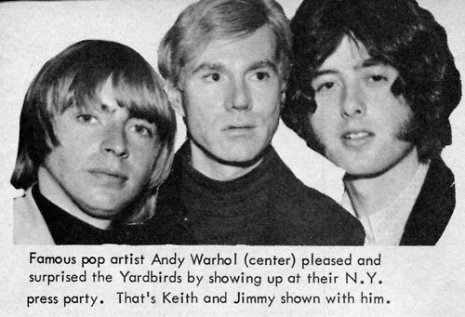
Johnny Hopkins and Martin James follow up with an essay that could not, in turn, have been better aligned with Roessner than if it had been commissioned by the editors, perhaps it was. The joint authors’ concern with the contemporary pop scene of the sixties is less with the overlaps the Velvets shared with the American counterculture than with their place in a transatlantic network. Despite never having played London and with only a few traces left in the contemporary British music press, the links were, as they show with numerous primary sources, tangible. Countercultural communications through outlets like Better Books and International Times fostered the already fermenting Pop Art connectivity of Warhol’s artistic enclave with his British counterparts, while the personal connections of Cale and Nico coalesced with the London-centric nature of the pop scene circa 1965 and into 1966 with the repeated Atlantic crossings of The Beatles, Stones, Animals, Yardbirds and The Who. Of all the aspects discussed and analysed in the volume it is this one I find the most intriguing. Into this communal hothouse of cultural exchange figures like Barry Miles, John ‘Hoppy’ Hopkins, Mick Farren, Mike McInnerney, Ken Pitt and his charge, David Bowie, Simon Napier-Bell and The Yardbirds flit before the eye – filtered through high expectations of the imminent arrival of the Exploding Plastic Inevitable on English shores. One of the great ‘what ifs’ of pop history.

It’s a shame that an essay could not have been found on the impact of the band and their connection with Warhol on the British art school scene, developing perhaps the insights given by Michael Bracewell in his study of Roxy Music on the trans-Atlantic connection between Newcastle and Manhattan, orchestrated by Richard Hamilton and experienced by his student Mark Lancaster. Nevertheless, Hopkins and James’ piece is followed by another strong entry, Glyn Davis on the link between Warhol’s filmmaking and participation of The Velvet Underground in that practice. Symphony of Sound (1966) and The Velvet Underground in Boston (1967) are held up for brief consideration alongside Nico’s appearances in shorts and in Chelsea Girl, but it is the ‘Screen Tests’ that are the focus and how these, in turn, became part of the EPI experience –‘aural and visual agitation combined’ where total cinema met total rock ’n’ roll.

‘Raving, out-of-tune, distorted sound . . .’ review of White Light/White Heat by Allan Evans in New Musical Express (June 1, 1968)

‘Utterly pretentious . . .’ review of White Light/White Heat in Melody Maker (June 7, 1968)

And on the good stuff rolls with Thom Robinson’s study of the literary underground – Grove Press  – and its impact on Lou Reed, which adds depth and weight to the too readily tossed about remark that Reed brought a literary sensibility to the band’s music. The interlacing of the Press’ story with Reed’s reading, his participation in the literary community at Syracuse University, is as fascinating as it is enlightening. Robinson has rifled through the archives of the University’s newspapers to place Reed’s juvenilia within the context of the day, especially the sensation and outraged caused (and courted) by Grove Press. Through the twists and turns of his story, readers, if they so wish, can make a connection back to Millstein’s research on Michael Leigh to think anew about what the ‘underground’– literary, cinematic, musical – meant then and now.

With the first four essays this volume marks itself as essential for even the most jaded VU head. While for me these initial contributions represent the book’s highpoint there are 12 further essays to pursue: on musicology and archetypes; Lou Reed’s Great American Novel’; Nico, cultural accreditation and experimental rock; solo careers through the ‘long-1970s’; the influence on Ziggy Stardust; Berlin, 1973 & 2006; Nico, Cale and Eno in Berlin; Metal Machine Music; Jonathan Richman; Live: Take No Prisoners – improvisation and performance; Songs for Drella; and finally Cale and Reed in the twenty-first century. Collectively these 12 chapters make for a lively, insightful, critical account of post-Velvet Underground activities. On the other hand, over emphasising the participants’ solo careers produces a centrifugal force that pulls attention away from the putative object of interest.

Beyond all the clatter and clutter these various volumes testify to the still far from faded legend of The Velvet Underground:

It's a hundred years from today, and everyone who is reading this is dead. I’m dead, you’re dead. And some kid is taking a music course in junior high, and maybe he’s listening to the Velvet Underground because he’s got to write a report on classical rock ’n’ roll and I wonder what that kid is thinking? [here]

–      Elliott Murphy, liner notes to Velvet Underground Live: 1969

We’re halfway there now and I wonder if Elliott Murphy is still wondering? I am . . .


Recent reissue/upgrade of Sweet Sister Ray boot . . . just like . . . dose yerself before and after reading . . .

Sister Ray . . . ‘The most ugly, yet most hypnotic performance in rock history’ New Musical Express (July 15, 1972)

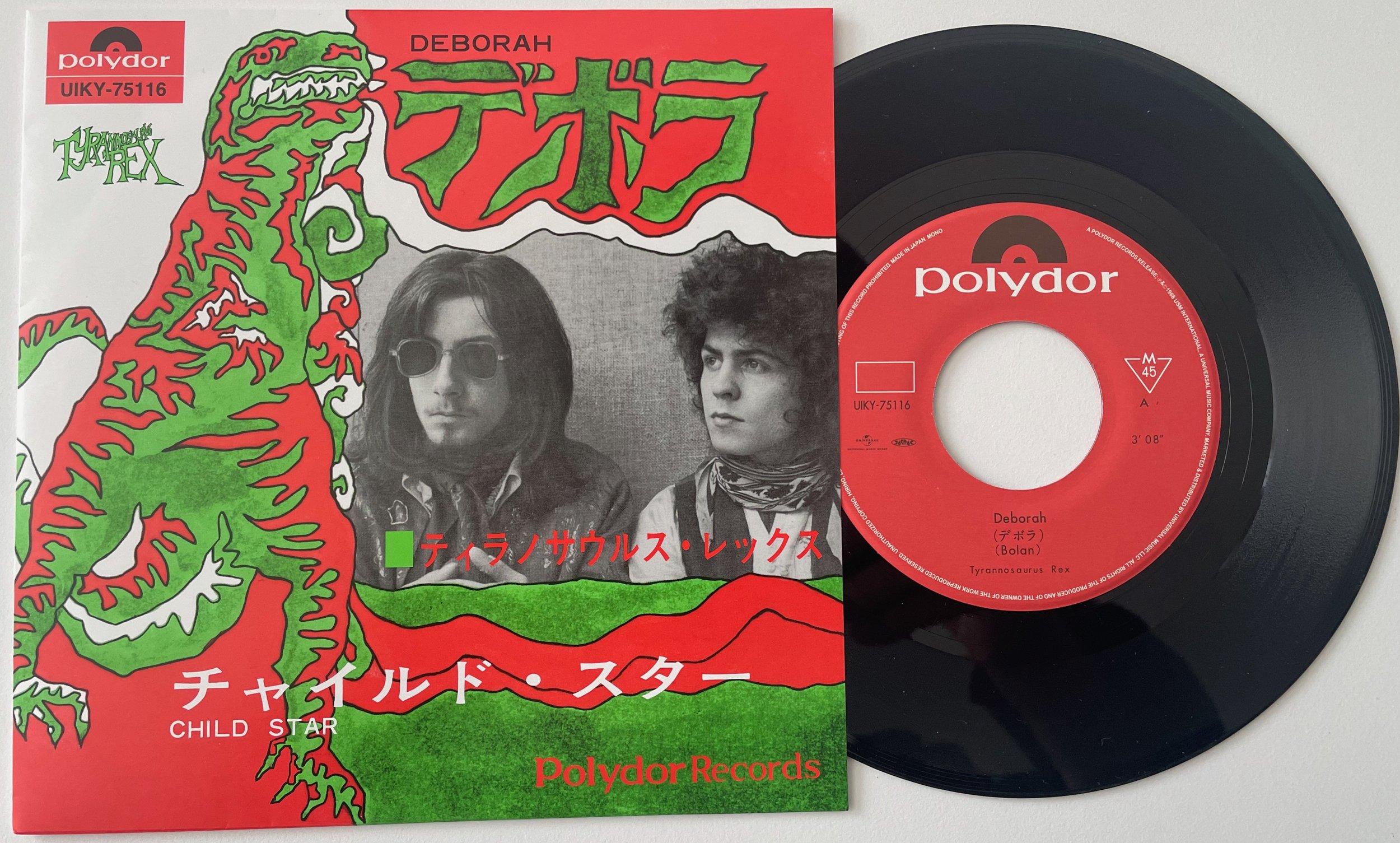
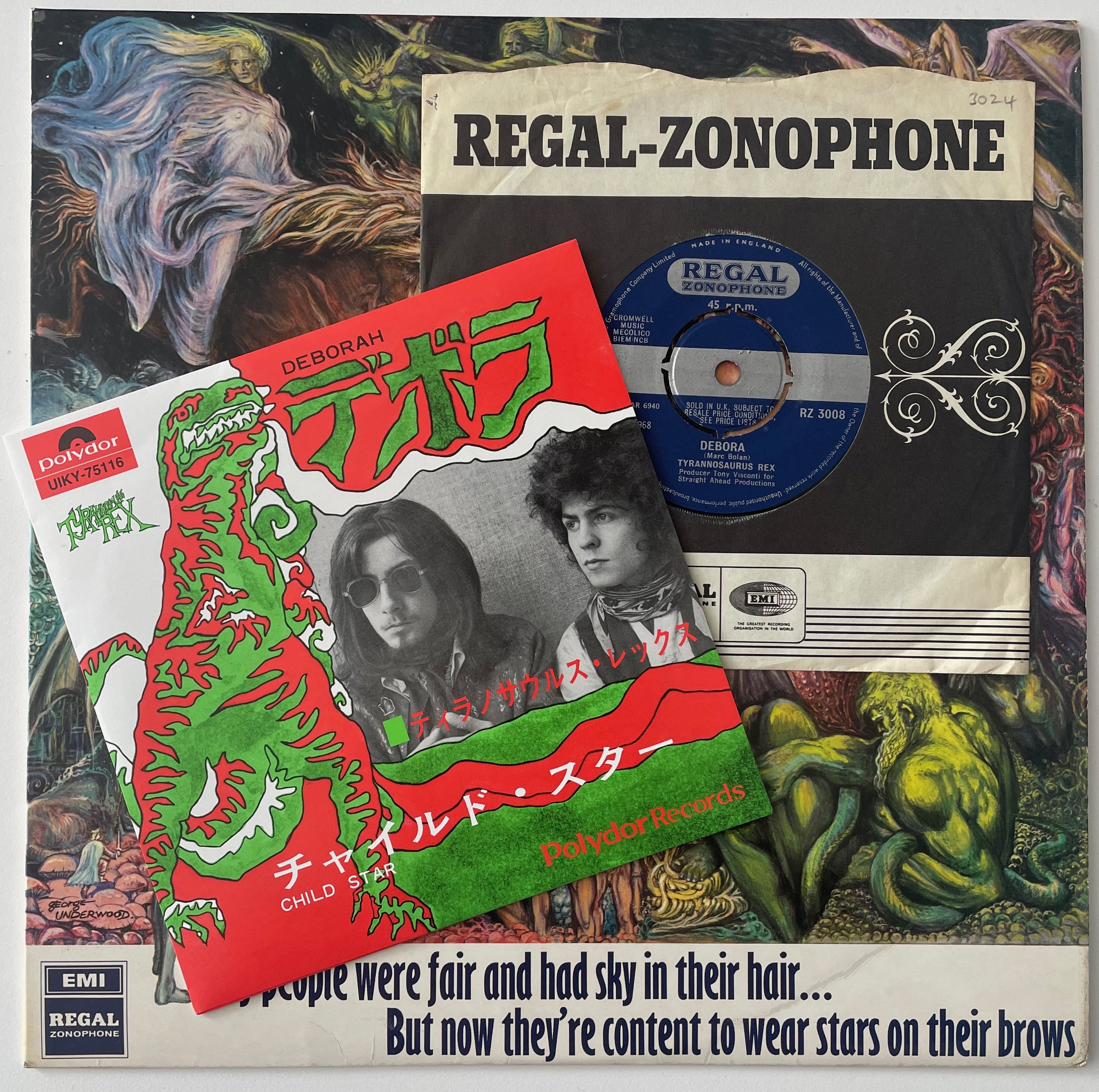
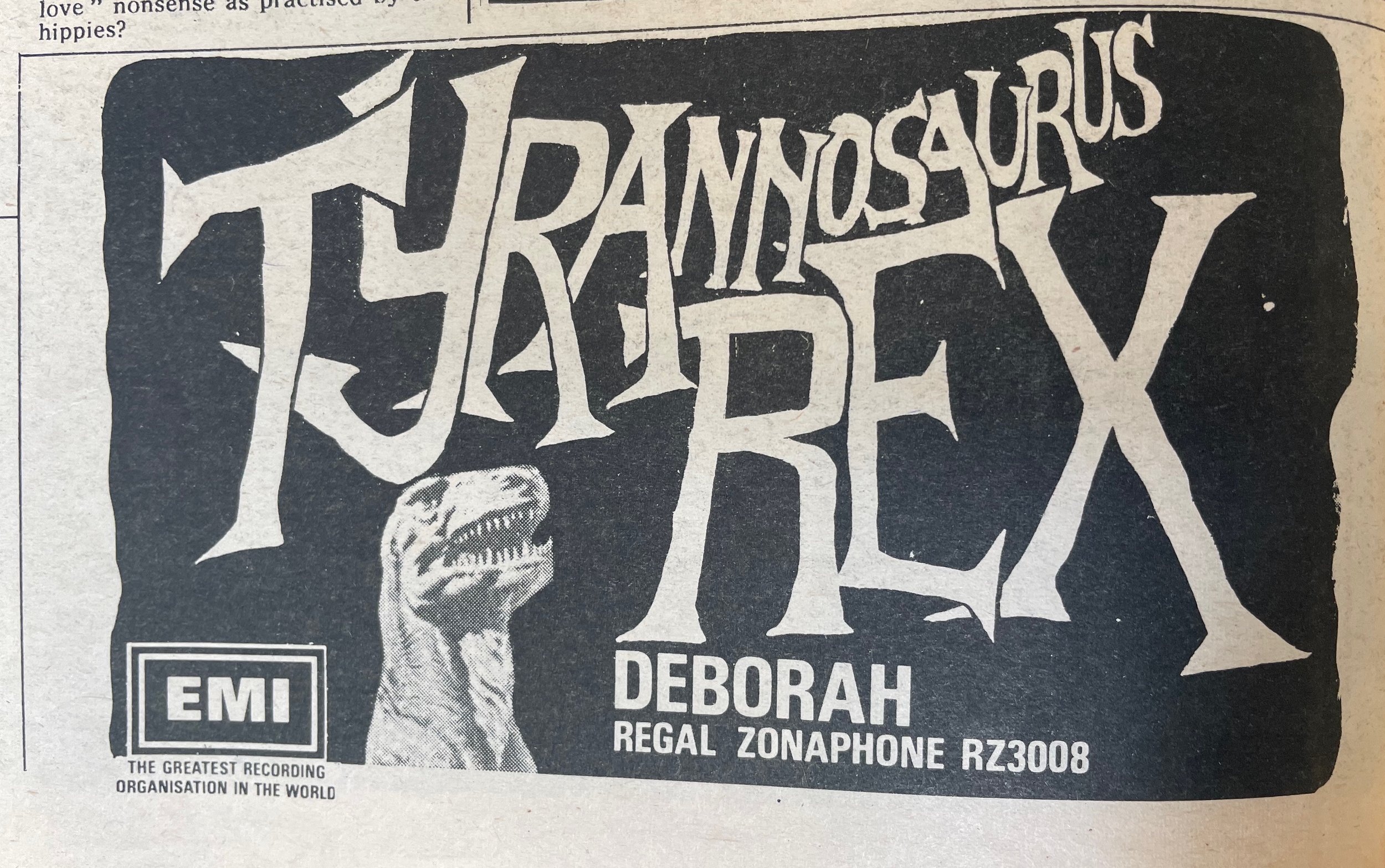
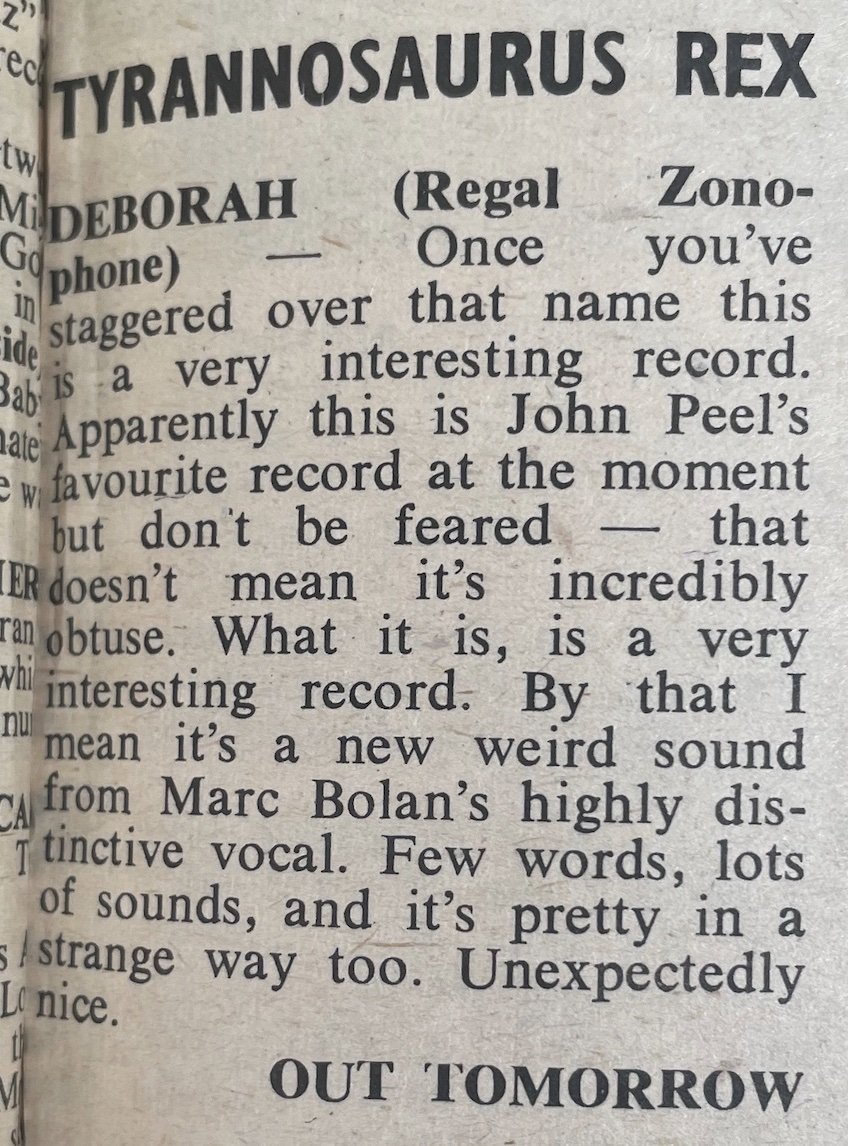
Tyrannosaurus Rex – Debora/Deborah (Made in Japan)

I’m not in the habit of buying reproductions but as I’ll never be able to afford (or justify) the price of an original Japanese release of ‘Debora’, even if I could find one for sale. I had no option but to fall for this Summer 2023 repress. It is, apparently, an exact copy, and I can well believe that, quality of the printing and paper weight seem just right . . . and who could not love this sleeve? A real bonus is the cutting of the disc, which is superb – stunning MONO that is a very close to the UK issue, if not also exact. Kudos to Kenji Yoshino, mastering engineer, and Kazumi Tezuka, cutting engineer.

The single is part of a Japanese Universal series of rare sides. My sincere hope is that they now turn their attention to John’s Children’s ‘Desdemona’, even though Bolan doesn’t get pictured on the sleeve, MC5’s ‘Tonight’, black leather jackets, and a box set of The Who’s ‘60s Japanese releases . . .

Nik Cohn, Queen (May 8, 1968)

Chris Welch, Melody Maker (May 25, 1968)

Two short profiles of Marc and Steve promoting the single in Queen and Melody Maker, Nik Cohn providing what I think is a definitive appraisal, not a word I don’t agree with. Record Mirror’s colour shot of the band is damn near perfect too . . . Marc’s exaggerated Dylanesque haircut never bettered

Derek Johnson, New Musical Express (April 27, 1968)

Penny Valentine, Disc & Music Echo (April 27, 1968)

Marc Bölan Sounds like a Motorbike

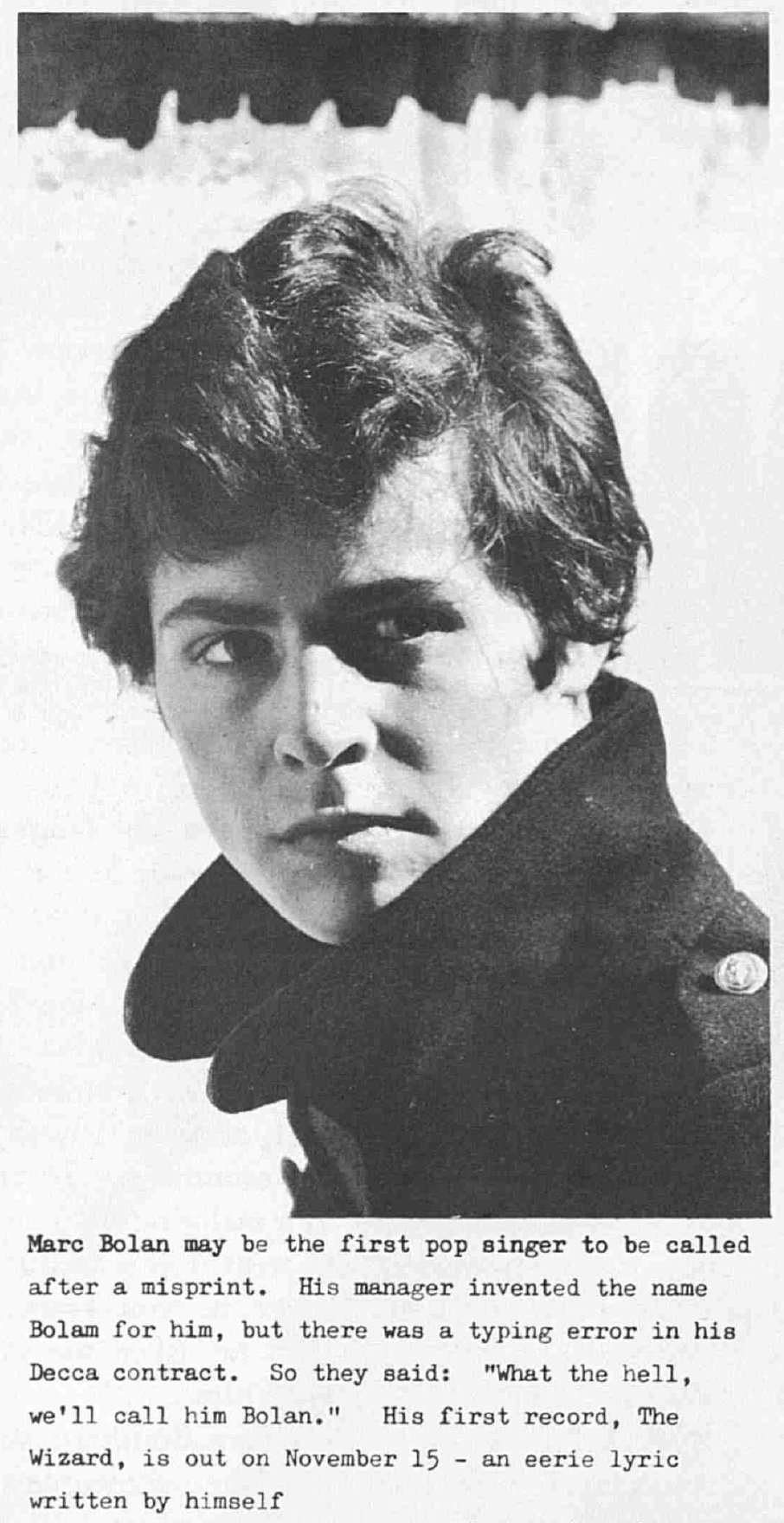
October 30, 1965 and Marc Bolan, hyping his first single, ‘The Wizard’, appears in the society magazine, The Tatler/London Life. He looks Dirk Bogarde handsome in his Decca publicity pic by David Wedgbury . . . His disc has an ‘eerie lyric’ that he wrote himself. . .

His name was an invention of his manager, he was going to be called Bolam but Decca mispelled it and now he was Bolan and, then, four months later (February 19, 1966) in his second appearance in the journal he was Marc Bölan; the German umlaut added to his surname which, with the French spelling of his first name, created quite the picture of the modern cosmopolitan.

For an 18 year-old Marc was never less than precocious . . . with ambition to boot. He was, he said, a writer, poet, filmmaker and dramatist . . . who had four, count them, of his compositions under consideration by The Byrds. He hopes to live in Paris  . . .

The magazine regularly asked musicians and celebrities to review the latest releases . . . Marc’s comments on the new discs are pitch perfect. Dylan is a ‘truly royal talent’ who makes his ‘guitar sound like a motorbike’, while Nina Simone plays piano like a motor-bike’, descriptions which I can buy. On the whole, The Who’s My Generation album is ‘bad’, he said, but the title track ‘swings’. He thinks that the Charlie Mingus album ‘sounds like everyone at this session was out of their heads’ and, pay attention Pete Townshend, ‘after one track you know where The Who got their sound from’. . . which nails it for me.

The Punk Muse and its Killer Efficient Communicants – Richard Meltzer, Nick Tosches and Lester Bangs on The Stooges, or Michael Begnal’s Future/Now

Battle of the Bands: The Stooges vs. Led Zeppelin, International Times (April/May 1971)

Psychologists have fun trying to analyse rock ’n’ roll and the people who participate in that culture. They hope to connect what goes on there to what goes on in the rest of the world. They’re going to have a ball with The Stooges.

–      Detroit Free Press (September 1969)

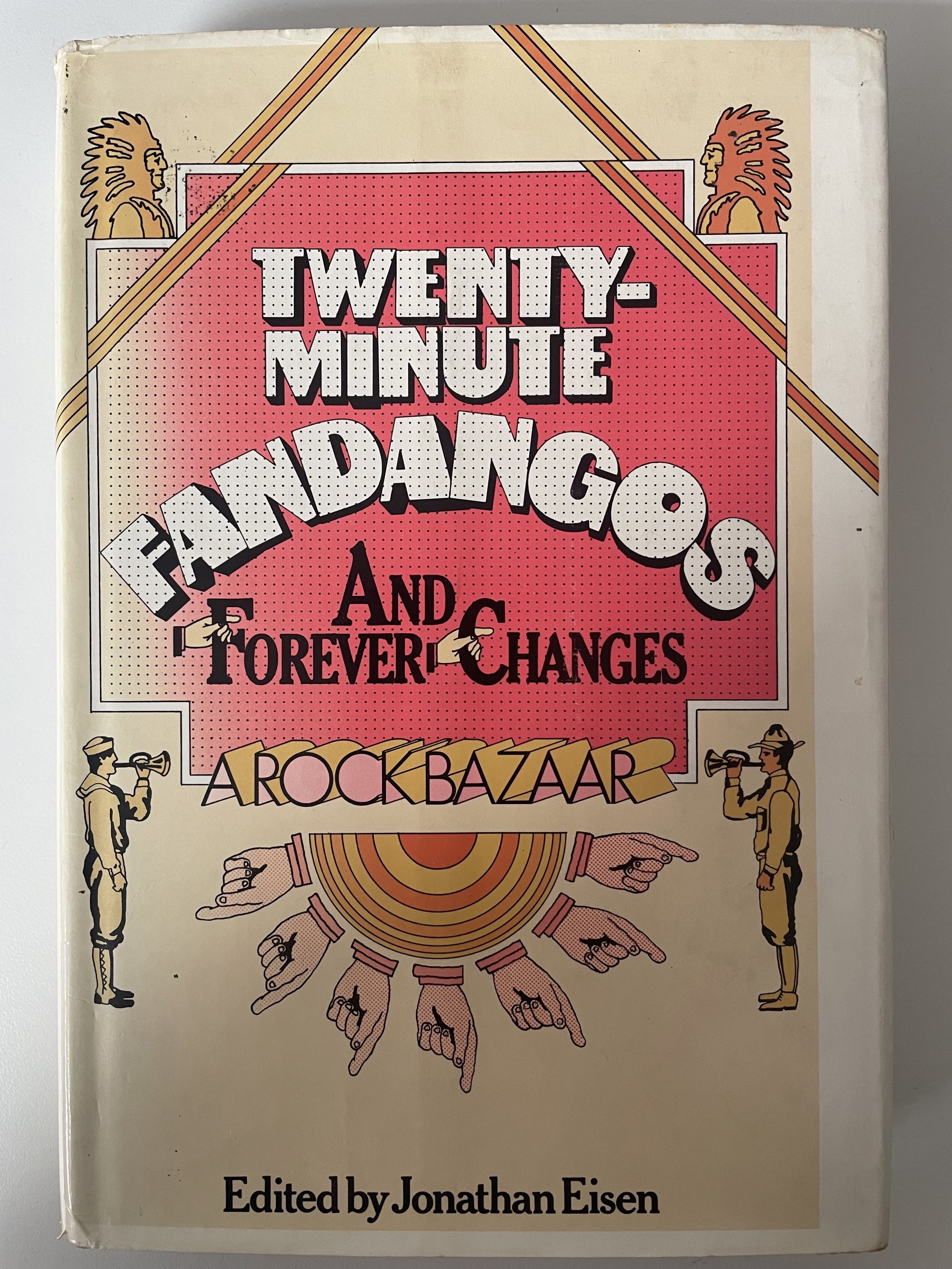
It was not just psychologists who had a ball with The Stooges, rock critics who thought of themselves as being out of step with their peers also got their analytic chops in. The late 1960s early 1970s debate over whether rock music was worthy of intellectual effort or best left alone to struggle or drown in the primordial mire of its own making found its locus in The Stooges. Published in 1971, Twenty-Minute Fandangos And Forever Changes: A Rock Bazaar was the third of Jonathan Eisen’s edited collections, preceded by Age of Rock volumes one and two, published respectively in 1969 and 1970. All three volumes are symptomatic of the then ongoing intellectualisation of rock criticism, nothing more so than the inclusion of Richard Meltzer’s goofball obscurantism, equal parts erudition and claptrap, both confrontational and self-deprecating. For the avid readers of the new rock press, Meltzer played, to near perfection, the classroom boffin and clown – the tormentor of his teachers to the delight of his peers.

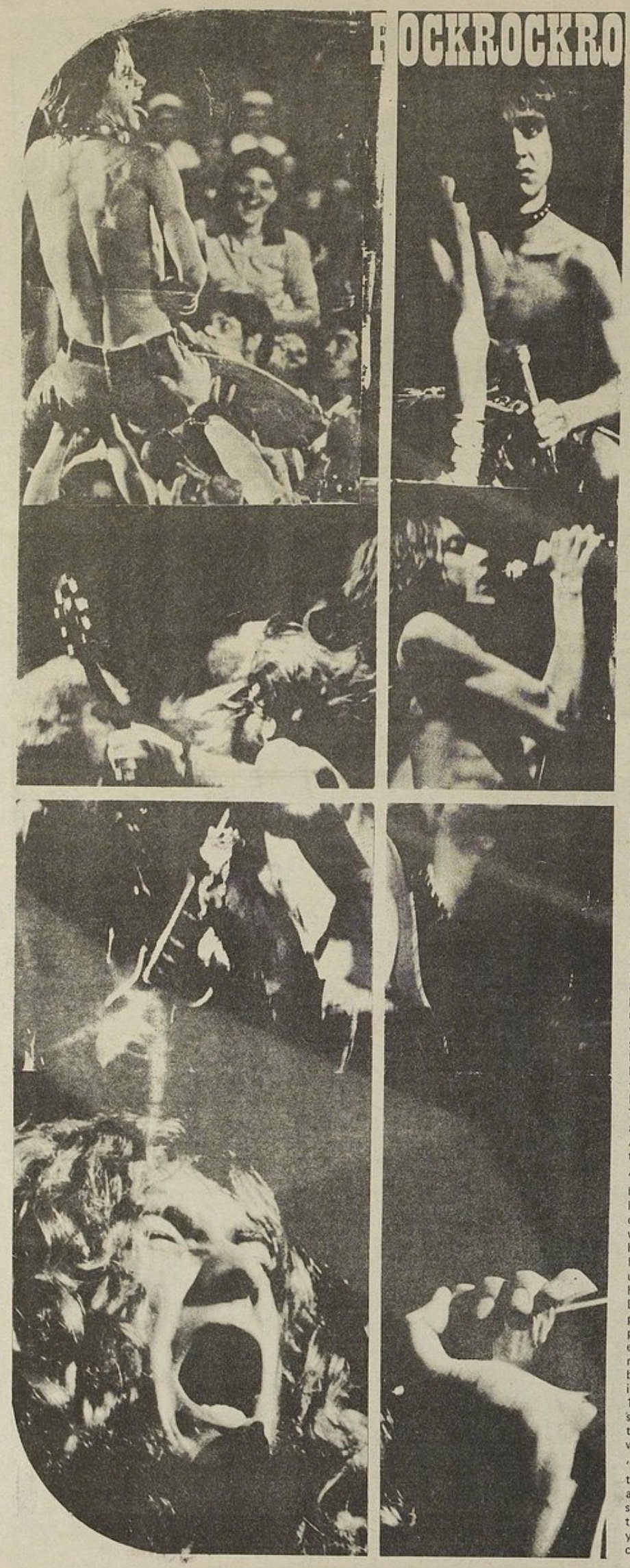
Twenty-Minute Fandangos included three fairly lengthy pieces on The Stooges, all focused on their three New York gigs at Ungano’s in August 1970 that followed on from the recording of their second album, Fun House, in May. Eisen included a long piece from Natalie ‘Stoogling’ Schlossman’s Popped, her Stooges’ newsletter, a discussion between Jackie Curtis and Ritta Redd about Iggy’s prowess that he culled from a 1970 edition of Gay Power (also quoted at length in Dave Marsh’s piece on the band that ran first in Creem then in Zigzag) and an abridged version of Meltzer’s ‘Getting It Off And Taking It Off: Iggy and the Stooges’, which was first published in his biweekly outlet, ‘Rock and Raunch’, a column for the pornographic magazine Screw. The Stooges also enjoyed a double-page spread of photographs in the book’s plate section: Iggy giving the finger to his audience, courtesy of Lee Childers, and on all fours in ripped jeans by Dustin Pittman, both taken at one or other of the New York gigs. For a group still not much more than a cultish fad, such extensive coverage was indicative of the critical space The Stooges had assumed and been assigned. They were the avant-garde dum-dum band that critics could readily patronise, discuss in erudite terms or dismiss as bozos. Neither position being mutually exclusive.

After witnessing an Ugano’s show, New York’s doyen of rock critics, Lillian Roxon,  thought Iggy Stooge the ‘sexiest thing since Mick Jagger’. In her encyclopaedia of rock she described the band under their original name, ‘Psychedelic Stooges’, as having the spirit of W. C. Fields, the Three Stooges, the Marx Brothers and Elvis Presley’ ­– a rock ’n’ roll comedy show. The Stooges were not apparently self-made, rather, ‘they were discovered in 1968’, she wrote, as if they were found in some Michigan backwater by a team of rock ’n’ roll anthropologists led by Prof. Danny Fields, Roxon’s good friend. Reviewing The Stooges’ October New York gigs at the Electric Circus, she wrote of Iggy:

His whole idea is to jolt the audience into a state of fear and shock. When he sings to a girl, or to the audience, he does not do it caressingly but with anger and violence. The girl doesn’t know whether she wants to mother him – or back away. Watching the indecision is part of the sadistic thrill of being in The Stooges audience . . .He seems to embody the violence around in America today.

The Stooges were rock’s pranksters, mocking its pretentions, and a broadcast from the dark side – a cipher for the rotten state of the nation. On the band’s third return to Manhattan in the early summer of 1971, Roxon wrote: ‘The Stooges are definitely the darlings of the avant-garde this year. It must be the spitting’. The ambiguity around how the band should be categorized or how they might be conceived was found in the question of whether they were a crass record company hype or a valid form of artistic expression? Whether synthetic or authentic? The conceptual task of answering the question was left to the critics in the audience. In this hot house atmosphere, as rock’s second generation began to mutate into its third iteration, Iggy’s clowning, his abuse of the audience, was most often received as performance art.

On the point about rock as social communiqué and critique, rock writers had no end of examples they could draw upon, not the least of which was The Stooges’ brothers, the MC5. The Motor City’s finest had been featured in Age of Rock 2 with a lengthy interview conducted by David Walley, first published in a July 1969 edition of Jazz & Pop:

Wayne: We need to talk about music because music really needs to be talked about. It’s the most personal thing. The important product.

David: All right, how is the energy level of music concerned with the MC5’s aims and goals? Is music a radicalizing tool?

Wayne: Oh, there’s no doubt about it. Music is, as you know, the killer efficient communication form. It feels good, it feels better than reading something.

David: It’s sort of like a cathartic effect.

Rob: (laughter) We’re from the Midwest – we don’t know any big words . . .

David: Where do you think this approach is going?

The rhetorical moves made by the band, from being highly self-conscious – ‘killer efficient’ communicants – to humorous self-effacement – ‘we don’t know any big words’ – is the common place in the era’s critical prose/pose. Humour was used to mask the pretentious, to track back from ideas that appeared to be over-reaching. Meltzer was past master of this game, its idiot savant. In a confected 1968 piece for Crawdaddy, republished in Age of Rock 2, he is supposedly being interviewed by Andy Warhol. The question and answer routine falls over itself as the concept of the ‘unknown tongue’ is discussed. Meltzer’s exercise is an absurd melange, a muddle of ideas that is at once a parody of the worst excesses of rock criticism and is the very thing itself. On The Stooges he wrote:

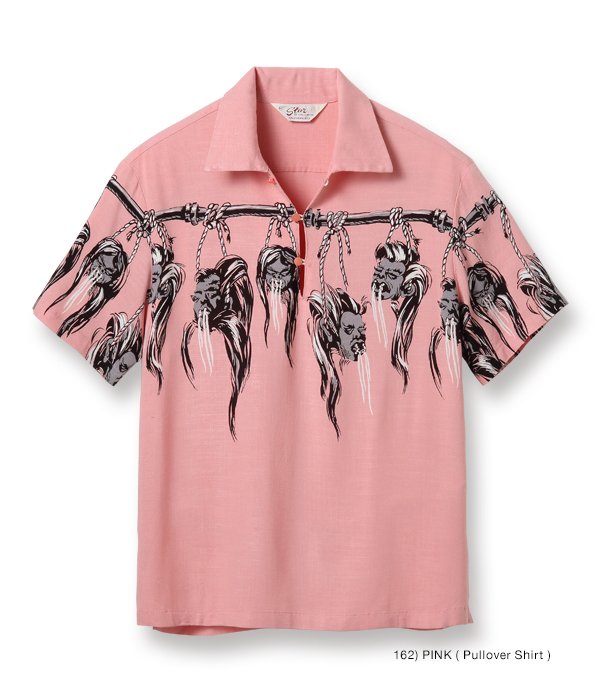
For every rock there’s a criticism and for every raunch there’s an epistemology. So raunch-wise, epistemologically speaking, my criticism of them is this: they dress real well, they have one shirt that’s pink with a shrunken head design, they have another that says Cocaine using the Coca-Cola logo, they have a lot of good shoes and some good boots. They’re what music is all about, going back even further than the first pair of blue suede shoes . . . [Iggy] learned the big beat from pounding on his tinker toys when he was just a youngster. THAT’S THE ONLY TRAINING YOU CAN GET FOR A LIFETIME OF ROCK AND ROLL, which makes the Stooges the only guys who know what they’re doing, including King Crimson.

Meltzer was not alone in his project of splicing the intellectual with the primitive, at its most reductive – The Stooges with King Crimson – it was a mongrelisation of the low and the high, the vulgar and the refined – Lester Bangs, somewhat, and Nick Tosches, wholeheartedly, joined in with similar flights of philosophical excess brought back to ground by earthy troglodyte pleasures.

Tosches’ oxymoronic intellectual primitivism took appreciable form with his sprawling essay ‘The Punk Muse – the lowdown on grease’, first published in Fusion and then collected in Twenty-Minute Fandangos. His point of departure was a critique of ‘honky bluesmen’, young white middle-class musicians who want to play black but can’t because they are not the authentic thing itself:

A straight Honky Music (Honk2) scene is a thing where you have a bunch of guys with teased hair up on a stage doing black blues, singing, with admirable ventriloquial skill, like Howlin’ Wolf in the throes of a Dexedrine orgasm, to a mob of suburban quasi-virgins who compensate for their fear of sex by substituting ‘The Lemon Song’ by Led Zeppelin at a distance of eighty paces for a good stiff dick in the dark meat.

Those who perform and listen to such acts of mimesis are ‘punks’, the honk squared is their muse. Contrary to this aspiring but lowly type is the ‘Grease’, exemplified by The Cleftones, who knew they would never know:

They knew that the secret of the universe was up in Betty’s drawers and in no one else’s. And they never got to know the secret. So they stand, left foot forward, in a timeless void, forever recreating that moment when Gnosis squirmed and said, ‘I’m not that kind of girl’. . . Grease tropes like that, sublimating the electric theme of unrequited love to dazed unrequited hard-on and back again, cultivating it with the lethal dronings of the honk fuck ritual choreography, are heavier and deadlier than anything the Stooges are capable of calculating. That’s because it comes from the heart (id) and not from the ego; poetry is puked not plotted.

As he overlooked Margate sands, T. S. Eliot would have been at odds with Tosches’ formulation, but, with their spitting, The Stooges would have slipped right in alongside The Cleftones. Except, on Tosches terms their artifice excludes them from the canon of Grease. The Cleftones were ‘speaking from the heart’, he wrote, ‘from the inside out as opposed to the I-wish-this-were-the-inside out’, which is where The Stooges did fit in. They are punks, a lesser form, lower on the scale to grease because they are a confection.

Tosches may have rejected The Stooges as ego not id, but the band were a good mirror to his own aesthetic:

Other great Honky Bluesmen of the Golden Age of Classical Grease were the Clovers, who drenched their melodies with the rhythms of the collective foyerfuck of a generation, bead-rolling the surroundings of sex memories and inducing minor key orgasms in parking lots throughout the nation, and the later female vowel-jobbers, Shirelles and Shangri-Las (although they are, in a strictly chronological sense, denizens of the Early Decadence), holy queens of greasefuck poesy, transmitting osmotic tau-waves of epiphanous pussy stench through silver-sequined lamé and jet-black stretch pants, moaning at America's youth for a transubstantial clit-strafe in the time-warp of adolescence. Kiss me there, Billy, kiss me there . . . (Ronettes, early liberators of Sleaze, unsublimated sex) fingertips (odors)    . . .  There, Billy, there . . .

Tosches’ vulgar turns are as learned as any stanza in The Wasteland, as are his arcane allusions and his shifts from the vernacular to the cultivated, from the profane to the sanctified. Yet Tosches is no more T. S. Eliot than The Stooges are King Crimson.

Opposed to the ‘Classical Grease’ were ‘THE NITWITS. Alias the Assholes. Those who sweetened sex. The Valentines, Playmates, Penguins’. But the Grease could not be suppressed or sanitised, it rolled on. To make his point, Tosches takes a detour into the realm of mathematics, into ‘The Metalflaked Alephteriaries’. The compound of ‘aleph’ and ‘teriaries’ belonged to Tosches alone, but no one, least of all the author, expected the reader to stop, pause and consider what was before them, only to wonder at the display of erudition as he traverses three forms of infinity. His final formation:

One who deals in visions, that is, one who perceives all the infinite rays of one object, or objects of conjugal positions (intersecting rays), is an Alephteriary, someone like the Heartbeats or Eza Pound or Andy Warhol, someone who can make dirt chairs by spilling it the right way. A metalflaked alephteriary is someone who can handle the infinite but, nevertheless, has a little plastic skull on the rear deck of his Olds that, for a right turn, blinks red in the right eye, and, for a left turn, red in the left eye.

Of The Heartbeats 1956 recording ‘A Thousand Miles Away’ – ‘an amazing catatonic blues, which rivals any extant Samuel Beckett soliloquy, with its eternal pledge of “coming home soon”’, Tosches wrote, ‘The basis of the song is the perpetration of desolation by the emission of artificial emotions, the absence of their non-artificial emissions dictating psychotic existentialism’. If this seems more than a two-minute street corner pop record can bear, Tosches provided the (faux) footnote in support: ‘5. See Andrew Duras, “The Year Dionysos Never Showed: A Study of the Heartbeats”, American Journal of Honk/Hieratic Communication, XII: ii (October 1961), pp. 92–117.’ Nothing to argue with there then.

‘The Fall of the House of Grease’, its ‘decadent period’, ran from circa 1958 to 1965, from the tv debut of 77 Sunset Strip to Alan Freed’s death, it was the age of Edd ‘Kookie’ Byrnes, Paul Anka and Leslie Gore. It was a time of superhype, of ‘punk media’, of Fabian and Dick Clark. In this time zone, The Beatles and Bob Dylan emerged, the latter ‘swept up in the then-big folk punk fad’. For Tosches, Dylan’s catalogue up and until Highway 61 Revisited ‘had perpetuated some of the honkiest bullshit in the history of American music. He had sat there with peach fuzz on his chin, singing like a hardened Negro loner about cold death’. That was the outside looking in, all ego, but then with Highway ‘he saw the whole derangement he’d been involved in and he began to spew out things from his own heart, all those things he used to pretend weren’t in him. . . Take ‘From a Buick 6’, a near perfect song, as good as anything the Heartbeats had ever done. Pure alephteriary’. He followed this with Blonde on Blonde, ‘one of the best rock albums of the decade’. The Beatles were similarly late developers into the state of alephteriary – ‘who the fuck wants to hold somebody’s hand?’ – but the combined effect was to win over ‘hordes of Cerebrum Groupies to become intellectual bodyguards of rock, spouting their dissertations of fantastic spiff genius into the nation’s offset presses and lecture halls . . . The Beatles made rock a punk religion’. They turned rock from a ‘calmative’ experience, you could rip it up on Saturday night but for the rest of the week you conformed. In revolt against this order, The Beatles said the rock experience could last seven days a week and ‘incited, albeit mildly, the feeling of discontent’. In doing so they paved the way for the ‘truly culturally revolutionary groups – the Jefferson Airplane, the Fugs, Country Joe and the Fish, even to a certain extent the Doors’.

Grease is the divine state of being, punk is the unworthy aspirant to that holy order, a rank acolyte. Those who solemnised rock, the cerebrum groupies, were punk critics. Meltzer, Bangs and Tosches were the grease who, from the heart, could see beyond the finite. But ‘punk’ and ‘grease’ were hardly separable from each other any more than the id is from the ego, or pure from impure. Writing in 1969 for the Detroit Free Press, Mike Gormley tacitly pulled together the cerebral and the somatic, the intellectual and the primitive, The Stooges were his test case:

The music they play has been described as stupid rock at its best. Iggy calls it dirty music and the group’s manager, Jimmy Silver, says ‘it’s dance music, fun music for kids’.

Iggy expanded on his definition. ‘The music we play is like a ritual we go through. It sounds like elemented rock but it’s actually based on classical and folk themes that are ancient. There’s a kind of bizarreness to it because we felt bizarre. When we play, a lot of things come out intentionally, so that’s the basic thing. It may be the reason our music is extremely moody. It has very simple moods to it.

Iggy as punk prophet and muse, The Stooges a greaser’s manifesto. Tosches wanted the purity of an untrammelled id, his Heartbeats, but they are a fantasy, his own honky blues; he was on surer ground with extolling the impurity of Dylan and Highway 61 Revisited.  With The Stooges, Tosches’ had tried to outdo Meltzer and Bangs, dismissing the band they had lauded to establish his hip credentials. In doing so Tosches ignored his own equation: punk + grease = metalflake alephteriary. Such a formulation meant you could convene with Iggy Stooge to testify on the infinite power of the Heartbeats, the one didn’t exclude the other. They were co-dependents. Meantime, without a care for the infinite, Ron Asheton, posed as the ultimate greaser punk in his pink Star of Hollywood shrunken head shirt, Iron Cross and white buck shoes, and pressed the keys on the jukebox selecting once more The Yardbirds’ ‘I’m a Man’.

What the band has to go on is showmanship. Right now their style is so unique that success comes easily.

But Iggy doesn’t seem to care either way.

‘The Stooges were together for a whole year before we even had a gig, and nobody even thought of us as a band. But I didn’t care, literally didn’t care, and I don’t care now. I don’t exalt some format of the band and I don’t exalt its success. If I want some success, and I happen to be in the mood to accept some success, sure, I’ll take it. I’ll grab for it, or maybe throw it away, or maybe I’ll kiss it . . .’

And that’s the word, straight from Iggy.

–      ‘A Painful Exercise in Pure Volume’, Honolulu Star-Bulletin (October 12, 1970)

Lester Bangs didn’t make the cut for Twenty-Minute Fandangos, his two glory shots ‘Psychotic Reactions and Carburetor Dung’ and ‘James Taylor Marked For Death’ were published in the same year as Eisen’s volume, but his two-part review of The Stooges’ Fun House, published in November and December 1970 editions of Creem might have been a late contender. Perhaps it was and Eisen decided that he already had enough Stooges. Whatever, it so closely followed the lines laid by Meltzer and Tosches to suggest it wasn’t because the editor was opposed to Bangs’ sermonising.
‘Of Pop and Pies and Fun: A Program for Mass Liberation in the Form of a Stooges Review, or, Who’s the Fool?’ opens with ‘Anatomy of Disease’ or the critical reaction to The Stooges, who have been abused, derided, condescended to and have faced ‘outright hostility’. Their stage act made for good copy but is too easily dismissed, wrote Bangs, with an ‘instant wag putdown’. Their music appeared so simple anyone should be able to play it, he continued, ‘that so few can produce any reasonable facsimile, whatever their abilities, is overlooked’ and, besides, he added, John Cale got the credit, for whatever it was worth, for their debut. As ‘theme music for suburban high school kids freaked out on reds and puberty and fantasies of nihilistic apocalypses’, The Stooges are scorned and dismissed. They carried within themselves the same sickness that was at large in the culture as a whole, ‘a crazed quaking uncertainty, an errant foolishness that effectively mirrors the absurdity and desperation of the times.’ But if they were rotten with disease, they also carried ‘a strong element of cure, a post derangement sanity’. The critical positions ranked against The Stooges were accepted by Bangs, the hostility shown toward them, the accusations of being mailable amateurs, their sickness, these things were not refuted by him but returned as necessary attributes of rock ’n’ roll: the core of the matter. . . To reject what The Stooges represented was to reject rock ’n’ roll itself.

The Stooges are as important as any band working today, Bangs wrote, but don’t call what they do ‘art or you may wind up with a deluxe pie in the face.

What it is, instead, is what rock and roll at heart is and always has been, beneath the stylistic distortions the last few years have wrought. The Stooges are not for the ages – nothing created now is – but they are most implicitly for today and tomorrow and the traditions of two decades of beautifully bopping, manic, simplistic jive.

The Stooges could not be faulted for being what they were, a continuation of rock ’n’ roll’s illegitimacy. The critical establishment were not wrong in their observations, but their value judgement was skewed, distorted and based on bad faith.

To get to a point where Bangs felt he could explain this phenomenon he has first to clear the foul air that surrounded the release of their first album and the hype that surrounded British blues musicians and critical incantations like ‘supergroup’ and ‘superstar’ – Tosches’ Honk2 – that have bewitched and befuddled ‘your poor average kid, cruisin’ addled down the street in vague pursuit of snatch or reds or rock mag newstands’ who otherwise had ‘no truck with the Stooges’. It’s that kid, that malcontent, who Bangs intended to ‘liberate’.

A ‘pre-eminently American kid’, Iggy Stooge was a surrogate for the teenager Bangs was honing in on. Both singer and kid suffer from confusion, doubt and uncertainty, from inertia and boredom – ‘suburban pubescent darkness’. But was this a theme worth pursuing? asked Bangs. Did the travails of a suburban punk measure up to the Black Panthers confrontation with the ‘new social systems’? Comparatively an irrelevance? Weren’t the Stooges simply trading in adolescent caterwauling? And wasn’t Iggy Stooge ‘a blatant fool’? Bangs embraced the argument, and again returned the principal charge of Iggy as clown. He was indeed a fool, but better the fool than the emperor in his new glad rags was how Bangs read the scenario.

If the hype, the record industry, is a joke, cosmic or otherwise, then being a fool is the only legitimate response. If not, ‘fantasies of a puissant “youth culture”, would collapse, and with it would collapse the careers of the hyped talentless nonentities who breed off it. Can you imagine Led Zeppelin without Robert Plant conning the audience” “I’m gonna give you every inch of my love” – he really gives them nothing, not even a good-natured grinful “Howdy-do” – or Jimmy Page’s arch scowl of supermusician ennui?’. Iggy is Bangs’ court jester, an impertinent figure capable of pricking the airs and vanities of his betters by hurling a cream pie at them. He does this as readily as he succumbs to the indignities his audience imposes by return:

It takes courage to make a fool of yourself, to say, ‘See, this is all a sham, this whole show and all its floodlit drug-jacked realer-than-life trappings, and the fact that you are out there and I am up here means not the slightest thing’. Because it doesn’t. The Stooges have that kind of courage, but few other performers do.

For Bangs The Stooges had the strength to ‘meet their audience on its own terms’ and not respond with ‘solemn grimaces of artistic angst, no sir’.

Iggy is like a matador baiting the vast dark hydra sitting afront him – he enters the audience frequently to see what's what and even from the stage his eyes reach out searchingly, sweeping the joint and singling out startled strangers who're seldom able to stare him down. It's your stage as well as his and if you can take it away from him, why, welcome to it. But the King of the Mountain must maintain the pace, and the authority, and few can. In this sense lg is a true star of the rarest kind – he has won that stage, and nothing but the force of his own presence entitles him to it.

As to the music it is, wrote Bangs, ‘monotonous and simple on purpose’, ‘mindless rhythmic pulsation . . . providing effective hypnotic counterpoint to the sullen plaint of Iggy’s words’. Their pristine simplicity is compared to the one-finger organ drone of Question Mark and the Mysterians ’96 Tears’ – the ur-text and origin story for The Stooges. Bangs has a profound love and respect for the experimentation of The Yardbirds and The Who, the use of feedback and noise which finds its ultimate locus in the Velvet Underground’s ‘White Heat/White Noise’ but the end result of this sonic experimentation was not liberation but the dead end of ‘Art-rock’ embodied in Sgt. Pepper. Things had taken a wrong turn somewhere back down the line, so Bangs was intent on refiguring the map’s trig points.

Bangs argued that the route out from behind and around this problem was to marry the simple four-four beat of two or three chord rock ’n’ roll and its monotonous melodies with the complexity of free jazz. ‘The Stooges’ music is like that.’ wrote Bangs:

It comes out of an illiterate chaos gradually taking shape as a uniquely personal style, emerges from a tradition of American music . . . that a band can start out bone-primitive, untutored and uncertain, and evolve into a powerful and eloquent ensemble. . . rock is mainly about beginnings, about youth and uncertainty and growing through and out of them. And asserting yourself way before you know what the fuck you’re doing. . . It can’t grow up – when it does, it turns into something else.

After working through the impact (and misfires) of Fun House, Bangs concluded that the Stooges are ‘super-modern’ but definitely not Art. They are a put-on, a joke, but one that reveals the sickness at the heart of things and that revelation comes on like a threat, but a ‘threat that is cathartic, a real cool time is had by all, and the end is liberation’.

Detroit Free Press (December 26, 1969)

When Greil Marcus pulled together his collection of Bangs’ work he opened with ‘Carburetor Dung and Psychotic Reactions’ and followed it with a late 70s consideration of Astral Weeks, both fell under the heading ‘Testaments’: Bangs as advocate for a form of rock ’n’ roll as adolescent discontent matched with his empathetic side. But the Van Morrison interregnum does not last long before it is followed in turn by the ‘Blowing It Up’ section with the lengthy Fun House review and the even longer ‘James Taylor Marked For Death’ screed/manifesto.

‘Carburetor Dung’ opens with Bangs acting the role of Creem’s Uncle Remus for third-generation rock kids: ‘Run here, my towhead grandchildren, and let this geezer dandle you upon his knee’. His tale of yore concerns The Yardbirds ’65 before the rot set in with their ‘pretentious and overblown’ progeny of ‘emaciated fops called Led Zeppelin’. His story is part wallow in nostalgia, detailing the impact the Yardbirds had on numerous aspirant players, Bangs wrote: ‘and then punk bands started cropping up who were writing their own songs but taking the Yardbirds sound and reducing it to this kind of goony fuzztone clatter . . . oh, it was beautiful, it was pure folklore, Old America, and sometimes I think those were the best days ever’. Bangs felt the same psychotic reaction as that which had inspired The Shadows of Knight and The Count Five, but in his fantasy it doesn’t end in art and Sgt Pepper. In his alternative history the Count Five continue to record and ineptitude remains a righteous attribute . . . a refusal to conform to the mundane, to kowtow to refined notions of good taste, to grow up.

Bangs’ follow up piece, ‘James Taylor Marked for Death’ switched out The Yardbirds for The Troggs and where Amon Duul had picked up Bangs’ torch of ineptitude in this latest iteration it was passed onto, of course, The Stooges. What changed was that the flame had dimmed, the light he was shining on the juvenile malcontent was receding:

The MC5 might have put you ‘flat on your back’ with ‘nipple stiffners’ and ‘wham, bam, thank you ma’am’ jams, the Stooges might tie you up in feedback wires while Iggy performed unthinkable experiments on your mind and body, even the Doors might have given you a crawly gust or two, but the Troggs eschewed all trendy gimmicks and kinky theatrics, delivered their proposition with sidewalk directness and absolute sincerity, and came out for any ear that half listens the most powerfully lust-driven outfit in white rock ’n’ roll then or now.

Between the reminisces about teenage fumbling and sex fantasies, Bangs explored what it means for a band like The Stooges to channel these adolescent urges post-the lust driven and feedback paroxysm  of The Troggs and The Yardbirds:

I ain’t as desperate as I sound, but ‘Wild Thing’ is rock ’n’ roll at its most majestic and for all the volume of product we don’t have any ‘Wild thing’ these days – a few things come close, maybe a Velvets ‘Head Held High’ or Stooges ‘Little Doll’, but even these are created from a standpoint of intellectualized awareness and consequent calculation.

The imposition of self-reflection in rock ’n’ roll meant the ground had changed, what once fuelled The Troggs is today but a simulacra or at best a waning echo of the real thing. In his introduction to Richard Meltzer’s The Aesthetics of Rock, Greil Marcus considers the explosive moment of Sgt. Pepper that Meltzer is concerned with as the ‘apotheosis of rock-as-art’, which was ‘contradicted by rock's existence as no more than a brute actualization of everyday life.

With Sgt. Pepper, art-was-dead because it suddenly ceased to exist as a realm separate from everyday life – as a unit of significance distant from it. The record was so alive, so surprising, that people suddenly lived their everyday lives with a new intensity. They walked down their streets as if they had never seen them before. They didn't necessarily connect that experience to the appearance of Sgt. Pepper, just as they had not necessarily connected the dulling of their streets to the presence of bad songs, or the vitalization of those streets to the presence of good ones. . . The death of art is what rock 'n' roll, as the brute actualization, had aimed for from the beginning; from the beginning, rock ’n’ roll had meant to change ‘art’ into everyday speech . . . But then the triumph was forgotten; art went back to ‘art’; everyday life went back to banality.

In his review of Fun House and in ‘Carburetor Dung’, Bangs pushed back against that return to the quotidian binary of art and life, he wanted that moment where the two are fused together, or at least the possibility of that fusion as with his fantasy of primitive rock melded together with free jazz, but in ‘James Taylor Marked for Death’ he recognised, like Meltzer, like Tosches and like Marcus, that the act of synthesis changed everything, moreover, even if the streets return to a state of mundanity and art is returned to the gallery, that moment can never be regained, it has passed as certainly as the greaser teen years Bangs never got over, all that is left, as Tosches called it, is punk.

***

Detroit Free Press (September 21, 1969)

The Stooges are now firmly established in the rock canon in ways none of their early advocates would have prophesised (or would have wanted) yet in many ways the band’s first critics were as responsible for this state of affairs as anyone, their philosophical disquisitions, whether parodic or not, would leave a mark on a generation or two of writers to come. They promised that The Stooges were always, and in all ways, a more interesting prospect to consider than any other of their peers and contemporaries – a shape shifting object of fascination. The Stooges now, however, are fixed in aspic as the ultimate cult band – a connoisseur’s obsession. Fifty-odd years after the fact they are a familiar yet rare pleasure, available in all formats yet cliquishly exclusive. As the magazine articles, blog posts and books on the Stooges proliferate, as the bootlegs get turned into deluxe reissues and the few feet of extant live footage gets stitched into hagiographic documentaries we have never known more about this band and yet never understood less about them – are psychologists still having a ball with The Stooges? When Bangs and co. were obsessing the Stooges they were not yet a spent force, their potential to make an impression on critics and audiences alike was still in play. After the fact, how to regain that vitality, that tantalising sense of potential? Attempting to capture those moments-in-time is what any decent account or history of the band must reach for if it is going to be more than just another sacrament at the altar of their cult.

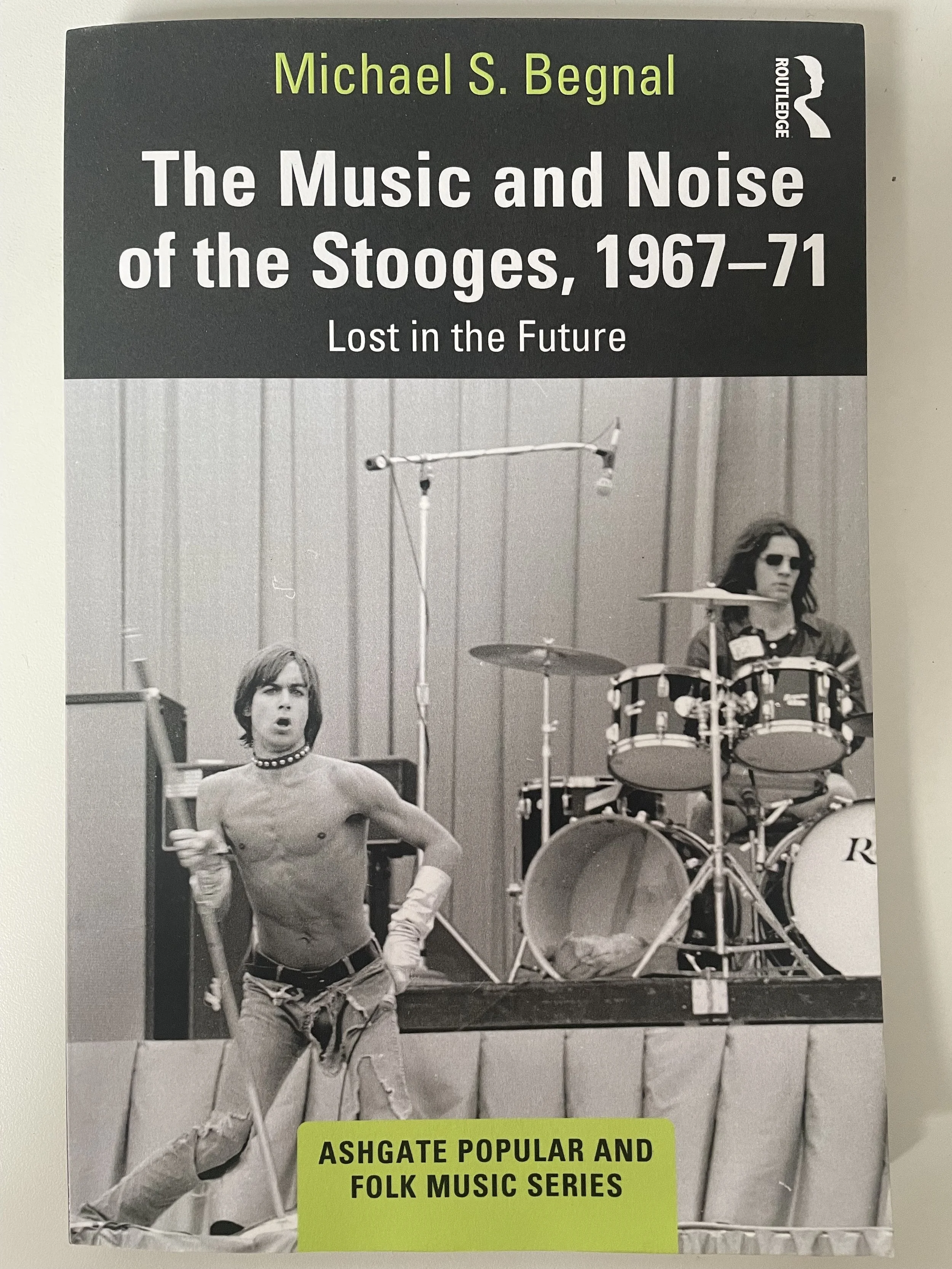
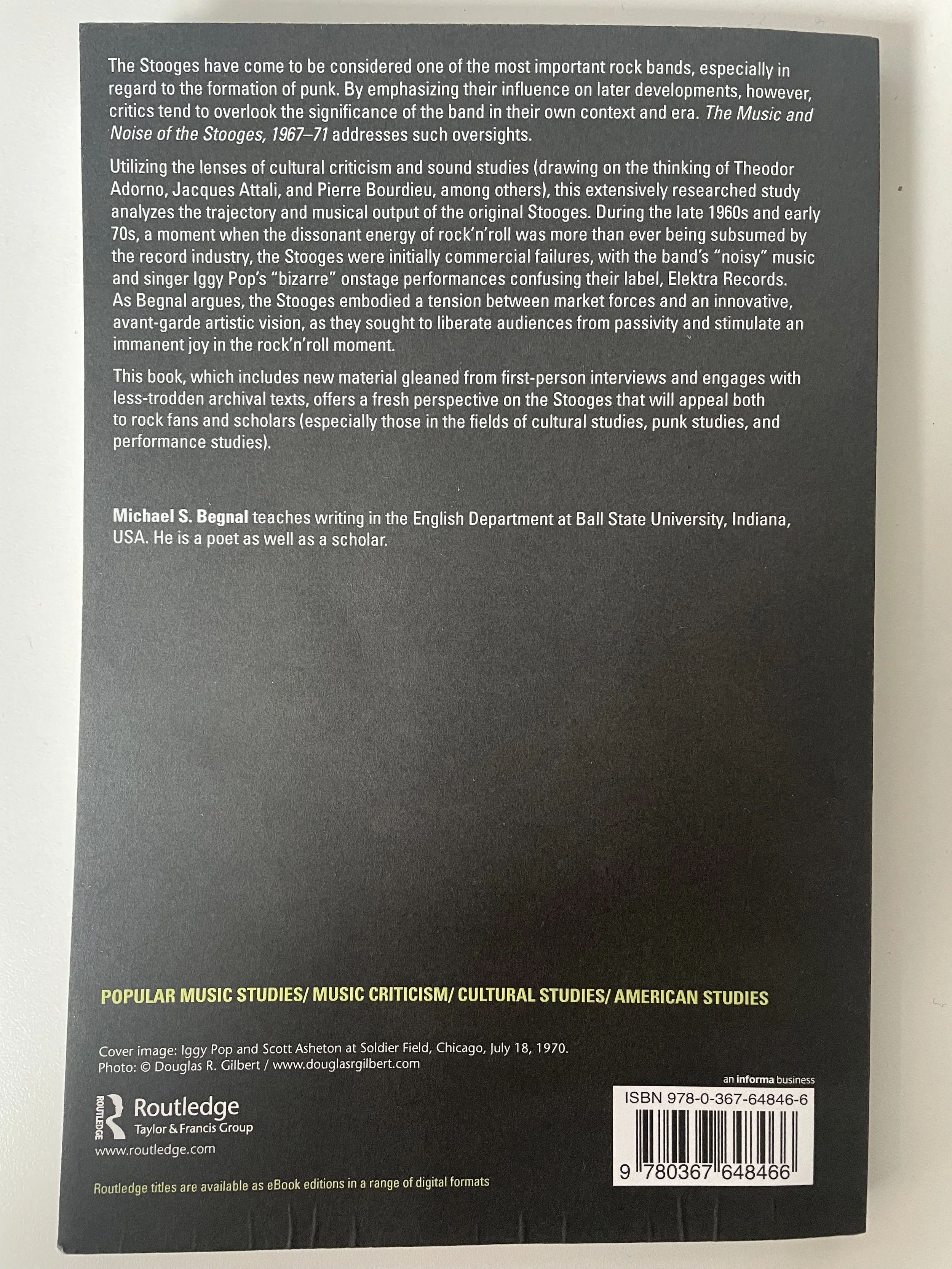
This is why Michael S. Begnal’s The Music and Noise of the Stooges, 1967–71: Lost in the Future (Routledge, 2022) is such a welcome intrusion into the stilled debate. It is an unapologetically academic volume and, as such, returns things to where Bangs, Tosches and  Meltzer left off. This is regardless of whether you see their ramblings as pastiche, pseudo-intellectual, pretentious or as the gospel truth. Meltzer, anyway, would surely enjoy Begnal’s use of European high theory to pull open the mummified corpse of the band to once more let loose the reverberations.

Pierre Bourdieu, Jacques Attali and Theodor Adorno are Begnal’s key co-conspirators helping him to unwind the tension the band embodied as avant-garde practitioners and as music industry product. You can imagine other theorists and other methods to negotiate the continuum between art and pop, the high and the low, the vulgar and the refined as well as other contexts to make meaning out of The Stooges (a more thoroughgoing take on teen-trash consumption as practiced, in particular, by Ron Asheton – that pink Star of Hollywood shrunken head shirt –  would have been in my ideal study), but what’s important is the debate itself that Begnal is stirring up, not his particular methodology. If the theory sticks in your craw, if you won’t meet this scholar at least halfway, then we are stuck with The Stooges as empty godheads at whose shrine we can only offer up more and more arcane pieces of information and newly discovered facts that lead only to more solipsistic inanities, fetishistic practices and smothering sermons on why the band matter to you rather than on the matter of the band itself.

Lost in the Future moves through three key phases in the band’s careening – their initial adventures in Michigan’s art spaces, ballrooms and clubs as the Psychedelic Stooges; the second phase is the two LPs they made for Elektra and the third is dedicated to an unrealised third album. With the implosion of the band in 1971 Begnal ends his disquisition, but a second volume on the Raw Power era is promised.

A noise-art ensemble without melodic intent or song structure and sans the mundane line-up of guitar, bass and drums, the Psychedelic Stooges valued improvisation and playfulness that involved found objects and domestic appliances – producing a subversion of the principles ­– competence and respect for the generic rules of music making and performance – that the groups, which The Stooges, bottom of the bill, supported, held to be irreducible. Whatever the worth of their art practice, in this iteration The Stooges were so far out they could never be appropriated and packaged by the music industry, until they were . . .

Shucking off the psychedelic tag freed the band of a redundant signifier of their self-identification with rock’s progressive element that by 1968 had turned experiment into conformity. By then ‘psychedelic’ no longer carried an element of provocation nor adventure the band obviously intended it to have, but having a shortened name that continued to pay homage to the Three Stooges, purveyors of the lowest form of comedy imaginable – a dumbshow of physical clowning without an iota of self-reflection or artistic pretension – now that was inflammatory. Sitting outside of both rock’s mainstream and art culture, Begnal argues, The Stooges found purpose in bridging the divide between independence and a collective approach toward creativity, as members within a band and as a band unique among their peers.

When The Stooges entered into a relationship with Elektra records that channel between the communal and the individual was stress-tested. Begnal plots the line of tension that was revealed between the demand that the band conform to the marketplace and their attempt to hold true to the principles they had fashioned for themselves:

Having evolved from their original freeform, experimental approach into something more recognizably rock, there is still the affirmation that, even though Iggy takes the role of frontman, the shared ‘group voice’ – forged in the process of a mutually unfolding artistic evolution – predominates. In opposition to the machine-like aspects of both the hit-driven music industry and a regimented life of factory work, the Stooges’ music centralizes the creative development of organic human interaction.

Against the odds, the first album successfully negotiated this predicament, argues Begnal, but was it a repeatable experience and was that repetition even desirable? This predicament was especially charged, Begnal writes, given that the band ‘were committed to ongoing change and evolution’ and that their ‘deliberately anti-pop stance’ had ‘put them in a particularly difficult position in terms of building a wider audience and selling records’.

Analysing the creation of Fun House is the book’s centre piece, Begnal has clearly listened with dedication and care to the boxed set of the Los Angeles recording sessions. His exploration and evaluation of the development of individual songs and the album overall is erudite and refined, wherein earlier chapters his ideas tumble out in a rush, here he gives them ample breathing space that allows him to take up a more nuanced set of critical positions. His analysis illuminates the problem all bands face if they want to make records for a major company and not compromise on their vision. The conformists, Begnal argues,

can write slickly produced pop ditties, or. If they still insist on projecting some sort of countercultural or rebellious image or sound, they need to make sure it’s emptied of any real danger to the existing order of things, so that it too can be packaged and marketed successfully – recuperated, as Attali puts it (or assimilated, as Gioia puts it). Bands that don’t do one or the other can therefore be easily dismissed, market dynamic likely guaranteeing they will soon disappear from the scene. Most listeners don’t even need to be told to see them as ‘noise’ or as not actually ‘music’, because their tastes have already been formed by this same process.

Beyond the two albums, Begnal dedicates significant space and thought to their live performances, mustering a superb array of primary accounts (if you don’t like his methodology then you can at least harvest the fruits of his bibliographic labour) that effort pays off in what for me was the true delight of the book, his analysis of what would have been their third album if Elektra hadn’t pulled the plug. Concert reviews and interviews with witnesses are arraigned alongside his listening to the Easy Action set You Don’t Want My Name You Want My Action that documented in lo-fi form the five piece band with James Williamson, joining Ron Asheton, on guitar, across four shows from April/May 1971.

While steeped in nihilistic ‘thirst for destruction’, the new songs were not about death per se but rather signify in retrospect the moment of their creation, the desperation that the Stooges must have felt, the intimations of potential extinction, and a strange kind of joy at the same time.

But that potential album, as he writes, was lost to the future, a what could have been that keeps the story of The Stooges still moving ahead, still in virtual if not actual progress. Begnal ends his account on the cusp of tomorrow with the disintegration of the original band and their subsequent consecration – an act of fan based sanctification as it was of a music industry assimilation of their non-conformity, the taming of their radical intent.  And yet,

Concomitantly, there is still power in the Stooges’ work that remains and comes through every time we listen to their records. Though they may have often been perceived as ‘lost in the future’ in their own time, and finally animated as ‘classic’ in our time, the raw particularity of their music and the uncompromising nature of their vision continue to prompt us to reconsider what it means to make non-commercial art in a consumerist society.

Begnal’s book is in itself eloquent testimony to the fact that The Stooges continue to inspire listeners, those among us who are not content to accept instant gratification but instead join with the psychologists in having a ball with The Stooges as we follow the lines laid down by Lester Bangs that guarantee a real cool time with liberation as our goal.

Traces They Left . . . Yardbirds in Australia

Thousands of Sydney teenagers, most of them girls packed into Sydney Stadium last night for the ‘Big Show’ . . . Keith Relf (above) lead singer of the English group, clutching the microphone and gleaming in a shirt of pink silk, seems to reflect the hysterical excitement of the evening.

Sydney Morning Herald (January 24, 1967)

Morning Herald (January 8, 1967)

Morning Herald (January 15, 1967)

An old picture . . . Morning Herald (January 22, 1967)

Morning Herald (January 24, 1967)

‘The Yardbirds, four bedraggled but friendly Englishmen’

Melbourne’s The Age (January 25, 1967)

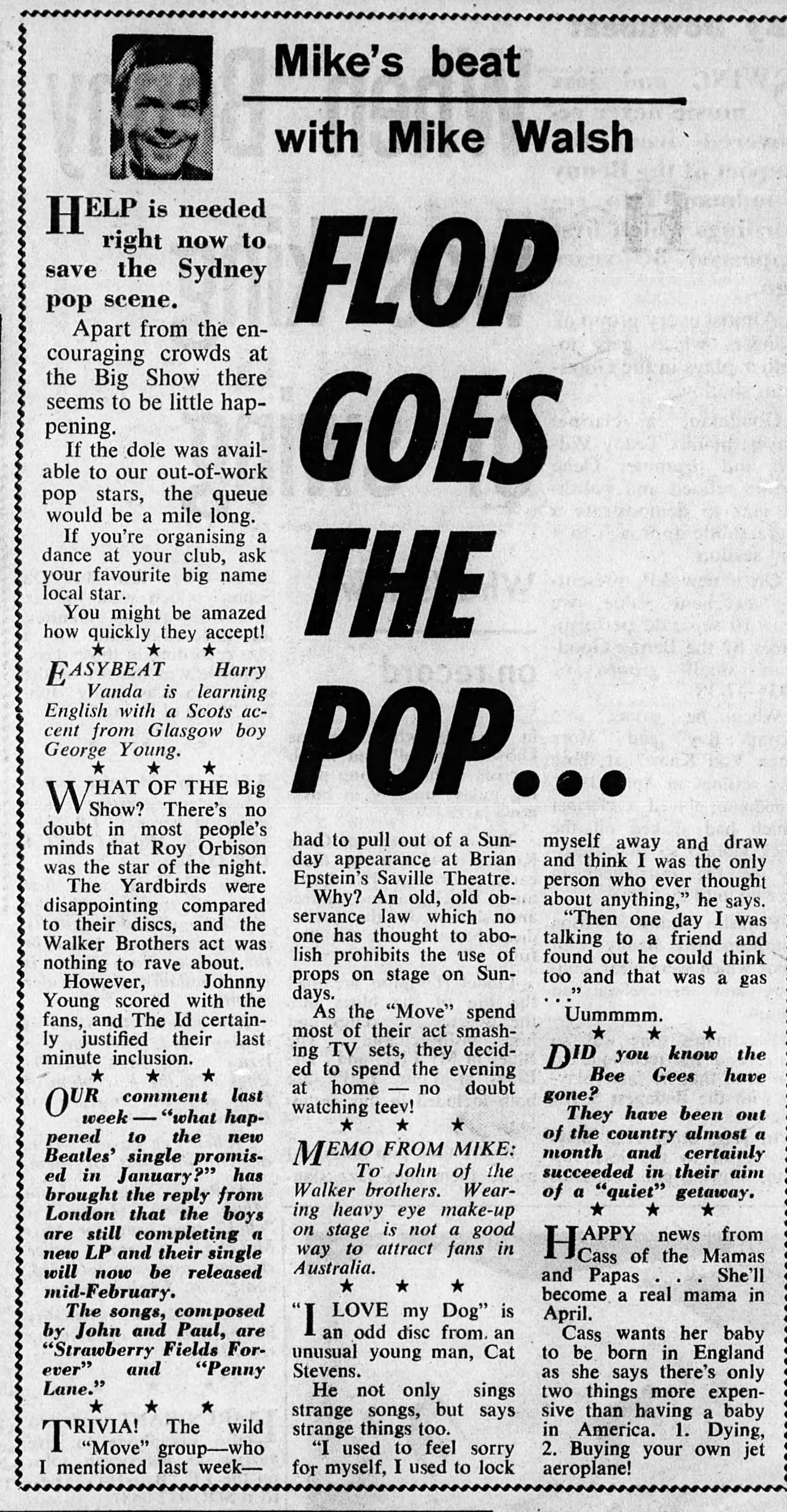
‘The Yardbirds were disappointing compared to their discs’, wrote Mike Walsh.

Sydney Morning Herald (January 29, 1967)

Festival Hall, Melbourne (January 26-27)

‘Yardbirds . . . a bizarre English group . . . Lead guitarist Jimmy Page bears a mention if only for his dress –a black frock coat, heavily jewelled tie, synthetic shirt and purple bellbottom trousers. On his lapel he wore medals – I don’t know why; they certainly aren’t for his singing’.

First night review, The Age (January 27, 1967)

State Express’s Terry Clark claims to have played sessions with The Yardbirds . . . Another chancer?

Sydney Morning Herald (December 3, 1967)

Yardbirds at Dayton's Super Youthquake, August 5, 1966

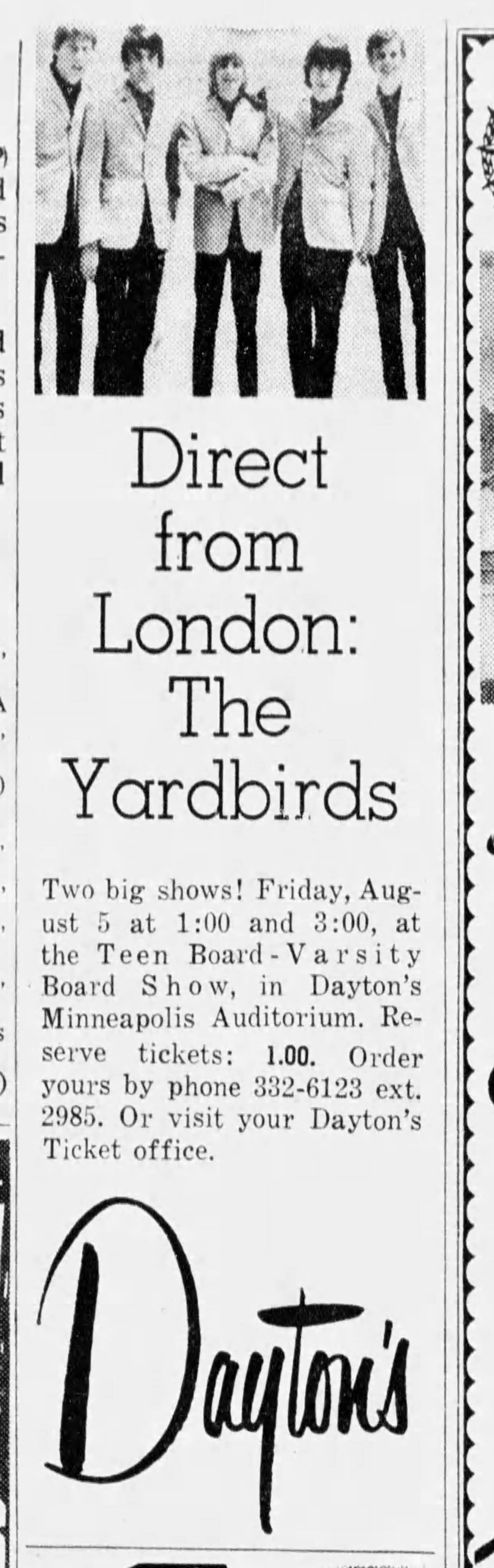
The Yardbirds first appearance on their debut US tour with Jimmy Page was for two afternoon shows, Friday August 5, 1966, at Dayton’s department store in their eighth floor auditorium.

Outside of showcase gigs like those at the Hullabaloo in Hollywood, back at the start of 1966 when Paul Samwell-Smith was still in the band, The Yardbirds’ US shows that year were mostly as part of some bigger event, like this smash fashion bash.

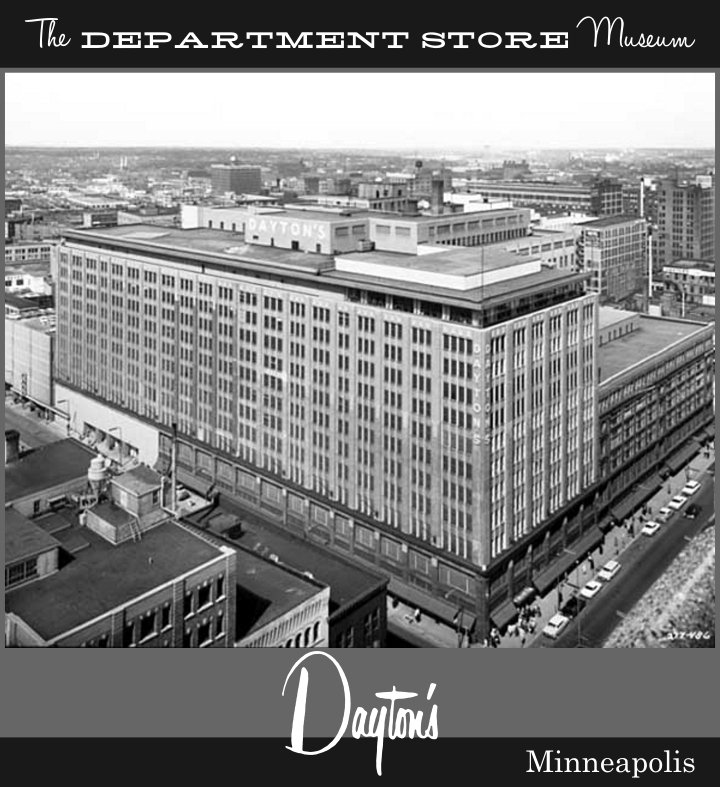
Dayton’s department store was massive, a size that must have seemed beyond belief to young Englishmen in 1966

Jimmy Page outside the store, snap taken by fan John Morris [HERE]

All a blur: image of the gig that is floating around on Facebook with Beck present and correct.

The Super Youthquake was a month long back-to-school bash, The Yardbirds no more than a blip in the scheme of things – at best they were part of a promotional gambit, another piece of English culture, like a faux Carnaby Street window display

‘Girl watchers’ . . . . those attending the afternoon shows. All very ’66 Mod and not a word on the ’Birds – the ostensible reason they had gathered to look and be looked at

Image is from the press conference given in the store, it is not a publicity shot like those used in advertising the event that still featured Paul Samwell-Smith.

The Yardbirds were in Minneapolis but a day before moving on to Davenport, Iowa and then Chicago for a meeting with Cynthia Plaster Caster who would take a mould of Beck’s leg . . . After the Dayton’s gig you could buy the demonstrator Fender amp they’d used (perfect working order) or pick up a ‘Yardbird’ type fuzztone (bring ad for special discount). . . . The traces they left . . .

Leaving a Wound: The Who and the New British Invasion

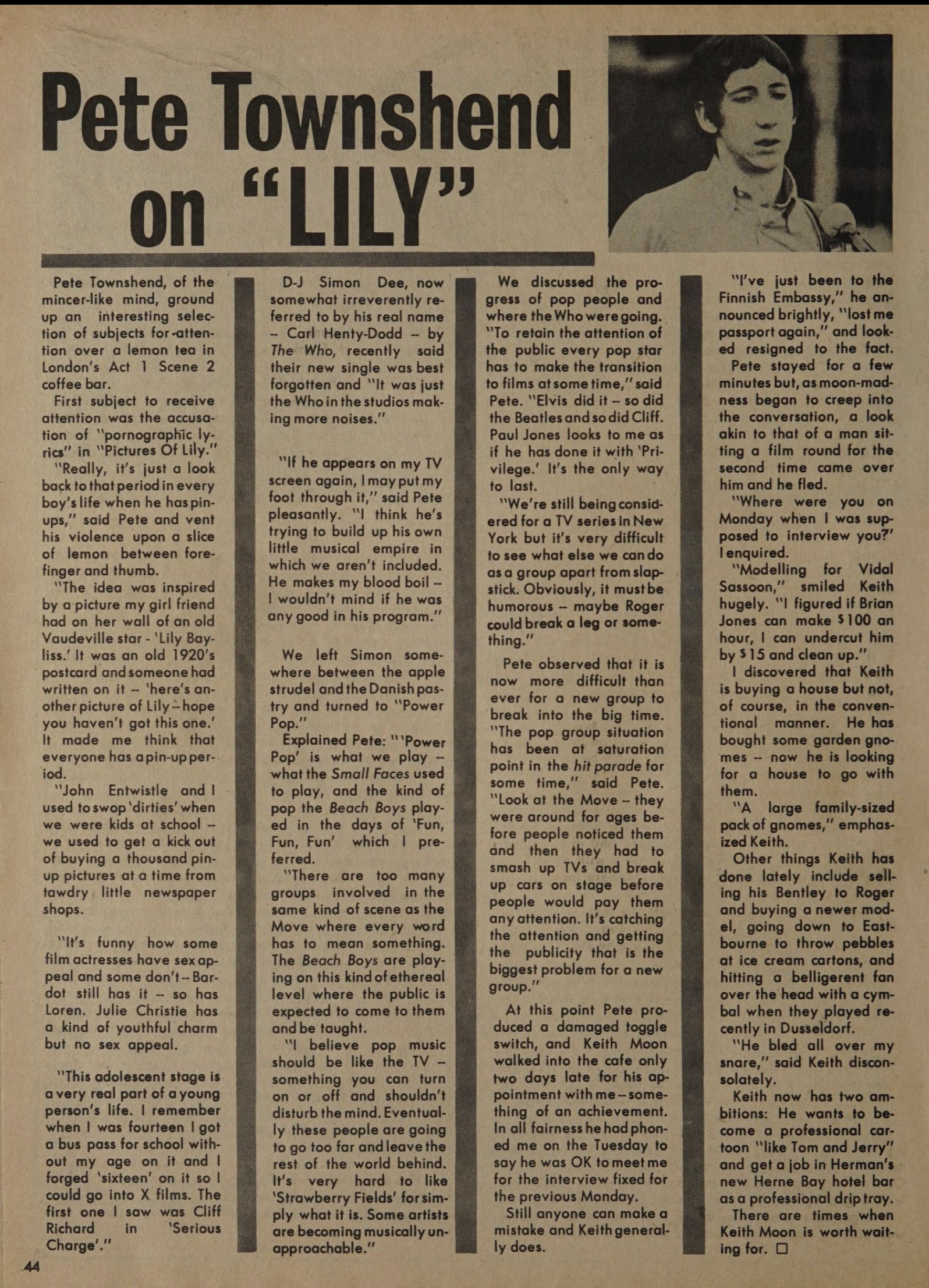
Pete Townshend: ‘We worked hard on “propaganda” for the first three days and I had two stock quotes which everyone wrote down. They were’.

“We want to leave a wound” and “We won’t let our music stand in the way of our visual act”’.

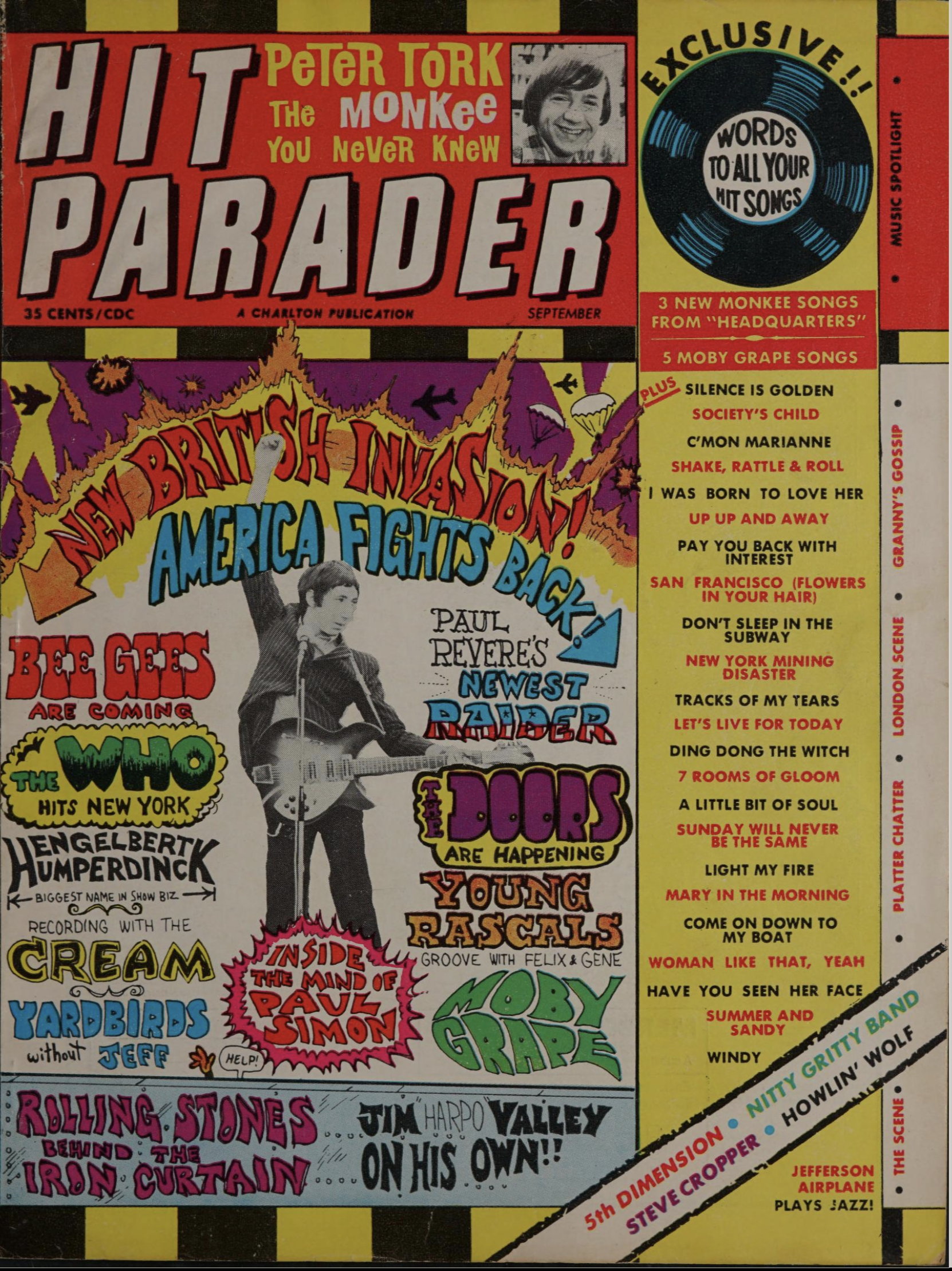
Townshend on top form here in the American magazine Hit Parader (though interviewed by NME’s Keith Altham), never sharper, never funnier . . .

“Murray the K’s wife was on the program,” recalled Pete Townshend in a Hit Parader article from later that year, “She appeared about ten times in a fashion spot with teenybopper girl models – Jackie the K and her fabulous fashion show. The most presentable of the models was a girl called ‘Joy Bang,’ who took a liking to Keith which I think was mutual until she said, ‘You must meet my husband, Paul Bang!’”

Joy Bang: Portobello Road, October 3 1966 . . . She’s standing on a 1960 Buick Invicta painted by BEV (Binder, Edwards and Vaughan) that featured on Kinks budget collection and in a Move publicity photograph. The car and Joy both have a cameo in Jack Bond’s Separation (1967). Excellent profile of Joy Bang HERE

Hit Parader (October, 1967)

Keith now has two ambitions: He wants to become a professional cartoon ‘Like Tom and Jerry’ and get a job in Herman’s new Herne Bay hotel bar as a professional drip tray.

Designed by Hamish Grimes of Five Live Yardbirds and Crawdaddy Club infamy

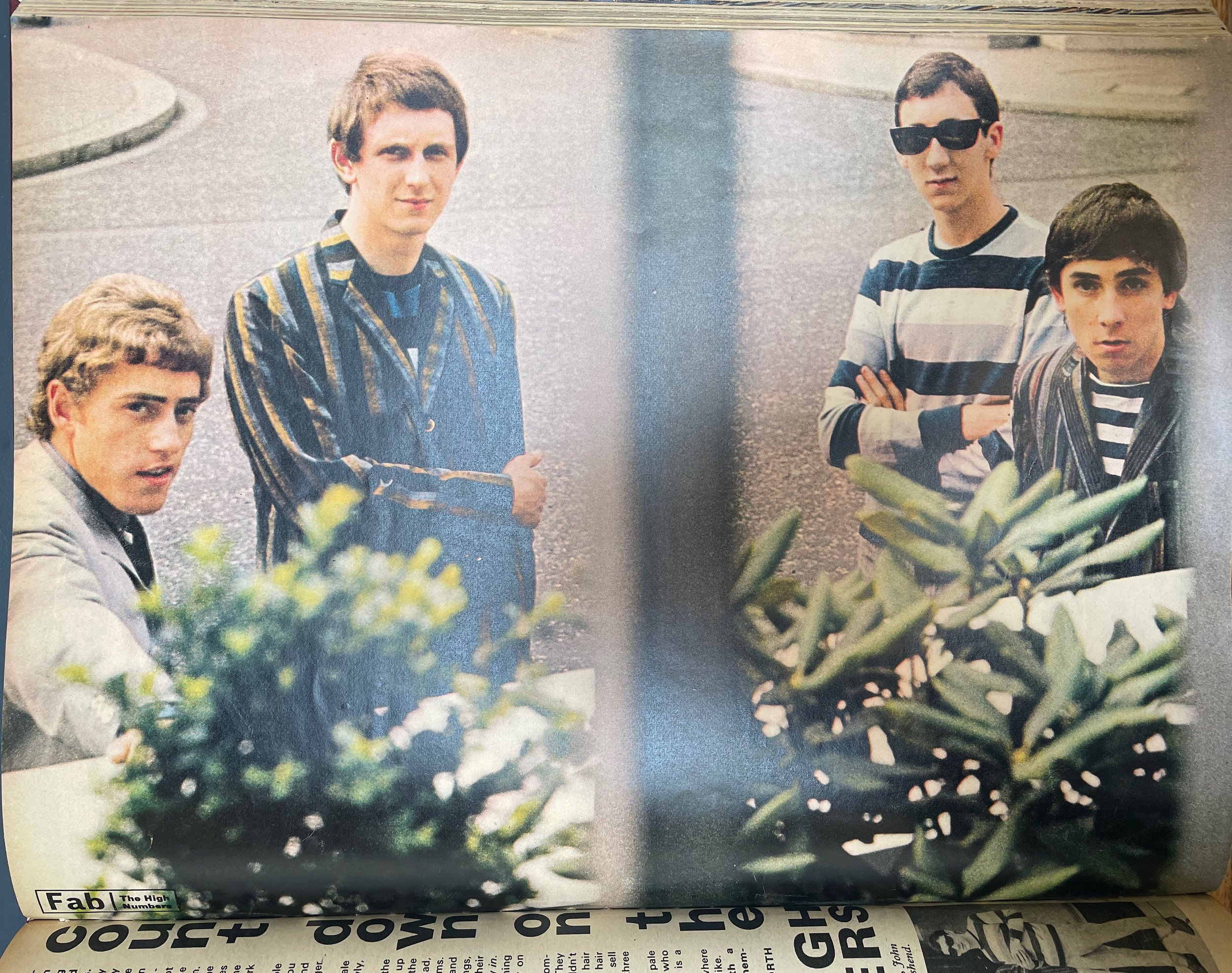
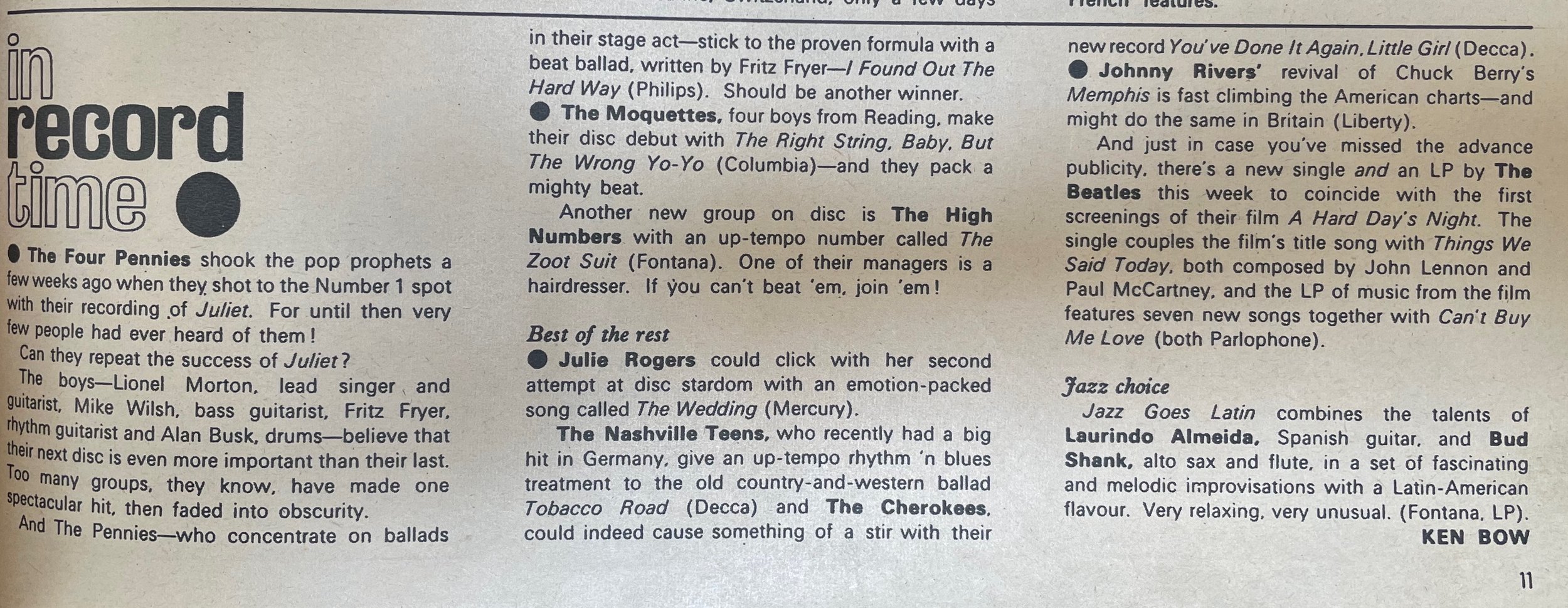
Fabulous – The High Numbers

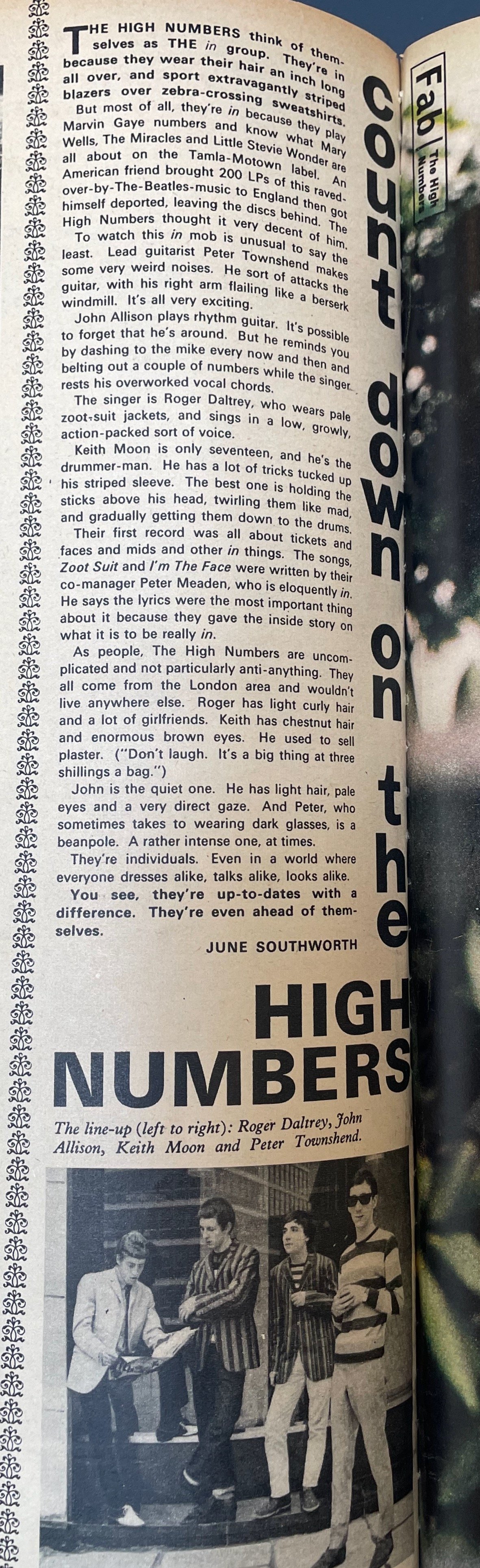
The High Numbers in Fabulous magazine . . . The ‘in’ group who are not particularly anti-anything but with a manager who is eloquently ‘in’ . . .

You see, they are up-to-date with a difference. They’re even ahead of themselves

Fabulous (July 18, 1964) . . . was Pete Meaden a hairdresser?

The High Numbers are featured as part of a themed issue of Fabulous (October 10, 1964) on the Rhythm and Blues scene. Editor June Southworth provided the text and in-house photographer Fiona Adams produced the snap.

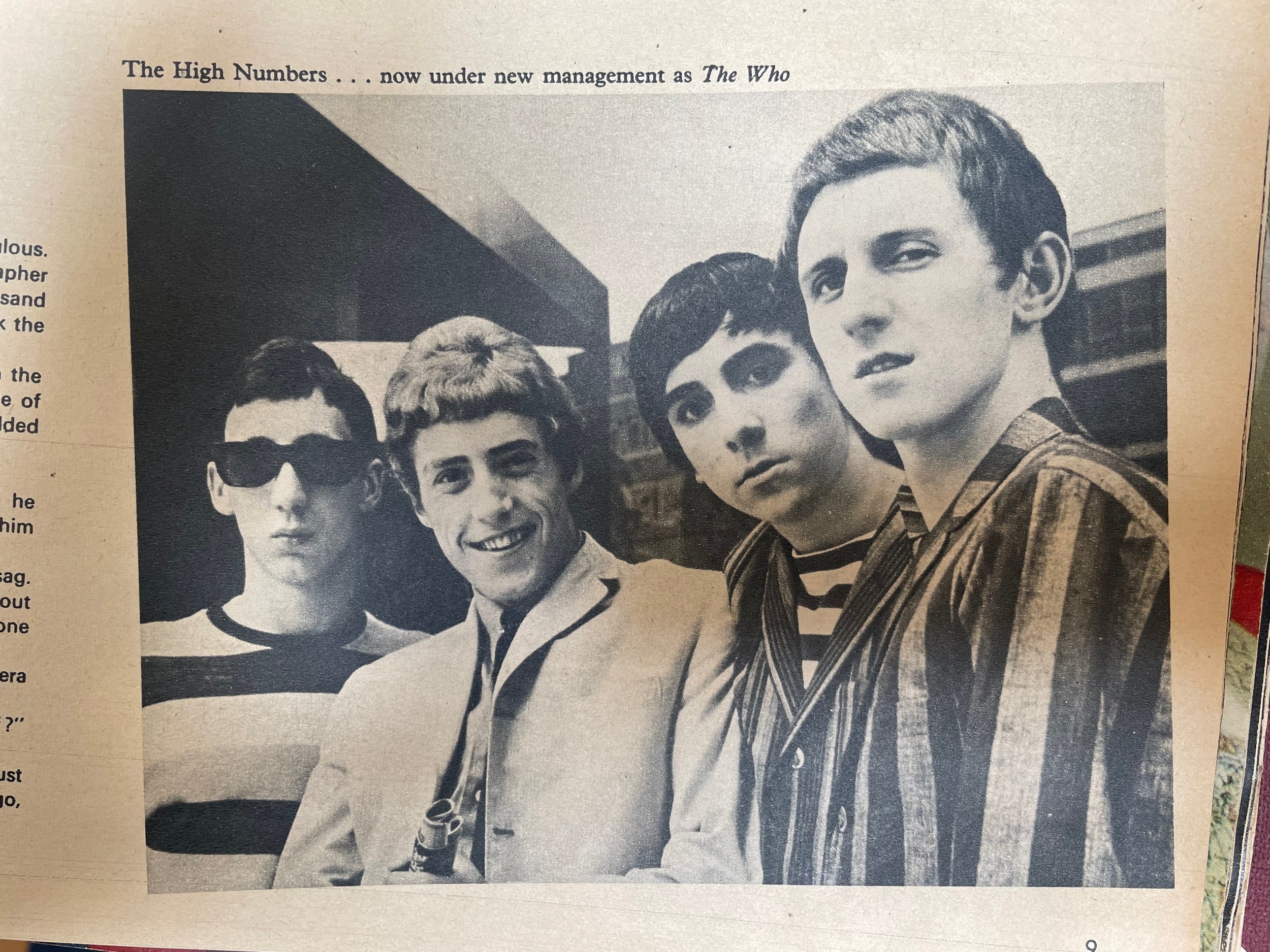
The Who worked under name ‘The High Numbers’ from July to October 1964, in August they started to work with Lambert and Stamp and Pete Meaden moved on . . .

‘The High Numbers . . . now under new management as The Who’

In January 23, 1965 issue of Fabulous they let readers know of a change in the band’s name . . . ‘They are not the mods that they were’ . . . the date of the gig at the Bruce Grove Ballroom in Tottenham is unknown but Andy Neill and Matt Kent suggest it was prior to the piece published in October.

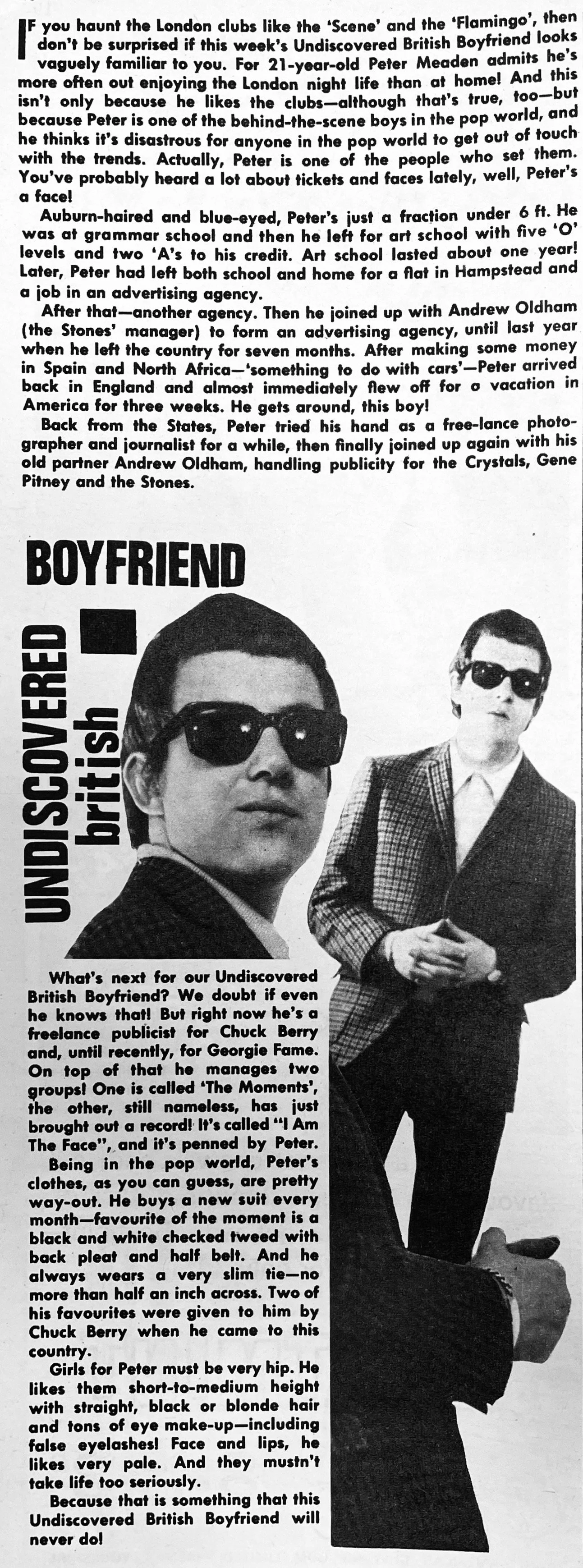
Boyfriend (August 8, 1964) . . . Pete Meaden doing the business

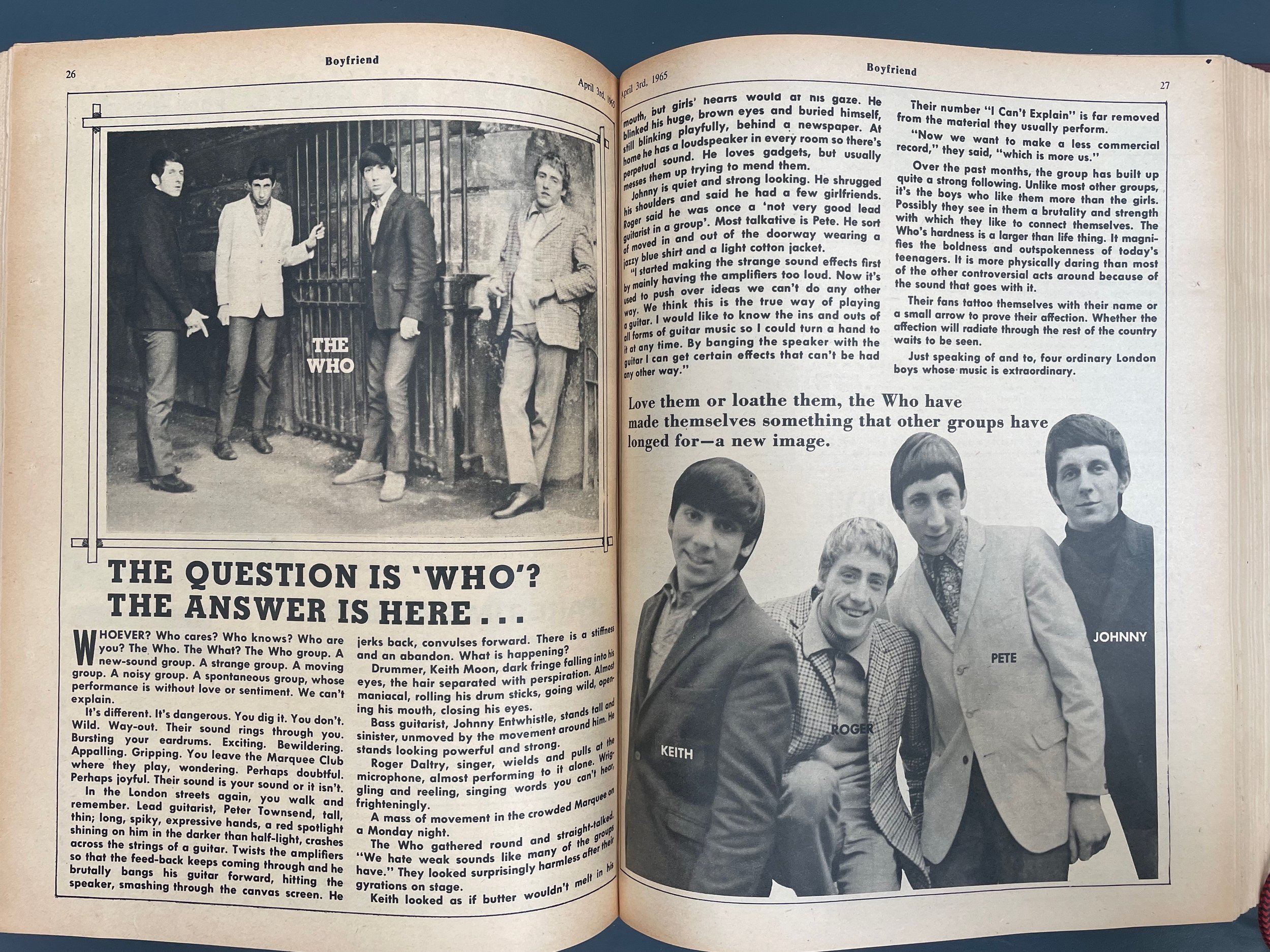
Pete Meaden had orchestrated his own bit of publicity in Boyfriend six weeks earlier (June 20, 1964) appearing as that week’s featured ‘undiscovered British boyfriend’. The magazine was big on the notion of the undiscovered with the column on unsigned bands beginning in the following week’s edition with The Strides . . .

Meaden himself had two ‘undiscovered’ bands on the books, The Moments (Steve Marriott’s troupe) and a ‘nameless’ band ‘who had just bought out a record’ (?!?) ‘I Am The Face’ . . . in fact available on July 3 when they were called The High Numbers . . . Weird how he didn’t have their name in place to help plug the disc. You can’t help but think his mentor Andrew Loog would not have missed such an opportunity . . .

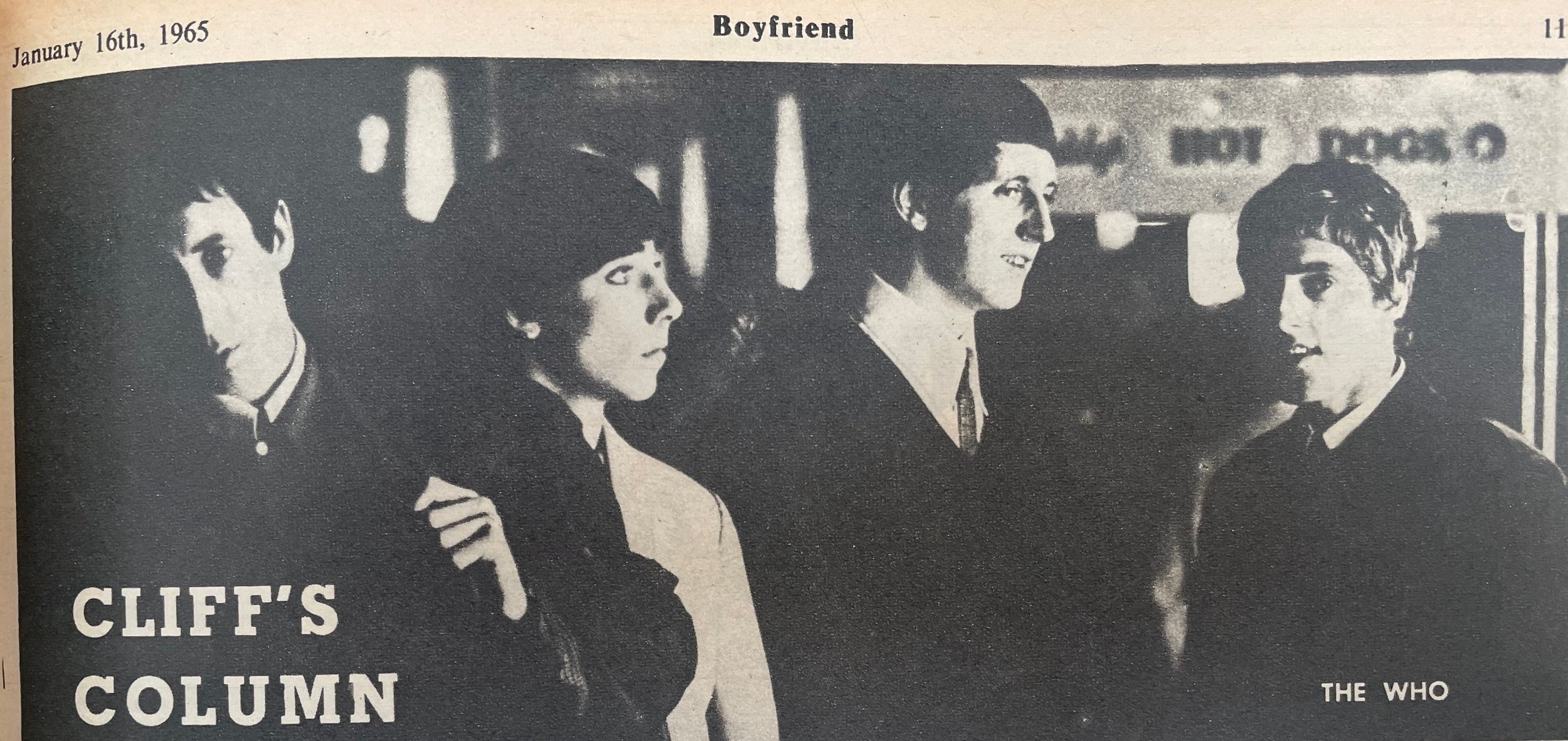
Cliff’s Column’ in Boyfriend was purportedly written by Mr. Richard but, like the magazine’s Rolling Stones’ column ‘Mod, Mod World’, it was ghost written, unless Cliff was writing himself out of pop music. . .

The urban noir of the image is in key with the idea that they ‘aim to get anything that’s wishy-washy out of pop music – what they play can be summed up as “hard sentiment”’

Weeks later, with ‘I Can’t Explain’ finally a hit, Boyfriend again featured The Who, returning to the Marquee: ‘We hate weak sounds like many of the groups have’.

Continuing the idea of ‘hard sentiment’, ‘brutality’, ‘strength’ and ‘hardness’ are what is said to personify The Who. But the image that sticks is of fans tattooing ‘themselves with their name or small arrow to prove their affection’.

Me and my brother were talking to each other about what makes a man a man . . . .

CODA

Two years before Pete Townshend gifted The Merseys ‘So Sad About Us’ they had their say about The High Numbers’ single

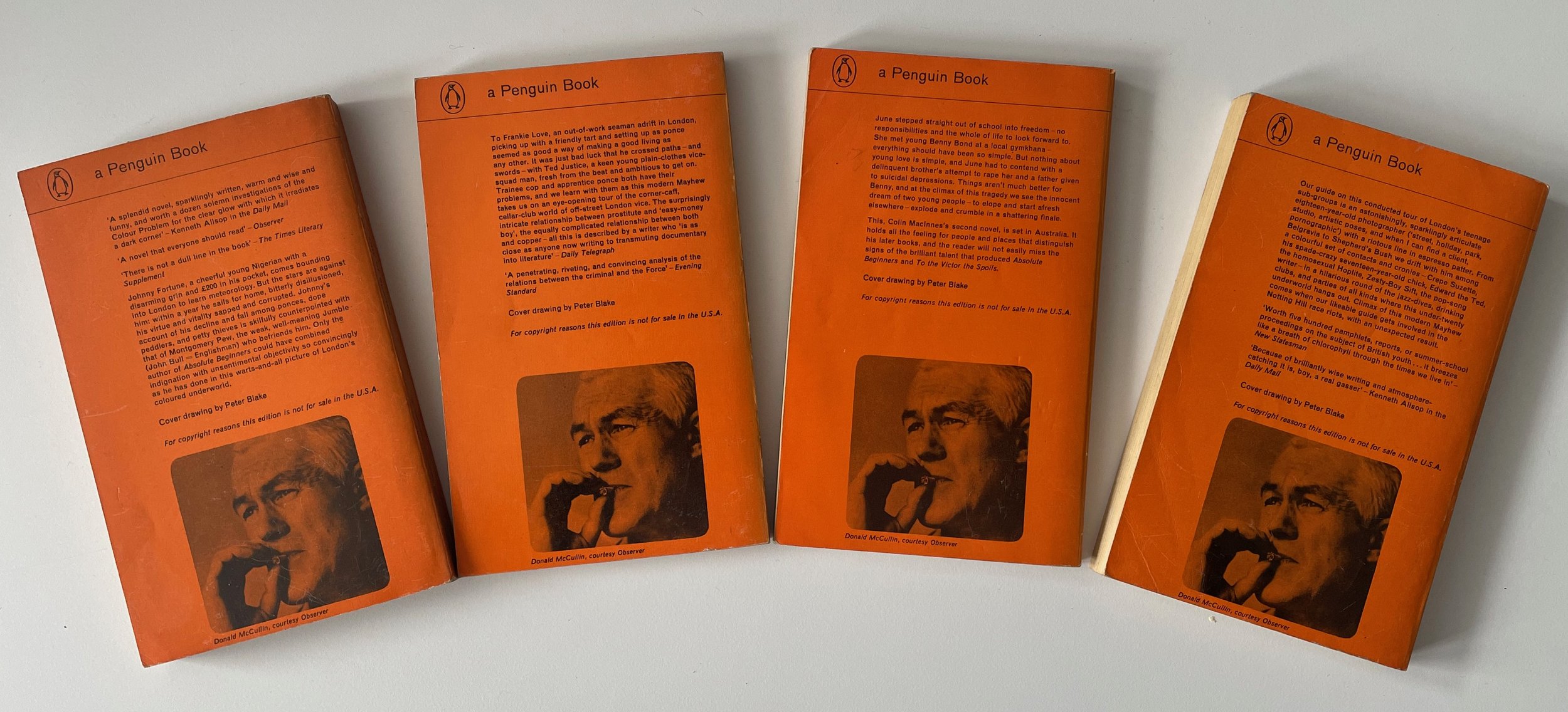
Peter Blake and Colin MacInnes – Penguin Books 1964

The visual image I have of Colin MacInnes’ books has been tarnished by 1980’s jacket designs — the film tie-in with Absolute Beginners or post-Quadrophenia Mod iconography of Lambrettas, targets and cappuccinos. How much more germane the illustrations are by Peter Blake for a run of Penguin editions from 1964. Utterly contemporary, without recourse to cliché – there’s not even an echo of Blake’s imagery in the subsequent heritage biscuit tin designs. The author’s photograph by Don McCullin, showing McInnes dragging on a dog-end, further adds to the class, in all senses of the term, that these editions exude.

Too Much, Too Soon: 'Scream and Shout!' Peter Watts (1966)

I had high hopes for this forgotten original Corgi publication from 1966 partly, I suspect, because the Pop Art jacket suggested more than a run-of-the-mill pulp exploitation of the rock ’n’ roll scene. But it is no more the real dirt than Thom Keyes’ All Night Stand, also 1966. Well-written and mildly diverting it is the story of a working-class lad making his way to fame, fortune and the hard lesson that was not what he wanted after all, which was domestic bliss with his teen sweetheart . . .

I don’t much care about the lesson in class politics - know your place lad - I could live with that if the book, like Keyes, showed at least some first-hand knowledge of the subject, but it doesn’t. Pop is just the background to a romantic melodrama of the old order.

Peter Watts (1919–83) was too old to be an honest broker of the sixties’ swinging scene. Under the names of Matt Chisholm and Cy James he wrote in the region of 150 novels, Westerns mostly.

The story of the rise and fall of Georgie Baker, better known to the record buying public as J.J. Abercrombie, is the souring of the promises made by his management team who when they can no longer tolerate his trespasses move to break him. When A&R man Morrie reaches the end of his tether he draws upon an American colloqualism (or maybe he’s drawing from a deeper English well for his meaning) and presciently foreshadows 1976:

‘Talk your self hoarse’, Morrie shouted. ‘I should care if he breaks his contract. He’s punk. Rotten’.

The back of the book promises ‘Too Much, Too Soon’ like Diana Barrymore’s 1957 autobiography, but the author hasn’t learned the truth of the New York Doll’s maxim that it is better to do too much too soon than too little too late if you’re going to tell a story that is worth hearing

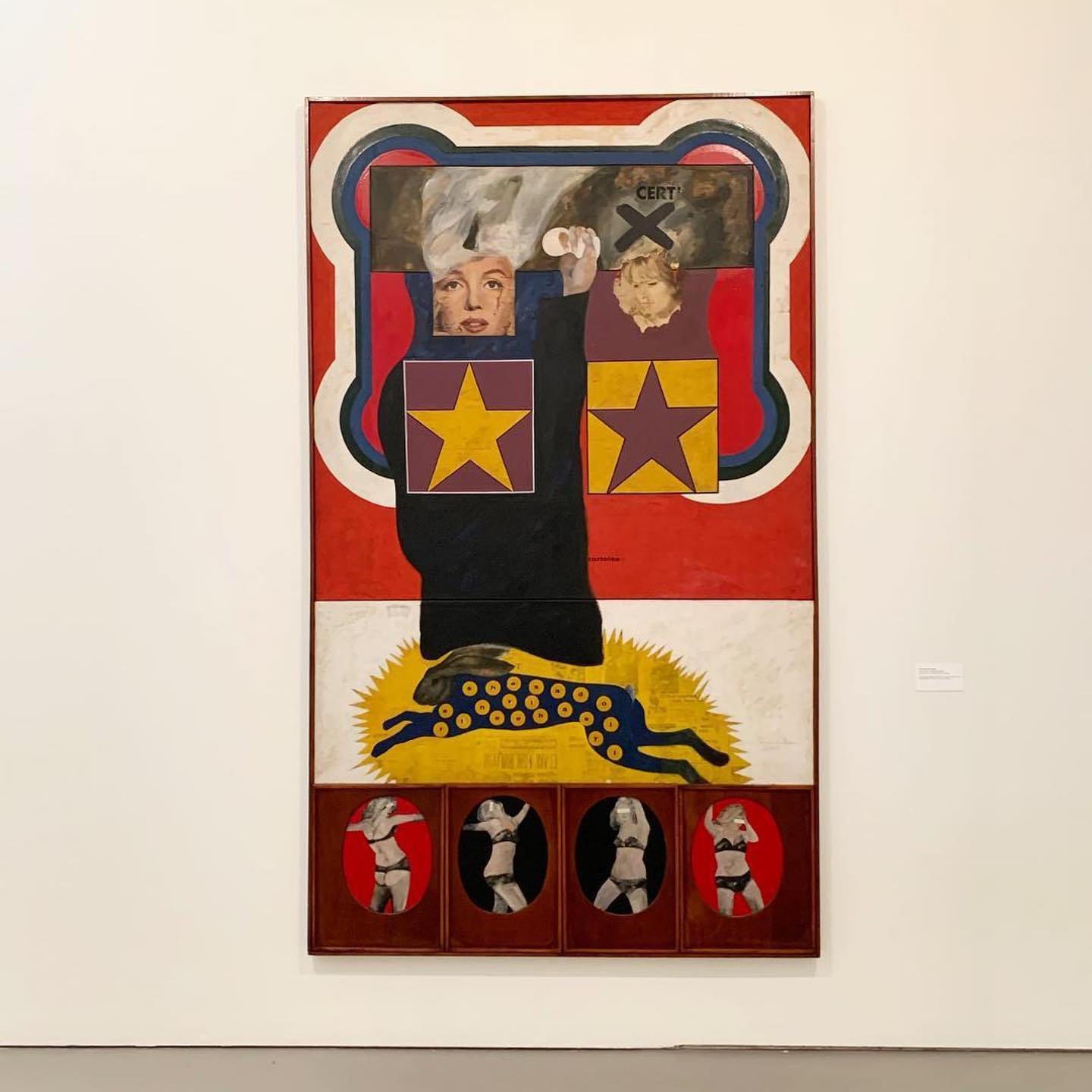
I would love to know who the illustrator for the jacket was, seems to be drawing upon Peter Blake and Pauline Boty for inspiration (or maybe I’m overreaching)

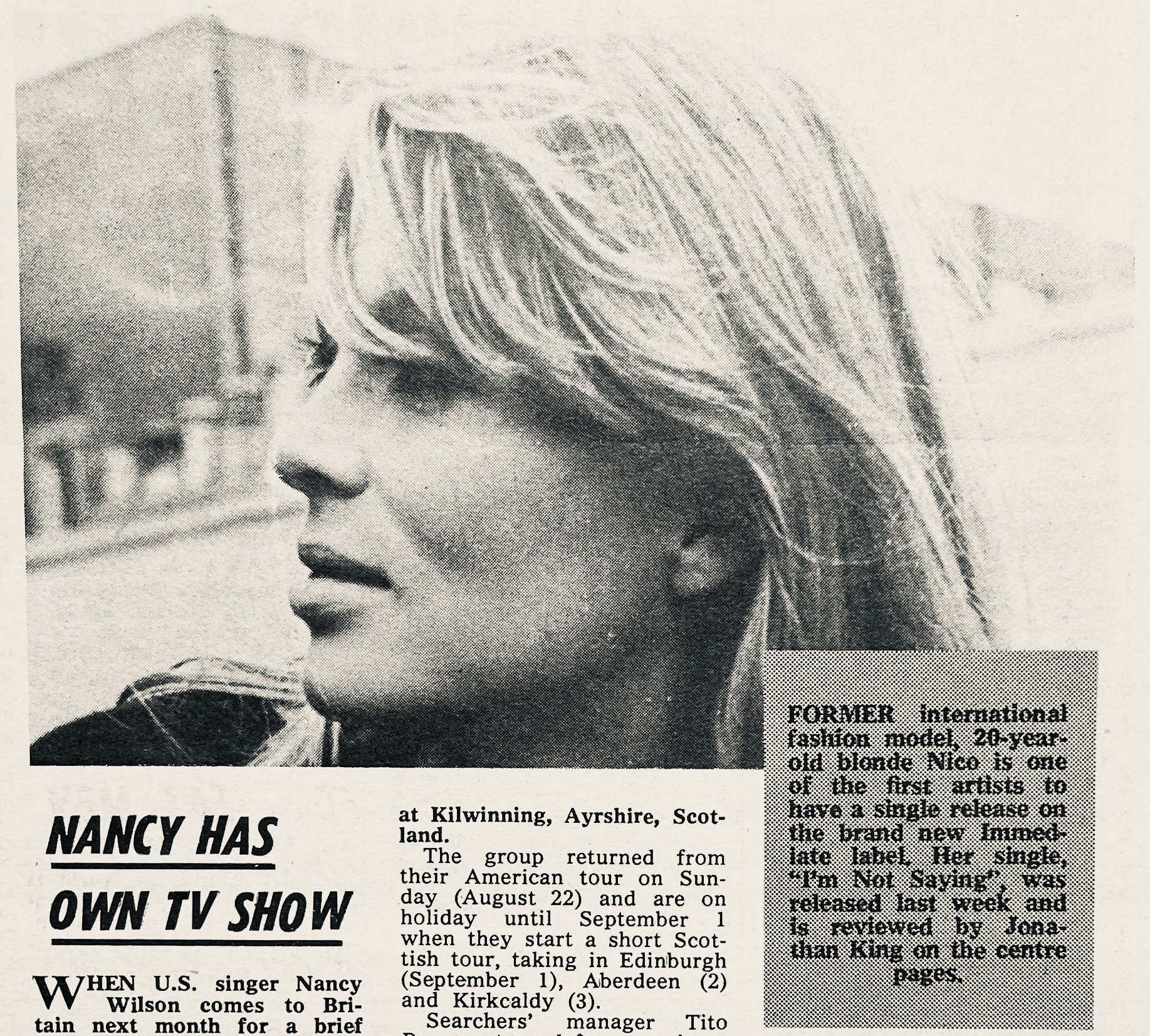
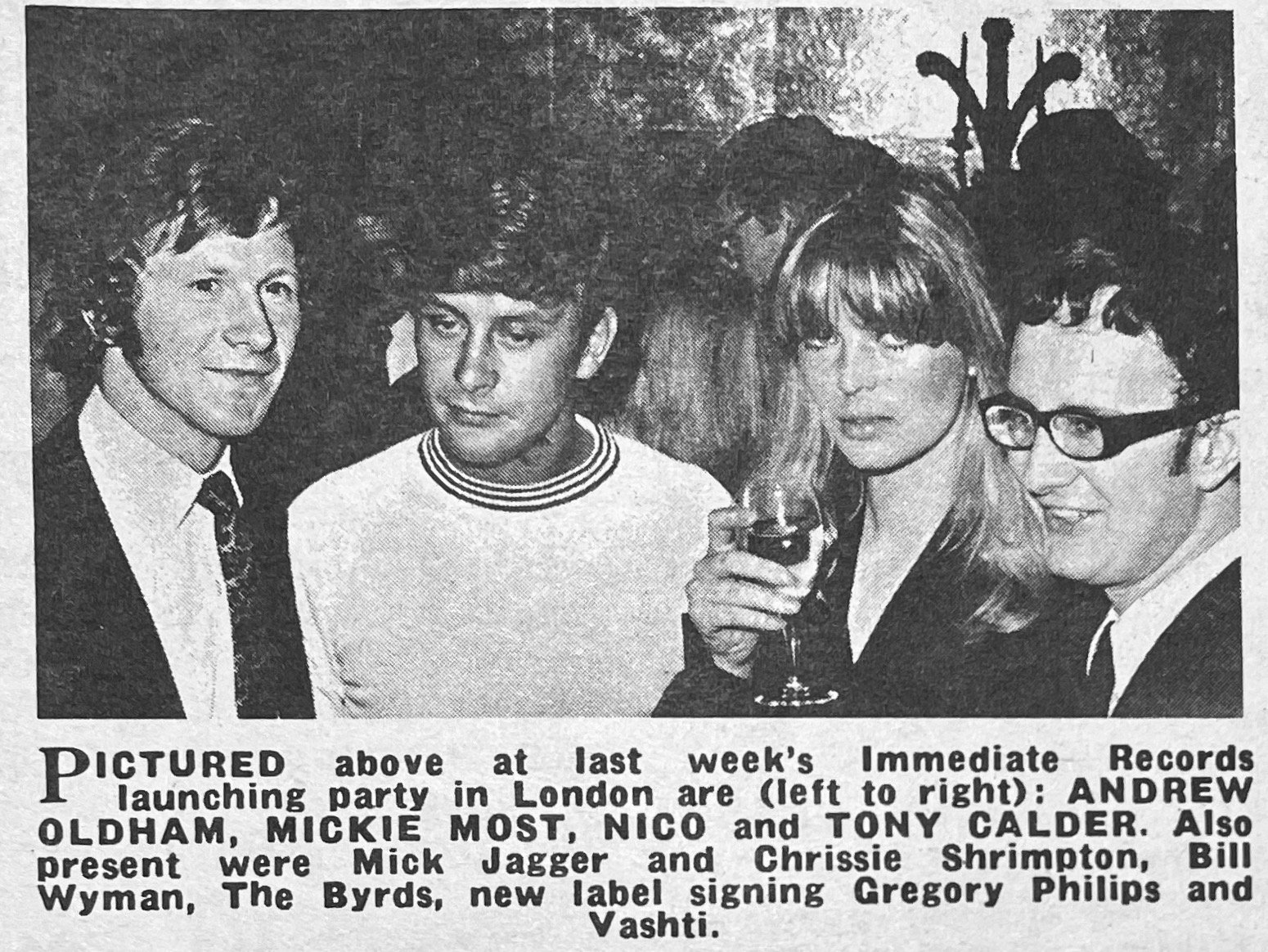
NICO – Continental Singer, Model and Actor in London, 1965

Melody Maker (August 28, 1965)

Not a history . . . just a scrapbook of found images and clippings I couldn’t let languish in the archives

New Musical Express (August 13, 1965)

The NME used a cropped image from the press conference to illustrate an interview with Oldham from the following year (August 5, 1966)

‘Niko’ . . . I’m guessing Andrew Loog Oldham phoned in his weekly column . . . Music Echo (August 14, 1965)

Music Echo (August 28, 1965)

Record Mirror (August 28, 1965)

‘I have a habit of leaving places at the wrong time . . .’ and arriving with the wrong work permit . . .

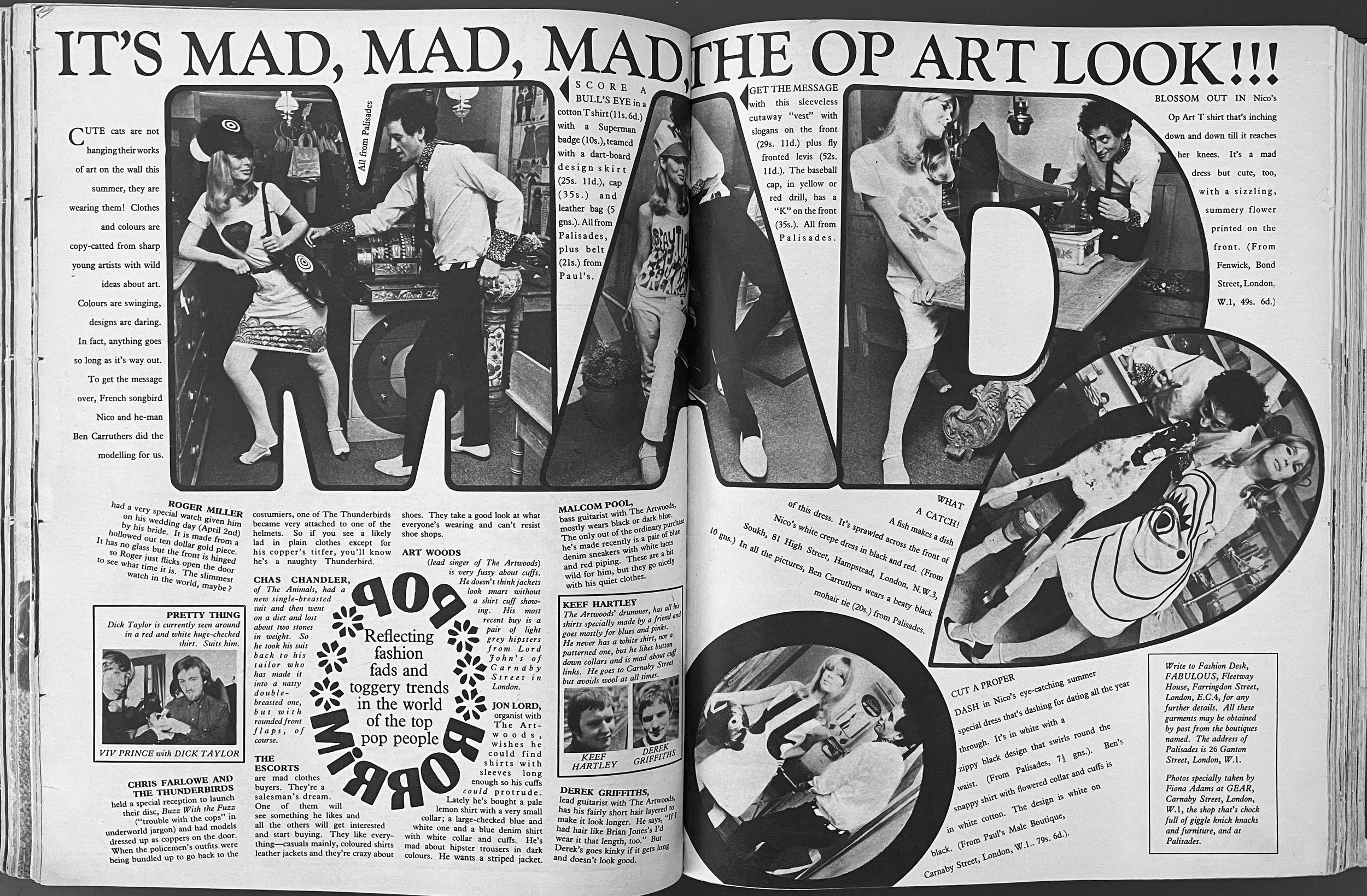
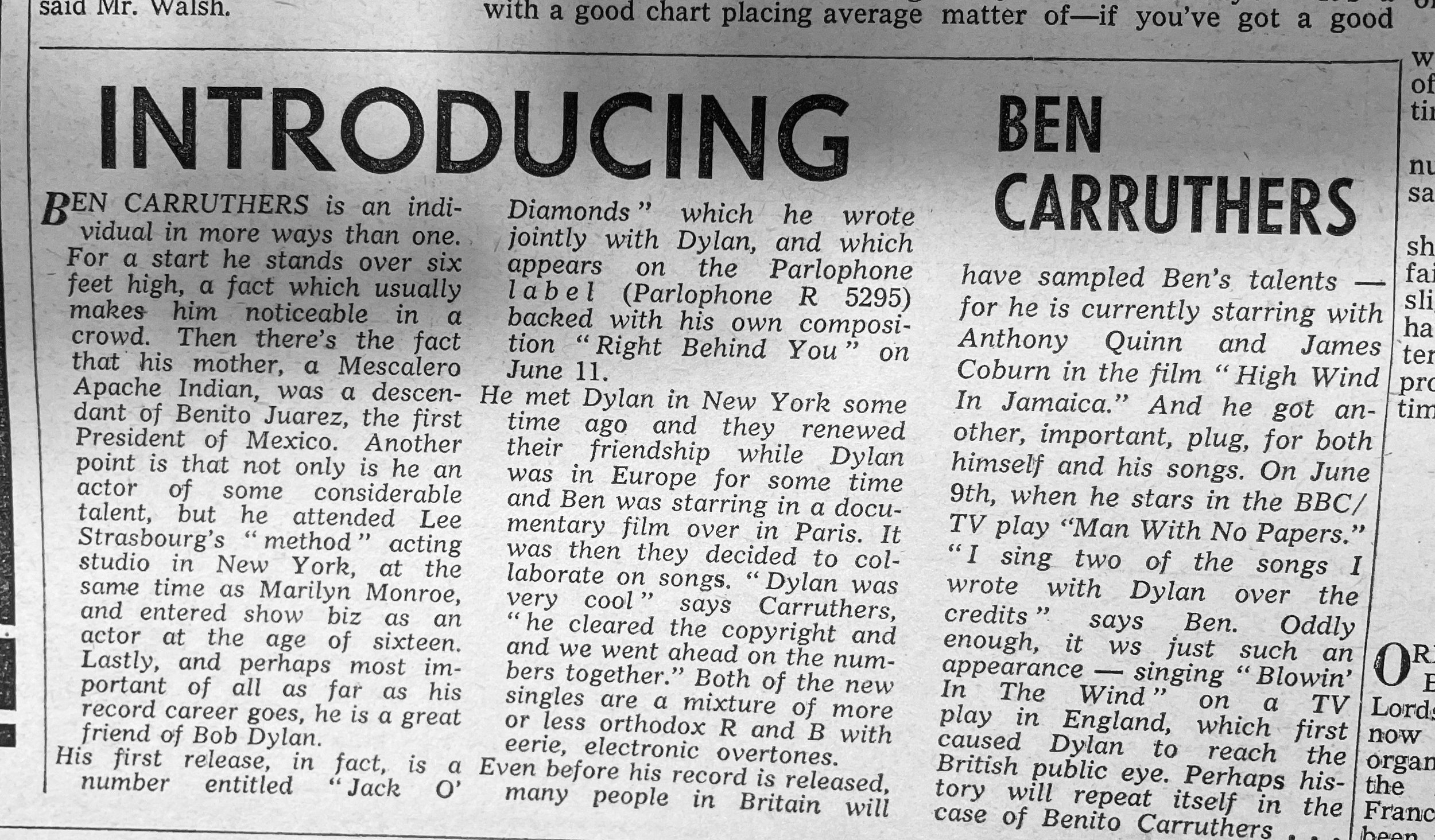
Nico in Fabulous (August 21, 1965) looking somehow out of place in a teen fashion shoot but then so does her partner in modelling . . . Ben Carruthers. He was the star of John Cassavetes’ Shadows (1959) and had just released a wonderful single, Jack O’ Diamonds produced by Shel Talmy and with Jimmy Page on guitar. Page forms one part of a triangle with Carruthers and Nico, Bob Dylna forms another (see immediately below and further down. Some great stuff on the record and Carruthers (read until the end of comments) [HERE]

Record Retailer (June 10, 1965)

Music Echo (September 4, 1965)

Daily Mirror (August 19, 1965)

Nico on Ready Steady Go! (August 13, 1965)

Evening Post (August 13, 1965)

Nico was featured three times on RSG! in 1965. Her first two appearances were June 4 and 11. For the first she gave an interview, for the second she performed Dylan’s ‘It Ain’t Me Babe’. Clinton Heylin in Double Life Of Bob Dylan (2021) suggests it was ‘Mr. Tambourine Man’ but an off-air tape of the programme lays the uncertainty to rest. Nico is accompanied by acoustic guitar and double bass in the studio and taped strings fill out the arrangement, although they sound like they are playing in another room. Her final time on the show, August 13, she sang ‘I’m Not Sayin’. None of her other appearances are thought to be extant either as audio or video. (see Andy Neill, Ready Steady Go! The Weekend Starts Here (2021)

The video of previously unedited footage is a revelation, perhaps the same could be done with Peter Whitehead’s effort

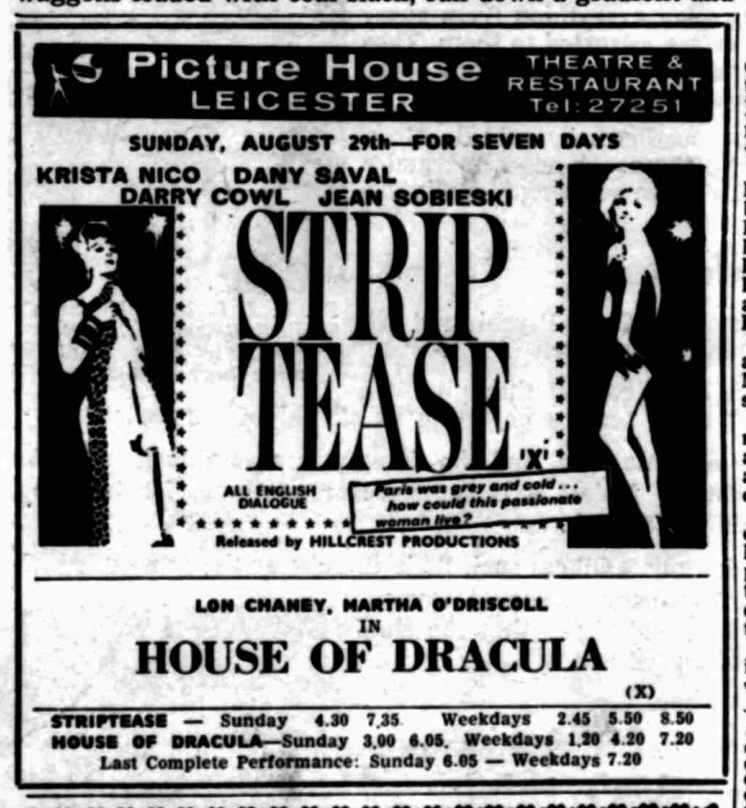
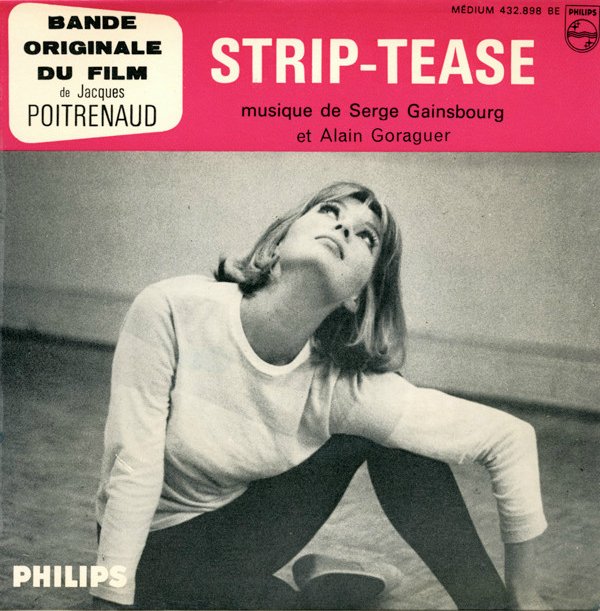
Coincidentally, while Nico was in London, her 1963 film performance, in which she was billed as Krista Nico, Striptease (X) was enjoying a London run – ‘Paris was grey and cold . . . how could this passionate woman live?’Directed by Jacques Poitrenaud, it was unimaginatively programmed with the archaic Lon Chaney Jr.’s House of Dracula (1945)

Juliette Greco sang the Gainsburg’s song on the soundtrack album but a 1962 demo with Nico has since been released [HERE]

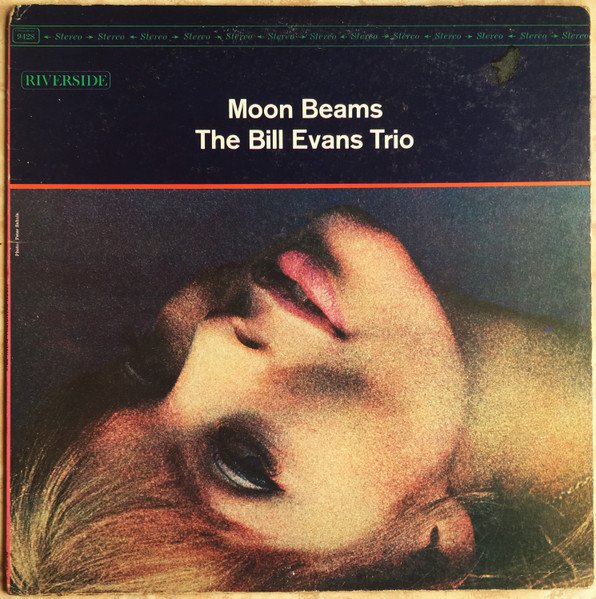
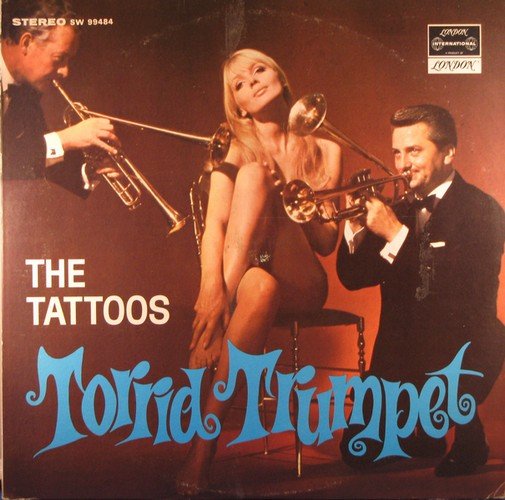
Nico as cover star. . . from sublime to kitch

The Bill Evans Trio’s Moon Beams (1962)

Casey Anderson, Blues Is A Woman Gone (1965)

The Tattoos, Torrid Trumpets aka Trumpets Go Pops (c.1967)

The Tattoos, Swingin’ With The Million Sellers (1972)

Music Echo (August 28, 1965)

Nico caught the eye and ear of Jonathan King, pop impressario, hit maker and music press columnist. He clearly didn’t like her but she made an impact on this most square of contrarians. . . The Christmas single idea should have been realised, however . . .

Jonathan King, Disc Weekly (August 21, 1965)

Melody Maker (August 28, 1965)

Music Echo (November 20, 1965)

New Musical Express (August 27, 1965)

Andrew Loog Oldham’s advertising copy was at its most obscure in 1965, all very lysergic

Disc Weekly (September 18, 1965)

Melody Maker (August 28, 1965)

Nico appears in an outtake sequence from Don’t Look Back (1965) in conversation with Dylan’s manager Albert Grossman (Ben Carruthers also appears in the outtakes working on the lyrics with Dylan for ‘Jack O’Diamonds’)

Nico in Times Square 1966 photograph by Steve Shapiro

So what do you bet . . . Nico shopped at Biba’s in 1965 taking fashion tips from Marianne Faithful?

Music Echo (May 15, 1965)

During part of a wide-ranging interview with Andrew Loog Oldham, held late July/early August 1966, the NME’s Keith Altham asked him about his relationship with Marianne Faithful. He said,

‘I have decided not to take over her management because I need full control and there are too many people still with vested interest and her talents are not diversified enough anyway. I think I put that very nicely’.

Asked whatever happened to Nico? he replied:

‘Ah yes, I was glad I was right about Nico… She’s working for a group called the Underground Movement for about $11,000 for eight days in clubs like Hollywood’s The Trip’

No mention of Warhol and the Velvets misnamed, but the venue where the Exploding Plastic Inevitable played, May 3–18, The Trip – ‘the new shrine of pop culture’ — he got right, I bet he remembered her payout correctly too . . .

Disc and Music Echo (November 18, 1967): I may have missed it, but I believe this is the only contemporary review of The Velvet Underground and Nico in the British music press and it is spot on: ‘Their music is hard rock ‘n’ roll brought up to date with electricity . . .’ Read on . . . The image of Nico is from her Ready Steady Go! appearance, which I’ve not seen printed elsewhere.

Punk Modernity: Robert Silverberg – 'Blood on the Mink'

Robert Silverberg, Blood on the Mink (1962; republished Hard Case Crime, 2012)

After breakfast, I got out of the hotel for some air. I guess it's about my only hobby -- lonely walks through big cities. The weather was milder, and a lot of people were out. Businessmen and pretty girls and grifters and cons, all moving through the streets purposefully and rapidly. While I strolled. It's lonely work, this undercover stuff. You don't make any friends in your line of work, and you don't feel much like making them after hours, because you can't confide in anybody. . . 

You're a man with a million identities -- which really means you have no identity at all. You look at yourself in the mirror and you see eyes and a nose and a mouth, but they really don't add up to a face, because to have a face you have to be a person. A solid substantial person. Not just a guy who plays thirty different parts a year. . . 

You hang out with crumbs and killers and leeches, and you try to be one of them. Not be like them, but be them. And that old question keeps coming back: Why me? And the old answer, too. Somebody's got to be the one.

 . . . And that's about as fine a distillation of modernity as you'll find in a pulp. Milling faceless crowds, personality built from interchangeable parts, criminals masquerading as respectable citizens, respectable citizens masquerading as criminals; all that's solid melts into air. . . And the flaneur keeps on strolling . . .

In a world of dissembling identities, and the novel is about counterfeit currency, one character type remains consistent - the punk

"Why you arrogant punk, you ought to --" Minton began, getting the rest of the way out of his seat." (29)

"Listen, you stupid punk, you've got some lessons in manners coming to you. And maybe next time I see you I'll take care of giving them to you." (61)

"I don't like punks to talk to me that way," Chavez crooned. (77)

Tomb Of Dracula (Marvel)

Pop Art Interiors: Pontiac Club – Zeeta House, Putney

‘Pop-art, Op-art and all that similar stuff is beginning to leak out of the avant garde galleries into the field of interior design. The doors open on a beat club in Putney tonight which aims to be the place where all things are happening in the Southern area’.

Charles Greville, Daily Mail (May 27, 1965)

From Ian Hebditch and Jane Shepherd’s essential, The Action: In The Lap Of The Mods (2012). Order [here]

Melody Maker (July 31, 1965)

As much as it was the name that caught my pop-eye – ‘Pontiac Club, Zeeta House, Putney’ – what piqued my interest was the description in Melody Maker’s 1965 cut-out-and-keep guide to London’s beat clubs. It was No.7 on the map: ‘A new action club with pop art décor’. With The Who as one of the named attractions, it was clearly part of the on-going phenomenon of Pop Art into Pop, that ‘leak’ which the Daily Mail’s Charles Greville was referring to when he visited the club on the day of its opening and one then being heavily exploited and led by the ’Bush Boys.

A cursory Google and a quick browse in books you might have thought the club would be discussed in gave up little but a membership card or two, music press adverts and a list of club dates on Garage Hangover [here], which suggests the venue operated for not much more than a year between May 1965 and June 1966.

The club was located in a building designed for the Zeeta Cake Co. that opened in 1938 at the junction of Upper Richmond Road and Putney High Street. There was a smoking room in the basement, the ground floor consisted of shops, a restaurant on the first floor, a ballroom and banqueting hall on the second floor and a bakery and staff offices on the third and fourth. The ballroom had a sprung oak floor with columns propping up a domed ceiling. [For a history of the building see here].
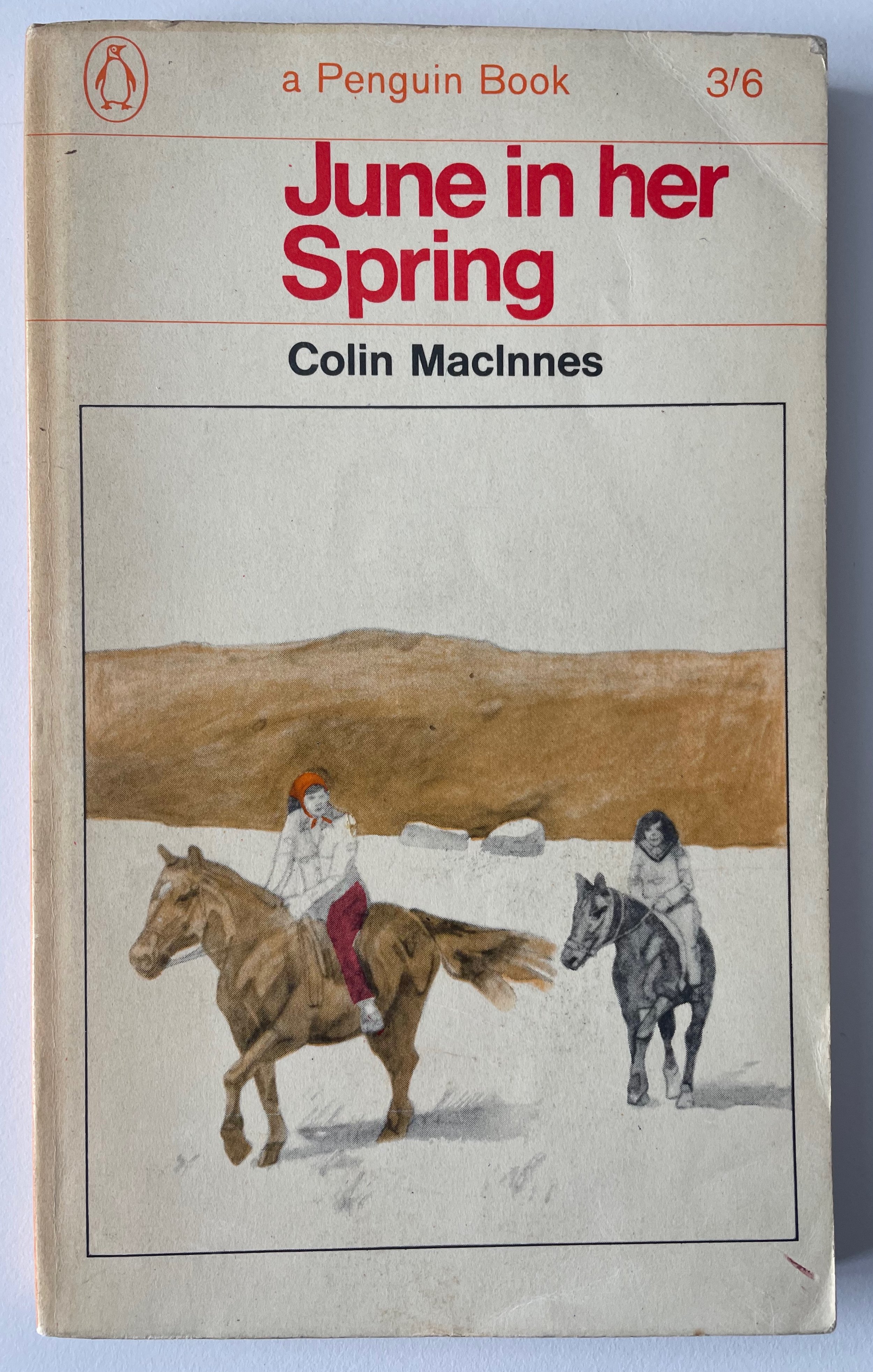
This sequence of images have been copied from RIBA’s webpages

First floor restaurant

Main staircase

The ballroom

Daily Mail (May 27, 1965)

Penny Valentine in Disc listed Johnny and Harvey Riscoe as the club’s owners, but in other accounts Paul Waldman is named as the owner (a June advert in Melody Maker announced the club was ‘now under new management’). The club had been advertising shows at least as early as March 17, but in any event it was Waldman who had invited art students to help redesign the club’s interior. Under the patronage of Sir Hugh Casson, Professor of Interior Design at the Royal College of Art between 1955–75 and director of architecture for the Festival of Britain, students Richard Beal and Alan Saunders were joined by Peter Dale from Kingston College of Art. They painted over the large mirrors that surrounded the dance floor with comic book figures, such as Superman and Iron Man. . . . Donovan was the opening night’s attraction, May 27.

The Kensington News & West London Times (June 4, 1965)

It’s Art Deco interior refashioned for a Pop Art age is a precursor, I think, to Biba’s takeover of Derry and Toms department store in 1973, both buildings were designed by the architect Bernard George (1894–1964)

Biba’s Rainbow Room, where the New York Dolls played in 1973, features a similar domed ceiling design.

Penny Valentine, Disc Weekly (July 3, 1965)

In Disc Weekly, Penny Valentine, described the Pontiac as a ‘sort of pop art club. The walls have been painted by two art students and look like something out of a nightmare with people like Superman in eight foot colour’. Beyond its Pop Art decorations, the appeal of the club was its size, holding over a thousand attendees, it was open Wednesdays through to Sunday, from eight to two in the morning and was unlicensed.

The club instantly became a feature on the city’s gig circuit, offering West London’s premier location after the closing of the Crawdaddy Club at the Richmond Athletic Grounds in July 1965.

Penny Valentine, Disc Weekly (July 24, 1965)

When they played the Pontiac at the end of July, Penny Valentine wondered ‘how many guitars and mikes The Who will demolish tonight’. The band exceeded themselves and even Penny’s expectations, as Andy Neill and Matt Kent note in their chronicle of the band. The Who only managed to play one of their two scheduled sets as they blew out the PA. They did, however, perform ‘My Generation’ for possibly the first time. Though it seems they just missed out on being filmed at the club, acts appearing later in the week ended up playing before cameras even if their efforts were mostly left on the cutting room floor.

Record Mirror (August 21, 1965)

At the start of August, Clarendon Productions spent time at the club shooting scenes for a sequence to be used in one of four thematically linked short films on ‘Romance and Courtship Throughout The World’.  Record Mirror listed possible appearances from John Mayall’s Bluesbreakers (featuring Clapton), Graham Bond and, club regulars, The Boston Dexters (The Action would later have the residency). Patti Boyd’s sister, Jenny, played the film’s lead.

The short film eventually appeared in 1966 under the title of Reflections On Love. Approximately three minutes into the eleven minute film ‘the girl’ visits the Pontiac. You can see the double doors, with the star insignia used on the club’s membership card, open onto the ballroom, which is crowded with dancers. The Bluesbreakers are playing but there is no synced audio from the band or anything from arranger Johnny Spence who had been listed as a contributor – the version on YouTube has Kula Shaker delivering the soundtrack. The club sequence has a set of visual effects, colour saturation, that blurs band, dancers and the club’s interior, and is, unfortunately, not much of a rival to Blow Up’s Ricky-Tick recreation, even if the dancers are more animated. It lasts a little less then a minute but some small compensation is that the ballroom’s mirrored walls, columns and ceiling can all be briefly seen.

Though it seems to float freely around on Facebook this is musician Steve Van-Deller’s membership card, he still plays in the Putney area – Google him. He recalls the Bluesbreaker’s gig with Clapton and T-Bone Walker as two standout shows at the venue. In an email to me Steve wrote:

‘I remember being very impressed with the interior, but I was only 15 going on 16 at the time . . .The club had a great vibe . . . The Action were brilliant when they had their Sunday residency, and the Boston Dexters were a great soul covers band too’. 

‘We are creating, a modern-day pop image in our own style’, one of the designers told The Kensington News and West London Times, ‘We made pop art into an interior, instead of leaving it on a white canvas’. Peter Dale added that he would be ‘rather pleased if people don’t like it’.

‘This Is Modsville’ . . .Pontiac billboards plastered over a shop front . . . From Paul Hogarth and Malcolm Muggeridge, London a al Mode (1966)

"The Long-Hair Musicians" – Sunday Times Magazine and The Pretty Things (July 1964).

Mick Jagger, John Lennon, Dave Clark . . . . and Phil May

July 12 1964 edition of The Sunday Times Magazine with a commissioned Pop Art cover from the very hip Peter Phillips

Ladies and Gentlemen . . . and all ten year-olds . . . The Pretty Things on the cusp of ‘blazing notoriety’ like the Stones or ‘total anonymity’ like The Daisies . . .

Peter Phillips, ‘For Men Only Starring MM and BB’ 1961

Peter Phillips ‘Entertainment Machine’ 1961

Peter Phillips, ‘Custom Print No.1’ 1965

The Commuters + The Cannibals: A Night Out at the Dublin Castle, Camden (1979)

All photographs by Mark Morreau – shot on May 16, 1979. Please don’t copy without permission, but if you do steal ‘em make sure Mark gets proper credit for his work. Thanks then to Mark and to Adam Blake

The Commuters came from Hemel Hempstead, hence the name . . . In their short lifetime they often supported the likes of The Cannibals, Lew Lewis, The Stukas and The Inmates. They played a million gigs with Watford’s The Bears and once upon a time supported the Clash in Bournemouth on their 16 Tons tour. They even played three successive night at the Gibus Club in Paris. Their moment of crowning glory was to headline at the Hope and Anchor and then break up.

Len Watkins sang, Peter Stanfield blew some mouth harp, Tim Brockett, played guitar, Luigi DiCasti plonked the bass and Greg Brimson beat on the traps.

The Legendary Cannibals on this occassion were Mike Spenser, vocals, Adam Blake, guitar, Johnnie Walker, guitar, Clive Leach, bass, Sion Evans, drums.

Both bands broke all speed limits

This page is dedicated to our friend Tim Brockett RIP

Outside of a killer three track single and a cut on a Garage Goodies album, The Commuters lasting claim on fame was as a sticker left above the stage at the Dublin Castle and then immortalised in Madness’ ‘My Girl’ video

THE WHO – LONDON 1965

The Who London 1965 . . . Ealing Club, Feburary 1965 with Fery Agasi (pinched from HERE)

The Who – Maximum R&B Tuesday Nights at the Marquee . . . a 23 week residency that became a cornerstone of the band’s foundation myth. As much as anything we have the classic poster to thank for that impression, reinforced by the one in The Who Live at Leeds package. Yet, the majority of the residency at the Wardour Street club appears to have been advertised not in its maximalist rhythmic and bluesy incarnation but as ‘THE WHO – LONDON 1965’. Sometimes with the hyphen, sometimes not . . .

An original is on the left, above is the Live at Leeds repro

‘Maximum R&B’ was used from November through to December 1964. The Monday Red Lion and Wednesday Florida gigs were in the same week the block ad, below, appeared in Melody Maker

Following the Kit Lambert and Chris Stamp takeover there was obviously an on-going debate over the band’s name or rather how best to present it. The first show of the residency, November 24, they were billed a ‘THE “WHO”’ which seems to have been the case until January 5 when the quotation marks were dropped, though they were back on the 12th and stayed in place until the first gig in February, when they went absent once more. From February 9 until April 6, if you paid to see The Who at the Marquee it was under the banner ‘THE WHO – LONDON 1965’. For the final couple of Tuesday gigs in April, the 27th being the last of the 23, they were simply ‘THE WHO’.

On the Brunswick label for ‘I Can’t Explain’, and in press advertisements and posters promoting the single, there was never any uncertainty over the name, they were just ‘The Who’. The heavily used appendage ‘LONDON 1965’ for the Marquee (and Ealing Club dates in February) was then a statement and a declaration. It was a contract with their audience that laid down the claim that they were not only at the very centre of things in Soho, but they were its centre – ‘right here, right now, we are what’s happening’, it said.

Melody Maker (March 20, 1965)

An April ‘65 interview with Kevin Swift, published in the May edition of Beat Instrumental, doesn’t refer to any of this directly, but it is there in plain sight – Stamp and Lambert ‘look upon them as the embodiment of London’s various characteristics’, Swift wrote:

It is quite a valid theory when you consider if for a moment. After all, their act contains an aggressiveness, humour, action and an overall indication of frustration.

London – The Who. The Who – London. Even the name is representative of the anonymity of the big city

Beat Instrumental (May 1965)

THE WHO – PRIMITIVE LONDON 1965

Record Mirror (December 19, 1964)

The High Numbers Record Mirror (July 23, 1964)

August 8, 1964

New Musical Express (April 23, 1965)

Before the Pop Art epiphony of ‘Anyway Anyhow Anywhere’, Townshend was already dumping the Mod tag: ‘this was a contrived artificial modness and we wanted to be ourselves’. Lambert’s reference to the band appearing in four films is intriguing. The French TV programme had been trailed in Britain as early as March in Record Mirror, with filming taking place at the Marquee, in Shepherd’s Bush and Hammersmith, Mods – Seize Millions de Jeunes (Sixteen Million Teenagers – tx March 18, you can find it on Vimeo as originally broadcast). Lambert is the ‘adult’ interlocutor, explaining teenage London. In one shot you see Moon (?) seemingly helping to design the Marquee poster but,The Who’s appearance aside, the highlight is the kids, smashed blocked and dancing like beautiful fools to some other band chopping away on Bo Diddley’s ‘Who Do You Love’.
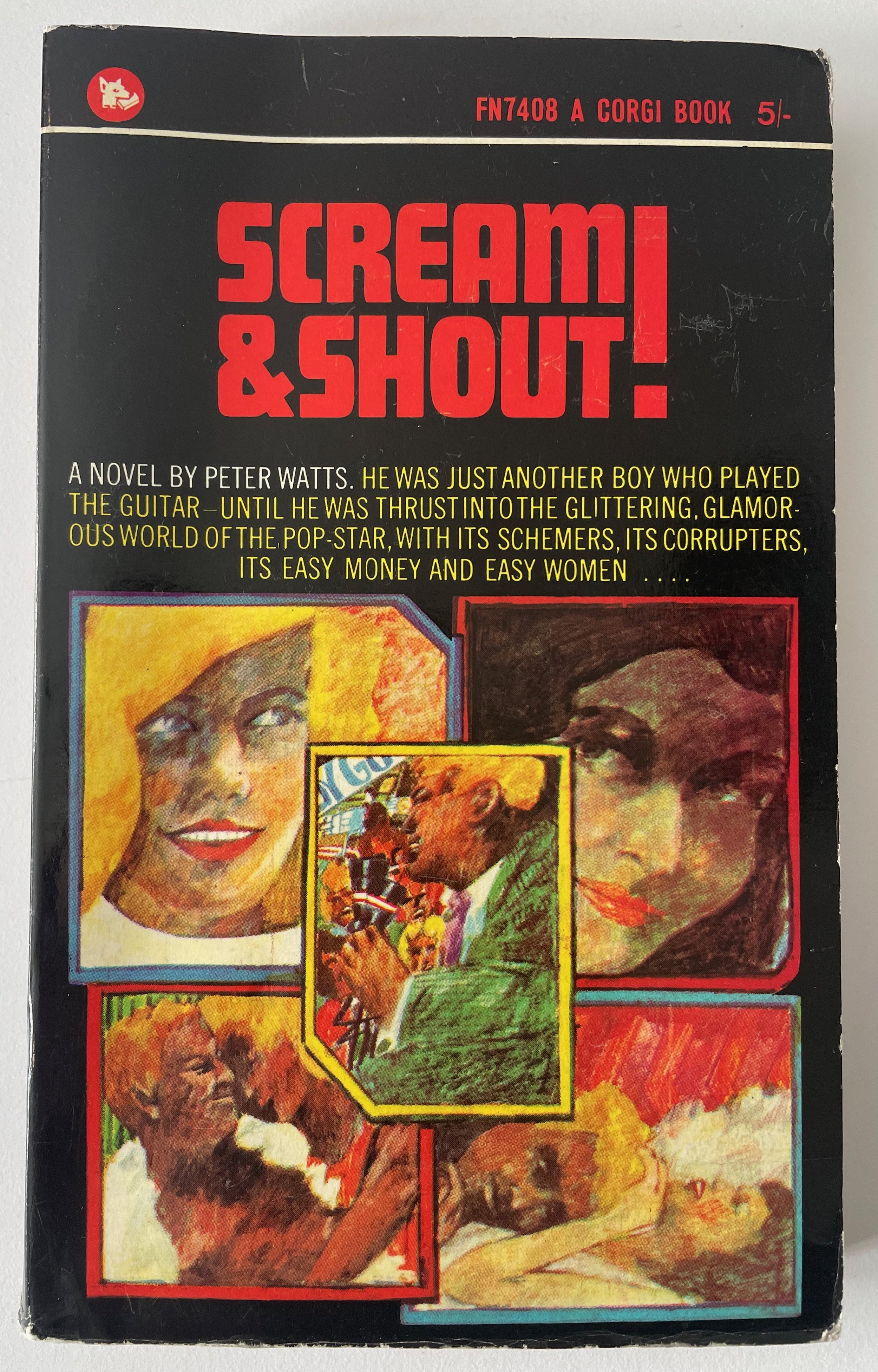
One of the two British TV spots could be Ready Steady Go (tx January 29) and the promotional short for ‘I Can’t Explain’ shot by the two managers and sold to Rediffusion to be used in ‘That’s For Me’ (tx March 15). The film ‘about a stripper’ was Carousella. The reference to it in this NME piece confirming, for me at least, that the band and management had contracted/cleared their appearance with the documentary’s producers, Mithras Films. They were billed as “The Who”. . . Much, if not all, of this on the films is in Andy Neill and Matt Kent’s essential Anyway Anyhow Anywhere: The Complete Chronicle of The Who (2007)

Screengrab from Carousella

Mail Bag, Melody Maker (June 19, 1965)

It's Madness: Don't Say 'Fab' Say Mickey Finn and the Blue Men

I’ve been digging around in the pop music press of 1964, searchin’ for material on the R&B boom generally and The Yardbirds in particular. I was struck by how heavily the East End Mod group, Mickey Finn and the Blue Men were hyped, more adverts than even the Stones managed. The cartoon figures caught my eye as much as the pork pie hats

Blue Beat alongside Motown, Chicago blues, Stax and the jazz of Mose Allison and Jimmy McGriff was just part of the panoply of styles that R&B encompassed in 1964. Mickey Finn got in on the act by having their first record released on the premier UK-Jamacian label, getting a testimonial from the man himself, Prince Buster, and then pulling into the mix Bo Diddley and Chuck Berry.

I’m not that keen on the band’s neophyte ska moves but I love the R&B raver on the b-side of ‘Reelin and a Rockin’, ‘I Still Want You’. Lovers of the freakbeat sound go for their 1967 release ‘Garden of My Mind’. Munster Records have pulled together all the band’s recordings from 1964–67 with top sleeve notes from Mike Stax (Ugly Things), you can hear their latest by dialing the number GER 7080 /7089. . .

Mickey Finn began the year as a five piece and ended it with six members having dropped the mod look and taken up posing on building sites and railway platforms as if they were the Stones or Pretty Things.

The added member, at least in publicity shots, was Jimmy Page – session man and harmonica player on the early singles.

Peter Aldersley review in Pop Weekly (February 16, 1964)

NME (July 3 1964). Derek Johnson also reviewed the High Numbers single which he described as ‘compelling styling but weakish material’.

Pop Weekly (July 18, 1964)

A Little less than a year after moonlighting with Mickey Finn our man is declared ‘the greatest guitarist in Europe. The greatest harmonica play in Europe. Jimmy Page is a phenomenon’. Why stop with Europe, why not the world?

Record Mirror (February 20, 1965)

Pay for an advert and get one of Record Mirror’s special reviews. Who said payola was dead . . .

Record Mirror (February 20, 1965)

Beat Instrumental (August, 1965)

Part of a set of profiles on the faces behind the hits, Sunday Times (February 20, 1966)

What's In A Name? Them Who Are Dissatisfied . . .

Looking for some context to place Mick Farren’s Social Deviants in Pin-Ups 1972, I took a sideways glance at how groups named themselves in the early to mid-1960s. Top of my short list of group names was Them. The pop correspondent of The Belfast Telegraph neatly captured the truculent provovation the band no doubt intended by adopting the pronoun:

He drew grimly on a cigarette and said: “We’re not wanted here. If you don’t belong nobody wants to know you”. He is, in fact, one of Them.

One of them in more ways than one – Billy Harrison.

One of “Them” – that quaintly named Belfast rhythm and blues group which sailed off this week for England – for good.

And one of them – those who find that society is not yet conditioned to really accept them.

For them are a five-strong outfit resembling the Rolling Stones with hair that must be longest in Ireland

Belfast Telegraph (June 12, 1965)

Disc Weekly (February 26, 1965)

From Pin-Ups 1972:

In any revised edition ‘The Dissatisfied’ will be slotted in between The Others and The Measles:

Despite playing with such esteemed Marquee headliners, and getting a stamp of approval from ‘Birds man Chris Dreja, I’d never heard of The Dissatisfied. Turns out there was a very smart looking bunch of likely lads from St. Austell (great band bio HERE) but they formed a year after this Dissatisfied, who I reckon were otherwise known by the much less truculent name The Dissatisfied Blues Band helmed by guitarist Jim Cregan who went on to play with Blossom Toes, Cockney Rebel and Rod Stewart [HERE].

The Dissatisfieds supporting The Yardbirds )ctober 31 1964

nicked from kernowbeat.co.uk . . . forever The Dissatisfied . . .

From the same issue of the Belfast Telegraph (September 26, 1964) in which Them appeared Maureen Cleave gave her opinion of the Bo Street Runners: ‘ugly but memorable’ which in this context seems fair . . .