I had some hope for the book when early on Fury describes Terry Staines and his brother skins, Chelsea FC’s finest, with an eye for detail that wholly escaped Richard Allen in his NEL published tales of Joe Hawkins. Staines wears a Crombie, ‘the type you only used to see in Burlington Arcade, neatly waisted, with a high, zig-zag collar and a neat breast pocket, showing a flash of Chelsea colours . . . and it feels just right, and he’s the only member of the crew wearing one, so everyone can see he’s the leader, or, as he thinks of himself, The King.’ Other skins in the gang wear sheepskin coats, the kind ‘male models in the ads wear as they drive their Lotus Elans through the overgreen countryside to the rugby club’, while further down the pecking-order two of the gang sport ‘blue knee-length gaberdines,
A little ordinary maybe, but they look good when you wear them unbuttoned and are leaning against the bar with hands in pockets crooked back like you’re about to whip out a couple of pearl-handled colt 45’s in the Final Gundown. Yeah, they look good, but not as good as Crombies which is why Terry is the Leader.
And on the description runs through American windcheaters (Harringtons), Levi’s, boots (Doc Martens and cherry reds) and haircuts:
Most cropheads look ugly; their shaven heads magnify facial characteristics, give them a disproportionate look – big ears, noses and teeth like horses. With The Face added, they resemble coarse, dull-witted peasants, slack-jawed and projecting a mongoloid surliness; giants brought down to size, fumbling over fi-fo-fum.
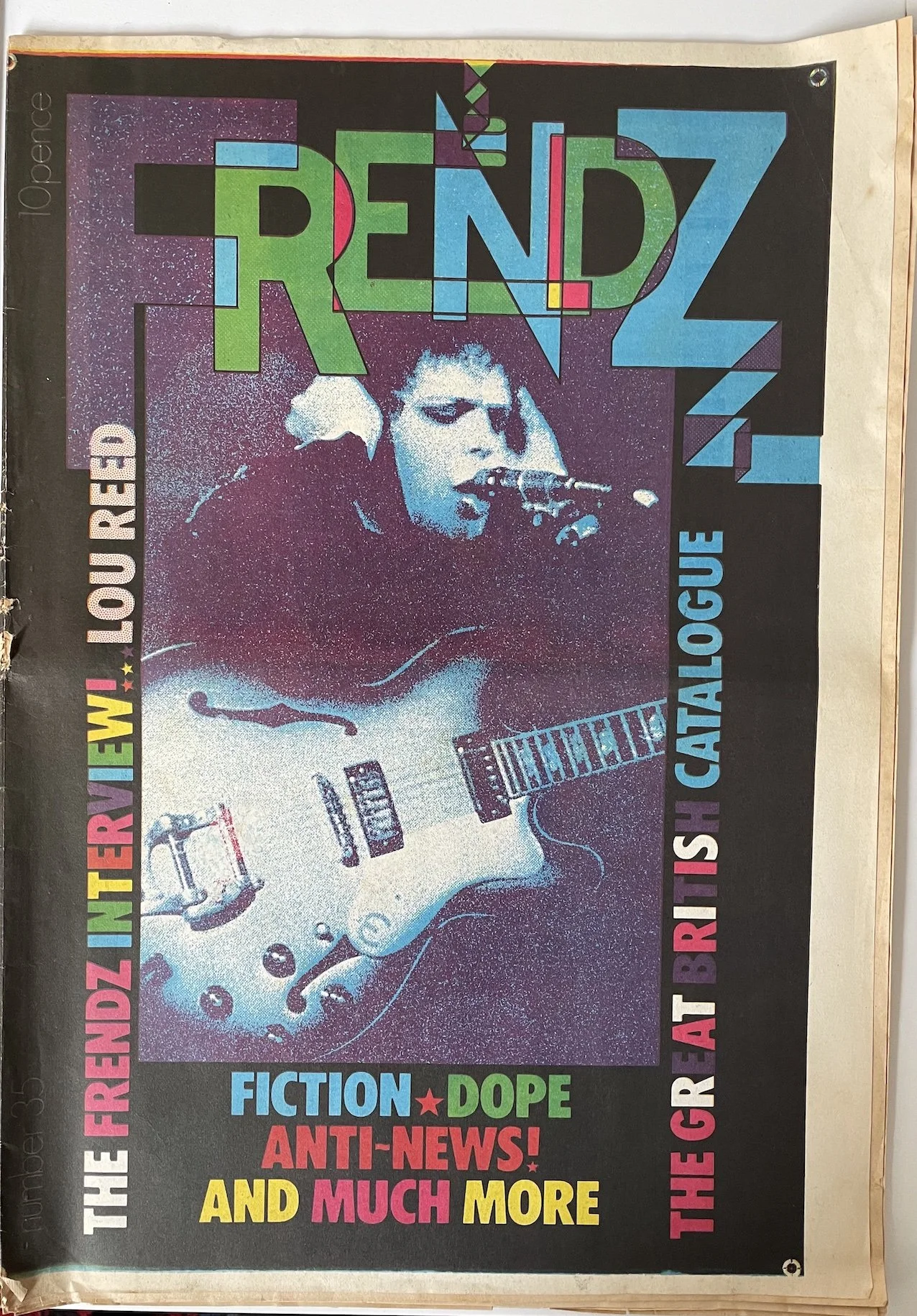
Elsewhere, other observational bits catch the eye such as Sid listening to the Velvet Underground’s ‘Heroin’, which, even though the lyrics are misquoted, might just be the first fictional refence to Lou and co: ‘The sounds erupt – raw jangling guitars and an asexual singsong of self-abuse, a plaintive heart-cry of New York street-sophistication’. Such minor things can impress, a snap shot of a moment in time caught through incidentals. But in themselves they are not enough. I can forgive the clumsy story-telling and over reaching for sensation and impact, which comes with the territory, but if I was Farren I too would have drawn the line with the abject description of what Sid gets up to in private with the Velvet Underground and Nico as his personal soundtrack.
Sid is munching on peppermint chocolates, on his living room walls are posters of Angela Davis, Eldridge Cleever and napalm victims, but in his bedroom the imagery turns to more erotic fare, Elvis in furs, Jim Morrison shirtless in leather pants, freewheeling bikers and pictures of ‘chicks doing weird things with chains’. With cocaine mixing with the soft-centred sweets, Sid’s senses flare with ‘Flash-back magnesium brilliance’. On the bedroom shelves, books on sado-masochism and concentration camp memoirs are mixed with Debray, Marcuse, The Illustrated Horror Chamber and Torture Through the Ages. In a closet hangs Sid’s leather suit and an S.S. Oberleutnant’s uniform – ‘not real unfortunately, but ripped off from a theatrical agency. It’s lost something of its original sharpness, has gotten rumpled and soiled’. This is less than a sketch for the kind of scenario Liliana Cavani achieved with The Night Porter a few years later. It’s not even the less reputable Nazisploitation of the Salon Kitty variety. Truthfully, it is about as decadent as a box of mint Matchsticks eaten while playing a round of Mastermind in a tuxedo, yet as a direct attack on what Farren stands for it is undoubtedly libellous.
Quite what Fury had against Farren and why he thought such a scene of cartoon onanistic and fascistic depravation might be included without upsetting the object of his ridicule is lost to history. The story could have lived without it, as could the novel without the character of Sid. Barren appears in two other notable scenes; in one he trashes the offices of an underground paper, stealing the hi-fi and their records, which makes Farren the aggressor when in reality he was the victim. It was the IT headquarters that were ransacked. The second scene is where he shares the stage at the Globe aka the Roundhouse with the Red Gnomes. This is fair enough if you don’t like the man and his particular attitude and style, but I really question the idea of a Pink Fairies gig as a Nazi rally, that’s just dumb spite. And Farren as a Hitler figure? Oh please. While he had on one occasion dressed up in a Nazi costume he had done it with a certain point in mind and not as a fetishistic gesture (more on this in Pin-Ups 1972).