The Word from Mose Allison and the Yardbirds: "I’m Not Talking"

If you want to demonstrate to a non-believer why The Yardbirds are among the elite movers and shakers of second-generation rock ’n’ roll then ‘I’m Not Talking’, as found on the flip-side of the US release of ‘Shapes of Things’, will cure their apostasy. Recorded at Advision Sound Studios on 13 April 1965, just one short month after Jeff Beck’s first recording session with the band, none of their peers at that point in time came anywhere close to the coiled controlled aggression displayed on this cover of Mose Allison’s jaunty sounding yet intently spiteful song.
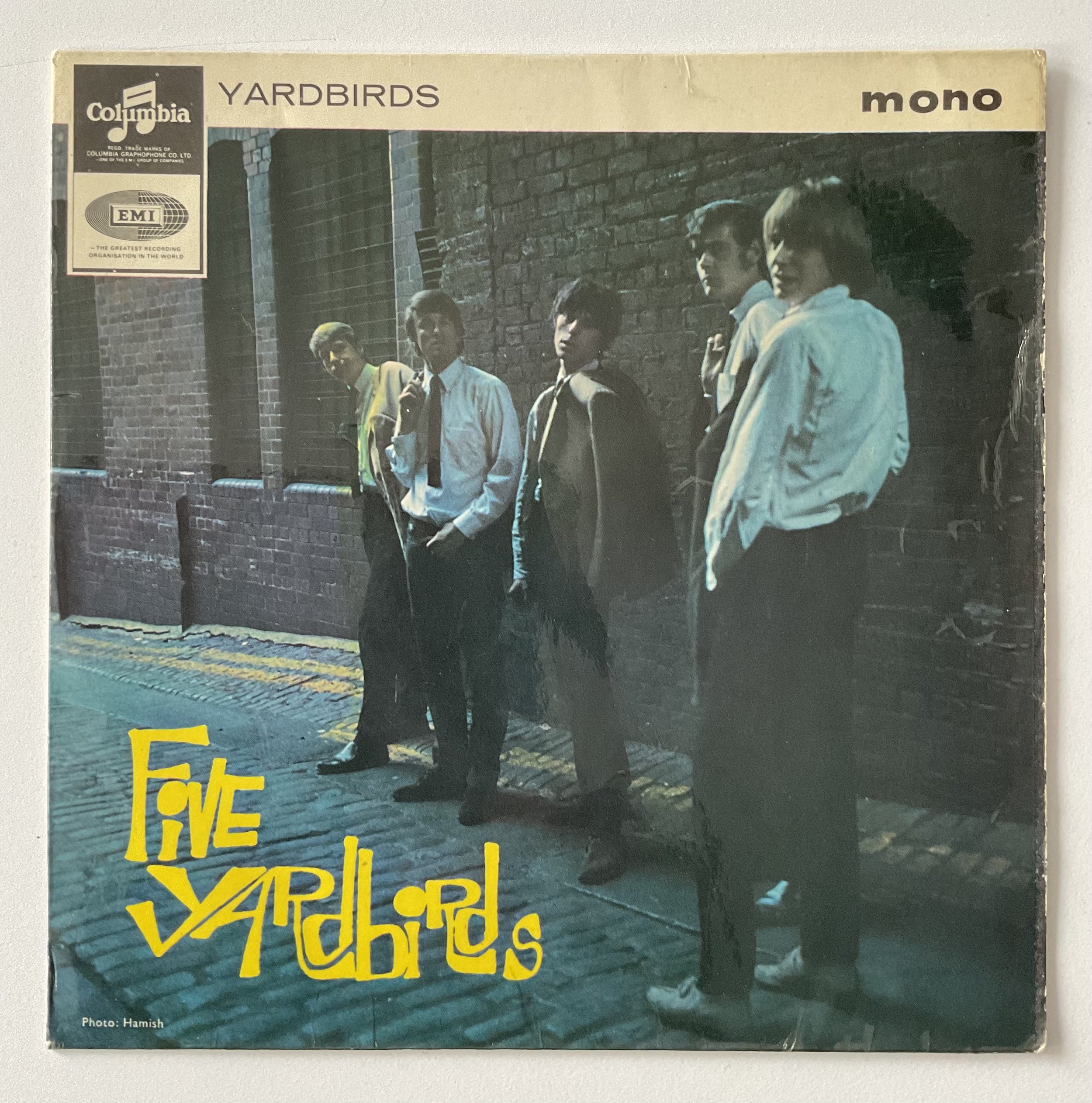
‘My Girl Sloopy’ on the top-side, ‘I Ain’t Done Wrong’ and ‘I’m Not Talking’ jammed together on the flip

In every which way, this cut on US Epic leaves all others behind . . . sonic perfection

Allison was a darling of English art school common rooms; his seemingly effortless bridging of rustic and sophisticated, country and city, black and white, modern and traditional styles was conjoined by a reserved cool that made him sound like no other, until Georgie Fame. The boys and girls in their art school days looked to similarly cross the divides, most usually between home and exile, their time studying art also a time to figure out adult identities (or refuse them, to be forever adolescent).

Rolling Stone Discotheque, New York, September 1965

Part of the attraction of Allison’s music was his undoubted authenticity, a white Southern man who played in a mixed-race trio and who had, it appeared, permission to play the blues, yet who vocalized without blatant imitation of Black voices. Allison seemed to take the blues into the modern age, an ambition that the Yardbirds shared. He was a model worth emulating, as Townshend surely comprehended with the Who’s covers of ‘Young Man Blues’, ‘Eyesight for the Blind’ and ‘One Room Country Shack’.

Allison played on the same bill as the Yardbirds at the fourth National Jazz and Blues Festival in August 1964; they had lifted ‘I’m Not Talking’ from that year’s The Word from Mose, his third album for Atlantic. The Yardbirds kick his song in the head with two drum rolls under revving guitars before exploding down the straight, Beck riding the clutch into the corners, Dreja, McCarty and Samwell-Smith pumping full-throttle, no let up. ‘I’m Not Talking’ is 100 per cent greased-up rock ’n’ roll, the toughest number recorded in Britain in 1965, no question, no argument. Recorded seven months earlier, ‘I’m Not Talking’ is a fulsome precursor to the Who’s ‘My Generation’, scratching the same attitude and style into a Bentley’s paintwork. Both numbers reached the similar conclusion that talking only breeds confusion – things said at midnight might not be said in the morning.
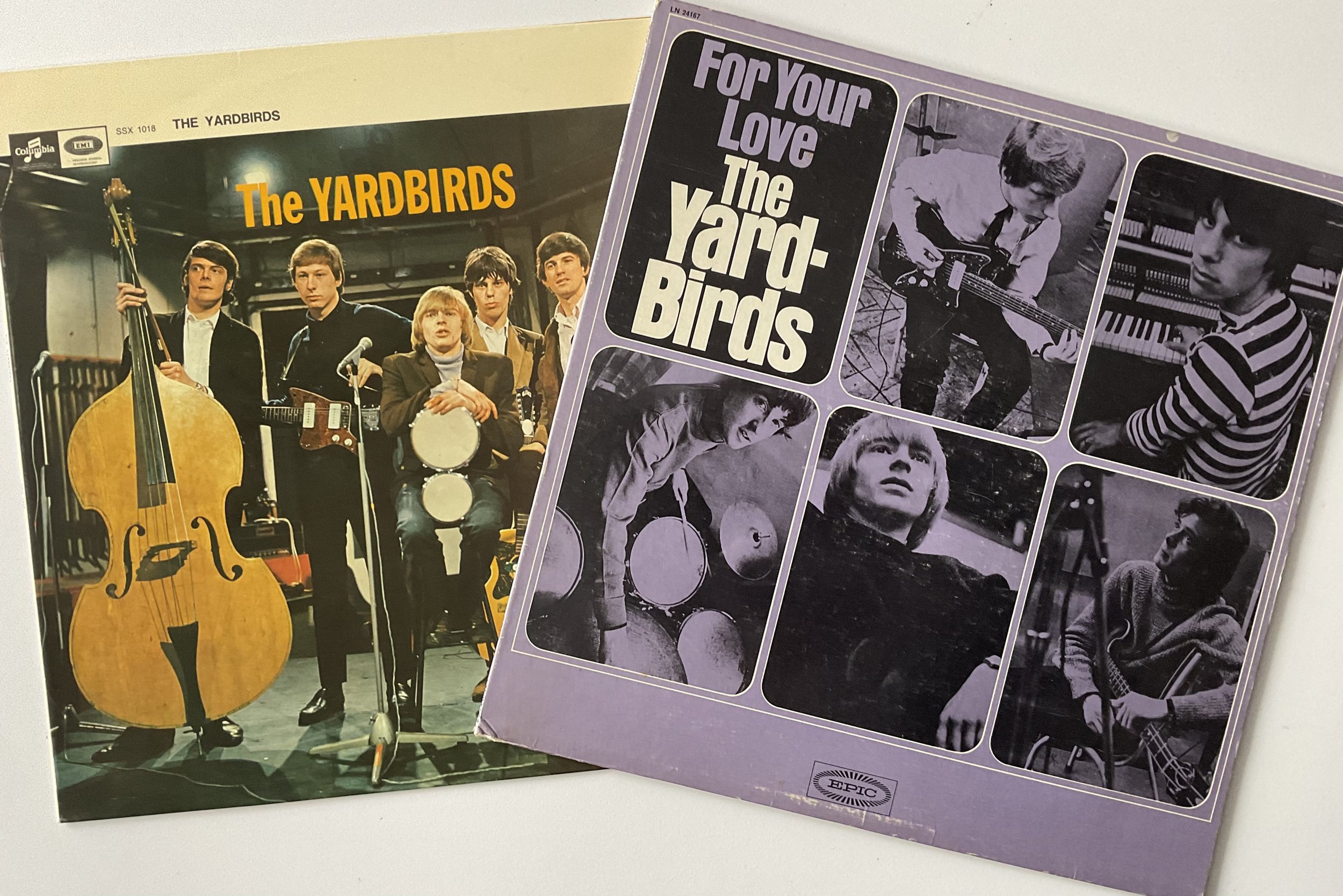
The Swedish version of For Your Love is an improvement on the US edition excluding ‘Sweet Music’ and ‘Putty’ but is still less than perfect.

Gomelsky wasted the two tracks by hiding them on the lower deck of a British EP and on the ragbag For Your Love album, squeezed between Clapton-era rejects of Major Lance’s ‘Sweet Music’ and the Shirelles’ ‘Putty (In Your Hands)’, both trite exercises in the Yardbirds’ hands that fail as pop and anything else they might have aspired towards; the rest of the album included the six sides from the first three singles and their woeful cover of the Vibrations’s ‘My Girl Sloopy’. ‘I’m Not Talking’ and ‘I Ain’t Done Wrong’ would have been better held in reserve to be coupled with subsequent singles and the numbers they would record in the States.

Beck had auditioned for the band in February and made his debut at the Fairfield Hall on 5 March. That the song meant something to him and the band is indicated by it being a key feature of two sessions recorded for the BBC in March 1965 and a third in June, bookending the Advision session in April. All the parts are already present and correct on the Saturday Club take from 20 March but it is a slight, thin affair lacking in the released torque that is exhibited to killer effect on the version cut for Top Gear just two days later.

The third version played for the Saturday Swings show, 4 June, is more cocksure; the band sound comfortable and almost at ease in putting it over, but the cut lacks the nervous rush of tension of their second March run through. They carried over that agitated tautness into the Advision session and then added a bottom end to the sonic structure that is missing on the radio takes. That base constrains and releases Beck’s lead which spools free and snaps back like the screaming line an angler lets run to pull in a hooked marlin.

The BBC sessions are best heard, no argument, on the new Repertoire 4 CD set The Ultimate Live at the BBC which not only boasts of 28 previously unreleased tracks but has seriously improved audio taken from newly discovered and best available sources. Compiled by Ashley Wood, who also provides the authoritative session notes, this is a serious upgrade on all existing collections of off-air and transcription disc collections. Essential  


The Stooges – Rock Beyond Woodstock

It was cheap so took a punt, flicking past the usual boring 60s into 70s acts – Joe Cocker, Jethro Tull, Grateful Dead, Blood, Sweat and Tears – I pulled up short when the VU caught my pop-eye. The unimaginative use of the 3rd album sleeve is given a bit of a boost by the editor spinning the William Faulkner quote Jean-Luc Godard had used in Breathless (À bout de souffle). He topped that with the best downer of a recommendation for the band I’ve read:

Everything in a Velvet Underground song is gray, agonized, drab and inexorable. But what they lack in hope and passion, they make up for in chilly perfection and basic rock, a good reason to accompany them down the razor-blade of life.

The book is organised into ten thematically arranged sections, the Velvets located in ‘Songs of Innocence and Experience’. Further on toward the end is the Marshall McLuhan influenced ‘The Medium Is The Message’ chapter which is where, good lord, the Stooges are found; all three pages of ‘em and all new to me . . . Photographed by James Roark at the Fun House sessions by the look of things – sax man Steve McKay is front and centre. The image of Dave Alexander might just be my favourite pic of him; the one of Iggy Stooge is none too shoddy either. Scott Asheton is MIA.

Rock is sex and violence. . . Rock is revolution. Rock is ceremony. It is the Stooges. . . It is Iggy Stooge, the latest high-energy uni-sex symbol, a second generation Jagger and Morrison.

The Stooges are what rock is about – stuck-up, overbearing, formless, insane, driving, intense

The Stooges: they’re wiggy.

The book ends with a dedication to John Cage and to noise and silence while Little Richard looks on – Nik Cohn would approve . . . Awopbobaloobopalopbamboom!

Unintentional, no doubt, but finding the Stooges in this context, among all the dross acts, is, I think, akin to unsuspecting record buyers discovering the band in the cut-out racks just a few years later; a chance encounter that turned the mundane into the marvellous.

Written by Michael Ross and with original photography by James Roark – the book was published by the Los Angeles based Petersen Publishing Company in 1970, which would make the Stooges pix of the moment. If I’ve got the right man, Roark was best known for his sports photography. Ross I know nothing about.

MC5’s ‘Miss X’: Tales of Wanton Nudity (and Other Acts of Depravity) in London W1

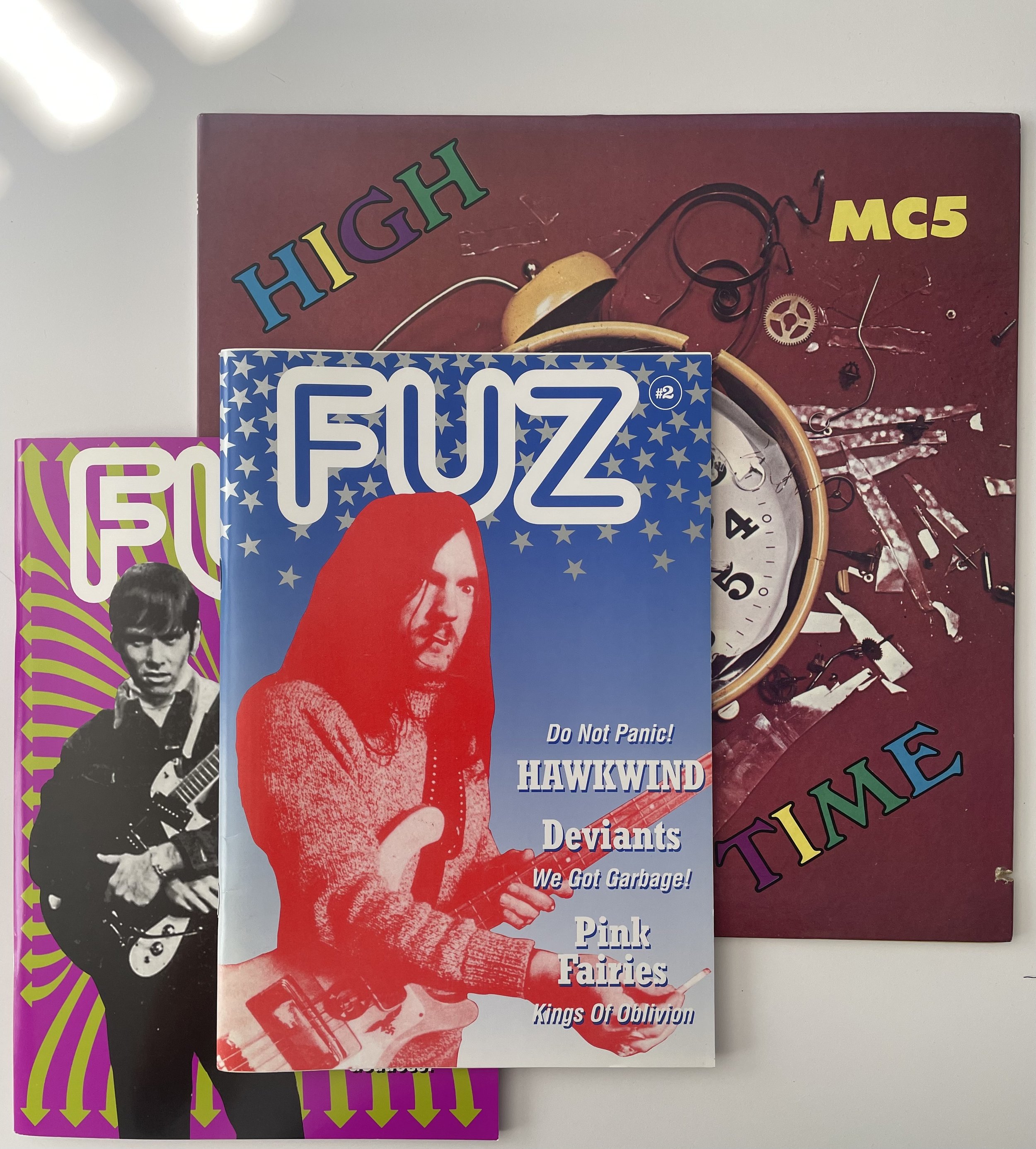
Following the baptism in the fire of love delivered by ‘Sister Anne’ and ‘Baby Won’t Ya’ on Side One of High Time comes Wayne Kramer’s paean to love’s healing power, ‘Miss X’ –  the Five’s most affecting trip into the arms of carnal romance. But who was Kramer’s amour fou, his mystery woman, his Miss X?  The Seth Man has gleaned the righteous dope on this tale of passion unwound, or what he calls  – ‘an exercise in capturing the spirit of sexual abandon and outright helpless rutting (“Sensations rollin’, turnin’ from me to you / Causing this aura of heat to swirl, yeah”)’.

Here ’Tis; his story:

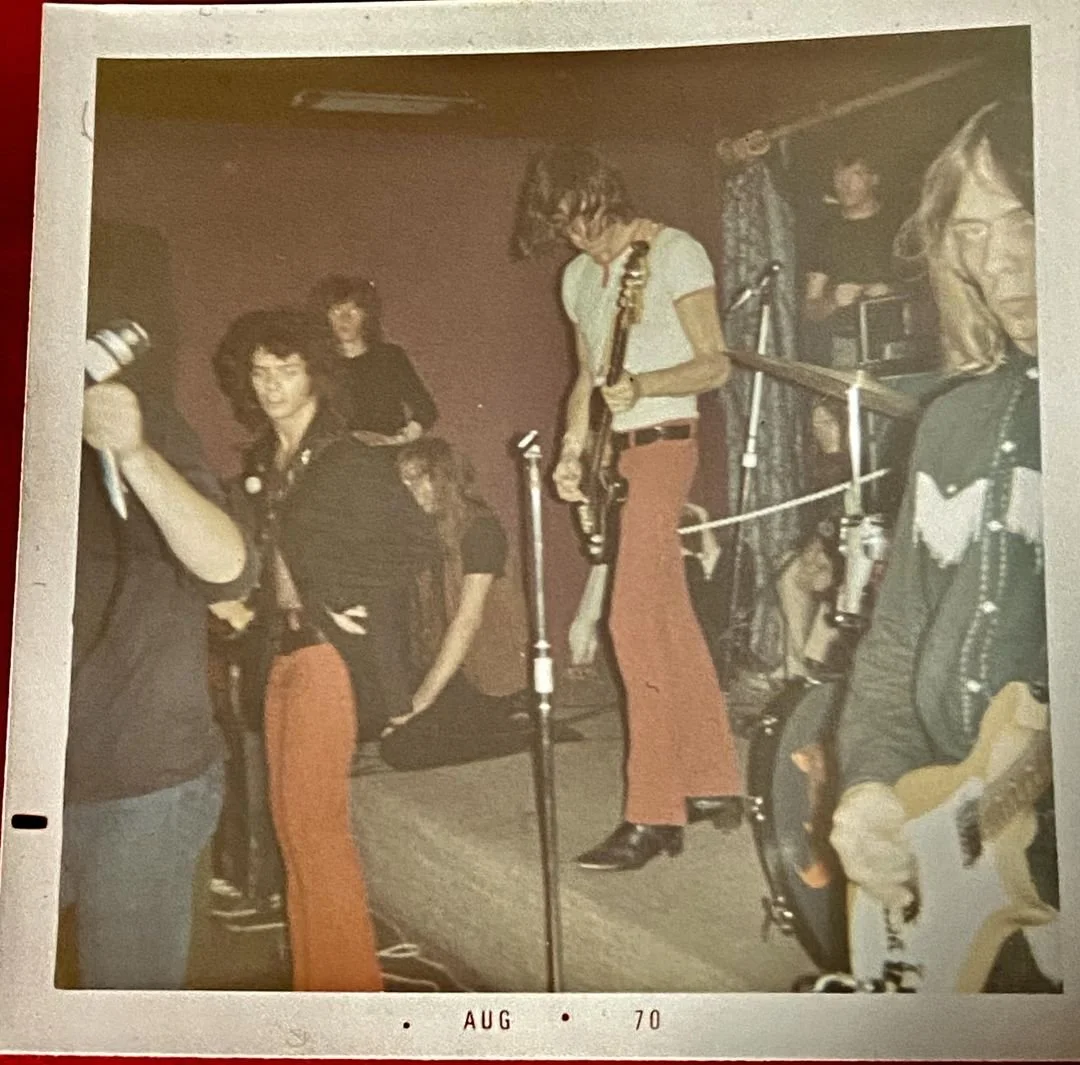
Miss X, MC5 & Pink Fairies At The Speakeasy August 4, 1970 (Tuesday night) and aftermath (Wednesday morning)

In August, the International Times ran with a parody of a sensational tabloid-styled headline that it splashed across its front page: ‘NUDE WOMAN, LONDON PIGS & REBEL MUSICIAN’. Above and below the headline, in equally bold san serif type: ‘TITS, ASS & HOT REVOLUTION! / MULTIPLE L.S.D. – RAPE SUICIDE BID’. The main story was sub-headed ‘Lovely New Zealander’s night of drama’ and delivered in scandalous detail the events that had unfolded one night at the Speakeasy club. The piece, by Mick Farren, satirised newspaper shock and sensation stories of the underground freak scene, and referred to the ‘nude woman’ in question as ‘auburn-haired Miss X’, whose name we are unable to reveal’. Since Wayne Kramer was already fast friends with Farren, could it be that he took the anonymous appellation of said woman and used it as both title and subject of one of his most uncharacteristic songs? As told in IT, the story follows closely the first-hand account of the night’s events that was much later told to me by Joly McFie, a member of The Pink Fairies road crew at the time.

***

A little more than a fortnight after their televised appearance at a free concert staged at Wayne State University in Detroit on Tartar Field, the MC5 were in the UK for the legendary Phun City Festival, held near Worthing in West Sussex. Promoted and assembled by ex-Deviants vocalist Mick Farren, it would become known as a highwater mark of 1970 Rock Music in the UK courtesy of The MC5’s high energy performance as well as that of The Pink Fairies whose two drummers, Twink and Russell Hunter, stripped naked at one point during their set in a show of zapped-out freak power.

Following Phun City, on August 4, The MC5 were scheduled to appear at the Speakeasy club, located at 48 Margaret Street in London’s busy West End. Earlier that day, MC5 guitarist Wayne Kramer encountered a young woman from New Zealand who expressed a desire to get high. Always obliging, he passed the young woman some speed along with an invitation to see his band that night.

Supporting the MC5 were the Pink Fairies, who shared their gear with the headliners. Twink, however, was banned from the Speakeasy, so had to be secretly transported into the club hidden inside a bass drum case. Let loose, and dressed, once more, only in his birthday suit, he invaded the stage during the MC5’s set, which led to him being, yet again, ejected from the club.

MC5 Kicking it out at the Speakeasy, photograph by Noel Shearer

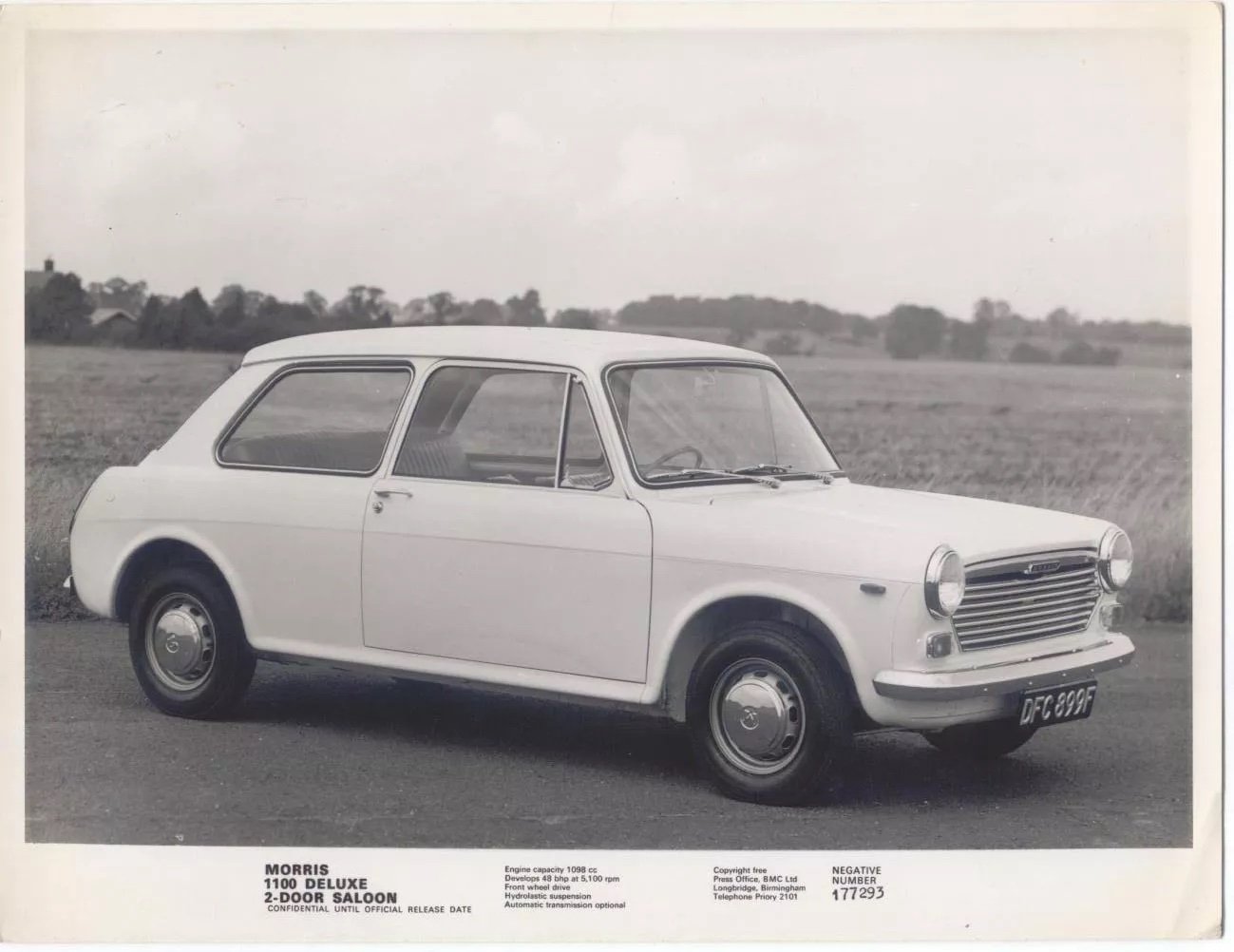
After the MC5 finished their set, the young woman had begun to exhibit the effects of not only the speed but of several alcoholic drinks and a dose of LSD from an unknown donor. Acting in an irrational and agitated manner, in the ladies’ room she began blocking the sinks and turning on all the taps before, like Twink, stripping off all her clothing. The manager of the club insisted the scene cease at once or law enforcement officials would be summoned. Swift steps were then taken by Pink Fairies bass player, Duncan ‘Sandy’ Sanderson and Roderick ‘Noddy’ Mackenzie of White Trash, who ushered the young woman into a waiting Morris 1100 automobile driven by Pink Fairies roadie, Joly McFie. Once on the road, the young woman, still naked, still freaking out, was now repeatedly screaming: ‘I NEED A FUCK!! CAN NONE OF YOU GIVE ME A FUCK?!’ While doing so, she was positioned on her back, lodged in-between the front seats with her head blocking the gear stick, causing Joly to make the short journey stuck in third gear. As he recalled later: ‘every light seemed to be red, and I was having to crawl away using the clutch’.

As the woman repeatedly yelled out for ‘A PROPER FUCK!’, Sandy attempted to oblige her while the automobile wended its way through the early morning hours to Regent’s Park where Joly found a quiet spot to pull over and park the car, where upon he got out. Those left inside kept ‘sensations rollin’ until Miss X changed position and popped out the windscreen with her feet, which Joly, standing nearby, caught whole. Coitus interruptus, Miss X then ran off in the direction of the nearby Regent’s Canal into which she jumped.

Sandy and Joly kept an eye on the intoxicated woman while she swam and continued her vocal dissatisfactions for several minutes before the police showed up. While the police cars were converging, Joly procured a blanket to cover her up. She was then escorted by Metropolitan police to a nearby hospital. Her condition improved with daylight and, according to Joly, ‘she was feeling much better and graciously sent thanks for our efforts’ on her behalf.

Whether or not Kramer just swiped his title from the story or from elsewhere, or even if ‘Miss X’ was more profoundly influenced by the ‘lovely New Zealander’s night of drama’, is perhaps neither here nor there. However compelling the coincidences, keeping true to convention the subject of ‘Miss X’ must remain as much a mystery as Miss X herself.

– The Seth Man

The tale of Miss X’s night of misadventure has also been retold in Rich Deakin’s inestimable biography of The Deviants and Pink Fairies, Keep It Together, with further collaboration from Sandy Sanderson, but the potential link to Kramer’s composition is all The Seth Man’s. Farren didn’t re-live that night in his autobiography, he does, however, give over a fair few pages to the Speakeasy and the sexual politics of the time:

The Speakeasy was not only the place for late booze. It was also where the girls were; one of the city's high temples of the groupie culture that would so fascinate the media. The lipstick killer parade of assumed boredom, platform shoes, scarlet talons, transparent chiffon, fishnets, false eyelashes, appliqué glitter, hotpants, short-short dresses and attitudes of superiority would continue for more than a decade. Much has been made of the oppression of women in rock & roll. Was the groupie a brainwashed victim craving a second-hand and illusionary contact high, or an independent woman making her own choices, fully in control of her own body and sexuality? Germaine [Greer] appeared to cleave to the former in both word and deed when I knew her, but in later life I understand she has recanted her former hedonism.

Tracking back only a few years and ‘Miss X’ was the nom de plume used by the press for Christine Keeler in the Profumo Affair . . . West End Stories on repeat with a Cha Cha Cha rhythm as scored by John Barry [click on the image below]

The Seth Man’s outstanding webpage The Book of Seth on Julian Cope’s Head Heritage can be read HERE His Fuz magazine from the end-of-the-twentieth-century is equally essential reading.

The Love Bug Pink Fairie style


Penny Valentine and Simon Napier-Bell in a tête-à-tête about John’s Children

Of all the weekly music press critics who took a turn at reviewing the latest singles, Penny Valentine was by far the most astute, witty and all around entertaining. You can get endlessly and delightfully lost browsing her column in Disc, which she wrote between 1964-1970. She could be equally enthused about the latest from regular chart toppers or a debut offer from complete unknowns. She didn’t work on a grace or favour basis, her recommendation had to be earned. Her style is intimate, personal, reflective. She will explain what she wants from a record and why it does or does not meet with her expectations. She is without cupidity in her love of pop: never curtly dismissive, patronising or elitist.

She filled the role of an interlocutor mediating between the pop machine and the pop consumer; her endorsement of a record genuine, honest, her critique considered. Most importantly she made her reader feel part of an ongoing conversation about pop, she was inclusive – writing in the same temper as the records she so clearly loved.

You can see how this played out across her reviews of records produced by Simon Napier -Bell in 1966–1967 in which she engaged with him as if he, the reader and her were sharing the same space.

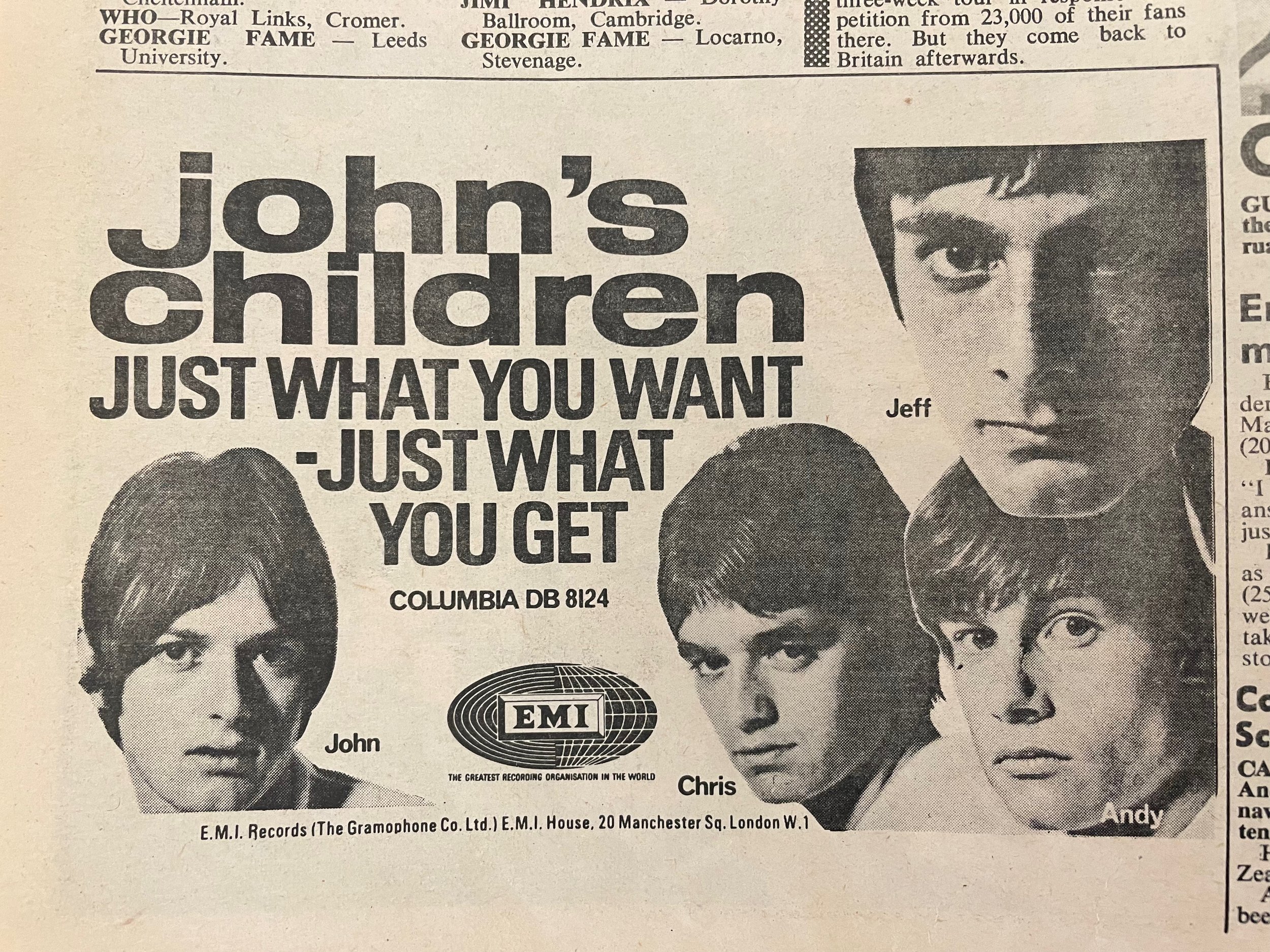
Her column would highlight half a dozen releases but she also dealt with twice that number in the ‘Quick Spins’ section, which is where she reviewed John’s Children’s second 45:

A gentleman phoned me last week and accused me of being very anti the musical works of Simon Napier-Bell. I wish to disagree – while admitting that I have so far remained unimpressed with the odd sounds Mr Bell has produced. Now to ‘Just What You want’ by John’s Children which is odd weird peculiar and disturbing but some tricks work and the overall is effective. Do I see the light? (February 4 1967)

It doesn’t appear that she reviewed the band’s debut – ‘The Love I Thought I’d Found’ aka ‘Smashed Blocked’ –  back in October 1966 so that accusation of being antithetical to SNB productions was most likely in response to the discs by The Yardbirds and Keith Relf:

 Keith Relf ‘Mr Zero’ (Columbia)

I'm very fond of dear Keith Relf with his starved face, and I too thought that this would have been just the sort of sad song cut out for him. BUT. . . I hate to make comparisons but if people will do songs that other people have already made then they must be prepared. It's been done much faster than Bob Lind's, and consequently you lose a lot of the of impact of loneliness. I'm not at all sure about this record at all. Other side is "Knowing." (May 14 1966)

Two weeks later, beneath the headlineNow Yardbirds go Russian and Arabic!’, she reviewed ‘Over Under Sideways Down’ (Columbia):

 I can only suppose that on their next record the Yardies will have the entire Dagenham Girl Pipers playing pick and shovels . . things have got to quite а pitch in their search for new sounds. On this they have great clapping and Russian-type "Heys, Indian rave-ups and a part that sounds like the Arabic call to prayer. Fact, I think it's fascinating and all very splendid. So there! (May 28 1966)

Hardly dismissive in either case but the idea of engaging with SNB must have appealed to her. Whatever, she definitely refused to continence their next single. As she explained:

 Yardbirds ‘Happenings Ten Years Time Ago (Columbia)

The time has come, the walrus said, to have a go. Well, he didn’t actually say that, but I am going to have a go.

I have always thought that a record should give, to each individually it should impart something musically nice. This does not give. It takes. I have had enough of this sort of excuse for music. It is not clever, it is not entertaining, it is not informative. It is boring and pretentious. I am tired of people like the Yardbirds thinking this sort of thing is clever when people like the Spoonful and the Beach Boys are putting real thought into their music. And if I hear the word psychedelic mentioned I will go nuts. (October 22 1966)

Being dull and condescending was a grave sin, while hiding behind the mask of psychedelia was no excuse for pretension. She was, however, ready to make amends with Relf’s second solo disc, ‘Shapes in my Mind’, which she reviewed under the title  ‘Make Me Break This Spell’ (Columbia), even if she still felt ‘Happenings’ was a ‘monstrosity’:

 I have a strange feeling that Simon Napier-Bell has been groping around in the dark – In the musical sense for a long time and may at last be coming out into the light.

This is as strange and weird as some of his other efforts (that includes the last Yardbirds’ monstrosity) but unlike the others this actually works. Here then we have Keith's off-beat, sad, echoey voice in a desperate state at losing his girl. Once you've got over the shock of everything stopping and starting and feeling that somewhere lurks the phantom of the opera at his organ keyboard, you'll like it. It may even move you. It did me. (November 26 1966)

Napier-Bell had cut the backing for Relf’s single in Los Angeles at the same time as he had the city’s top session men record John’s Children’s debut, musically and thematically the two singles make good companion pieces.

Marc explained about their stage act “We don’t just do a musical performance . . . it’s a 45-minute happening . . .”’Record Mirror (June 10, 1967)

It would have been a fair exchange . . . . Velvets for John’s Children Melody Maker (July 15 1967)

The third release by John’s Children was also placed in the ‘Quick Spins’ section:

Some have said that ‘Desdemona’ is a very dodgy song indeed, and JOHN'S CHILDREN say no, it's not. So be it. But even to my uncontaminated mind the words don't seem to leave much to the imagination. All very weird, with Marc Boland's [sic] odd black magic voice coming through well. (May 13 1967)

Valentine had reviewed Bolan’s debut The Wizard and had rather liked it:

On the strength of this strange young man's looks and weird background, I suspect we'll hear more of this odd record about meeting a wizard in the woods who knew all.

I prefer the other side, 'Beyond the Rising Sun' which has more tune. Jim Economides, ace producer, does lovely things on this. I'm a bit put off by the way this boy sings with Dylan phrasing, but that’s all. (November 19, 1965)

She missed (or avoided) reviewing ‘The Third Degree’ and ‘Hippy Gumbo’.

Melody Maker (June 10 1967)

Napier-Bell’s pursuit of the sensational, however phoney, had made its mark with ‘Desdemona’, how then to follow that line of provocation?

John’s Children – ‘Come and Play With Me in the Garden’ (Track)

Some people, including Simon Napier-Bell himself, think I have a "down" on Simon Napier-Bell's productions. Well, I haven't. I do try to be fair – really. But so often it strikes me that all he and his groups агe after is a controversial lyric and such a way-out production that nobody would be any the wiser if they were all playing and singing on their heads. Perhaps they are. Down here, mother, where the air is clean and your children are innocent, I couldn't understand what was going on. In fact, I couldn't even follow the tune.

John's Children sound as though they have been recorded suspended from crystal balloons. All disconcerting. But see "Emily Play" and look how wrong I was about THAT. (July 22 1967)

The admission of error when it came to predicting hit records was one of the traits that enhanced her appeal. The previous month she had written off Syd and the boys:

Pink Floyd – ‘See Emily Play’ (Columbia), didn't really go mad over this group's last record, and I' can't in all honesty say I like this much either. It's another of those songs which appear childishly innocent on the surface but actually carry messages of doomy evilness. (June 17 1967)

With the next John Children’s effort,was Napier-Bell replying in kind to her commentary about his charges?

 John’s Children – Go Go Girl (Track)

The clever thing about this group is that their records are always so outrageous they always manage to get a big review. This one, I understand, was made in desperation after continual harsh words from me. It sounds like it. I will accept no responsibility for this extraordinary send-up. It's chronic and a joke. But then, of course, it's meant to be. Haha. Ignored it will surely not be. Goodnight Simon. (October 7 1967)

Was Penny Valentine – all put together with chocolate n’ feathers – the subject of ‘Go Go Girl’? Undoubtedly not, but it kept the conversation rolling on though that was the last of the John’s Children 45s. Valentine did, however, review two of Andy Ellison’s solo singles:

 Quick Spins:

From ‘Round the Mulberry Bush’ a pretty song of lost summer love, sea and sand, called ‘It’s Been A Long Time’ by Andy Ellison (January 6 1968)

Andy Ellison, who has stunned many by recent TV appearances, makes Beatles’ ‘You Can’t Do That’ into a pretty evil-sounding proposition. (June 8 1968)

Had others heard the evil masquerading as innocence in ‘See Emily Play’ and Ellison’s version of the ‘You Can’t Do That’? While her dialogue with Napier-Bell faded, his replacement was waiting in the wings:

Tyrannosaurus Rex ‘Deborah’ (Regal Zonophone)

Once you've staggered over that name this is a very interesting record. Apparently this is John Peel's favourite record at the moment but don't be feared doesn't mean it's that incredibly obtuse. What it is, is a very interesting record. By that I mean it's a new weird sound from Marc Bolan's highly distinctive vocal. Few words, lots of sounds, and it's pretty in a strange way too. Unexpectedly nice. (April 27 1968)

Tyrannosaurus Rex ‘One Inch Rock’ (Regal Zonophone)

I dig you now, Tyrannosaurus! It has taken me much longer than all those hip people who have been digging them for ages to appreciate this group. I now admit I find their sound rather endearing, certainly very individual, and totally fascinating. I have also met Marc Bolan in my lift, and he’s much smaller and delicate looking close to than I had suspected. I’m glad they put a title on this because I couldn’t understand a thing he was singing about. But there’s power in those vocal cords, by jove! And they do get a very good sound. (August 23 1968)

Tyrannosaurus Rex ‘Power Suitor’ [sic] (Regal Zonophone)

After having owned up to liking the overall sound these two put over, I must now admit to being rather confused as to why all their singles have this hard tight chanting vocal but very little lyric. It's okay if you just want to leap about in a white hat making the floorboards shake, but to sit and listen to – unless you're in a mystic mood– it's a bit mind-boggling. (January 25 1969)

Tyrannosaurus Rex ‘King of The Rumbling Spires’ (Regal Zonophone)

Penny was on holiday for this release so the paper asked pop star Clodagh Rodgers to review the week’s singles

I can't follow it at all, I can't find any definite tune in it. I like Marc Bolan's voice because it's very distinctive ‘Deborah’ was great. But on this they've got too much backing —it's overloaded. It's messy and the only words you can hear is the title.

Penny Valentine, Sounds (March 26 1972)

Most of Penny Valentine’s reviews of Bolan’s records have been quoted in There was A Time – Marc Bolan: a Chronology (2024). I can think of no better way to idle away the hours than tracking with Cliff McLenehan the traces Bolan left behind.

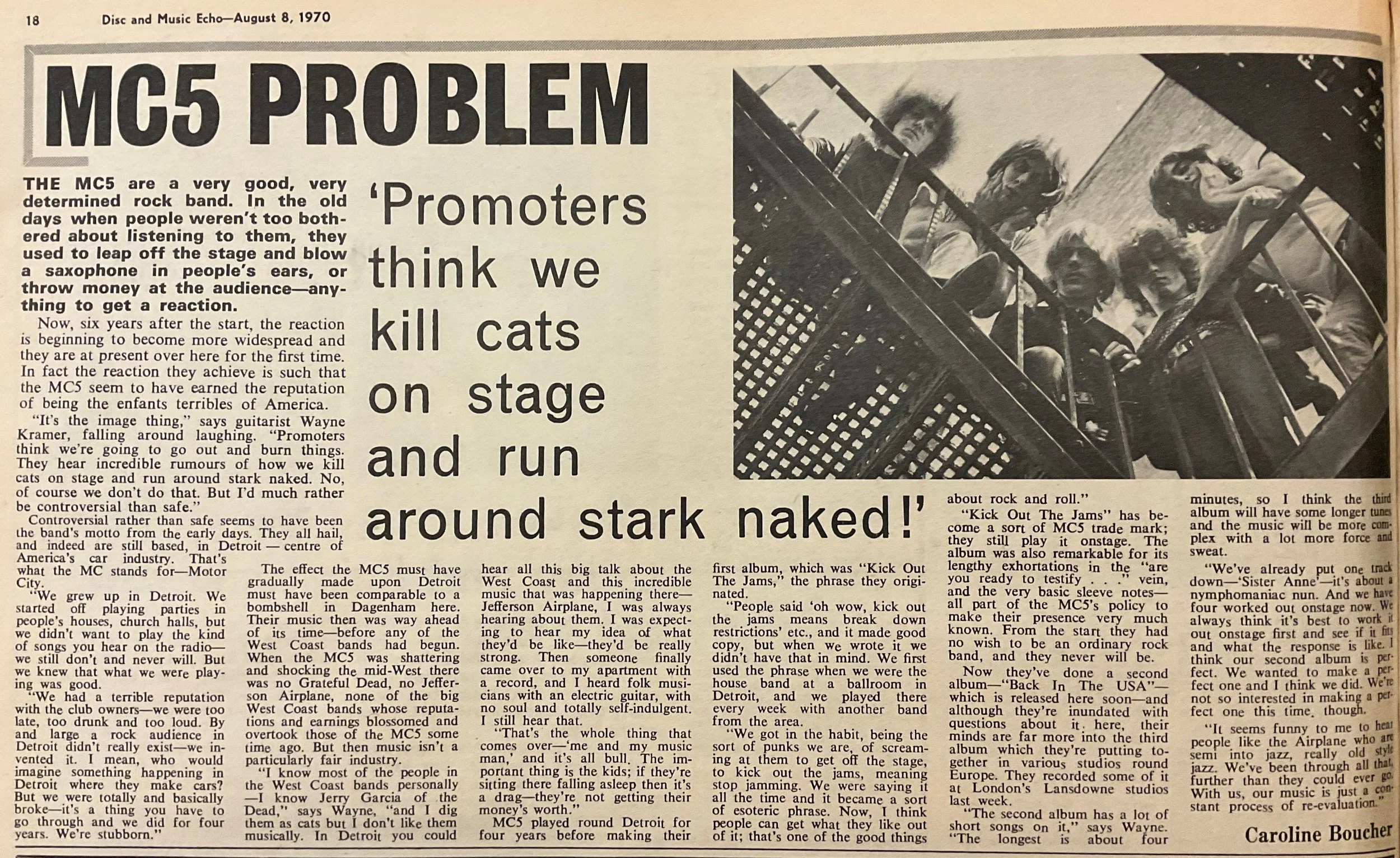
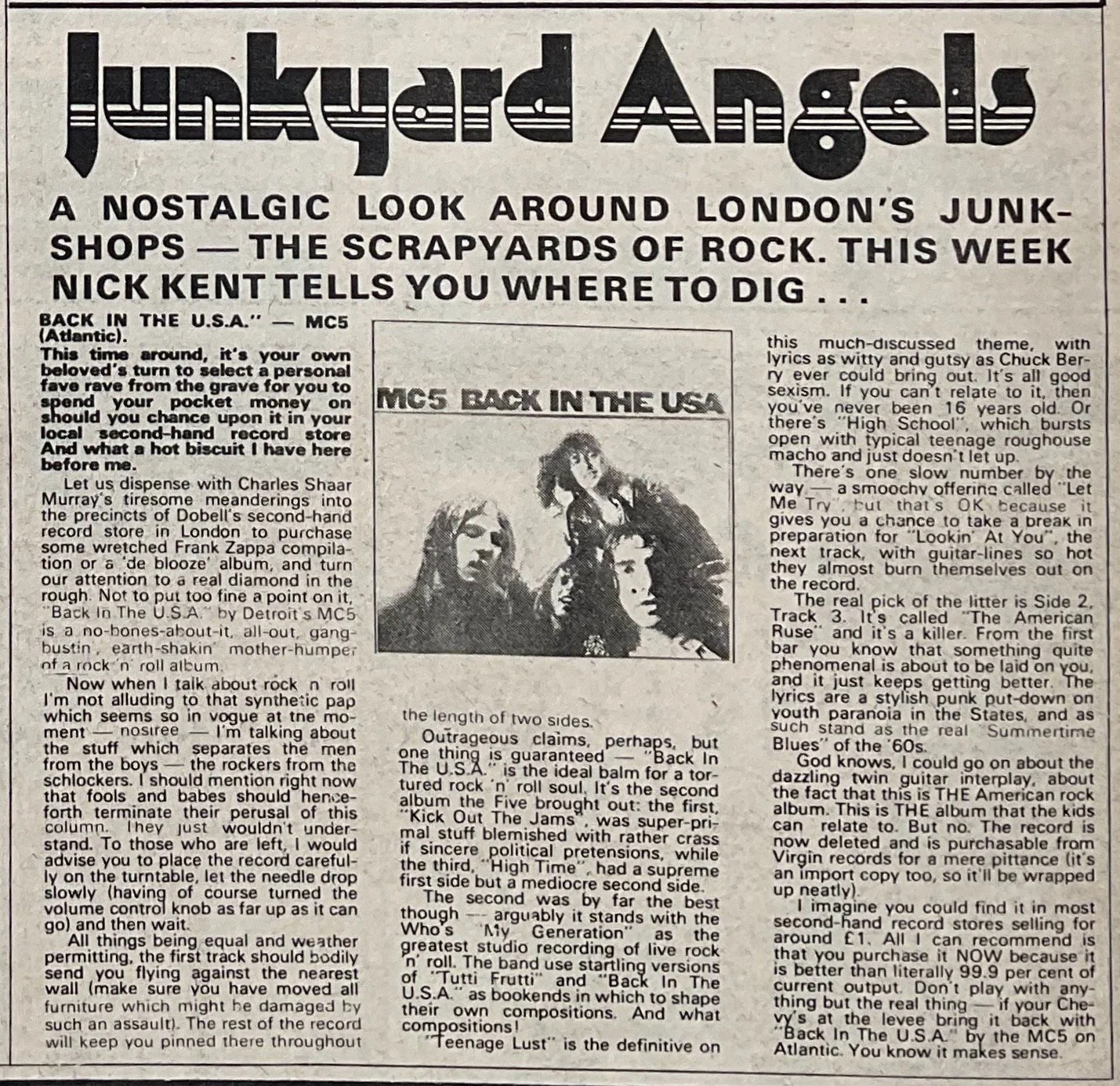
'No Dress Restrictions' – MC5 UK Gig List 1970 & 1972

In anticipation of my 13 page epic tale of the MC5 in Britain 1972 — Ugly Things #66 (Summer 2024) — here’s a list of the gigs the band played in the UK as they neared the end of their tumultuous career: 4 shows in 1970 and circa 36 in 1972

The Five’s second visit to the UK was chaotic and without record company support. Gigs were announced and then cancelled. Sometimes the band turned up late and played only one number, sometimes they didn’t even get past the soundcheck. Not every date listed here is confirmed though for most shows I have at least two or three pieces of evidence that they did take place. I expect there are some omissions, ad hoc appearances, but as of today it is the most comprehensive list we have. A fair few of the shows were reviewed in the weekly music press and I quote from these and a good number of news stories and interviews in ‘MC5 Live On Saturn, London 1972’, which is fully referenced.

Melody Maker (August 8, 1970)

1970

Zigzag (August 1970)

Disc and Music Echo (August 8 1970)

July 25 Phun City, Sussex

July 26 Roundhouse, London

July 31 Marquee, London

August 4 Speakeasy, London

The Speakeasy, London photo: Noel Shearer

Music Now (August 15 1970)

1972

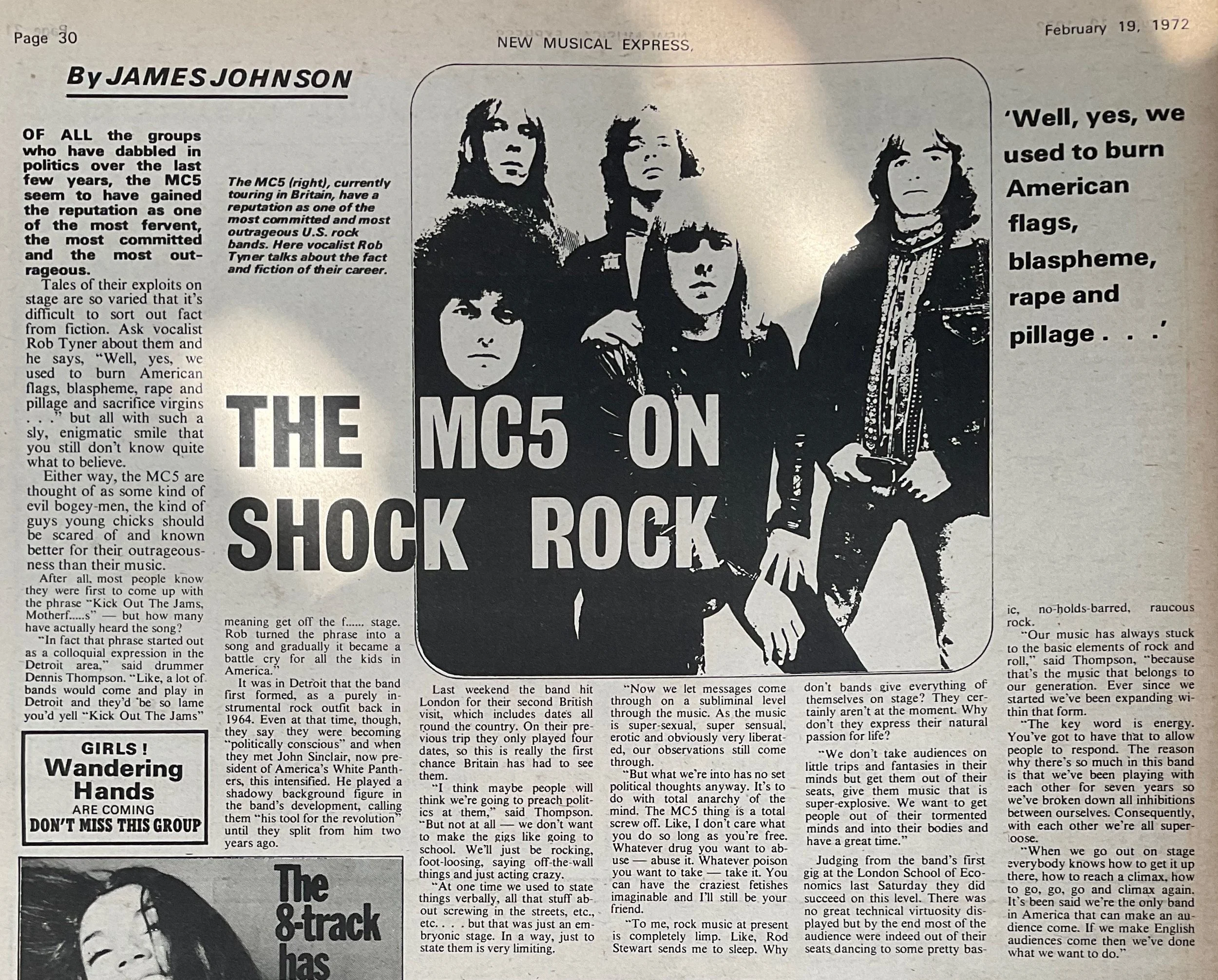
February 5  (Sat) London School of Economics, London

"When we go out on stage everybody knows how to get it up there, how to reach a climax, how to go, go, go and climax again.It's been said we're the only band in America that can make an audience come. If we make English audiences come then we've done what we want to do."

February 11 (Fri) Friars, Aylesbury

February 13 (Sun) The Greyhound, Croydon (Michael Davis’ last performance)

Croydon’s White Panther Party UK get disgruntled . . . full account HERE

February 17–22 France

 February 24 (Thur) Corn Exchange, Cambridge

February 25 (Fri) Lanchester Poly, Coventry

February 27 (Sun) Barbarella’s Birmingham

February 29 (Tue) Flamingo, Redruth

March 1 (Wed) Plymouth Polytechnic

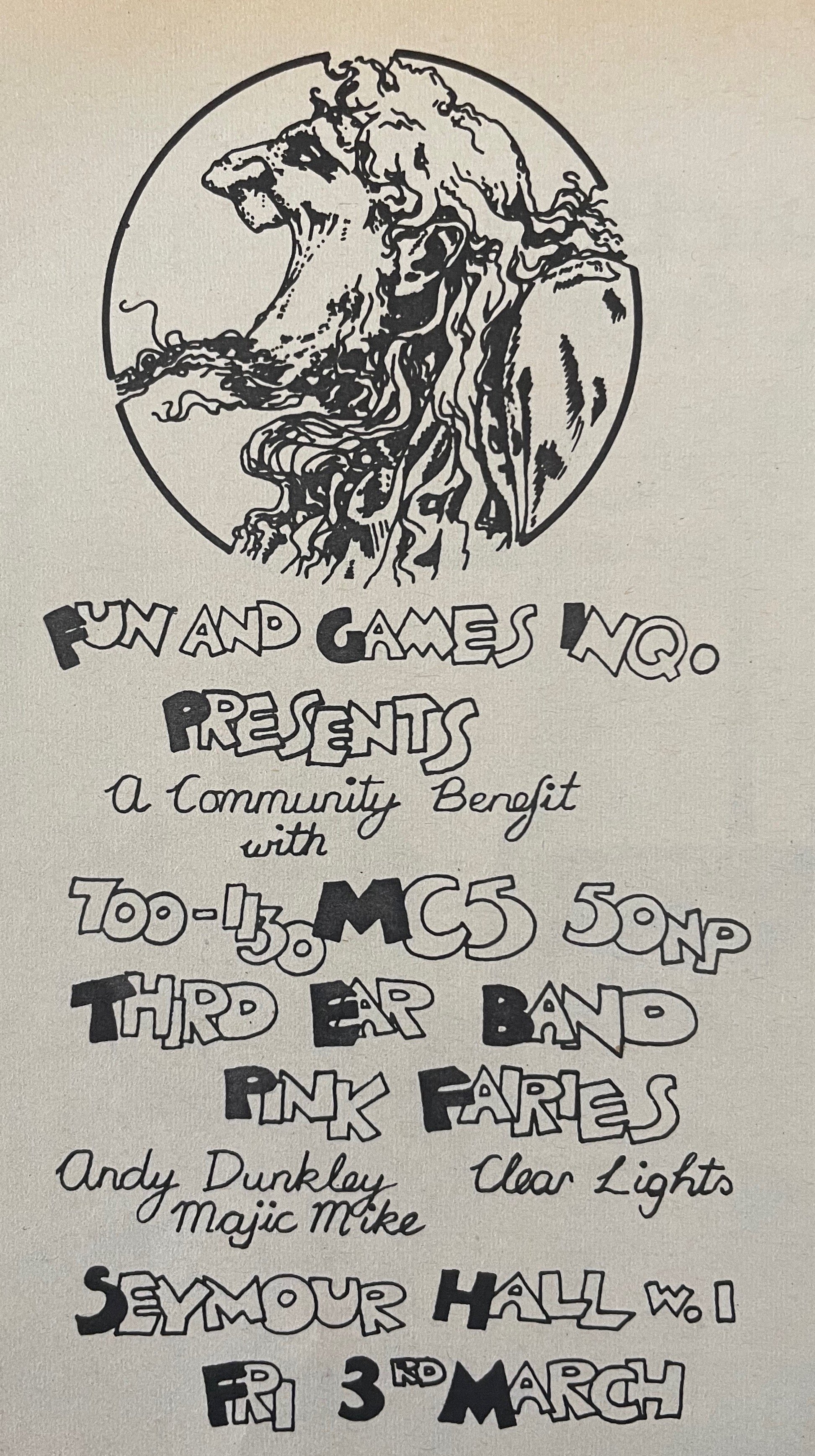
March 3 (Fri) Seymour Hall, London

March 4 (Sat) Odeon, Canterbury

 March 8–23 France/Germany

 March 23 (Thur) Speakeasy, London

Sounds gig list

 April/May USA

 June 1 (Thur) City Hall, Leeds

June 3 (Sat) Clitheroe Festival, Clitheroe

Manchester Evening News

June 5 (Mon) Magee University, Derry

NME gig list

June 7 (Wed) The Stadium, Liverpool (unconfirmed and unlikely as the Five are not listed in adverts the Stadium ran in the Liverpool Echo)

June 9 (Fri) Guild Hall, Northampton

NME

June 10 (Sat) Kings Cross Cinema, London

June 11 (Sun) Letchworth Youth Centre, Letchworth

Time Out listing

June 12 (Mon) Trinity College, Cambridge

Sounds

June 16 (Fri) Edgehill Rag Ball, Top Rank, Liverpool

Liverpool Echo

June 18 (Sun) Wake Arms, Epping

June 19 (Mon) York City Rowing Club, Lendal Bridge, York

Melody Maker

June 23 (Fri) Penthouse, Scarborough

June 24 (Sat) Hornsea Rock, Hull

June 27 (Tues) Merton College, Oxford

June 28 (Wed) Greyhound, Fulham Palace Road, London

June 29 (Thur) Kingston Polytechnic, London

Time Out

June 30 (Fri) Bedford College, London

July  1 (Sat) St Albans City Hall, St Albans

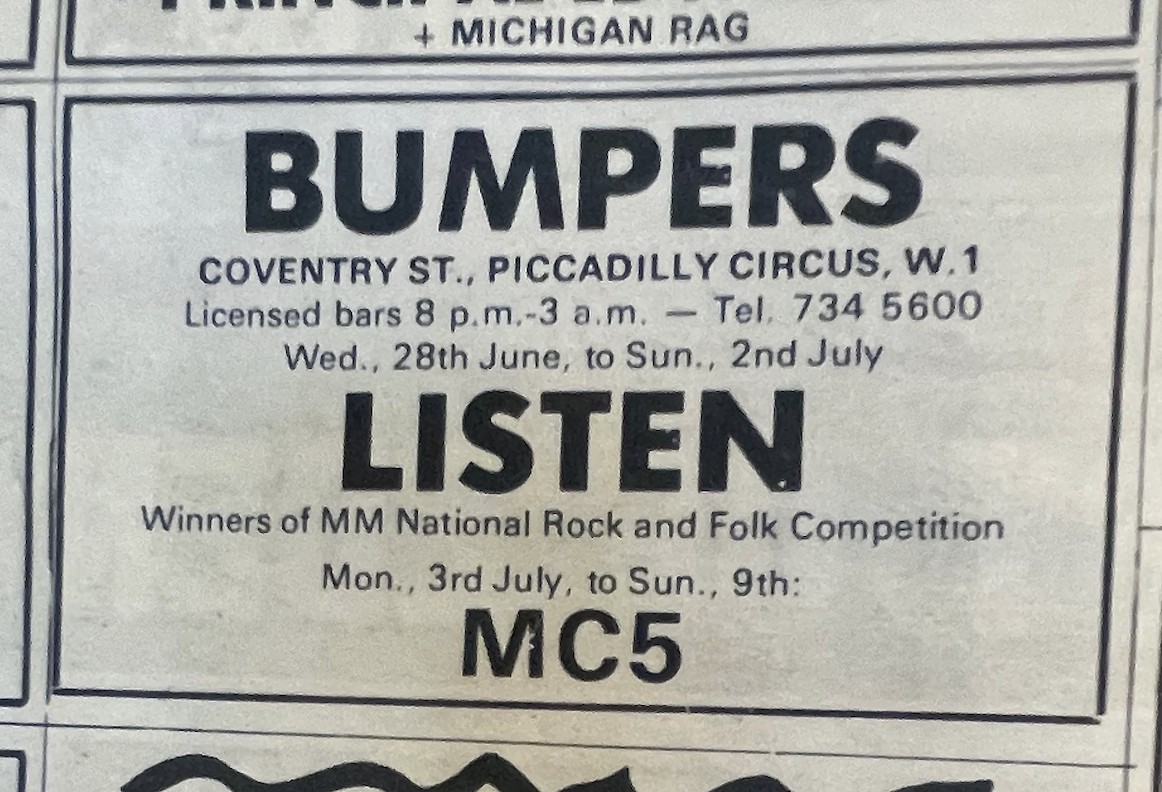
July  3-9 (Monday thru Sunday inc.) Bumpers, Coventry St. London

Nick Kent . . . NME October 21 1972

Bumpers Club hostesses . . . promo photograph circa late 1971


July 12–22 Holland/Belgium


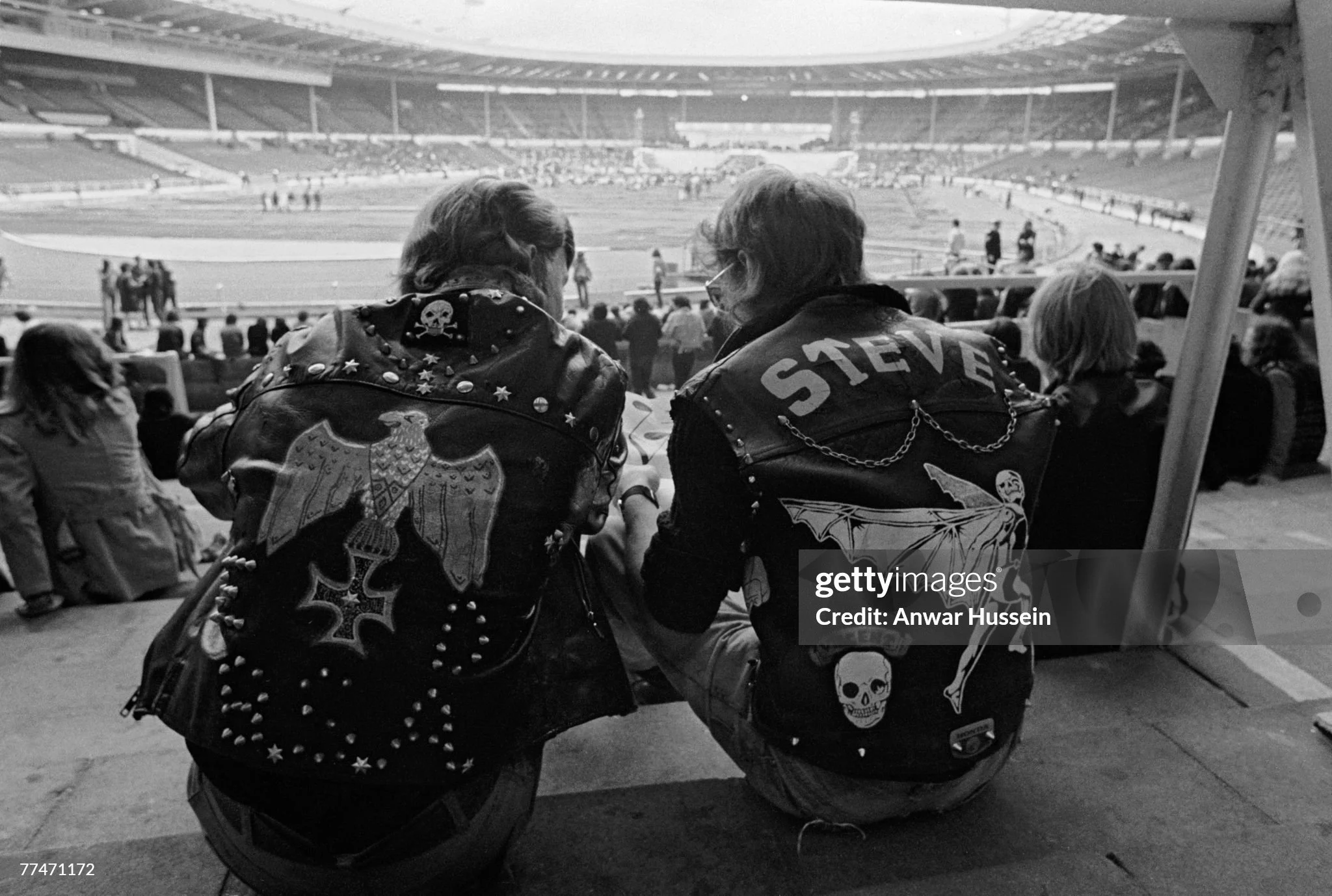
Rob Tyner glams it up in Wembley

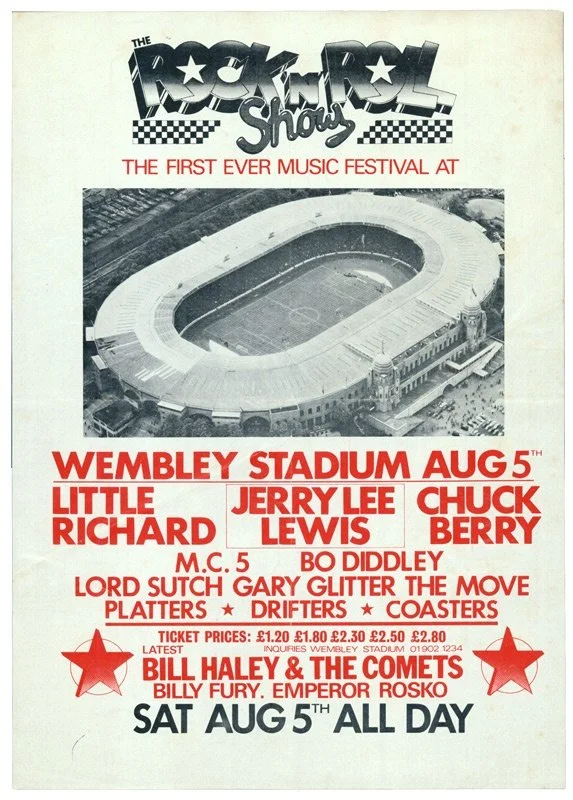
August 5 Rock ’n’ Roll Show, Wembley


Though listed/advertised/rumoured the MC5 didn’t appear at


February 10 Corn Exchange, Cambridge

February 12 Mardi Gras Club, Liverpool

March 5 Implosion, Roundhouse, London

September 16 Pier Pavilion, Felixstowe

September 23 Windsor Arts Festival, Windsor

November 16 Sundown, Mile End, London

December 2 Epsom Baths Hall, Epsom

December 9 LSE, London

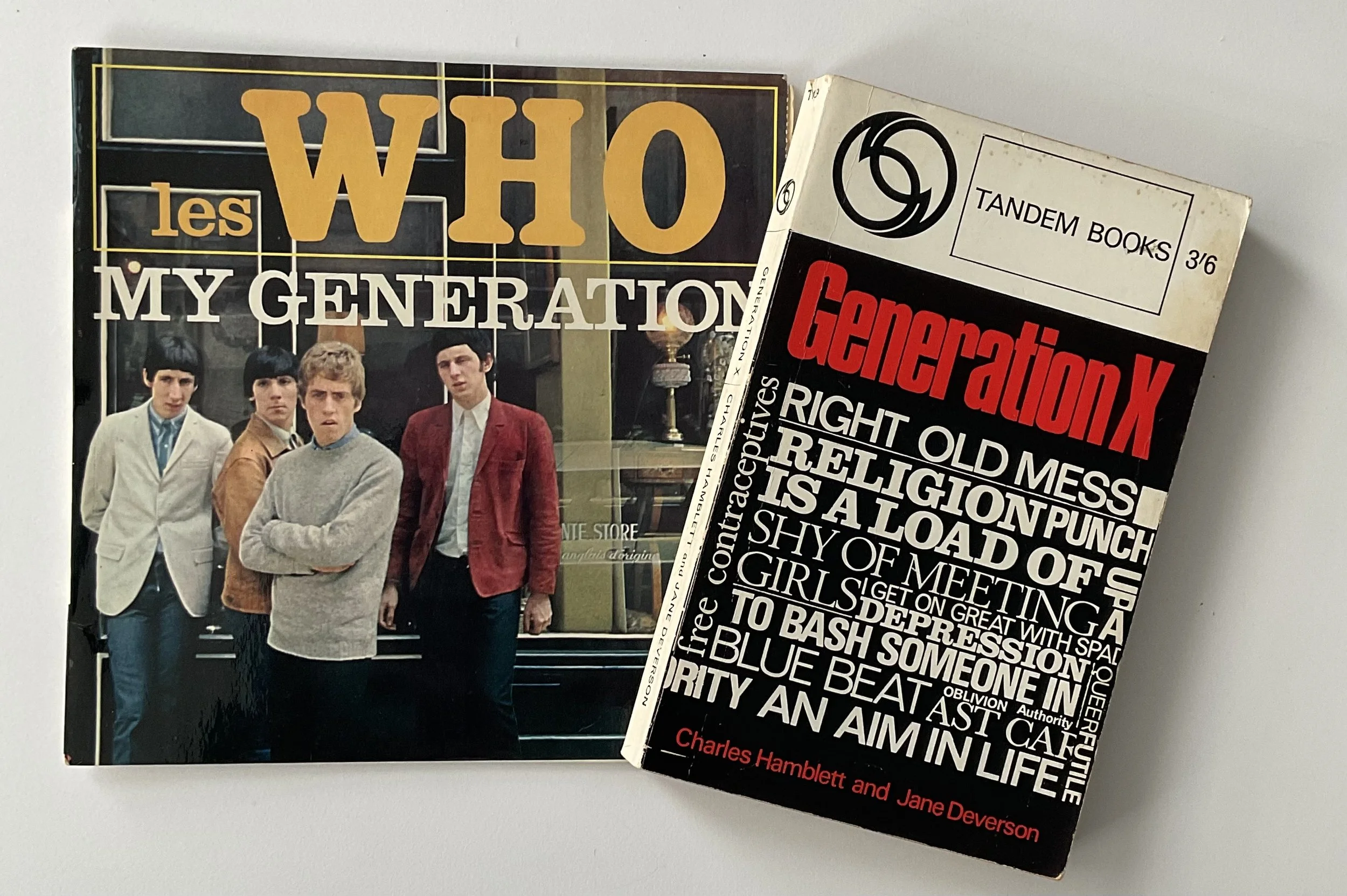
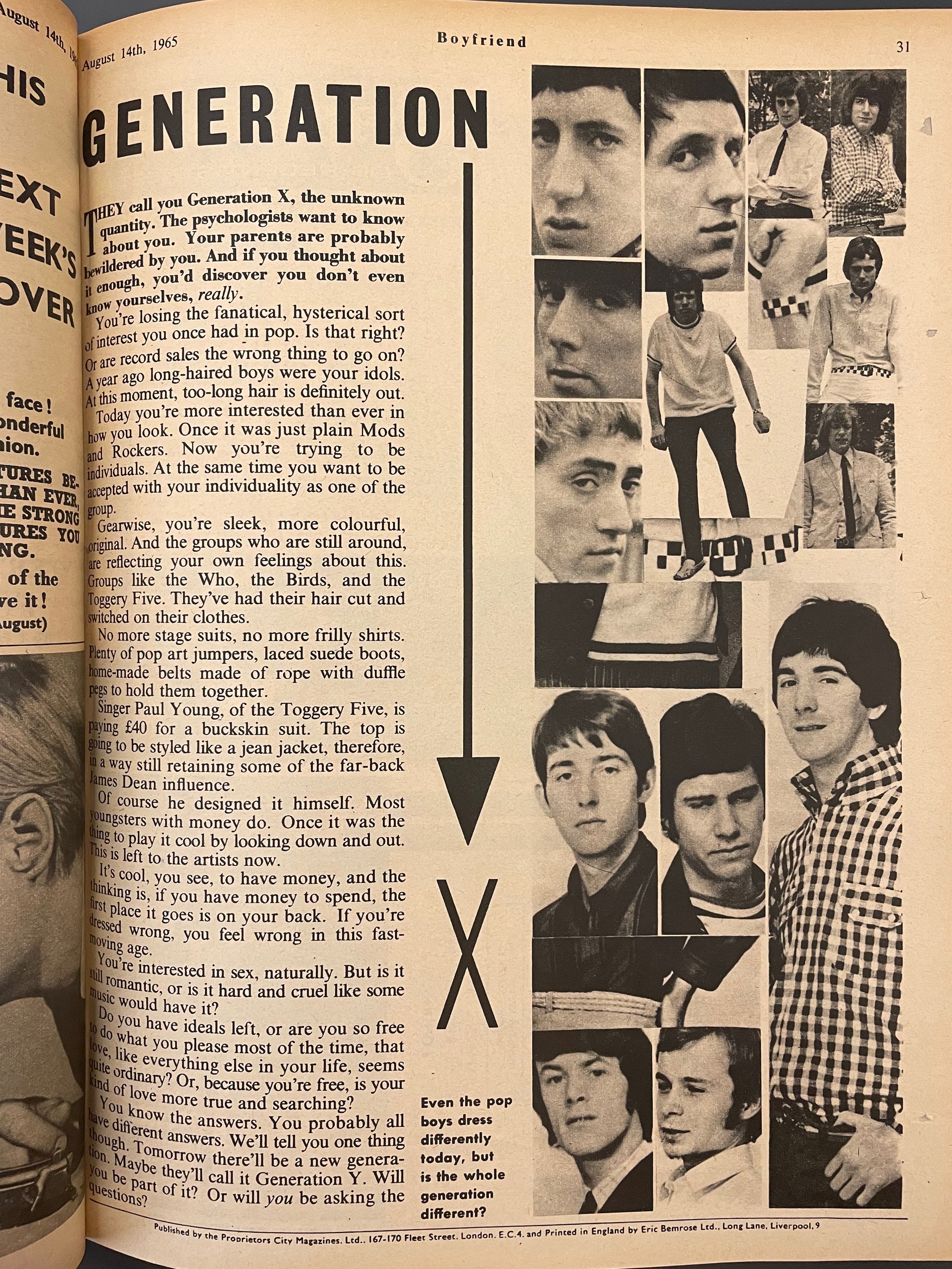
They call YOU Generation X

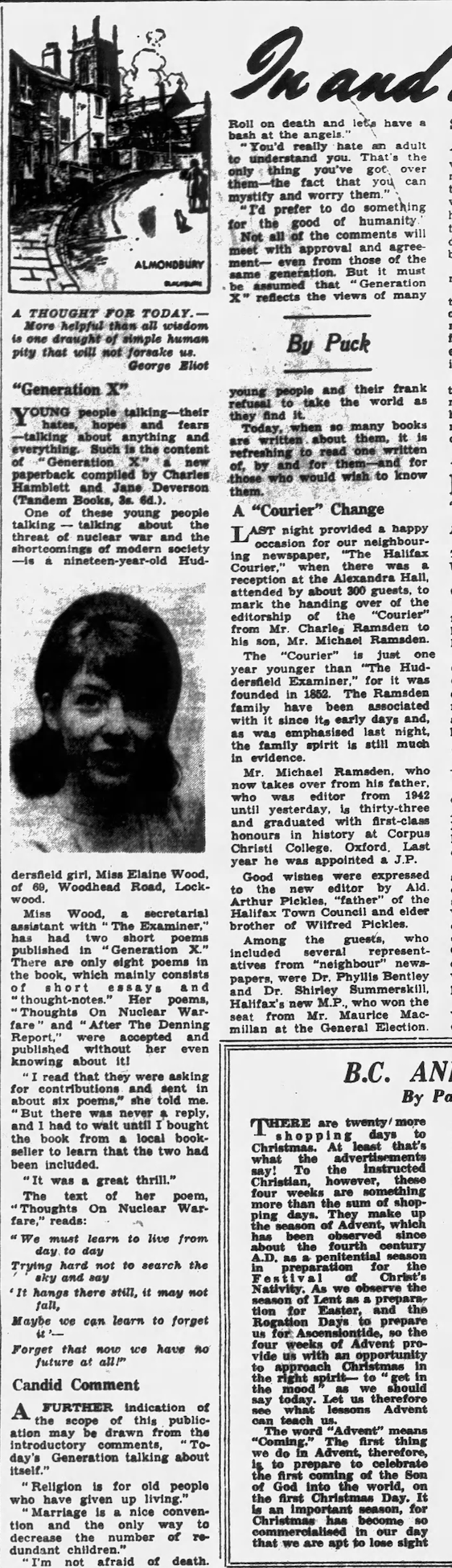
‘Roll on death and let’s have a bash at the angels’

Generation X

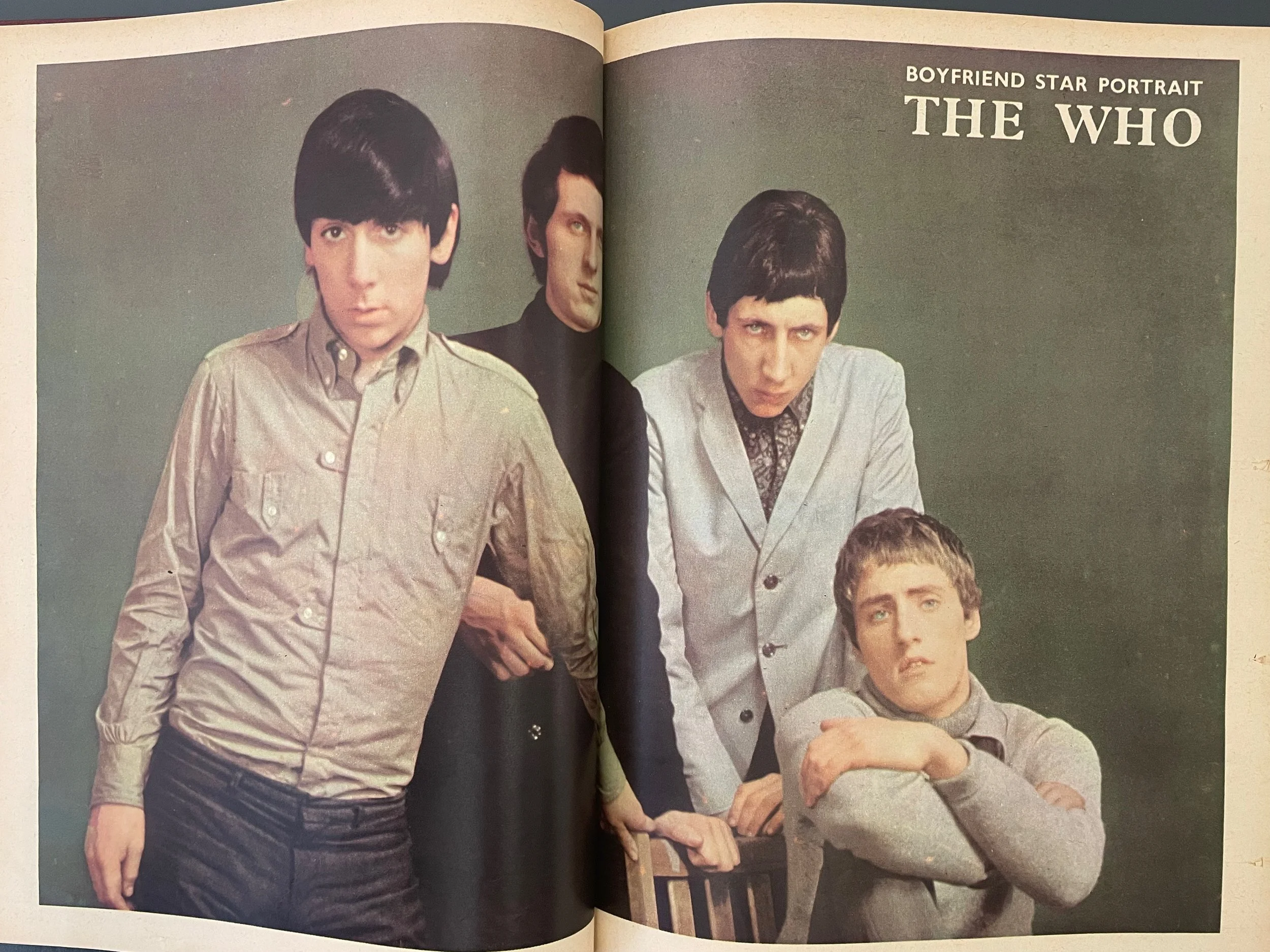
When the teen pop magazines eventually picked up on Generation X they turned it into a set of life style tips with The Who, The Birds and The Toggery Five as their models

The Observer (May 17,1964)

Huddersfield Daily Examiner (December 1, 1964)

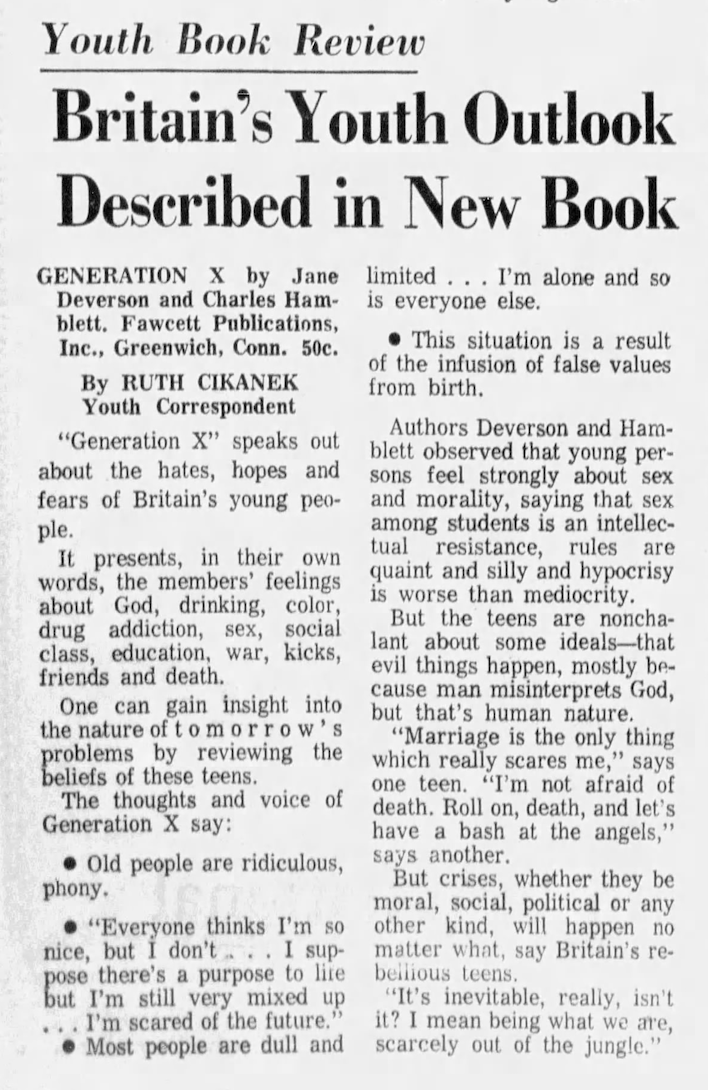
Wichita Beacon (November 26, 1964)

After You’ve Gone blog has some background on the term ‘generation x’ [HERE] and on the book itself [HERE]

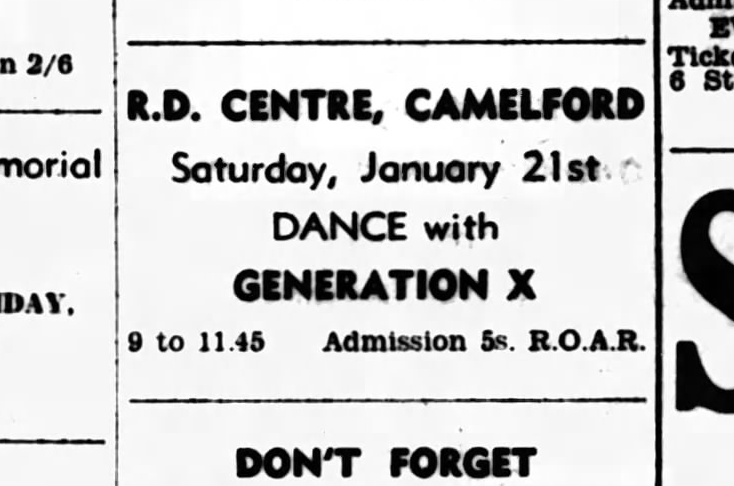
Before Billy Idol’s mob took the name there were at least two other combos, one in Kent the other in Cornwall, who adopted the name and attempted to breakout of village halls

A Kentish Express columnist looks no further than to her darling boy’s school band, Generation X, for this February 1967 piece.

Cornish Guardian (January 19, 1967)

‘Generation X the title of a paperback which detailed the wild youth of the 1960s: a rock band of the 1970s . . .’ Bolton Evening News (December 20, 1977)

Clipped pages from Generation X on the rear of The Clash’s debut single

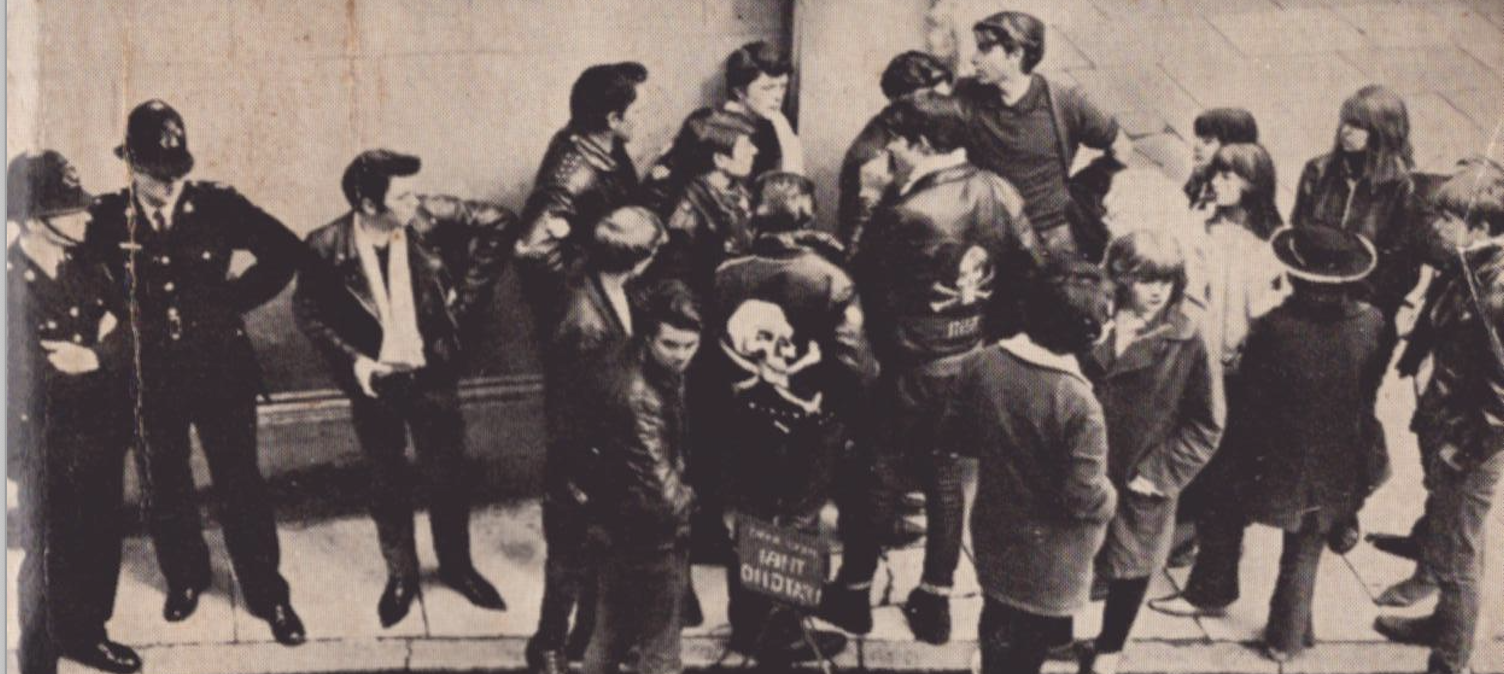
The 1964 American edition, published by Fawcett, uses a reversed and cropped image of rockers and policemen on a Margate street corner. The original below is reproduced in Johnny Stuart’s essential Rockers! (1987)

“Police Notice . . . NO WAITING”

The two rockers to the right of the policemen have been given hair enhancements by Fawcett’s photo editor – quiffs are go!

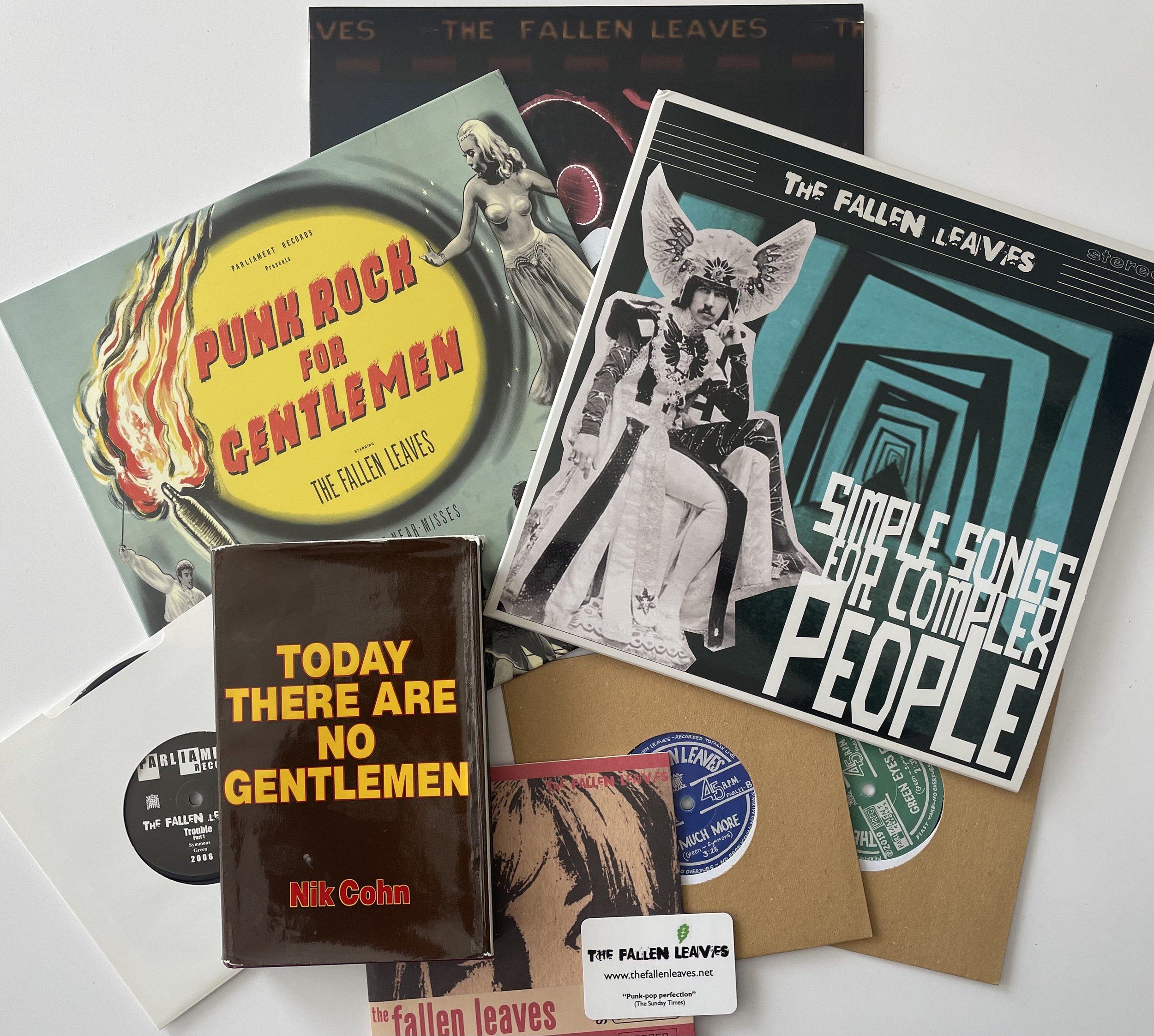
Today There Are No Gentlemen excepting The Fallen Leaves

Yellow Socks Are Out

As Eric Joy, the tailor, puts it: 'When I first started cutting, in the early fifties, my biggest seller was the single-breasted, button-three in grey or dark blue; ten years later, it was the same; today it's the same; in 1980, it'll still be the same.' . . .

With this, all the bleatings of revolution may begin to take on meaning. For the first time, male fashion won't be just the rich and the chic, sipping Campari sodas at the Arethusa; it will be dealing in millions.

On that basis, this book comes more into perspective. It isn't about a movement but about the roots of a movement; not about change but about the precursors of change. Simply, it's about a beginning.

 Nik Cohn, Today There Are No Gentlemen (1971)

All the important bands have a manifesto, written or unwritten. These are the rules they live by and the laws that they wilfully break (for a sizable cash advance)

There is poetry in The Fallen Leaves manifesto

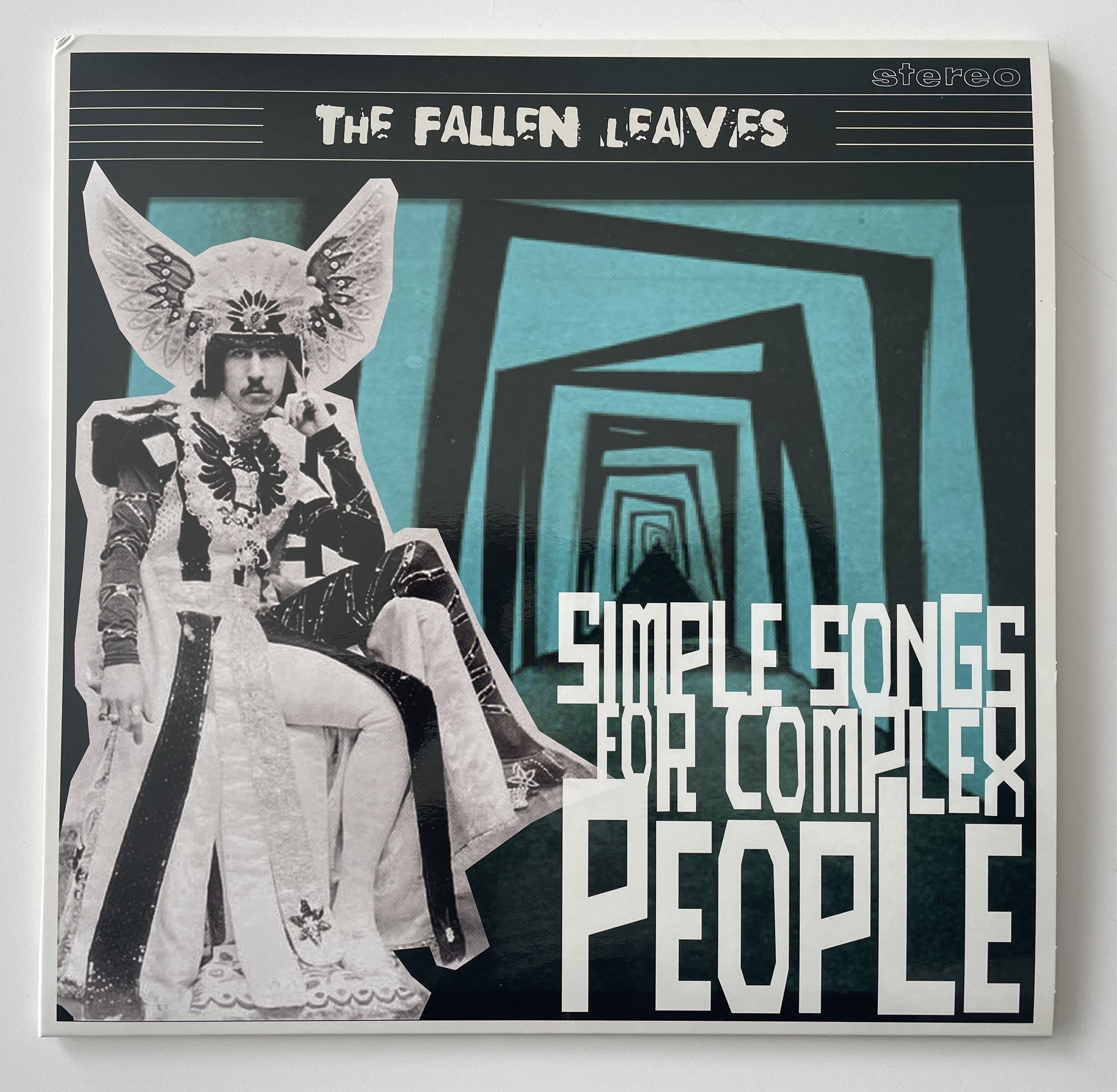
 Simple Songs For Complex People.
Punk Rock For Gentlemen.
No Jeans. No t-shirts. No Cover-Versions.
The Fallen Leaves believe in the DIY Punk ethos.
Song, Sound and Performance are all.
Recordings are live, minimal overdubs.
As the self-proclaimed champions of the glorious underachievers The Fallen Leaves ask you to remember … Simple and easy are not the same thing.

 That credo was once shared by Dr. Feelgood; obviously not the embargo on cover versions, but in all other aspects the two bands walk the same line. In 1976 on the Feelgoods first tour of the States, Wilko Johnson explained to an American critic his philosophy:

“we play straightforward . . . We think the simplicity of it IS it . . . If there is no feeling in it, there’s nothing at all.”

photo: Mick Gold

 The Fallen Leaves don’t sound anything like the Feelgoods but they do sound like a good few of your other favourite bands. More importantly they apply Johnson’s ethos with verve and drama and they have in abundance what Nik Cohn loved in certain English bands, flash.

Their latest album is a true testament to that fact, it is the best album since forever (and I bet I’m still humming along with it next year and a good few more after that). Rev. Rob Green sings in a way that tugs at my most romantic inclinations, which is to say I believe him. Sir Robert Symmons plays guitar as if he’d sat a crash course taught by Sterling Morrison along with a few desultory evening classes with Ron Wood at the lectern, circa 1965. The Fallen Leaves also have the best vocal harmonies since The Who in 1966. Their songs are tailored for the ages . . .

Buy the album [HERE] then go see Aki Kaurismaki’s film that shares the band’s name . . . and much of their manifesto.

Dirty Real – Cultural Rhapsody

A review of Dirty Real in Library Journal.


“In a challenging cultural rhapsody about the gritty authenticity characterizing films following the hippie era of the 1960s, Stanfield (emeritus, film, Univ. of Kent; Maximum Movies) posits that the 1970s presented problem-based rather than escapist entertainment vehicles. Actors like Dennis Hopper, Peter Fonda, Jack Nicholson, Jon Voight, and Jeff Bridges personified a bohemian reality in Easy Rider, Five Easy Pieces, Midnight Cowboy, and The Last Picture Show. Stanfield usefully presents minute analyses of lesser-known films of this genre, including Ride in the Whirlwind, The Shooting, The Last Movie, The Hired Hand, and Dirty Little Billy. As with many eras, the themes of 1970s cinema do not precisely correspond to eras; antiheroes, usually loners, already existed in biker, working-class, and Western films of the 1950s. Stanfield references The Treasure of the Sierra Madre, released in 1948, as an influence over the era. He also examines how the lifting of the Production Code in 1968 resulted in greater openness in films.

VERDICT A challenging meditation on nonconformity in mid-20th-century cinema that includes a filmography list influenced by Italian and French New Wave cinema. Cultural critics might enjoy this book more than general readers.”

Reviewed by Frederick J. Augustyn Jr , May 01, 2024

https://www.libraryjournal.com/review/dirty-real-exile-on-hollywood-and-vine-with-the-gin-mill-cowboys-1806175

Dirty Real – Deadline May 13, 2024

Dirty Real is published on May 1st . . .

Publisher’s Weekly has had a head start:

Dirty Real: Exile on Hollywood and Vine with the Gin Mill Cowboys

Peter Stanfield. Reaktion, $25 (344p) ISBN 978-1-78914-862-6

Stanfield (A Band with Built-In Hate), a film professor emeritus at the University of Kent, delivers a discerning deep dive into counterculture films of the late 1960s and early ’70s. According to Stanfield, such actors as Peter Fonda, Dennis Hopper, and Jack Nicholson played down the glamour that had previously characterized Hollywood stars in favor of grittier personas that reflected an emerging understanding that movies were no longer “means of escape but a means of approaching a problem.” Astute analysis of key films of the era reveal how they tackled topical issues. For instance, Stanfield contends that Fonda’s The Hired Hand (1971) used the western genre as a backdrop to promote themes of female empowerment, and that Bob Rafelson’s Five Easy Pieces (1970) regards with distrust the “bourgeois slumming” of its protagonist, who maintains the privileges of his middle-class background despite seeking out a more “authentic” lifestyle working in oil fields. Stanfield shares Rafelson’s skepticism toward the period’s vogue for authenticity, suggesting that leading actors, writers, and directors showed “an acute nostalgia for the gutter none had known at first hand,” and that the predominantly white casts portrayed a “social realism [that] did not include the reality, or even fantasy, of black lives.” It’s a sharp study of the contradictions of post–flower power cinema.

https://www.publishersweekly.com/9781789148626

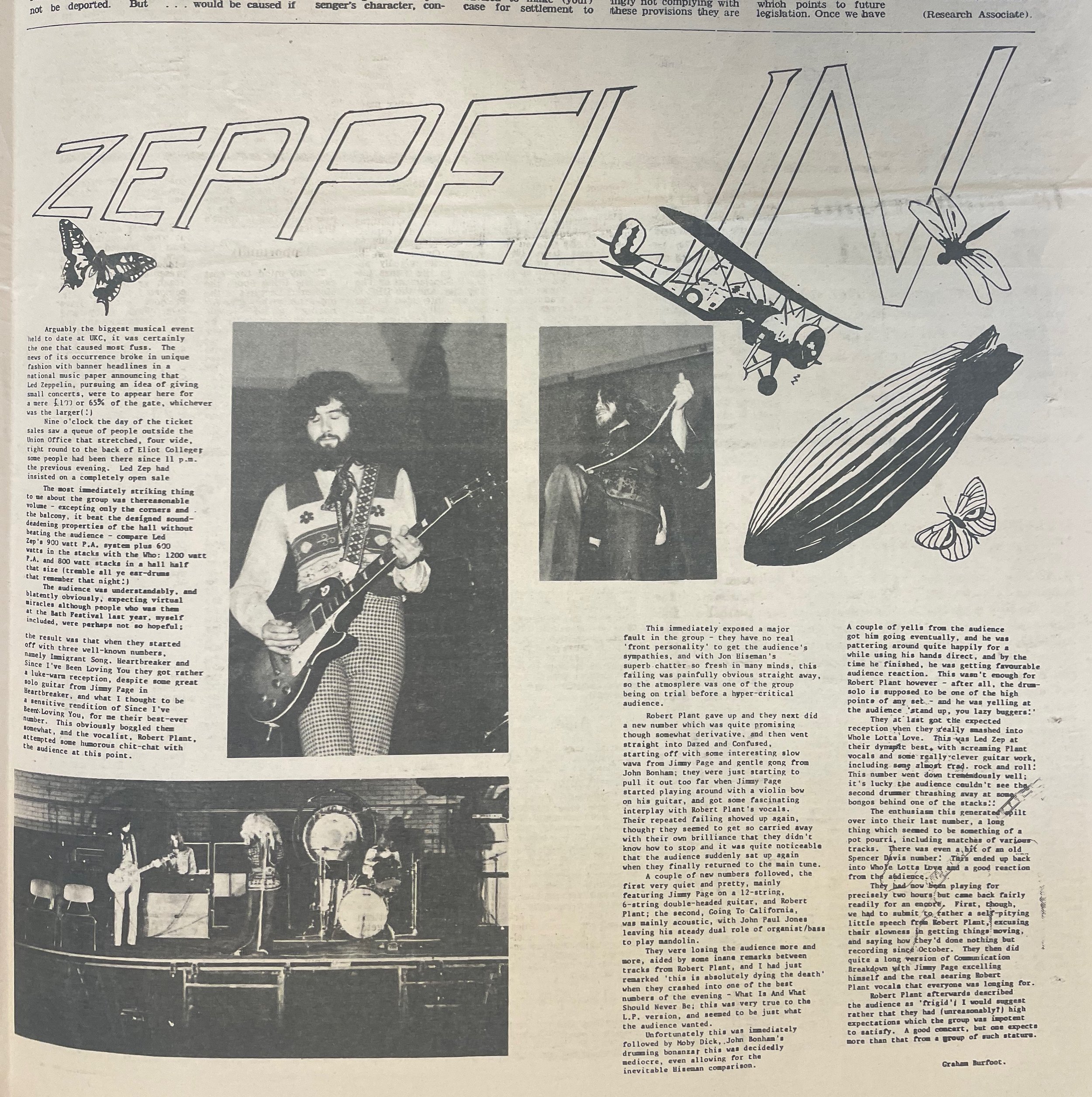
ANOTHER ASTERICK-AWFUL DANCE! . . . The Yardbirds and Led Zeppelin – University of Kent 1967 and 1971

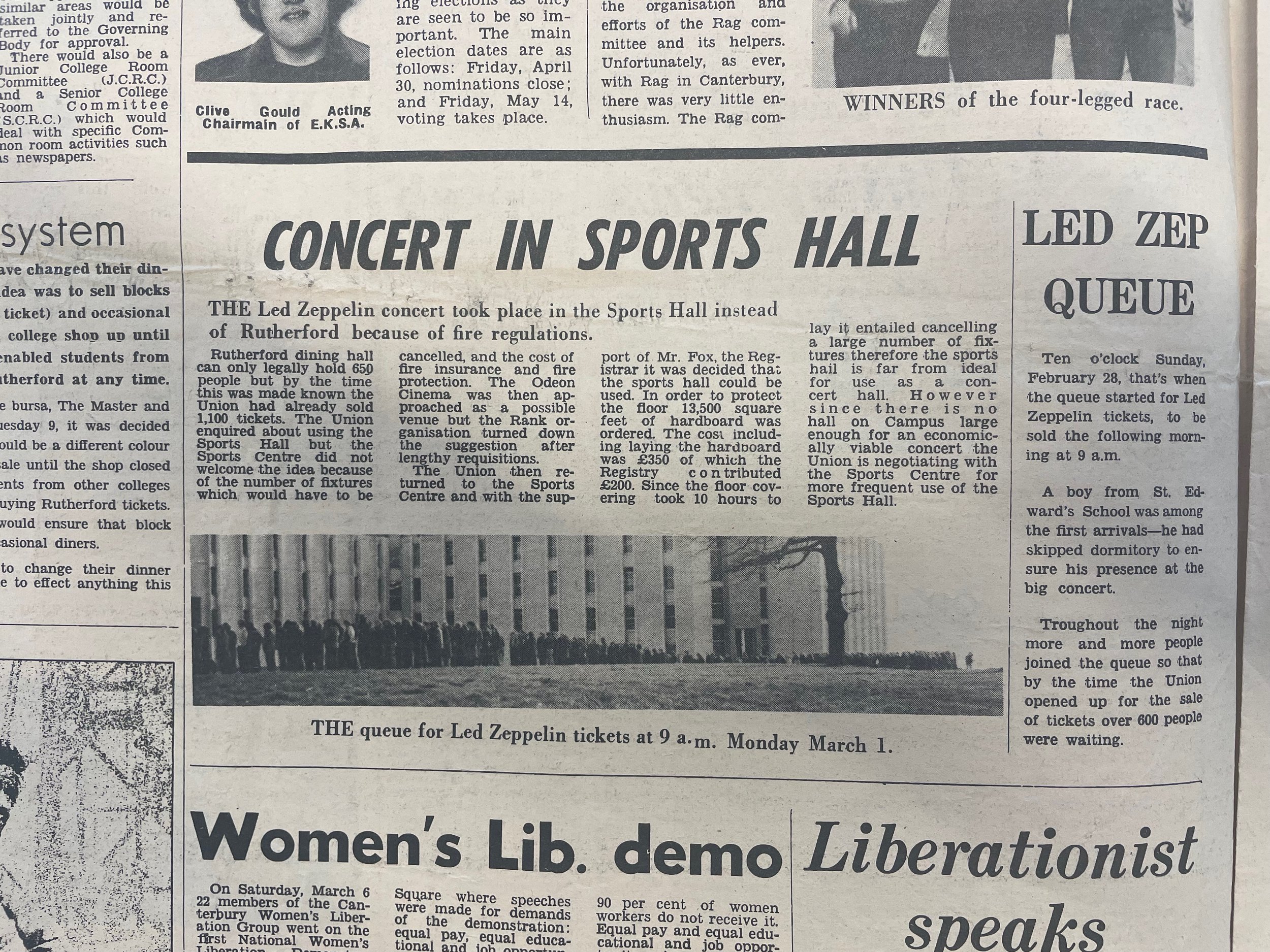
I’ve eaten a good many meals in Rutherford Dining Hall, the idea of Led Zeppelin playing there, as rumour had it, seemed as fanciful as them playing the even smaller venue Bridge Place Country Club (now a restaurant) in a village near to Canterbury. I’ve been there once and I can’t figure out where they would have played – all the rooms seem entirely inadequate for a rock band. . .

The Who had played Eliot Dining Hall the year before, which is the same size as Rutherford, holds approximately 600 bodies, but then, as it turned out, the event took place in the Sports Hall and not where I bought chips and beans.

The gig was part of Zeppelin’s ‘Back to the Clubs’ tour and their sixth UK jaunt, the idea was to reconnect with their audience. . . . which Robert Plant, at least for this reviewer, singularly failed to do . . .

Back when they played in Bridge in December 1968, Zeppelin were billed locally as ‘The Yardbirds’, possibly the last time they were promoted as such in Britain.

Before the three original Yardbirds up and quit on him in the Spring of 1968, Jimmy Page had played alongside Keith Relf, Jim McCarty and Chris Dreja for the University’s Summer Ball, 1967 . . . Their performance was slammed in the student paper InCant.
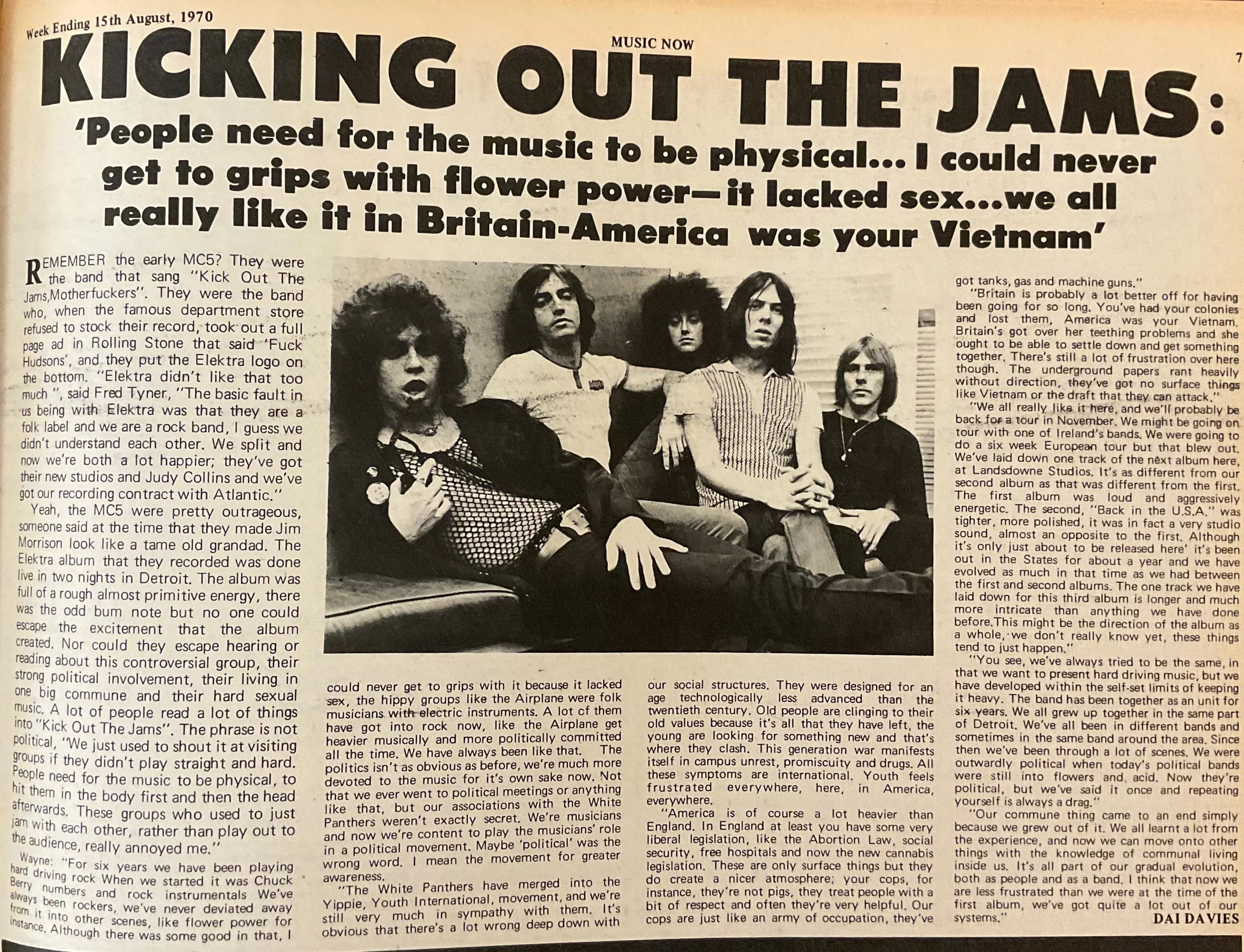
No Ball!

NOT AGAIN! YES, AGAIN I’M AFRAID – ANOTHER ASTERICK-AWFUL DANCE!

The really significant word in the above statement/exclamation is ‘Dance’. Friday the 2nd of June was to be the University of Kent at Canterbury Summer Ball. What we actually got was a rather upper-second-rate hop.

What price non-culmination? About £200 in the red! Much of this debt probably due to the £300-odd paid for 50-minutes’ ‘worth’ of un-danceable Yardbirds.

To cap it all, the buffet served day-old lemon mousse . . . . the horror

In defence of The Yardbirds, there were complaints about nearly every band subsequently booked for freshers week or the end of year ball. You couldn’t dance to any of them and they were always too loud and money was inevitably lost . . . Of all the bands who played the University in the 1960s and first half of the 1970s – Manfred Mann, Kinks, The Move, Procol Harum, Ten Years After, The Who – only Fairport Convention, twice, turned a profit. University gigs were subsidised and always ran at a loss, but lemon mousse, at least, was never again on the menu . . .

The Who Left The Campus Stunned – University of Kent (May 16, 1970)

“Darling, they’re playing our song . . .”

A week before the release of Live At Leeds, The Who played Eliot College Dining Room, University of Kent, on Saturday May 16, 1970. Capacity around 600. It would be the last University pick-up gig they would play before the big American money rolled in and made such intimate appearances redundant.

Published lists give the date of this gig as Friday May 8 but that show appears to have been cancelled and rescheduled for the 16th.

“THE two hour performance given by The Who on Saturday night must rate as one of the most memorable events ever to take place at U.K.C. The total effect of the volume of sound, musical violence and the sheer brilliance of The Who, seemed to leave the campus stunned and drained of energy for days afterwards.”

The reviewer was genuinely beside himself and the occasion deemed significant enough for the student paper, InCant, to devote a whole page to the review. The uncredited photographs are the best that the paper ran of any of the many live events at the University.

Two attendees of the show took a little pause and moved past immediate impressions to give voice to what would become The Who’s defining characteristic post-Tommy, nostalgia

InCant (June 17, 1970)

“the whole evening was pervaded with an air of unreality, an air which surely is present at a Judy Garland comeback or an Alamein reunion, where the audience sit on the edge of their seats waiting for ‘Somewhere Over the Rainbow ‘or ‘The White Cliffs of Dover’.”

But if the sense that The Who were trapped by their own history and the demands of their audience, a bigger concern was with rock’s solipsistic turn:

“The mistake so many progressive groups make is to ‘intellectualise’ their music, to make it intricate for intricate’s sake”.

Ann Le Sauvage and David Rooney’s final point in their letter perfectly encapsulated the state of play:

"The Who seemed an image from the past simply because they played to and for their audience and not for themselves; the fact that this is a point at all, illustrates completely our disillusionment with today's popular music”.

Third generation rock and roll could not come soon enough. . . but meanwhile you could play pinball

“Playing pinball is a challenge to modern society. It is man versus machines. You try and beat the machine”.

“Playing the machine is a good analogy with life. You lose most of the time, but you do get occasional replays”.

“I think you find mainly scientists using the machines – they are more neurotic and that’s why they play”.

InCant (March 18, 1970)

One More Questionnaire: Carm Deleff aka Marc Bolan

AMBITION: to make the transition . . . How many questionnaires did Bolan complete over the years? By 1975 he was a past master at the game and this must be among the best (NME August 30, 1975). OCCUPATION: interior mental decorator. That’ll do me . . . HOBBY: Snurding. Yeah, mine too! And he was always THE Mod – CRIMINAL CONVICTIONS: Stealing a G.S (scooter). Go ahead and dig in while you chew on some alligator steak

Riding the Circle Line to Ladbroke Grove with Alice Cooper

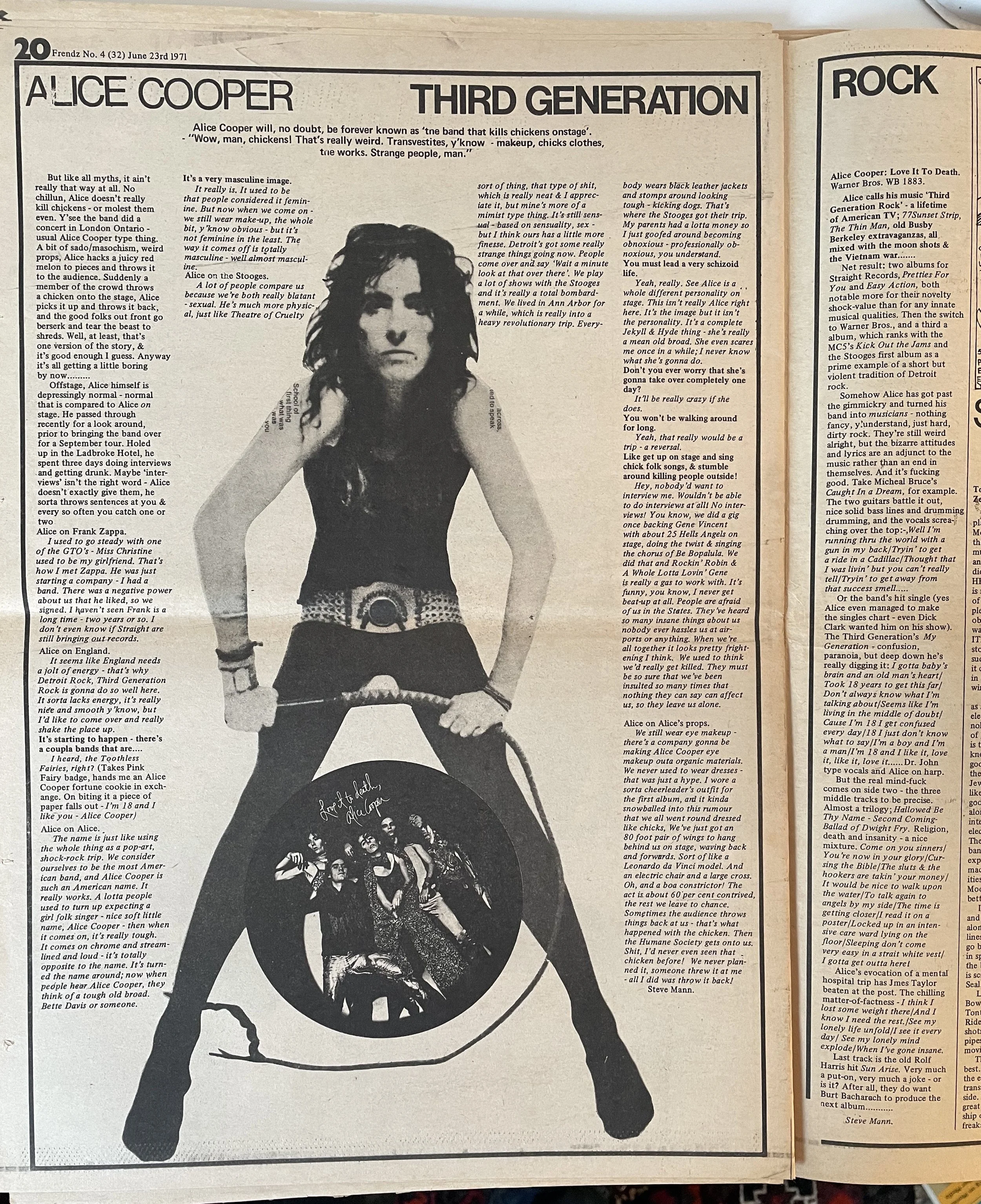
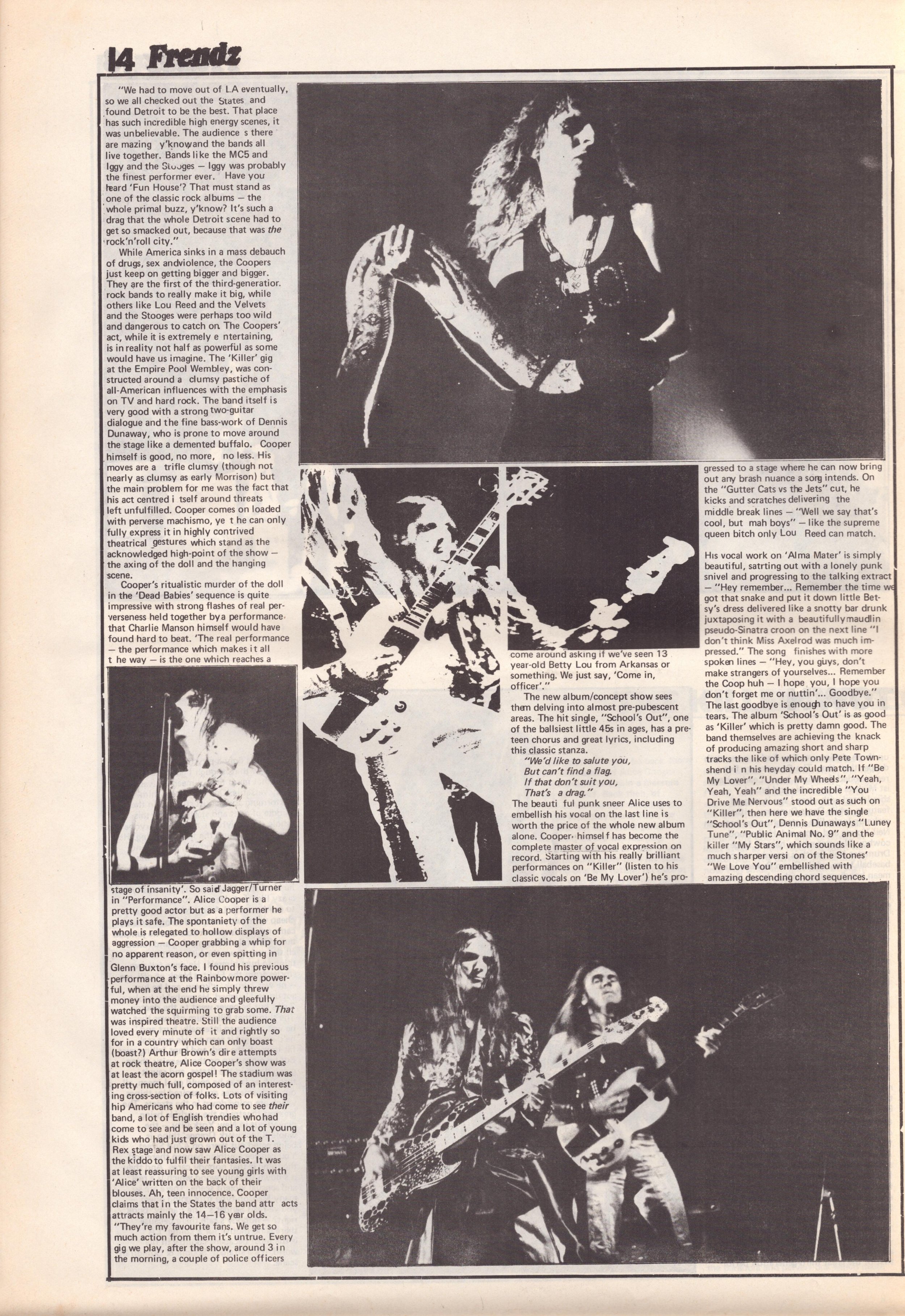
Before Alice Cooper became the big thing and media darlings with ‘School’s Out’ their core appeal in Britain was to freaks and rockers. What you have here is a few choice cuts from before the deluge that mostly focus on the underground press, Frendz and IT in particular. Here’s what Mick Farren and Nick Kent, among others, had to say about the band who ‘act as a mirror – people see themselves through us’.

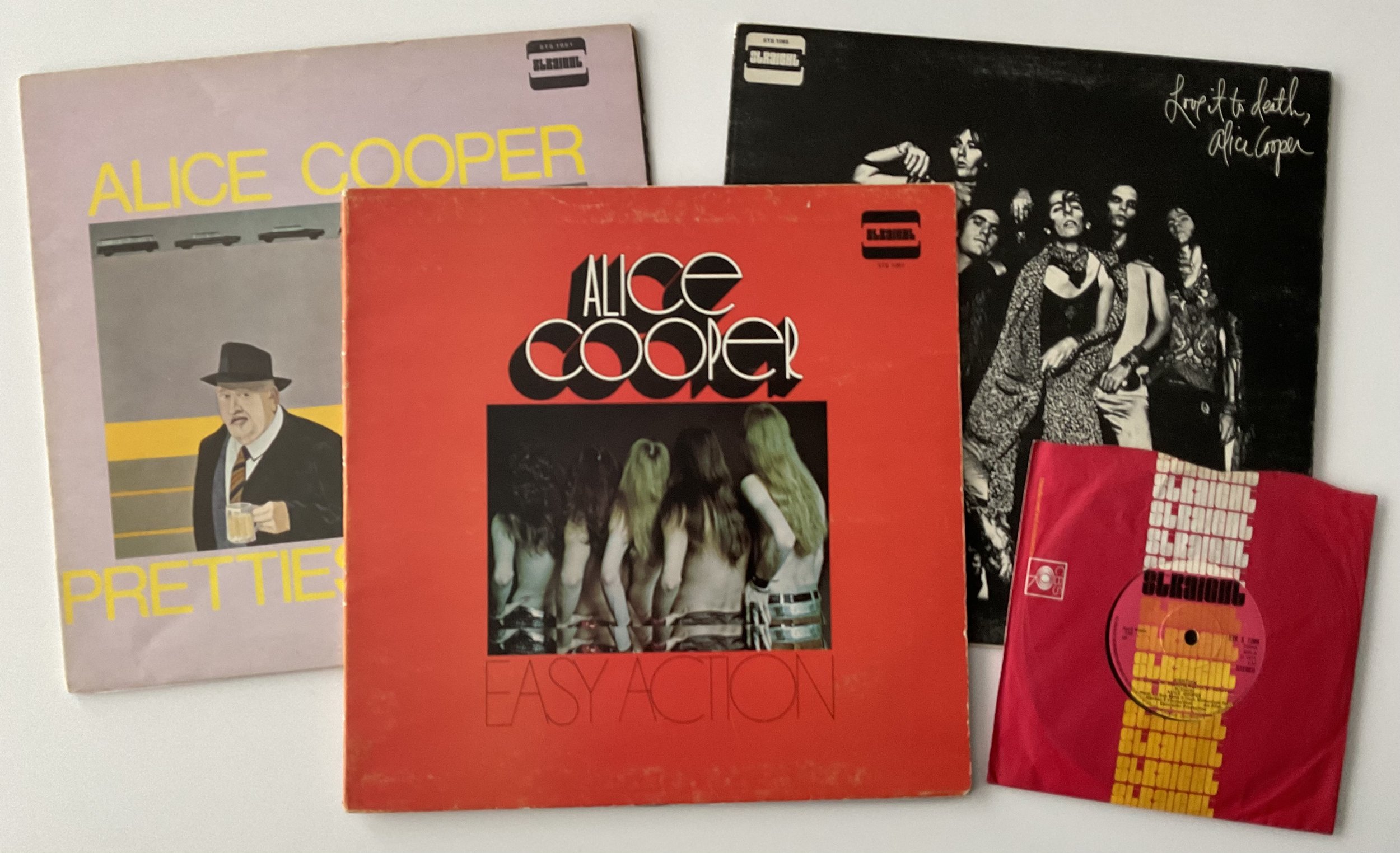
Alice Cooper’s CBS distributed Straight label UK releases

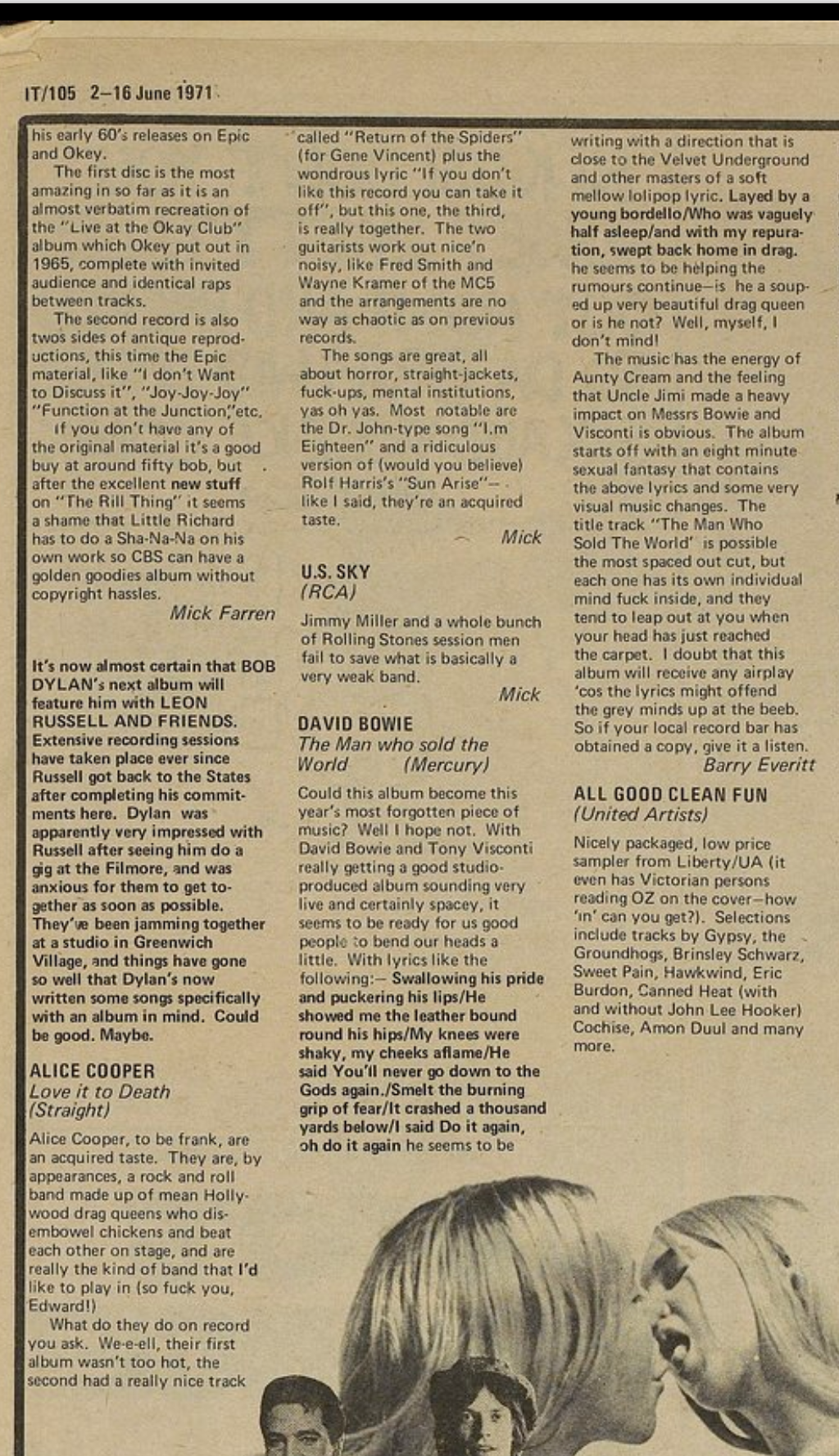
‘a rock and roll band made up of mean Hollywood drag queens who disembowl chickens and beat each other on stage, and are really the kind of band that I’d like to play in’ – Mick Farren

Greg Shaw, Jukebox Jury Creem

Greg Shaw thinks it is all about the Stooges, he wouldn’t be the last

You wanna know all about third generation rock n roll then look no further . . . . Alice with Steve Mann in Frendz

. . . some more third generation proselytising with Jamie Mandelkau in IT

“Got me so hot I could scream . . .”

‘Alice Cooper are supreme pooff rock . . .’ Mick Farren at his most lazy, touting the consensus.

John Peel, Singles: Disc and Music Echo (March 25, 1972)

‘This really is an odd group to come to terms with . . .’ – John Peel

All change and mind the gap: ‘The sight of rocking hordes of 12+ boppers at Alice Cooper’s Wembley concert would seem to prove that his efforts in the direction of bizzaro teen appeal are paying dividends’. – Mick Farren

Below, Myles Palmer, on the eve of the Wembley concert, gives a perfect summation of where things then stood . . . a worthy quote line in every paragraph, but the conclusion will do: ‘As music it’s not half bad, as showbiz it’s riveting and as trash it is absolutely incomparable’.

Dave “Boss” Goodman arrives late to the party . . . While Nick Kent gets the scoop on the Coop after Wembley (July 1972):

While America sinks in a mass debauch of drugs, sex andviolence, the Coopers just keep on getting bigger and bigger. They are the first of the third-generation rock bands to really make it big, while others like Lou Reed and the Velvets and the Stooges were perhaps too wild and dangerous to catch on The Coopers act, while it is extremely entertaining, is in reality not half as powerful as some would have us imagine.

The Final Fall Into Depravity – New York Dolls Play Warwick

“Yes dahhhlings they’re here. Divinely decadent, superbly sexy, long, lean and licentious – dig this if you can”

Two great plugs for the Dolls in the Warwick Boar, University of Warwick’s student rag, for their show on November 22, 1973 . . .

Given that the text mentions Billy I’d bet it is cribbed from somewhere or other, but it is great advertising copy regardless . . . Below, an editorial from the the same issue draws a parallel between the Dolls and George Melly, which I for one full approve of. . . an encouragement to moral laxity. Let the debauchery begin

Well, did Bert Jansch turn up?

Lesson #2: How to piss off progressive rock fans

Its Inmates Absurd: The Velvet Underground at the University of Kent 1971

“After about the first two years we got talking. . .”

– Maureen Tucker on rehearsing with the Velvet Underground

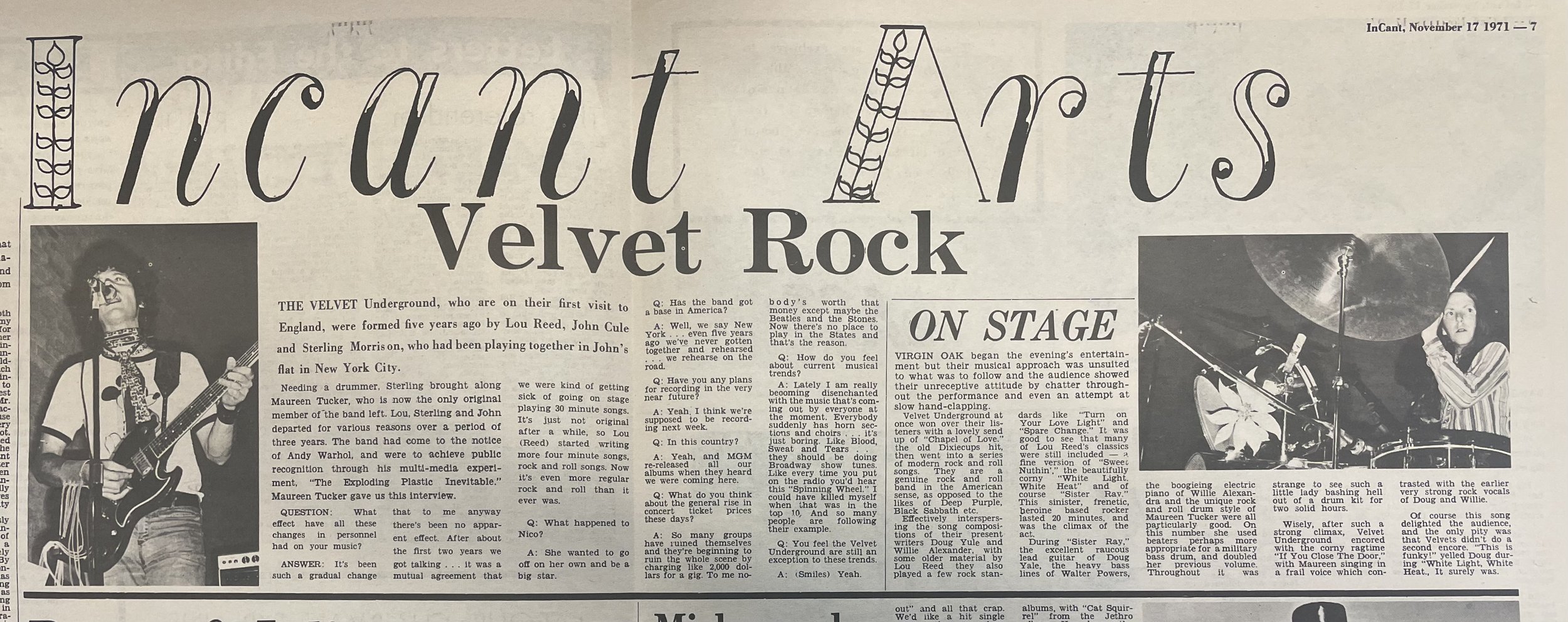
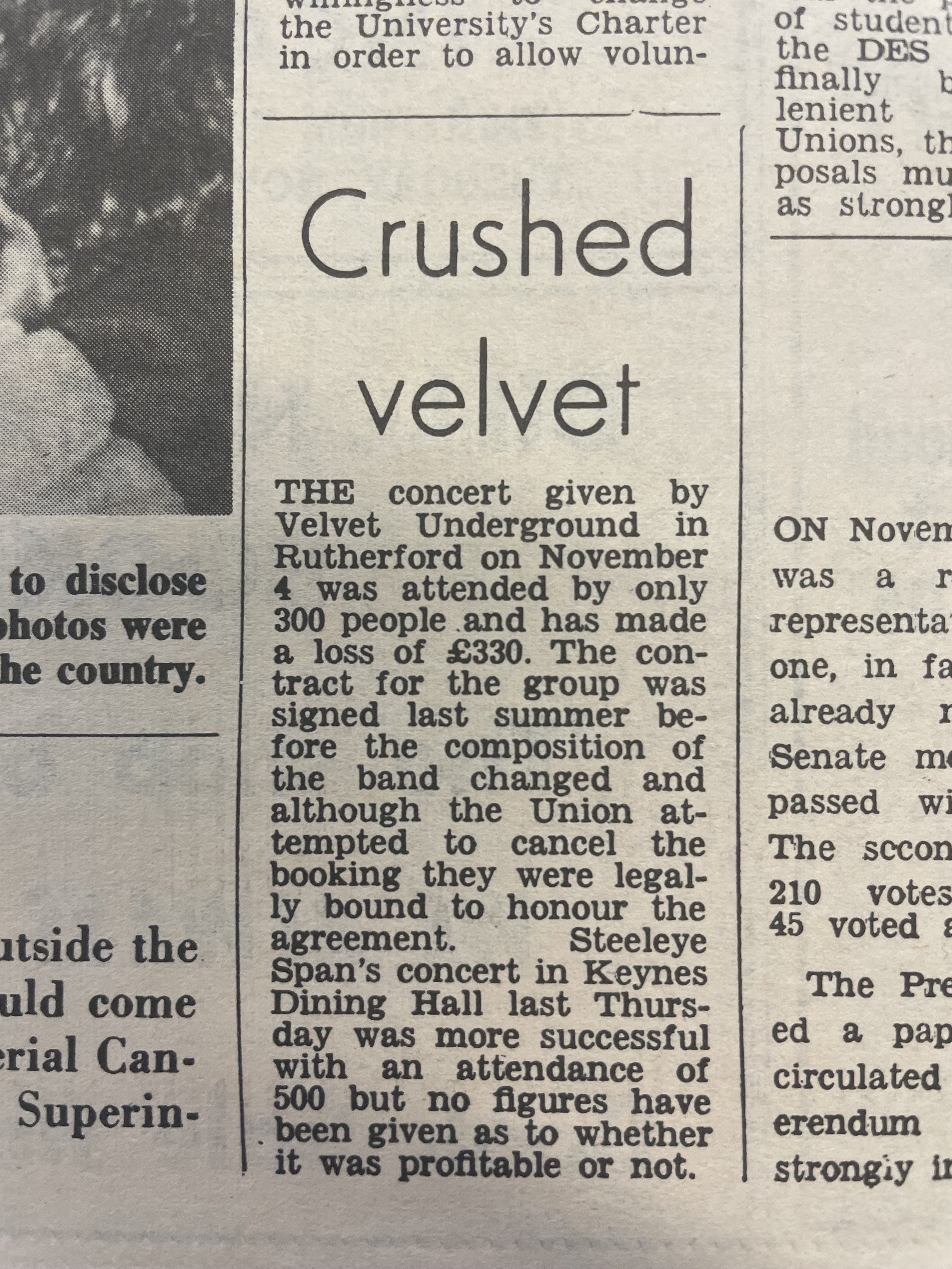
As a live proposition, The Velvet Underground, sans Lou Reed, existed for an improbable 2 ½ years, which included two tours of Europe in 1971 and 1972. In England, Autumn 1971, most of their gigs were on the burgeoning university and college circuit. On November 4, they made an appearance at the University of Kent. The big recent attractions on campus had been The Who, Eliot Dining Hall, May 1970 and in March 1971, in the Sports Hall, Led Zeppelin. More generally, student entertainment was provided by middle-ranking progressive rock bands – Mick Abrahams, Colosseum, Blodwyn Pig and local heroes Caravan. Kent alumni Spirogyra were an ever present feature. In all likelihood, the bookers thought the Velvet Underground would fit right into this scene. For their drummer, Maureen Tucker, the VU were always the exception to such trends.
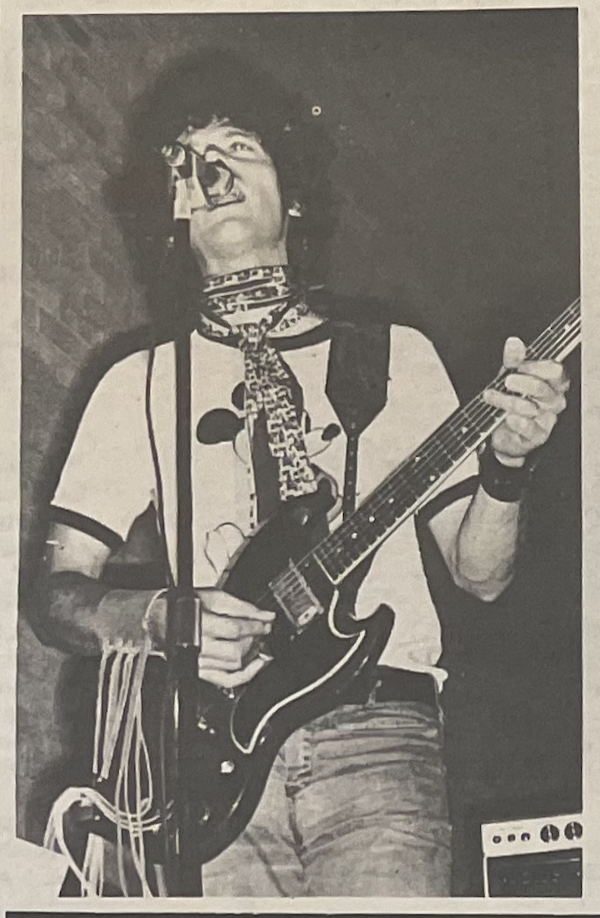
The Velvets performed in the Rutherford Dining Hall to a positive response, if the reviewer for the student paper InCant was any indicator. He or she considered them to be a ‘genuine rock and roll band in the American sense, as opposed to the likes of Deep Purple, Black Sabbath’. The reviewer delighted in their choice of covers ­ – Dixie Cups’ ‘Chapel of Love’ and standards ‘Turn On Your Love Light’ and ‘Spare Change’. Lou Reed songs ‘Sweet Nuthin’, ‘Sister Ray’, ‘After Hours’ and, the ‘beautifully corny’ (!?!), ‘White Light/White Heat’ were highlights, with the latter described as ‘funky’ by Doug Yule. InCant’s critic agreed.

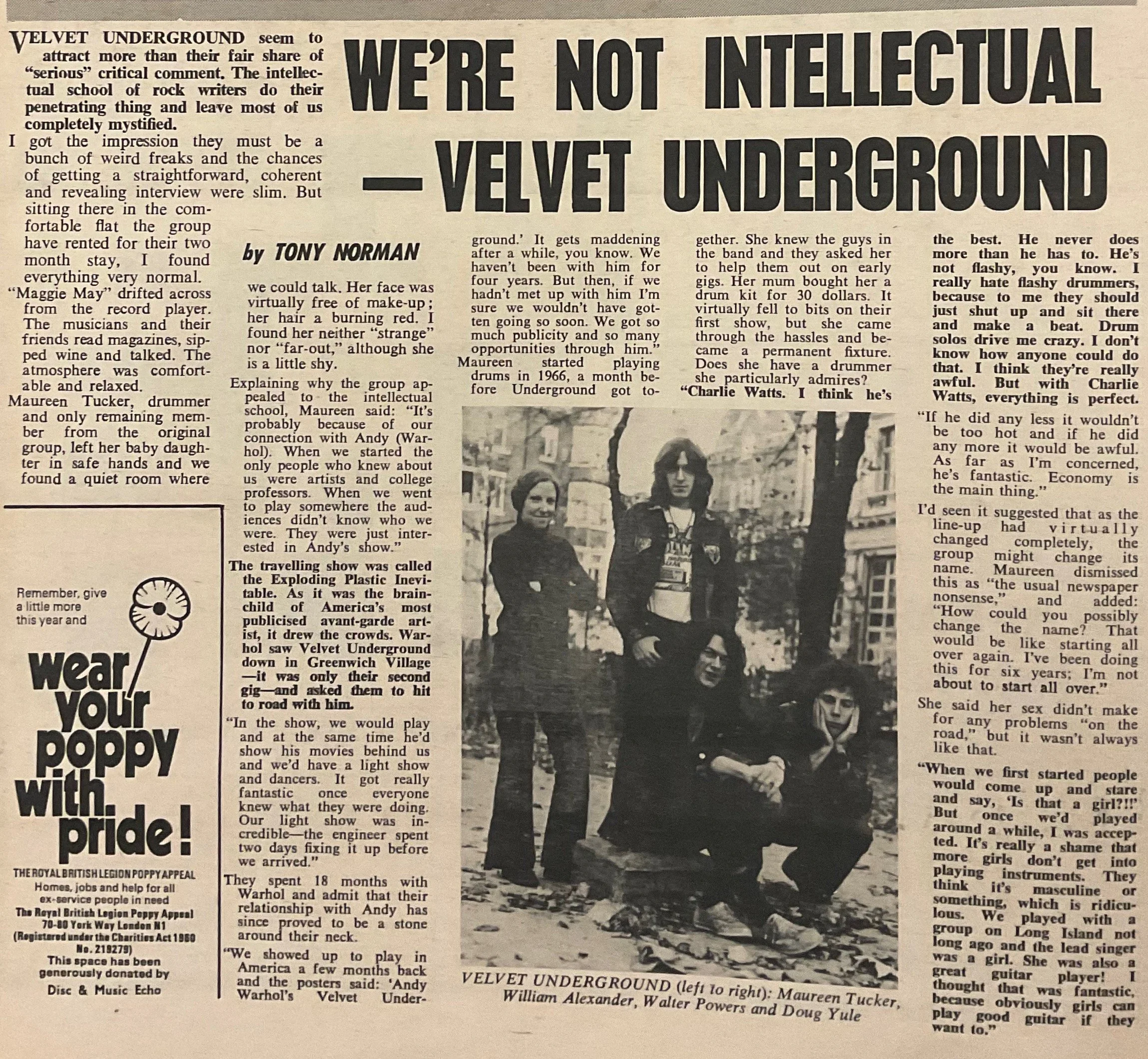
The interview with the only original member of the band, Maureen Tucker, is a peach. Asked about the shifts in the line-up, she said:

It’s been such a gradual change that to me anyway there’s been no apparent effect. After about the first two years we got talking . . . it was a mutual agreement that we were kind of getting sick of going on stage playing 30 minute songs. It’s just not original after a while, so Lou (Reed) started writing more four minute songs, rock and roll songs. Now it’s even more regular rock and roll than it ever was.

What happened to Nico? She wanted to go off on her own and be a big star

Like most of the events held by the Student’s Union, The Velvet Underground gig lost money; the organisers putting lack of interest, it was suggested, down to the fact the band’s line-up had changed. On that basis they had tried to cancel but were unable to break the contract. Steeleye Span proved to be a bigger draw.

Back in April 1971, student Helen Chastel had provided InCant with a review of Loaded, soon to be released in the UK. It is one the best summaries of the VU I’ve read.

Proposition: for consistent and versatile genius in rock the Velvet Underground (or V.U.s to the cognoscenti) are equalled only to Dylan and the Stones. Don't ask questions if you dispute it, write your own review. If you deny it, you are a Quintessence or Andy Williams fan and not worth bothering with.

Helen clearly didn’t think they belonged with the progressive mediocrities. She was a total fan, she’d bought her copy of Loaded in Washington last Christmas while on an exchange to the States and she knew someone who knew Lou Reed – ‘virtuoso extraordinaire, ex-child prodigy, now repudiator of drugs and hippies, mythical recluse . . . Sainthood is all in the mind.’

How many recognise themselves in the line ‘The deep sleep of a suburban upbringing can be shattered by sudden exposure to such a group’? Faced with VU & Nico, Helen ‘saw darkness of which I knew nothing, saw an extreme weariness, people born to die. Eliot (her college at Kent) life became petty, its inmates absurd.’ Reed, she wrote, had a ‘clear and cliché-less view of modern city life’, White Light/White Heat extended even further ‘into a chaos of light, blood, heat and noise . . . The third album is a surfacing, a return to verbal precision’. . . Lou Reed, Saint of the City. Helen Chastel, Saint of VU fans. . .

On that same tour of British Universities, the VU entertained Warwick University’s student cohort. COMUS providing support (they also played at Kent in May 1972). Ad and review from the Warwick Boar student paper

‘The Velvet Underground from whom great things were expected . . .’ Like at Kent, attendance fell below expectations.

Disc and Music Echo (November 6 1971)

Where The Who and The Velvet Underground Meet: John Hofsess' Palace of Pleasure (1967)

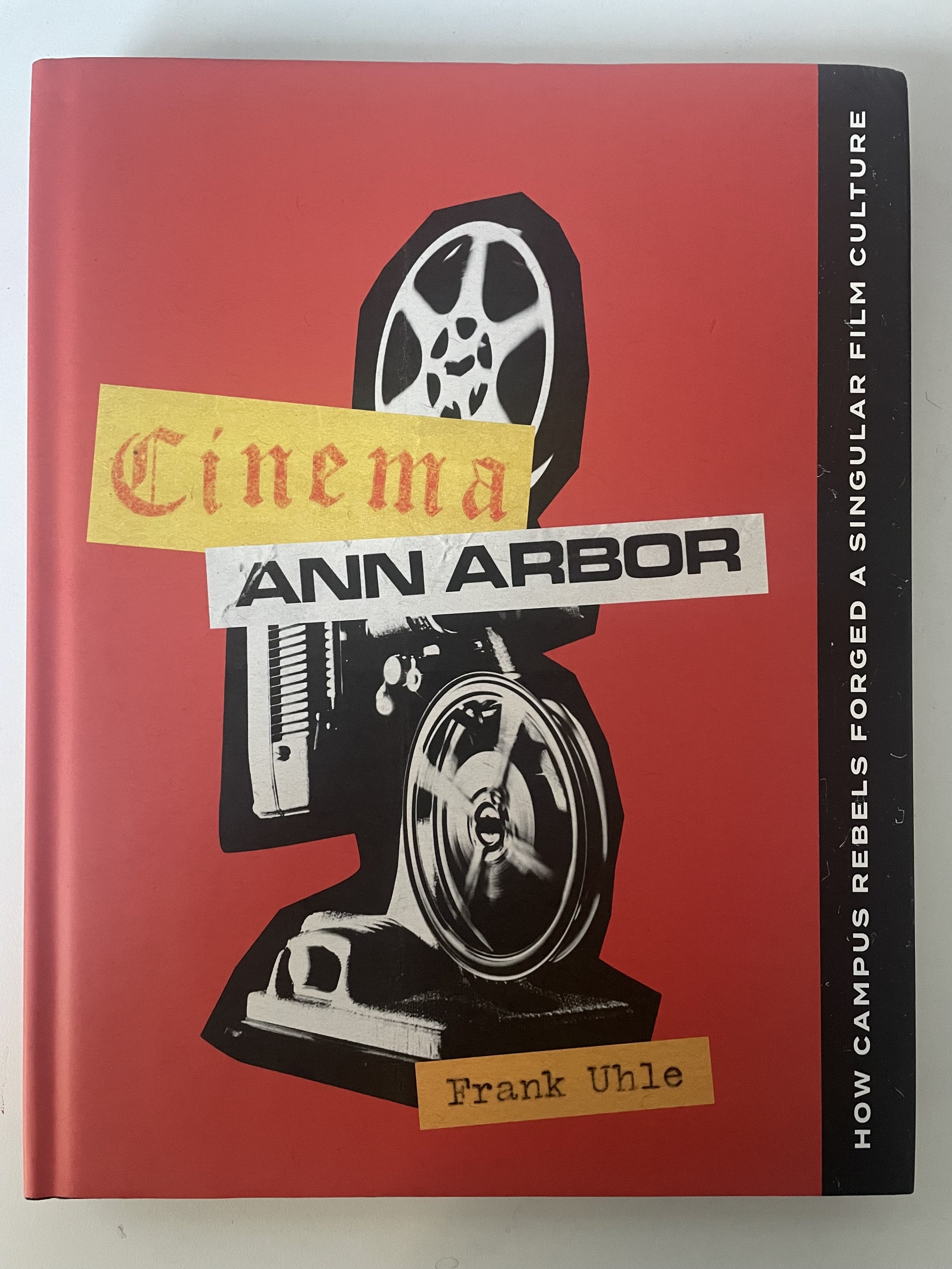
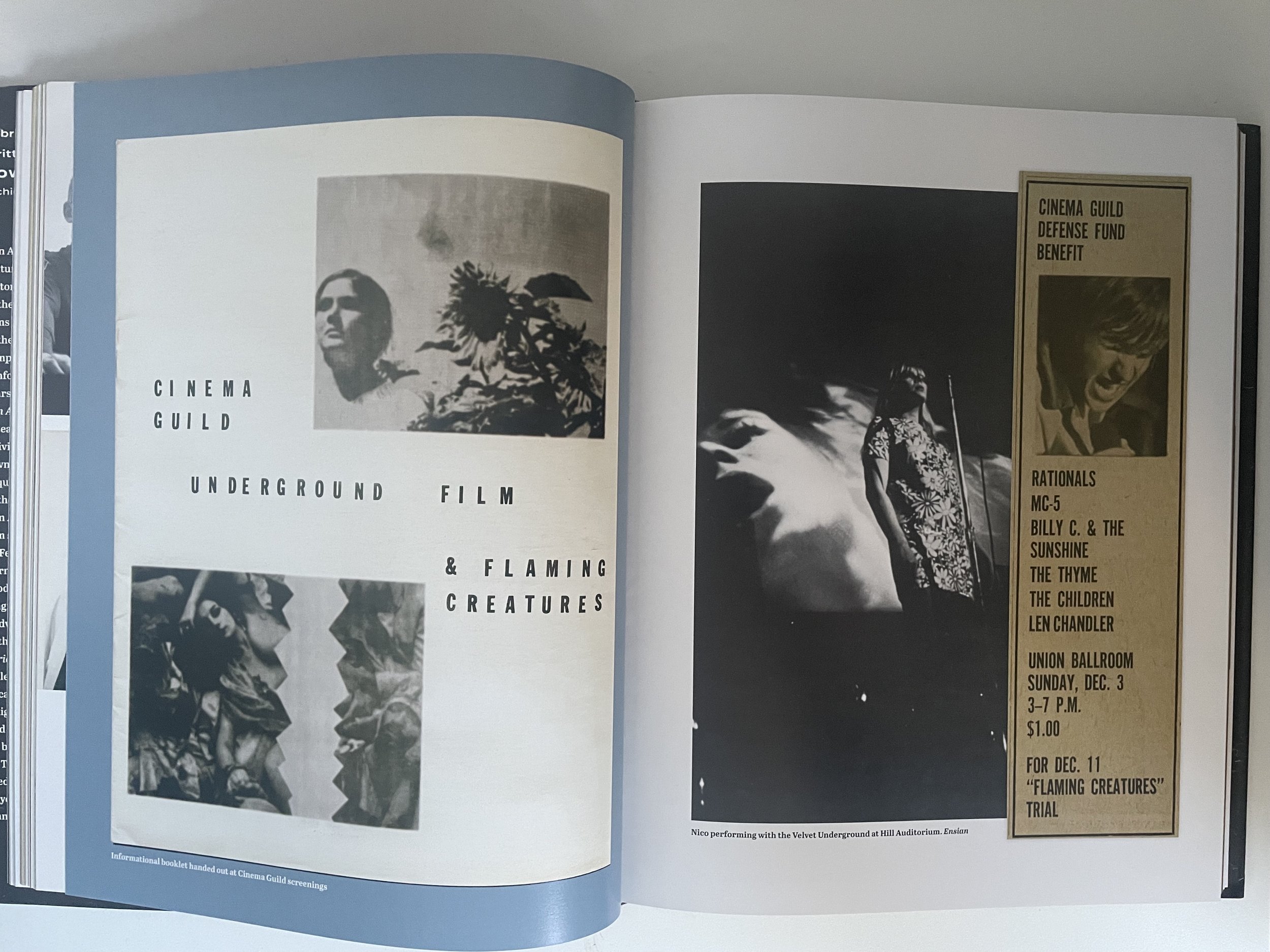
Inspired by Frank Uhle’s history of Michigan’s campus film societies, Cinema Ann Arbor (2023), I went browsing in the pages of The Michigan Daily. It’s a great resource for anyone with an interest in many of the topics this blog gets obsessed with [HERE] and it’s guaranteed to give up more than a few unexpected delights. A search for the ‘Velvet Underground’ produced among many things an advert for John Hofsess’ Black Zero: screened on October 17–18, 1968 as part of the ‘Underground at the Fifth Forum – Flicks & Jams’ programme – ‘poetry by Leonard Cohen and music by Velvet Underground’ was used to elevate the film’s attraction (and my interest).


Canadian filmmaker Hofsess and his kaleidoscopic experimental film were new to me.

Black Zero was described in the advert’s blurb as ‘an underground feature in color which demonstrates that split-screen dual projection can be used more creatively than in Chelsea Girls’. Also included were three lines of press hype: ‘A masterpiece! The finest experimental film in two generations – Boston Avatar. ‘This 1st prize winner is without question a sexual art’ – Vancouver Sun. ‘Filled with indescribable terrors and beauties! – London Free Press

I went looking for those indescribable terrors and beauties . . . I didn’t find an on-line stream but there are enticing extracts, with critical commentary, that are being used to promote a recent blu-ray release of Hofsess’ small catalogue of film works [HERE]. Palace of Pleasure features and pairs, as intended by Hofsess, Black Zero with the earlier Redpath 25.  The original soundtrack is provided by The Gass Company, another unknown, but they have Reed and Morrison’s guitar sound down pat, best heard in Redpath 25. In Black Zero, their instrumental sections feature a Cale-esque viola drone that seamlessly segues into the real thing with the VU’s ‘European Son’ followed by ‘I’m Waiting For The Man’. Hofsess had a good ear.

When his film was screened in Los Angeles in January 1968 it was billed with Ron Nameth’s Velvet Underground: Exploding Plastic Inevitable, which cemented a link with Warhol. Palace of Pleasure, however, is more than that relationship — it is a lexicon of contemporary experimental cinema; equally infused with Jack Smith’s Flaming Creatures, Stan Brakhage’s abstracts and Kenneth Anger’s oeuvre. Such a lineage should demand that the film be better known, but I’ve failed to find anything in the key histories of the avant-garde. Maybe Jonas Mekas and his peers didn’t take to Hofsess, finding him too derivative. But if cinephiles have ignored or remained ignorant of the film then rock’s cultists should surely have found their way to make the work more visible, especially as The Velvets are not the only contemporary group featured; their two tracks are preceded by two from The Who’s first LP, ‘The Ox’ and ‘My Generation’, which are played in their entirety across Redpath 25.

Bringing together The Who and the Velvet Underground through the filter of Pop Art is not a difficult move to make – see A Band With Built-In Hate – both Cale and Reed have talked about The Who’s influence on their artful dissonance and songwriting, but to see the two groups tethered to each other in an experimental film is suggestive of a more complex set of aesthetic interconnections, less a posthumous theoretical construct than the actual fact of the matter. You can find numerous historical intimations of a pop/art conversation but none, I think, quite so unmediated as found in Palace of Pleasure. Here, at least, Hofsess’ film is entirely unique.

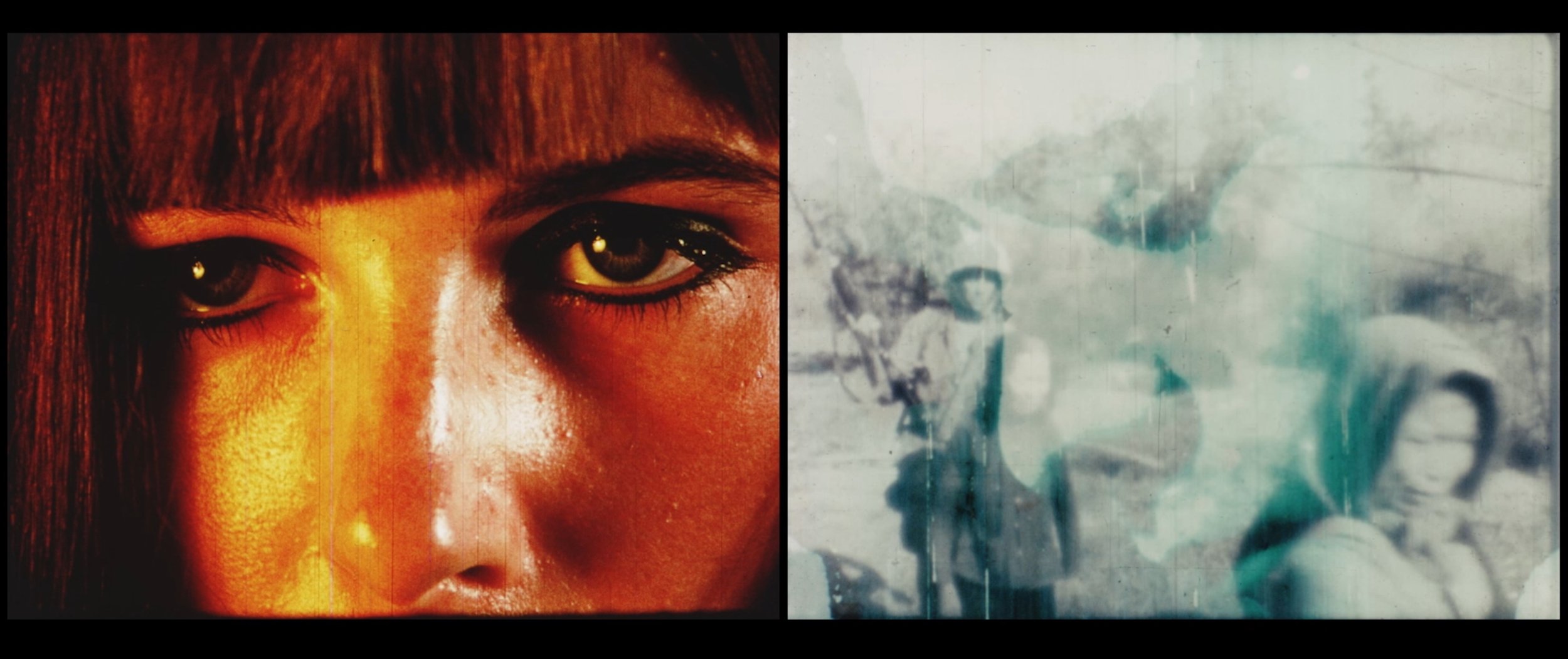
Redpath 25 is the more overtly ‘Pop’ of the two films in its use of a familiar iconography that in one screen focuses on a young woman’s face. Lit by oversaturated red filter, her image strikes a contrast with the monochrome of the Vietnam war actualities projected in the right-hand screen. But, unlike pop art male fantasies that used the objectified figure of a young women to explore cultures of consumption, the fantasia on display here is one of female desire – the woman picks and cuts away at a sheet of silver foil to find packaged behind the film her ideal male lover. Quick cuts to images of male genitals and a view of her fellating the man follow. Meanwhile, masculine fantasies of death and destruction play out on the other screen.

The sonic riptide of The Who’s ‘The Ox’ provides a noisy urgency that tugs away at the passive slow burn of the otherwise inchoate death-obsessed imagery. ‘My Generation’ continues the onslaught but also comments on the film frames that follow of white weddings (and marriages that end in court) – Townshend’s mid-sixties bete noir of young marrieds here made manifest. Leonard Cohen’s poetry carries even more of the thematic weight. Black Zero, with the VU, continues the theme of emotional discord over images of a marital bed occupied by a couple who become distracted from their love making, disengaged from one another, when a second man appears; perhaps the one the woman (and Lou Reed) had been waiting forever to arrive?

Los Angeles Free Press (January 5, 1968)

Los Angeles Free Press (June 7, 1968)

“On the same programme will be John Hofsess’ dual-screen Palace of Pleasure and Ben Van Meter’s outrageous Acid Camp” The latter another film I should probably seek out . . .

Black to Comm – Review Pin-Ups 1972

Really pleased by this review from Black to Comm’s Chris Stigliano on his Blog to Comm pages: here (January 3, 2024):

“You like your old rock papers and mags with all of those flipped out "gonzo" writers who either made you glad or mad? Still have those T. Rex singles snuggled in your collection? Did you get your fashion tips from Lisa Robinson's "Eleganza" column (or, if you were a Clevelander, Charlotte Pressler's "Pizzaz")? Well, this one one book, and perhaps one of the ONLY ones extant, that will tell you the plain and simple truth that you were right all along!”

UGLY THINGS – The Creation: In The Beginning

Very pleased to have a feature article in the latest issue (#64) of the great Ugly Things

Copies can be had from here – direct from the publisher or with cheaper shipping in the UK from 14th Floor Music here

There was a small formatting glitch in the print edition and a column of text went AWOL. So, if you’re interested in what Penny Valentine had to say on Ealing’s finest, here’s what’s gone astray: